Insight from the Bro-Tex Raid: What Activists Saw While Confronting ICE
St. Paul, MN — Last month, dozens of community members were alerted to a surprise raid at a warehouse in St. Paul. Within minutes of federal agents with ICE, the DEA and FBI arriving at the workplace, a rapid response network mobilized to confront the agents carrying out an immigration raid at the Bro-Tex distribution center.
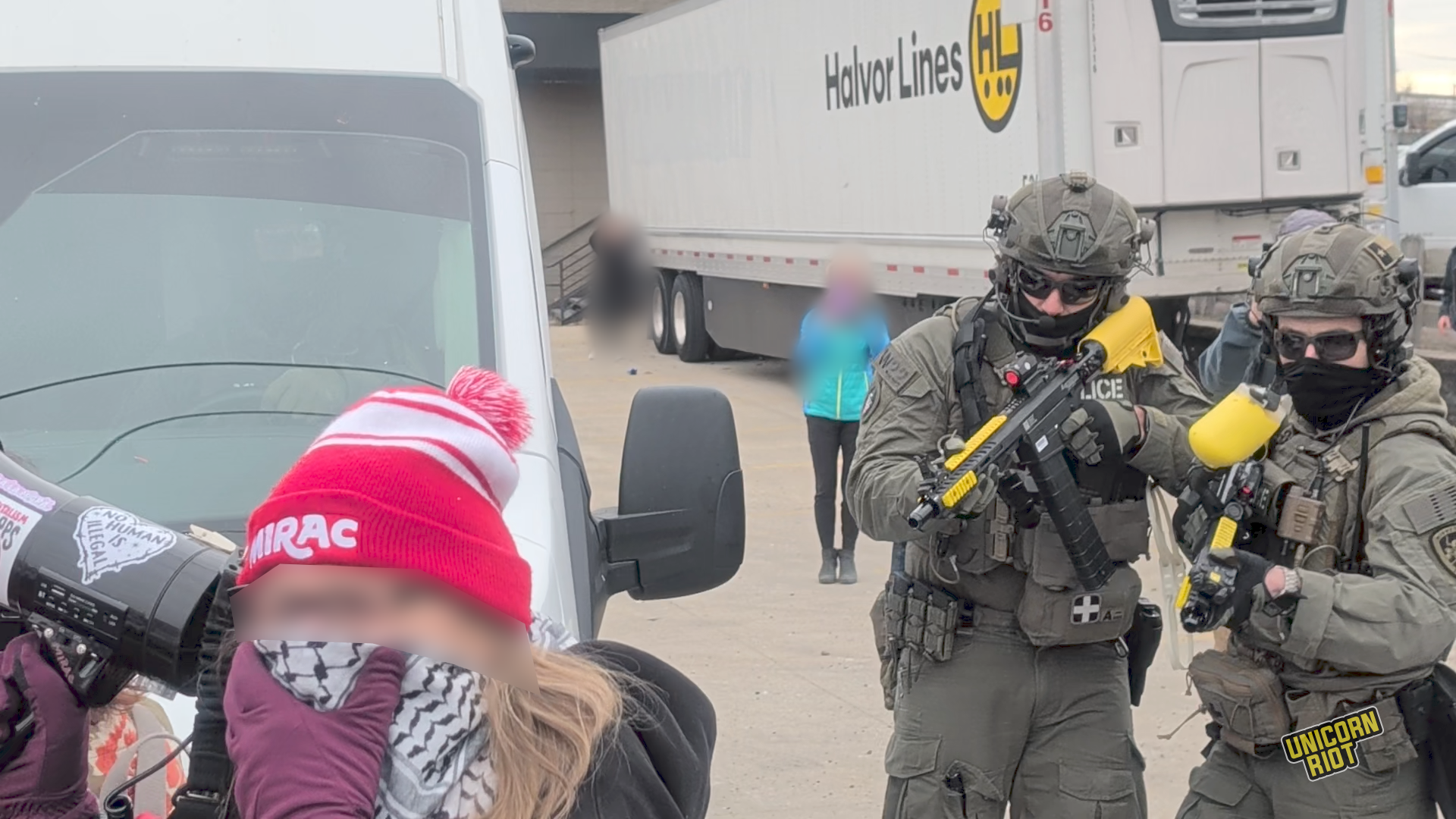
As community members rallied to halt the raid, federal agents cordoned off the area and began trying to clear protesters. Agents used pepper balls, OC canisters and pepper spray on the crowd as they tried to clear a path for a convoy of their vehicles, some of which carried detained migrants, to leave the area. The crowd quickly grew into several hundred people by the time federal agents left the area.
Fourteen people were detained by the time the raid was over. This was the largest federal operation in the Twin Cities since the controversial June 3 “Homeland Security Task Force” deployment on Lake Street which led to federal charges against local poet Isabel Lopez. At least one person was detained outside. According to a series of Bluesky posts from their spouse, they were detained at the Bishop Henry Whipple Building at Fort Snelling. He added that a federal agent shouted at him, “Fuck you. You’re not even real Minnesotans. You’re all from Canada.”
In recent weeks, as the Trump administration bears down on the Twin Cities area, activists have responded to a slew of immigration raids. Drawing on lessons from other communities and organizations that have faced off against agents in similar raids, organizers in Minnesota have adapted and learned from each encounter.
Two participants in the November 18 resistance shared their firsthand experience with Unicorn Riot, providing valuable insight about what they saw at the Bro-Tex facility operation. In the wake of recent raids, and with an eye toward future encounters, the participants reflected on what happened that day and shared their experience in an extensive interview.
To learn about what happened on the ground from the perspective of those who mobilized to disrupt the raid, Unicorn Riot spoke at length with Anthony Maki and Matt McRee, two locals who responded to the Bro-Tex raid on the morning of Nov. 18.
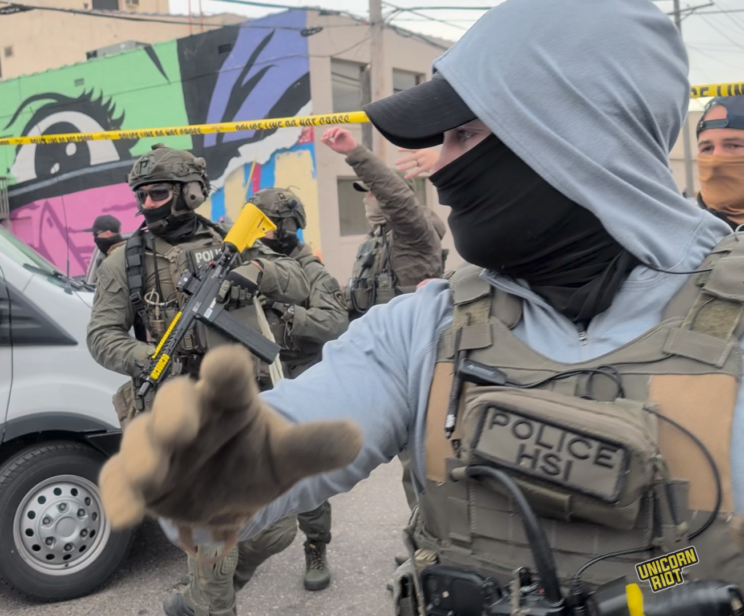
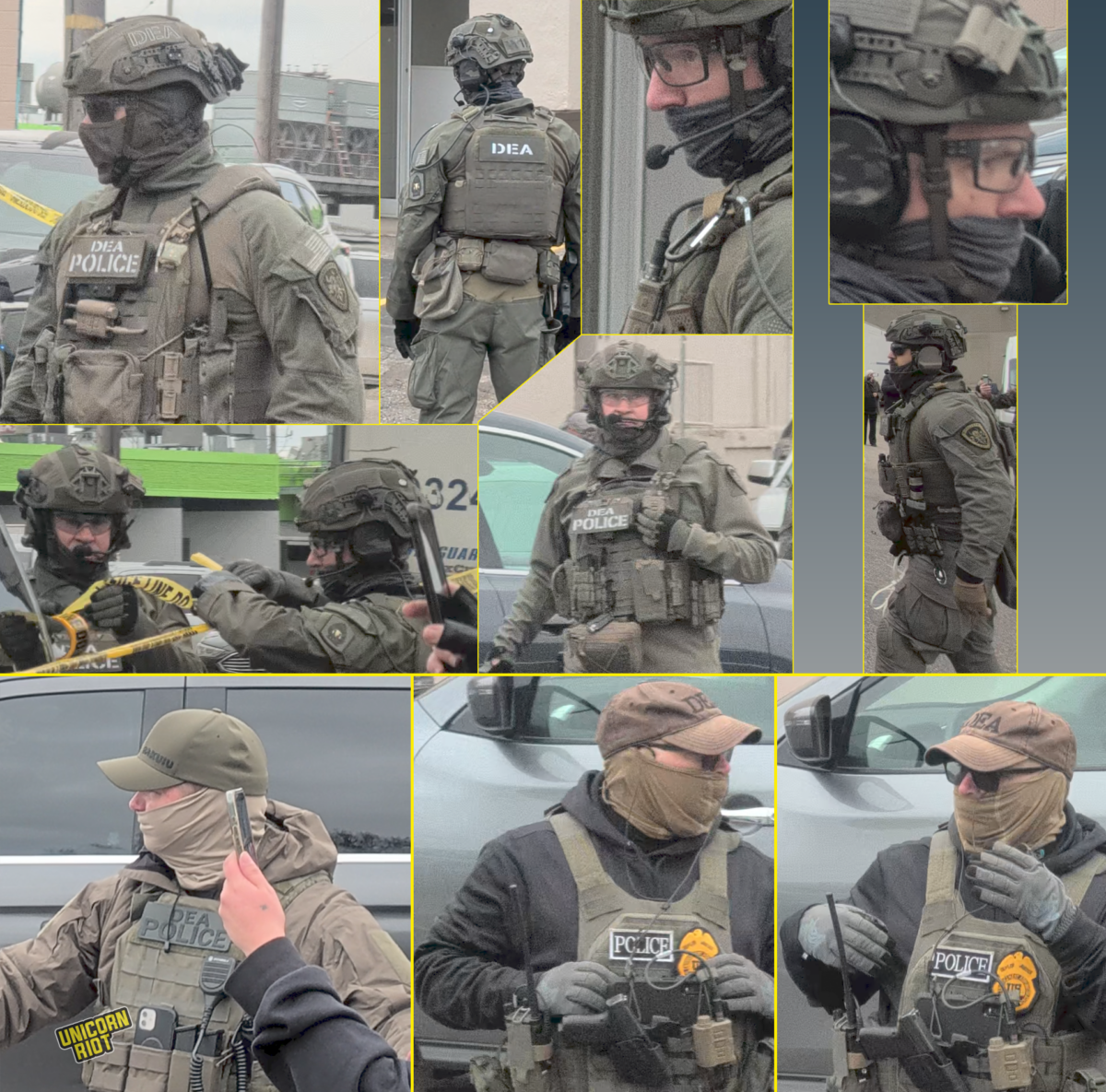
Q + A With Participants
We talked with two participants in the evening of November 18. The following is an excerpt, edited and condensed for clarity; a few sentences were clarified after the initial interview.
Dan Feidt for Unicorn Riot: What’s the take away from today?
Anthony Maki: I expected escalation [from law enforcement], but I think they delivered a bit more than my expectations.
Matt McRee: I would agree with that.
Maki: I went out of it after having heard that it was happening through a Signal chat. I started thinking, “I’m going to go outside and check out what’s happening.” I woke up Matt. We started getting ready for about 15 minutes, and I was prepared for anything to happen, I guess. But I didn’t think arrests were very likely.
Nonetheless, I put the Twin Cities National Lawyers Guild hotline number on my hands just in case. I thought it was possible chemical weapons would end up getting used, but I think we saw it getting deployed at least a half a dozen separate times, probably more…
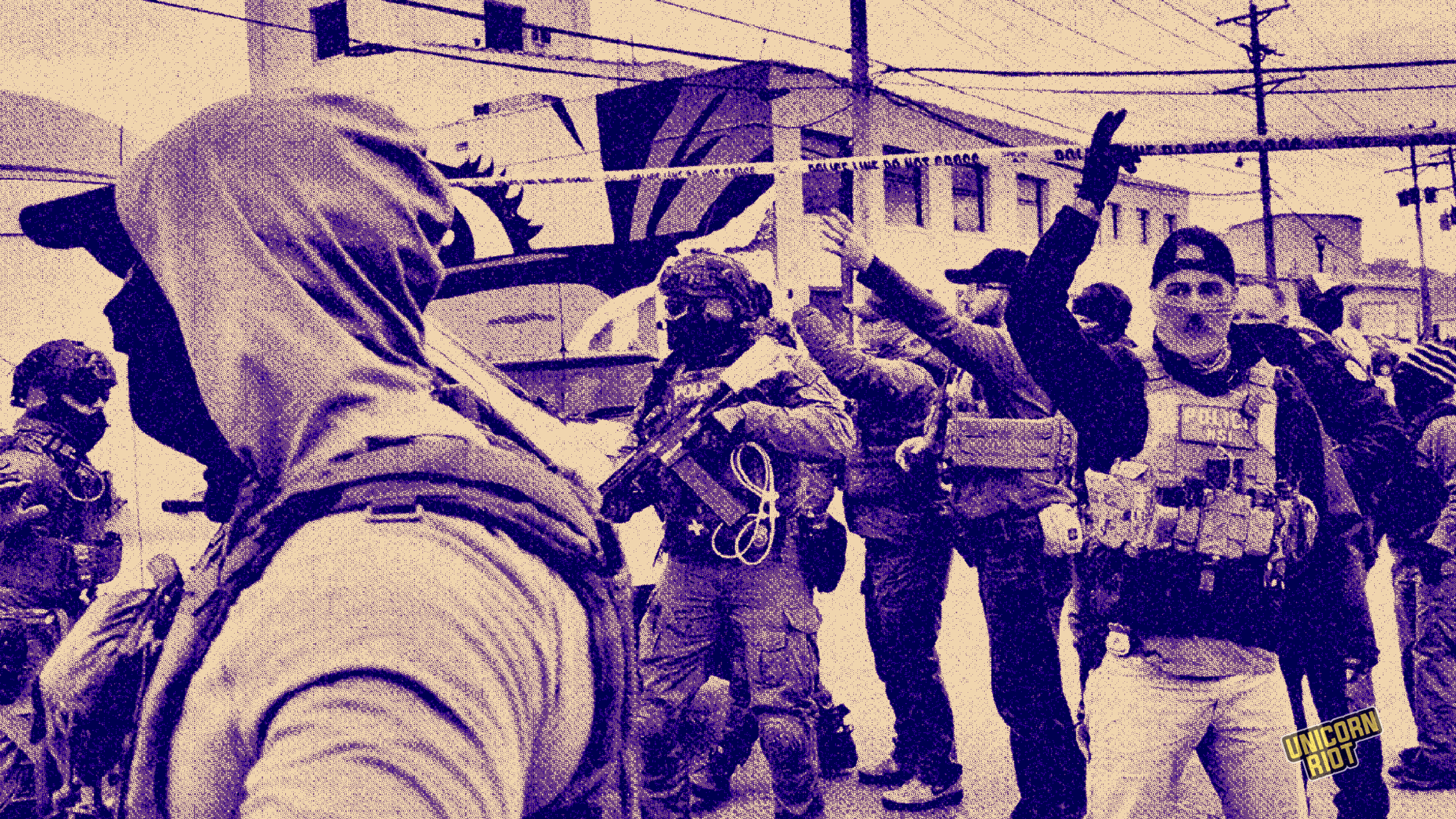
The perimeter [of the area that federal agents had cordoned off] was quite large. And it kind of blocked off an entire street, block end to block end… When we learned by overhearing one of the agents say that they were going to look at leaving in an alternative exit, some of us started walking to where [that was]… When we got there, that’s when the escalation started because that’s when they were leaving [on the north side]… They had lined up rental vans, and I think that’s where they had loaded the people…
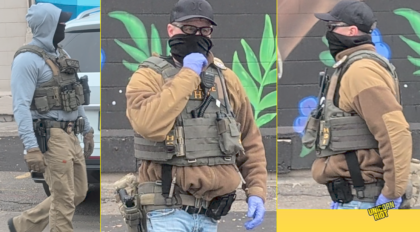
It looked like they were preparing to leave, so people got into a human chain linking arms, blocking the road, north on Hampden…
We were a little bit concerned about being arrested. So we communicated with the organizers. Like, “Yeah, ‘We’ll be part of this chain, but, if, like, there’s a warning of arrests, we’re going to have to leave’.” … But the convoy then slowly proceeded to the line, and then they kind of accelerated the car in a unreasonably fast way, considering there are people right in front of it, and they stopped right before reaching the people…
So the convoy came out right up to the [line], despite the fact that there are people right there. And then agents who were on foot started pushing and shoving people out of the way of the [first] vehicle… They started to succeed in breaking the chain. And then the [first vehicle in the convoy] pushed forward more. And I think at that point, some people either were pushed to the ground by the car or they fell to the ground…
And then and the convoy started going through, I guess by their standards, relatively smoothly, because they had established some sort of velocity and nobody would want to get in the way of that.
UR: And they were trying to go northbound on Hampden?
Maki: Yes, I think north [and towards Highway 280]…
McRee: They had police tape cordoning them off explicitly as well as unmarked vehicles mostly. And a lot of SUVs.
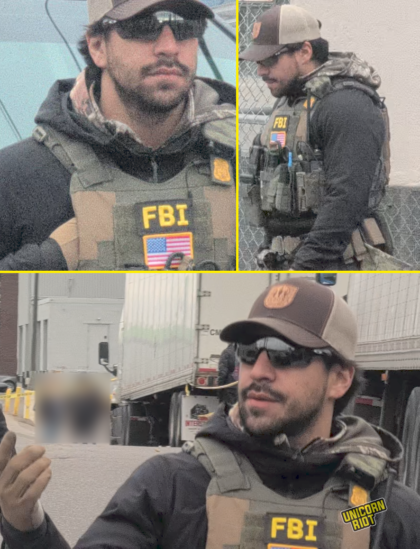
Maki: Yeah, and a lot of agents everywhere.
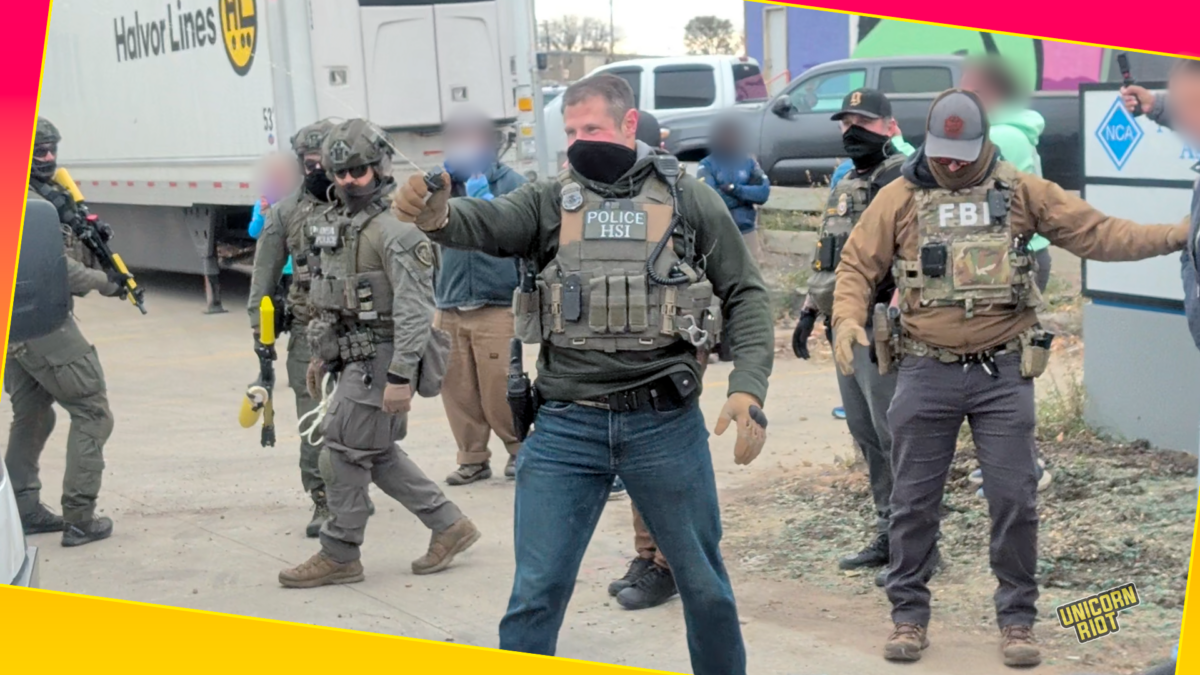
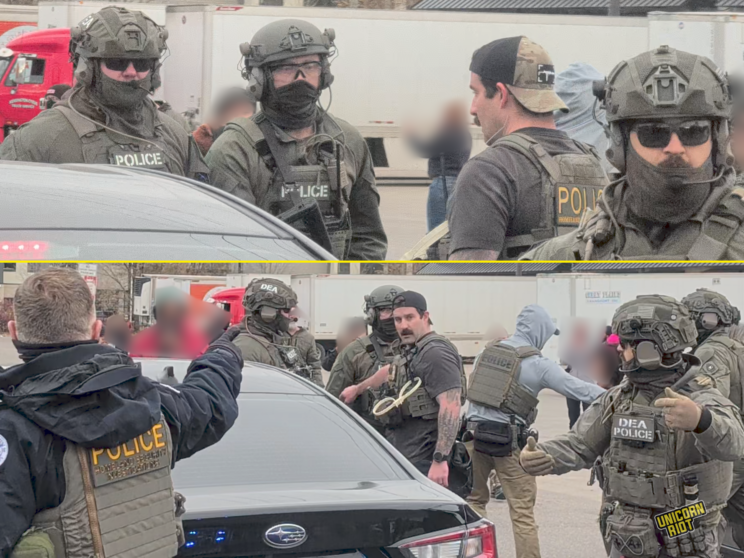
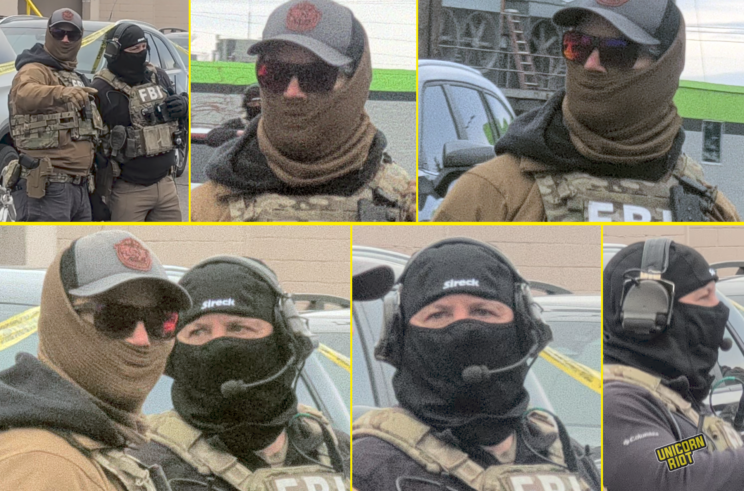
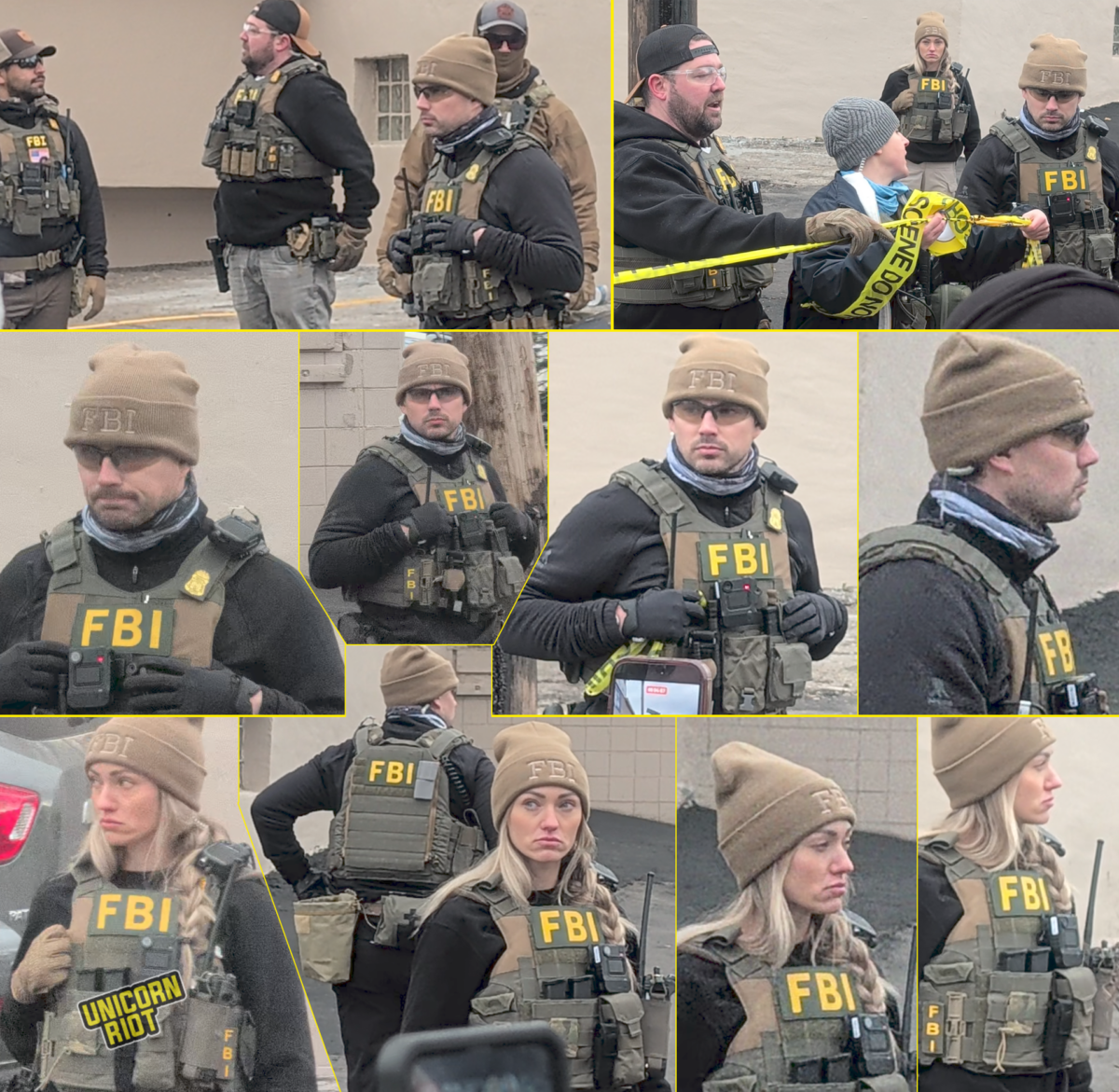
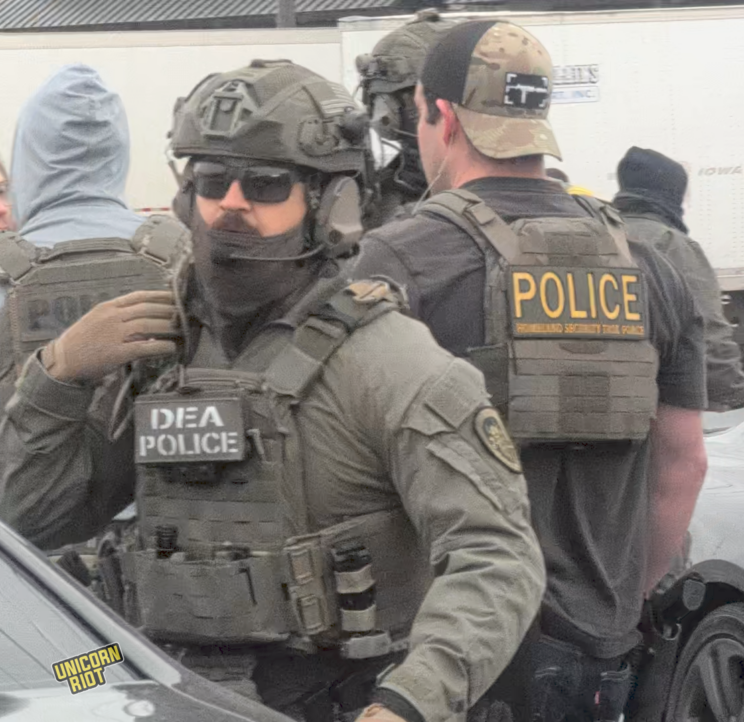
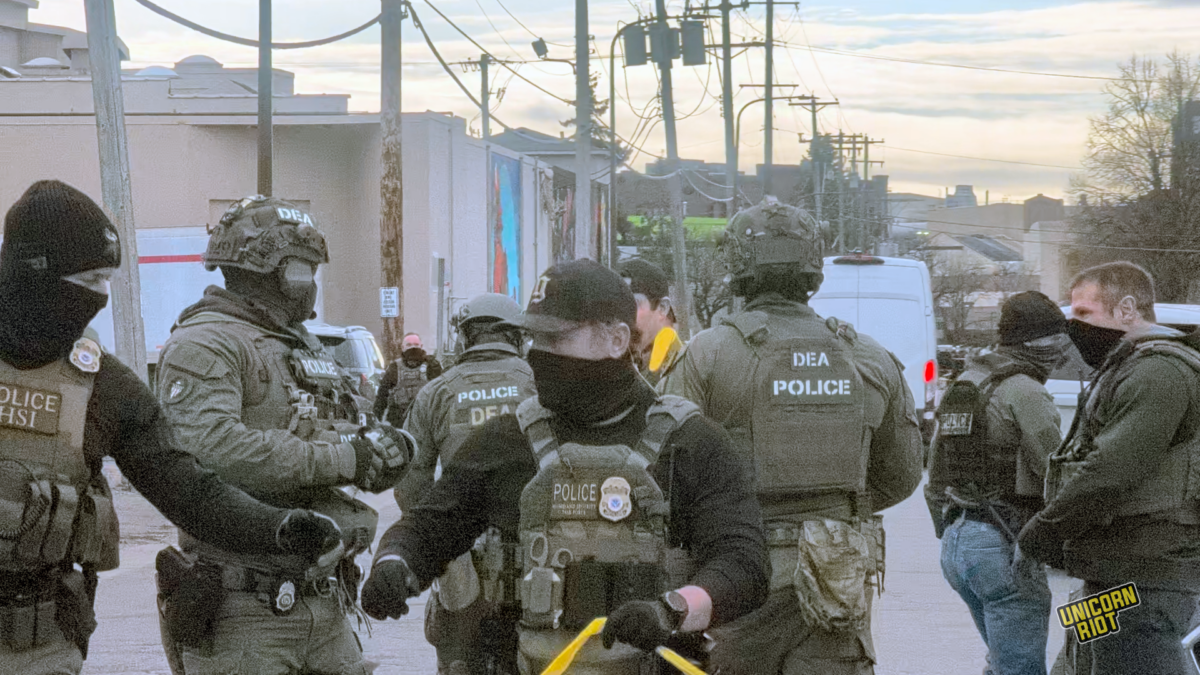
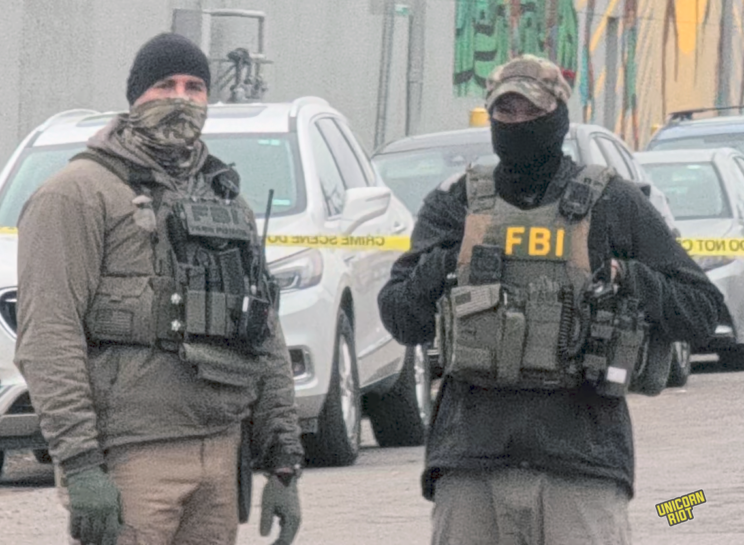
McRee: Mostly FBI but also a number of especially well-armed DEA agents.
Maki: Yeah. The DEA agents seemed, at least to my recollection, to be the ones with the pellet ball rifles. I think it might have been a different agency who unleashed the pepper spray on us.
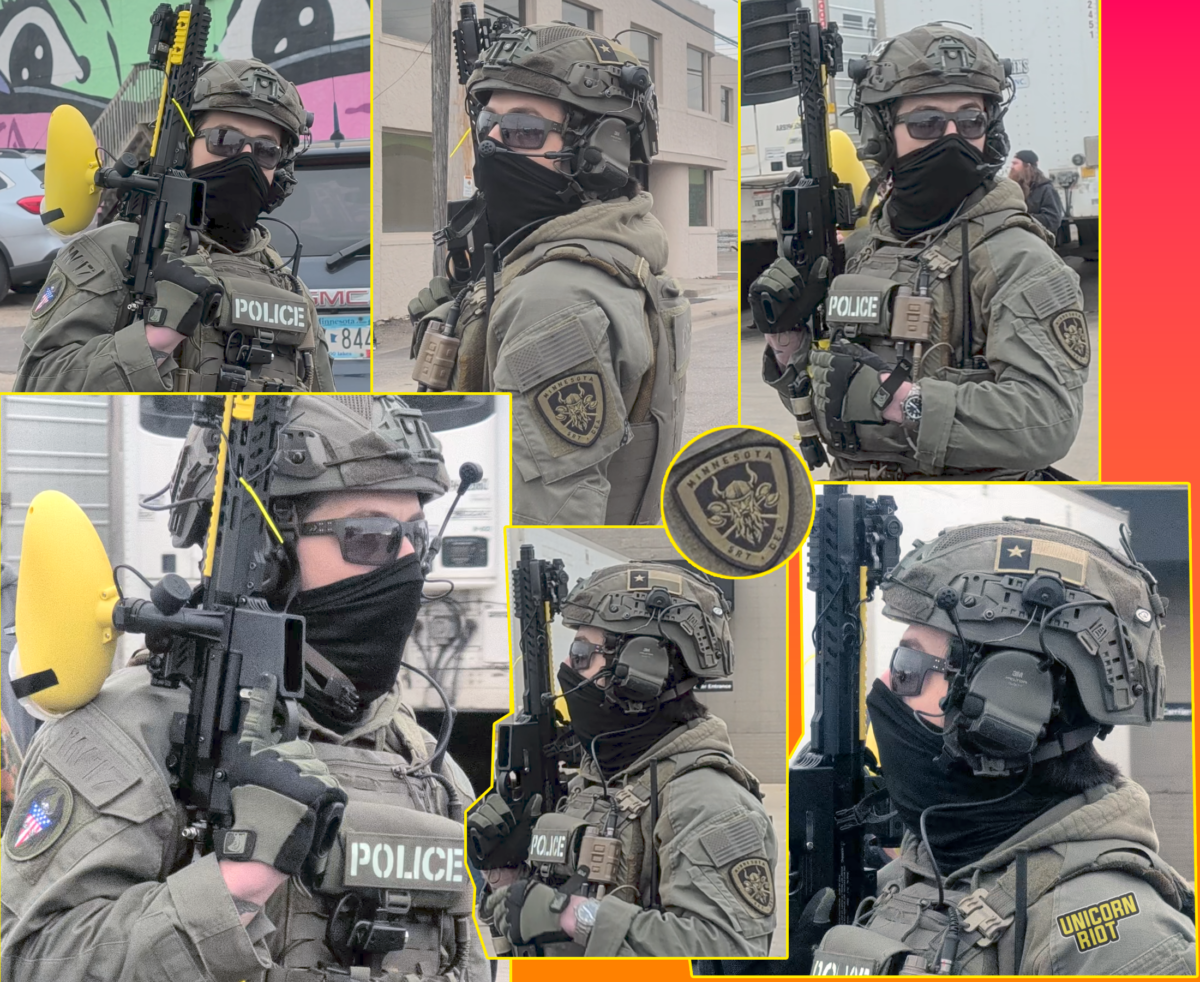
McRee: I think it might have been FBI. I think that was FBI. I think.
UR: I think I saw through Sahan Journal that the canisters were OC canisters from Defense Technologies.
Maki: Yeah. They they had a striking resemblance to them. They were silver metallic.
UR: So you mentioned that you overheard agents like saying some stuff. What kinds of stuff?
Maki: …Most of the agents in my ear shot seemed pretty taciturn. They had their lips pretty sealed.
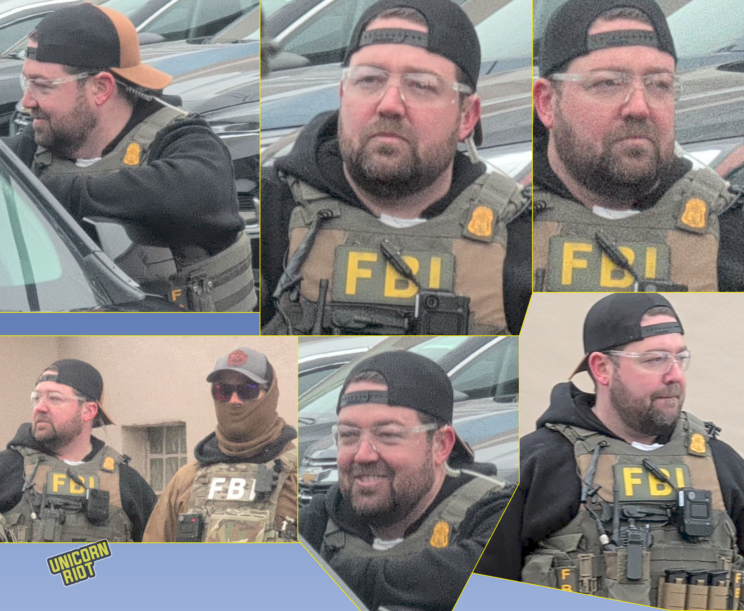
McRee: Well, [there were differences in] the kind of facial expressions that agents had like, you could tell that there were some agents that maybe were a little bit hesitant to be involved in this operation. But there were other agents that you could just tell were very happy to be doing this work.
Maki: Yeah, I believe I got some shots where there are agents smiling and laughing. I don’t know about what…
UR: How did you feel about the amount of community mobilization and how quickly it happened in the morning, how how did that strike you?
Maki: Well, I didn’t know what to expect because I guess you could say this literally is my first rodeo, because I’ve honestly never had to deal with this problem before. … I was very impressed with how many people came, how quickly, and a number of media outlets have even described the number as hundreds, which I’m a little bit surprised by, because usually they kind of minimize the numbers.
UR: How many people do you think it was from your vantage points?
Maki: It’s hard to say because there were many separate locations that people were at.
McRee: And it grew with time as well. Significantly. When we first arrived there were maybe 40 or 50 [people where we were].
Maki: I would say then that it definitely increased like an order of magnitude or an order of magnitude and a half. It seemed like there were like 4 to 6 times more people there at the end than when we had just arrived.
UR: Okay. So that would probably be some hundreds then?
McRee: It was definitely in the hundreds. Like maybe in my estimation, this is just a guess, is maybe 250 to maybe 350…
UR: So it sort of built up pretty quickly. And so do you feel like the fact that the feds could tell more people were showing up was kind of like they were feeling more pressure to leave?
Maki: Yeah… I think that the response that came and how it came so quickly, I got the impression that at some point [agents] made a decision that, “We need to get the fuck out quick.” And that’s why we suddenly saw all these escalatory tactics in a very short window. And it succeeded in getting them out. I feel like if they had waited maybe 15 to 30 more minutes, there might be too many people around for them to get out as easily. So in that sense, I think the response was a success, even though it didn’t stop [the raid].
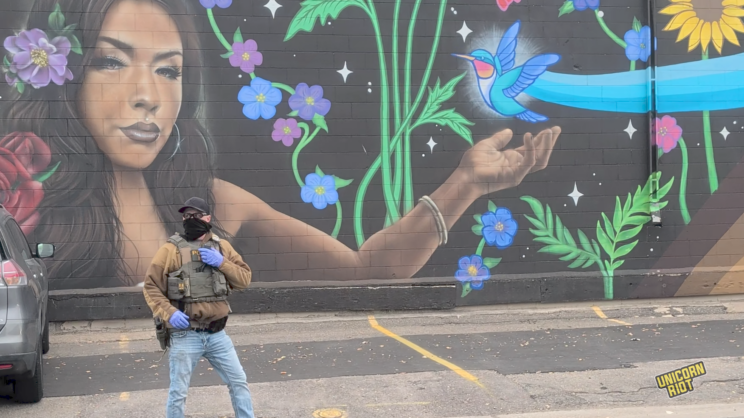
McRee: And I would say that there was clearly a split among the overall attendance, to be honest. Like there were older people who were more clearly more traditional, like DFL [Democratic-Farmer-Labor Party] liberal types.
Maki: Yeah. But there was also the 50501 people.
McRee: Then on the other hand, the majority of the people, of the response, that showed up seemed to be people that had been previously involved with either socialist politics or on the ground activism, in particular immigrants’ rights groups. Like I recognized people from DSA [Democratic Socialists of America], and they understood ahead of time… that there was a high likelihood of escalation. Hence a lot of the people who were clearly not just, like, liberals, were prepared with with gas masks or masks of some type, N95s, water, people that knew how to deal with being pepper sprayed or dealing with other forms of chemical weapons.
Maki: Yeah. Like when, when we got pepper sprayed, Matt and I got separated because we couldn’t see. Neither of us could see. Right?
McRee: Yeah, I couldn’t either. Very hard.
Maki: Like, I couldn’t see for about five minutes.
McRee: I couldn’t breathe.
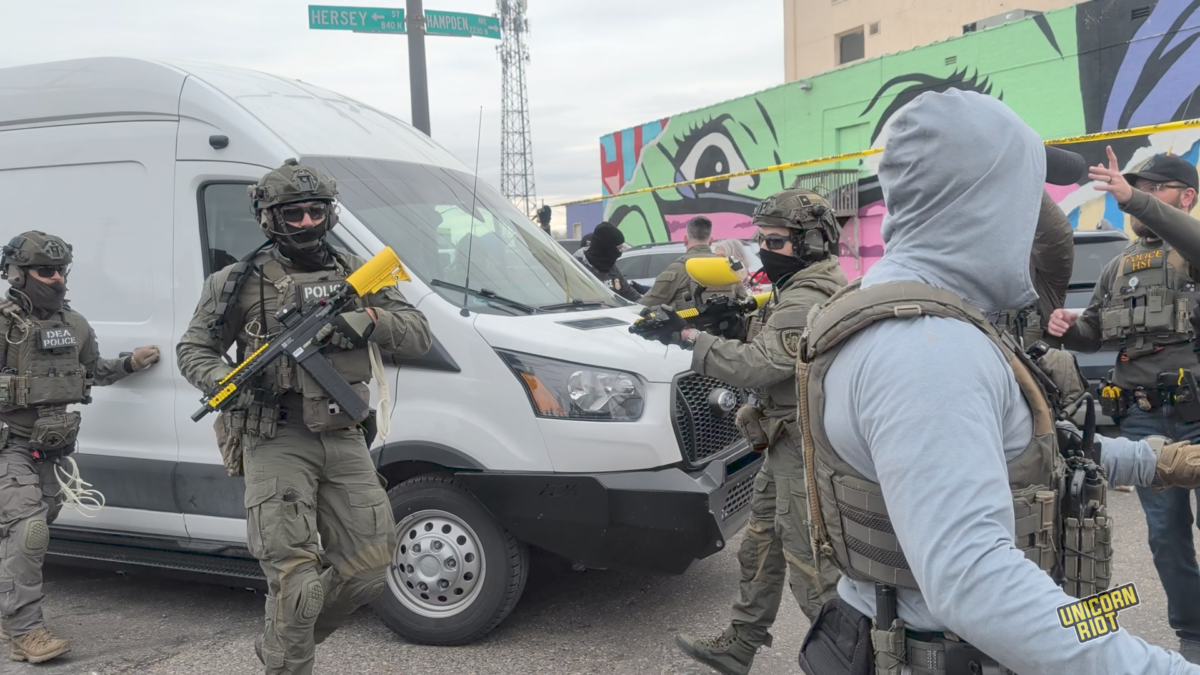
Maki: I just stood in place where I was. I happened to be kind of in the middle of the street, although there wasn’t any traffic moving through yet.
I just stood there because I thought that was the best thing to do. But then somebody, I think someone in some kind of support role came and found me in the middle of the street and asked me if I was okay, and I just said, “Yeah, I just can’t see.” And they took my arm and guided me to the corner of the street, which was a safer spot. And then they gave me a bottle of water and then helped me pour water in my eyes to get some of the pepper spray off. And then finally, I could open my eyes and see, even though it was still hurting a lot. And then eventually I found Matt again.
McRee: Yeah, during the time when we were separated, I had to walk… back away from the commotion because even though I was wearing a face covering, I have asthma, and I inhaled some of the pepper spray, and it was giving me an asthma attack, and I kind of had to get away. But a woman, thankfully noticed that I was having issues being able to see. And she, even though she said outright that she didn’t really know what to do, she had a bottle of water and she poured it over my face…
UR: So were you hit with pepper balls or was it like a stream from hand sprayer?
McRee: I felt the noxious fumes [from pepper balls], but I didn’t get hit.
Maki: Yeah, I got the noxious fumes a little bit, but I don’t think we were impacted by pepper balls. But I definitely did get, like, the actual pepper spray substance in my face. And it’s still on my eyeglasses.
McRee: I know when we were watching the local news today, I saw from that same incident where we were pepper sprayed, we noticed that they pushed an old woman back, and she looked like she was probably 75 or 80 and then they pepper sprayed her as well, and along with several other people. And it was pretty depraved, honestly, because it’s like this woman looked pretty frail. And they seemed to have no regard for her at all, for her safety at all.
UR: Could you tell how many people were impacted enough that they couldn’t really see, could you tell how many people got a pretty severe dose of that?
Maki: I would say between one and two dozen.
McRee: …I would say that [it was] maybe a few more than that from my estimation. But then again it’s hard to know….
Maki: …Although I will say it’s clear that there were several different incidents of this and we weren’t at all of them.
Once they broke through the chain [of demonstrators], they started shutting down the perimeter, and that’s when we started walking south. And that’s when, as the individual agents were getting into their unmarked cars to leave, all these spontaneous confrontations were happening. The protesters would walk up on each of the cars, and, like, taunt them to leave.
And eventually we ended up back at the south corner and there was this final car where so many people had surrounded it that it couldn’t really freely move. So it was kind of in a holding pattern for a few minutes… Then after this holding pattern, eventually agents start pushing some people away and then when it’s not as successful as I think they wanted it to be, that’s when they broke out the pepper spray and we got it in the face, along with probably at least a dozen other people…
McRee: …There were a lot of people that were coughing at the time, especially as a result of pepper balls, so there were probably quite a few people who were exposed in some capacity… Once we got pepper sprayed the convoy definitely was able to speed up quite a bit and it was quite noticeable.
Maki: People really unleashed the profanities and stuff when the convoy broke through [the human chain] and they were just kind of steadily going through. People are pounding on vans. Some people even put their hands on the glass of the vans as they were passing by, as if to say “We love you. It’s going to be okay.”
McRee: Also, notably, there was a woman who was knocked down onto the ground and as the cars were leaving after the human chain was broken they came extremely close to intentionally hitting [her]. It looked to me like they were going to run her over. Or at least they were trying to give the impression that they would be willing to. They didn’t, but they came very, very close to running a woman over from what I saw.
UR: Is there anything that jumps out to you in terms of protest tactics, like anything that you saw that was particularly effective that protesters were doing?
Maki: There was very good chant that the organizers got everyone involved with. The chant was… “No abra la puerta,” which is “don’t open the door,” “No conteste ninguna pregunta,” – Don’t answer any questions, “No firme nada” – Don’t sign anything. And so it kind of alternated with the more antagonistic chants,
McRee: “Chinga la migra.” [Fuck the migration police.]
Maki: But we spent a good amount of time just chanting that in case anyone could hear it, so that hopefully they would not sign something that seals their deportation.
UR: Regarding how the feds were operating as groups, are there any other patterns that you saw, in terms of their squads? A lot of them are wearing tactical radio headsets [in video clips]. Is there any other stuff that you noticed in terms of how they move around or try to flank for each other, or any of that kind of tactical stuff?
McRee: Notably it seemed for a while we were not actually sure that actual ICE agents were on the perimeter because we didn’t see any.
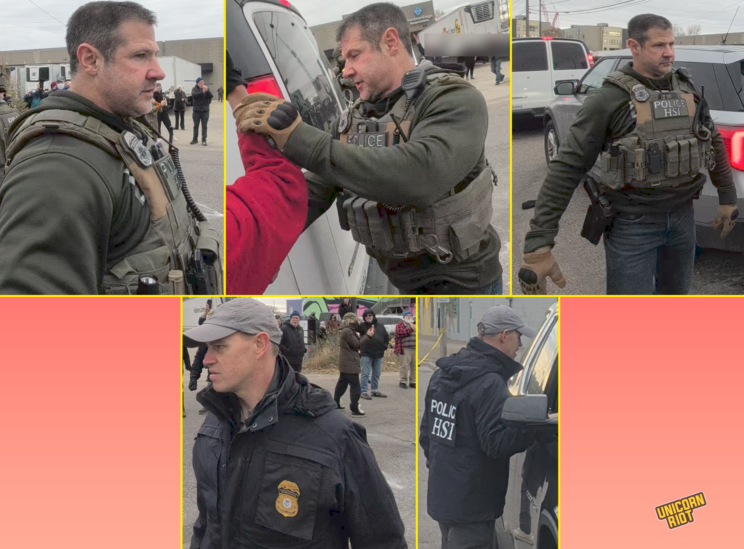
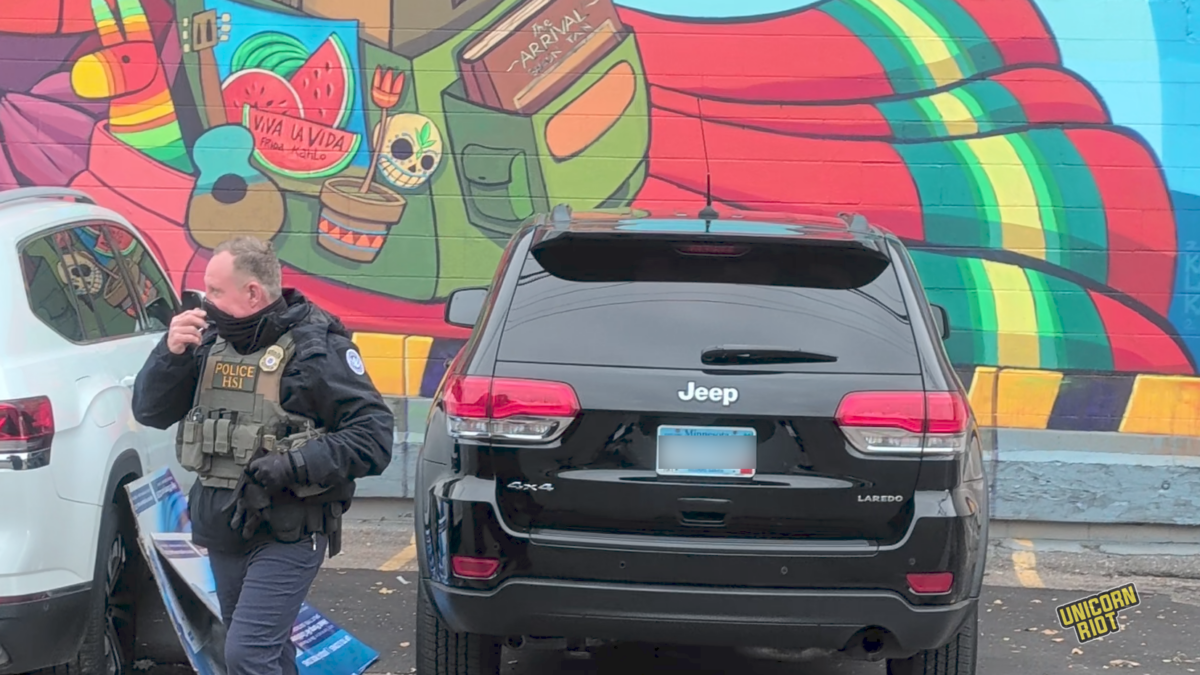
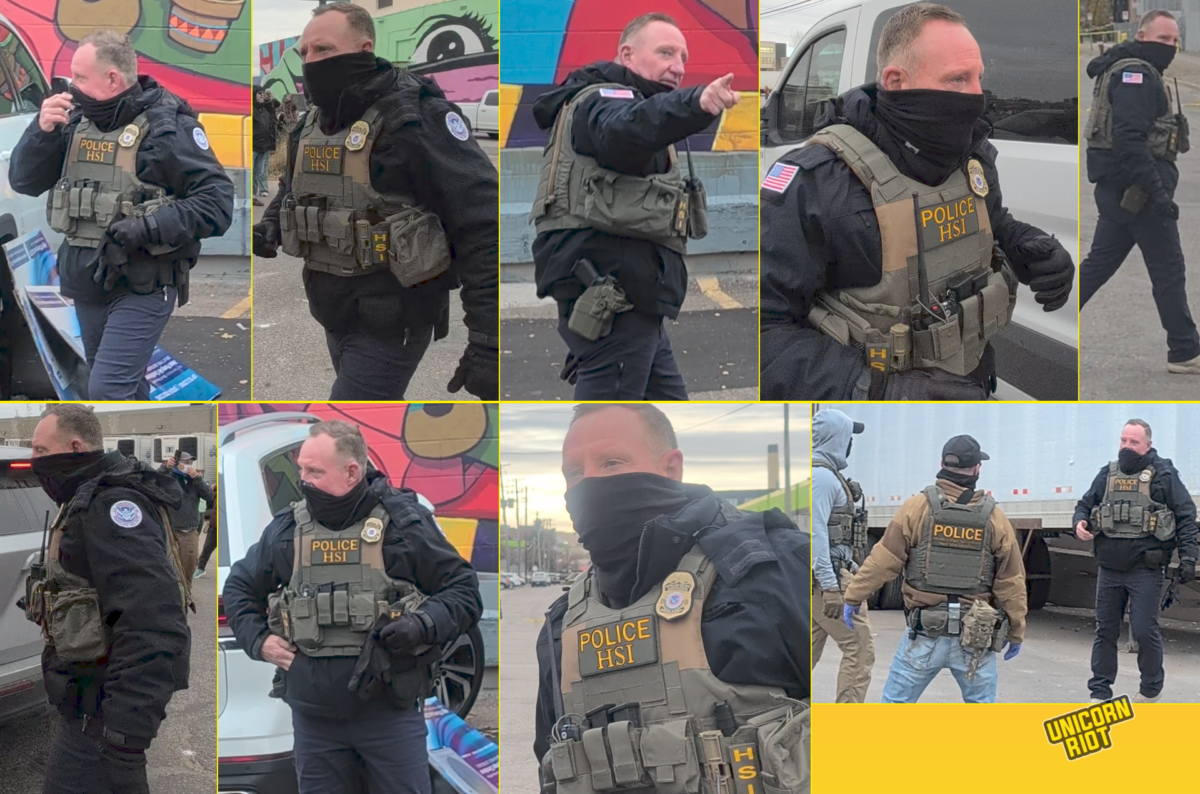
Maki: …All that we had seen, until we later saw photos that had ICE on them, was DHS, HSI, FBI and DEA.
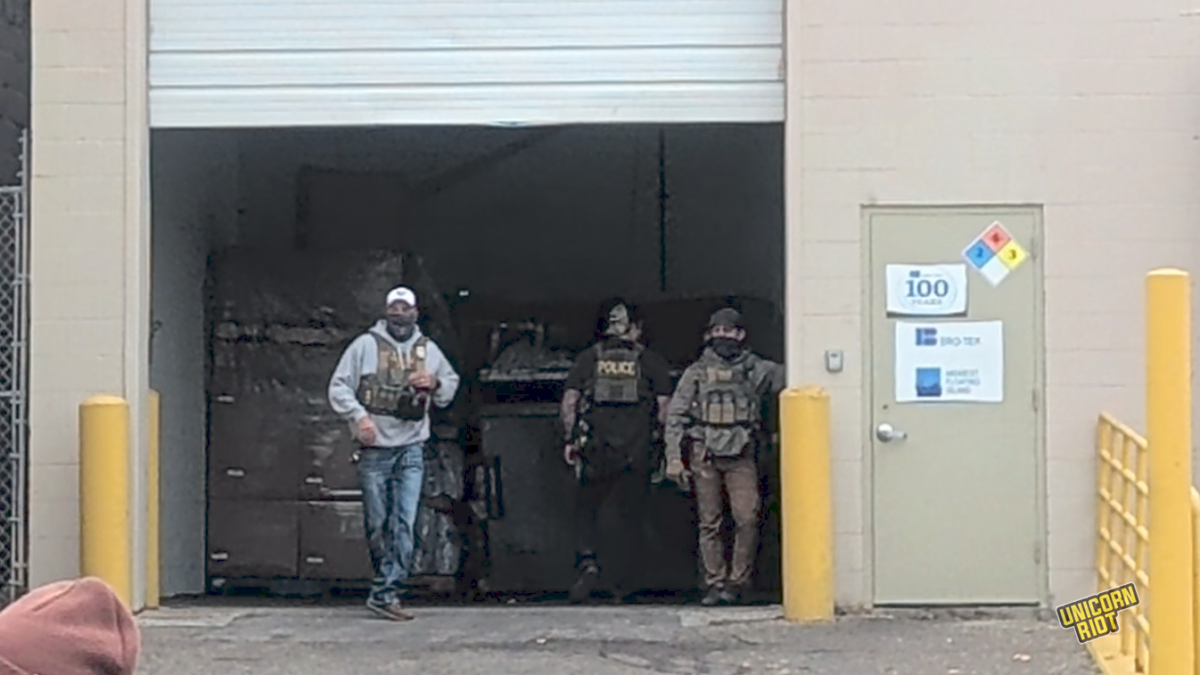
McRee: And it turned out that [all of the ICE agents] were all clearly in the building itself, dealing with the detaining of [those] who work at Bro-Tex.
Maki: Because it’s an industrial facility, it has loading docks for semi trucks and their trailers, and I think the reason why very few people saw the detainees being transferred into vans is because they backed up the vans to the loading docks.
UR: Okay. That’s definitely helpful to know for sure.
McRee: HSI were visible outside of the building itself. But… most of what we saw [was] FBI, but also DEA agents, which were especially armed. In particular, there was one DEA agent… He had a tactical helmet, substantial body armor. His face was covered, of course… Most of the other agents were not particularly equipped in the same way, but they were kind of just there as seemingly reinforcement or maybe maybe logistics.
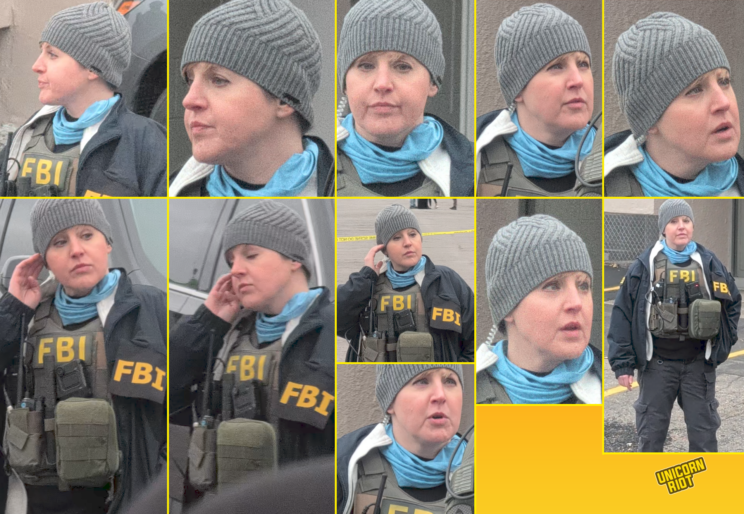
Maki: There were a few FBI agents, and I’m not sure if this was because of sexist reasons, but they happened to be female, who honestly kind of seemed like they were there just chaperoning. They seemed sort of aloof, and sort of staring off into space, emotionless.
…I guess, a bit of comic relief… in order to make their escape, one of their vans had to drive into and slide past one of their unmarked vehicles. And so it got some [cosmetic damage]. There was some junk on the street afterwards.
UR? They sort of sideswiped each other?
Maki: Yeah, and it got some people laughing.
UR: Is there anything in particular that you would like to add or that you want people to know about this?
Maki: Get connected to your neighbors.
McRee: I think that even though we went into this not thinking that we’re going to be able to stop them, at the very least, we could slow them down and make their life and make their operations more difficult.
Maki: And be a deterrent.
McRee: And I think they seem to get the picture. Whether it makes a difference or not, I have no idea. But I think it could make a difference in how these agencies decide to do these operations going forward.
And it’s pretty clear that people were more organized than I maybe expected, including people who knew how to deal with injuries caused by chemical weapons. And I think people were prepared to be able to help.
Maki: Over the past few months, I’ve seen a huge uptick in these kind of immigration defense trainings being offered by both things like MIRAC and another organization called Monarca in Minnesota. And I think that’s part of what enabled such a robust response.
There’s a lot of people who have done some training, and so they have an idea of what to do, especially how to direct people who don’t know what they’re doing. And maybe are scared. And so I’d encourage people to go to one, so that they know how they can help people.
McRee: From a more political angle, there was clearly significant involvement from both members of DSA and probably PSL [Party for Socialism and Liberation] and probably Freedom Road Socialist Organization and also anarchists. The fact that you had a decent number of these people who were quite experienced in being involved into protests, they knew what to do, … and were able to keep people who were less experienced in protesting safer.
Maki: They really displayed an understanding of the risk gradient well, and allowing people to sort themselves along the risk gradient.
McRee: I think that people’s level of militancy in the Trump 2.0 era has dramatically increased. As a result of that militancy you’re seeing even some more traditional liberals — some who may not have ever gone to a protest until very recently. They’re getting more and more experienced with protest. It seems like in each city where ICE raids happen, people are learning lessons from the prior city. I think that because of all this militancy that’s arisen, people are figuring out more how to organize themselves, learning safety, learning how to be more effective tactically.
Photo stills from videos provided by Anthony Maki. Compositions by Dan Feidt.
2025-2026 Unicorn Riot Coverage of the DHS / ICE Crackdown Campaign in Minnesota:
Click the image to see all UR coverage of federal law enforcement operations in MN.
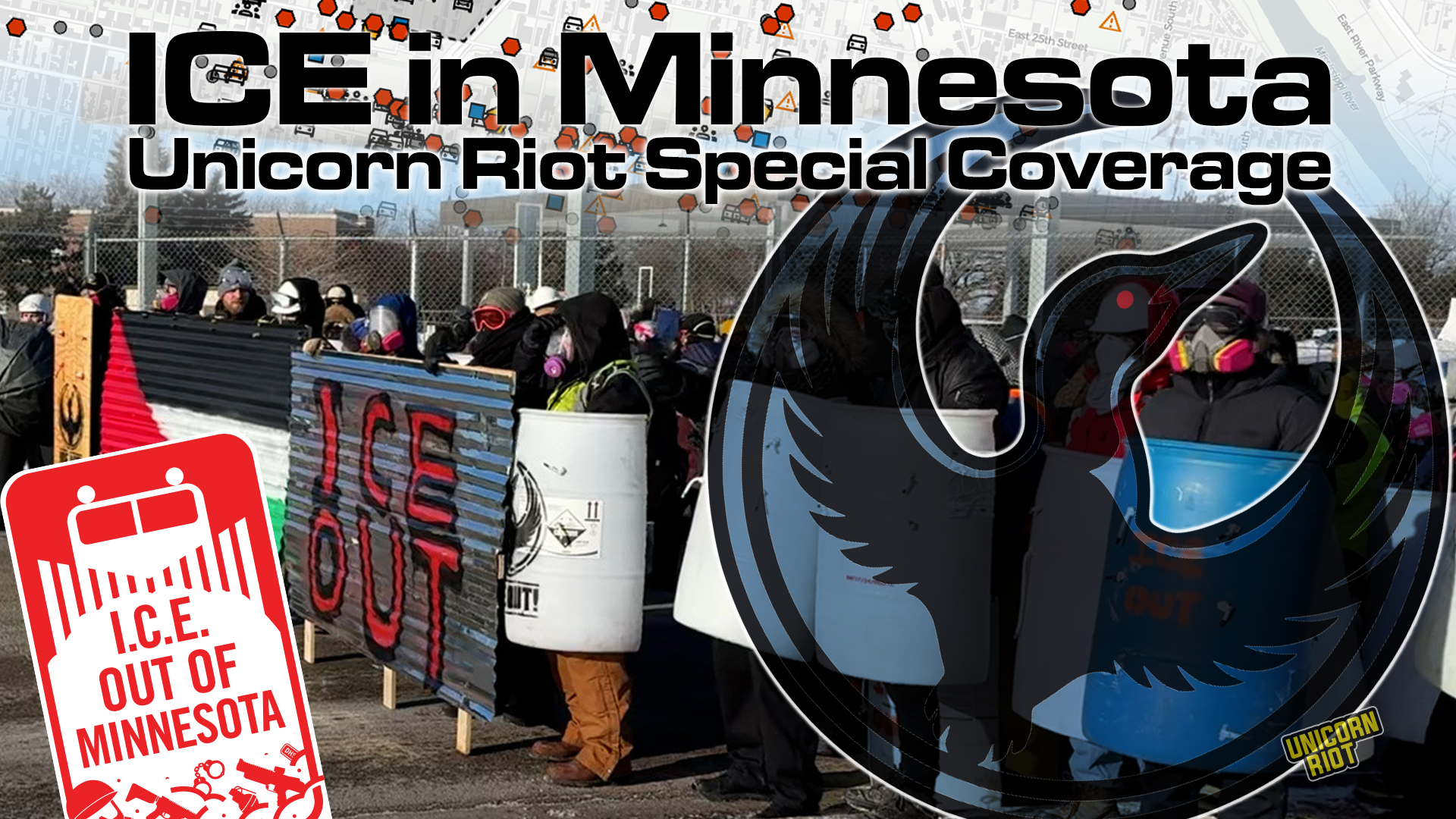
Watch Unicorn Riot’s videos from ICE in Minneapolis in playlist below.
Please consider a tax-deductible donation to help sustain our horizontally-organized, non-profit media organization:

Follow us on X (aka Twitter), Facebook, YouTube, Vimeo, Instagram, Mastodon, Threads, BlueSky and Patreon.