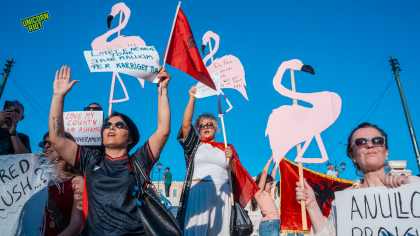
Government Says Terabytes of Signal Chats are Central to the Case Against Minnesota 15
Minneapolis, MN — On the verge of America’s most violent deportation campaign that left two Americans dead, 15 federally indicted activists were among the growing ranks inside Signal chats and rapid response networks where volunteers monitored how federal immigration agents took over Minnesota.
Fourteen of the 15 pleaded not guilty to federal conspiracy charges on July 1. A month earlier, the Justice Department rolled out indictments alleging they were members of Direct Action Minnesota and the Black Cat Worker’s Collective and were conspiring to impede federal agents from carrying out the largest immigration campaign in this country’s history. Read the searchable indictment here.
Federal Indictment on Minnesota 15 Peddles DOJ ‘Antifa’ Conspiracy Angle After Raids
The case against the Minnesota 15 is not just accusations of brake-checking on a federal vehicle, notes knocked out of an agent’s hand or allegedly tailing an agent from the Whipple Federal Building across the Wisconsin border.
It’s about conversations, thousands of pages of it, harvested from encrypted group chats and loaded into an Everlaw database for prosecutors to build conspiracy charges against Trump’s political opponents.
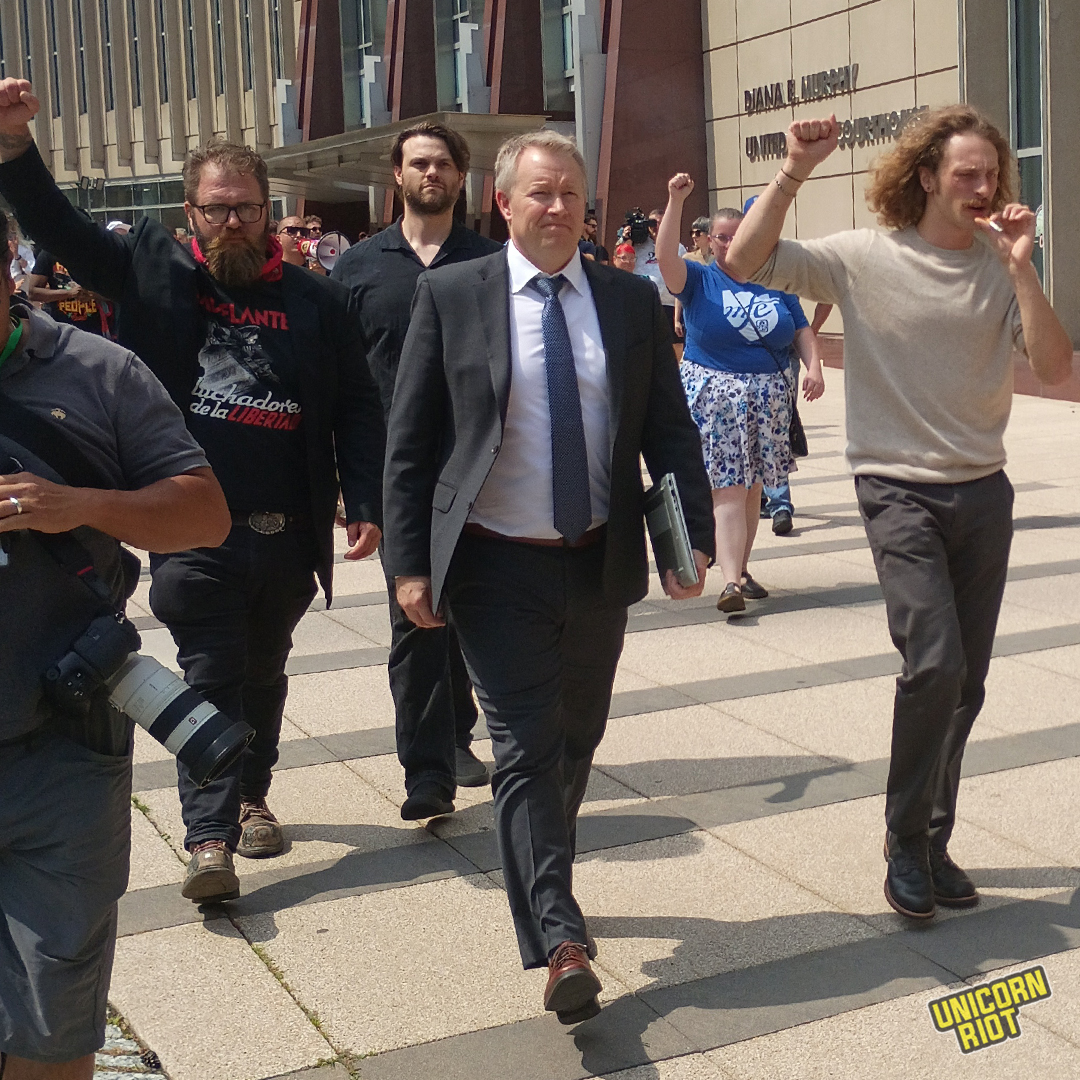
The Justice Department is sitting on 47,000 pages of documents and 960 video and audio files pulled from body cameras, dash cameras and drones. The July 1 arraignment court hearing was really about the nearly 16 terabytes of Signal data. (A terabyte is approximately 500 hours of HD video or 6.5 million text document pages.)
Prosecutors asked U.S. District Judge David Schultz for an extra three months before turning over chat logs to lawyers representing the protesters.
“We’re currently trying to copy two or three terabytes onto a hard drive, and that takes several days just to load to the drive,” U.S. Attorney Kristian Weir said. “The process alone of adding it to a drive takes an enormous amount of time.”
Defense attorney Surya Saxena, a former federal prosecutor, was not buying their argument.
“We understand that it takes time to copy the discovery,” said Saxena. “What we don’t understand is why the government is asking for 90 days to copy discovery.” Weir said providing evidence to the defense can become time-consuming.
“We can’t simply move our database to defense, we’d have to put it on hard drives. We have to make it available over Dropbox links,” said Weir. “We have to provide it in some hard copy, because we have to make it available for defense.”
The former prosecutor now representing defendant Nat Kim has some recommendations.
“A load file can be created, certainly a lot of data, but a load file can be created. It’s not an insurmountable task,” said Saxena. “That’s why we ask federal prosecutors to think about discovery before they charge a case.”
Schultz rejected the government’s request for a 90-day stay on turning over the Signal chat evidence, instead ordering prosecutors and defense attorneys to hash out their own deadlines. Schultz denied a separate motion for a protective order over personal information, giving both sides until July 10 to meet and confer and until July 17 to either agree on terms or submit competing proposals for his review.
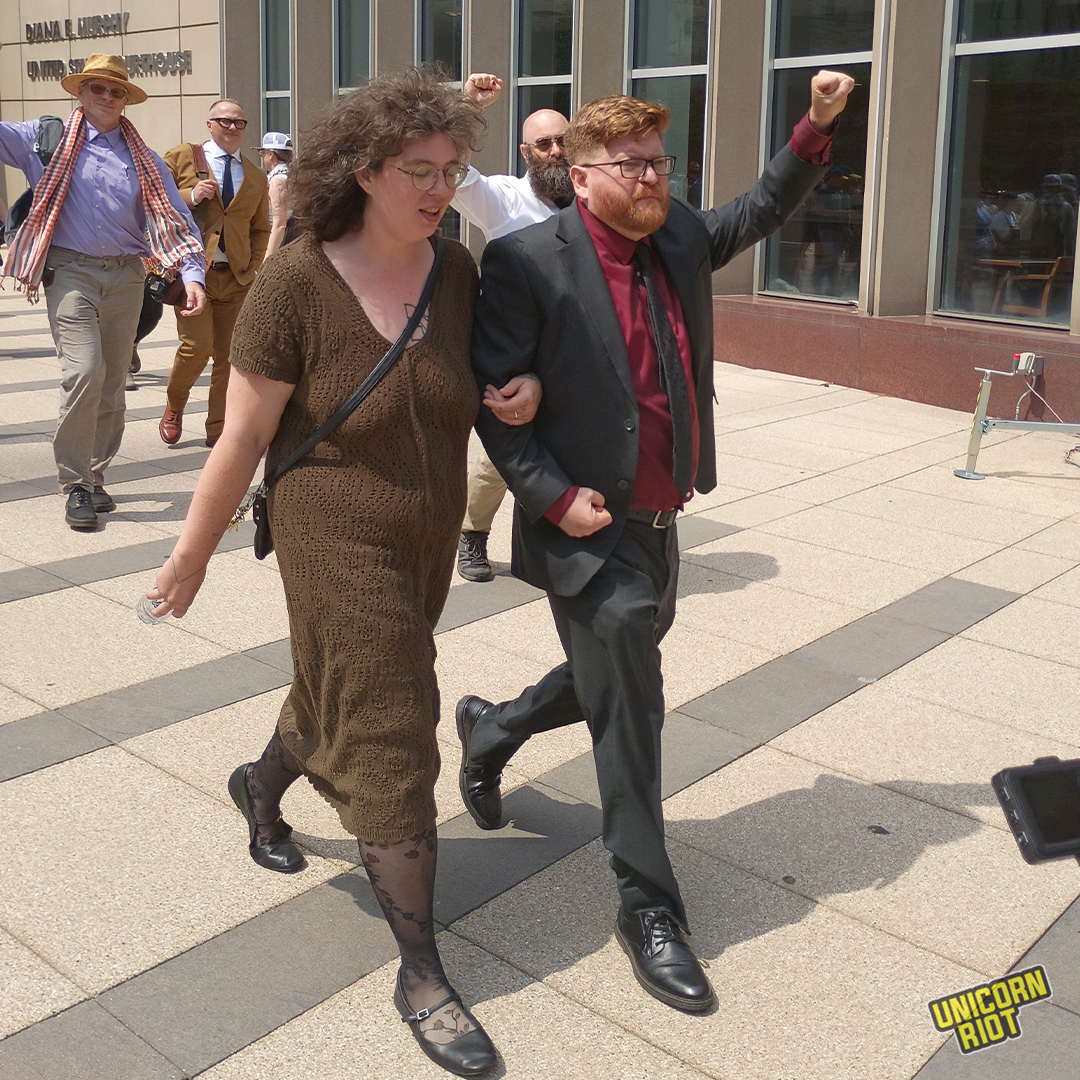
Charged in Anti-ICE Conspiracy, Two Minnesota Defendants Speak Out
Law enforcement turned over chat logs to prosecutors “around the end of May,” U.S. Attorney Sommer Honeycutt told the court, five months after the alleged conspiracy is said to have begun, and long after the wholesale nature of the collection became apparent.
Wholesale, is the crux of it. Honeycutt admitted that prosecutors swept up chats from “40, 50, 100 people.“
“There is a large amount of chats that are not specific to these defendants,” said Honeycutt. “They may be getting some signal chats that may or may not have these defendants.”
Judge Schultz pressed for clarity.
“So Signal chats that the government has, for lack of a better word, intercepted that may or may not involve any of the named defendants,” Schulz asked.
The admission that the government swept up entire group chats numbering in the dozens or hundreds, most of whom face no charges became the pivot of the hearing. Schultz wanted to know why, if defendants were already in those conversations, the government also wanted a protective order restricting what they could see or possess.
How, exactly, agents got inside encrypted Signal groups that by design aren’t supposed to leak beyond their participants remains the case’s open wound. Signal’s end-to-end encryption protects messages in transit, and the app retains almost no metadata to seize even under a compulsory process. So somebody, somewhere, was already on the inside, as a participant, an informant, or the owner of a compromised device, before any of this could end up formatted as PDFs.
One of the 15 defendants, Kyle Wagner, has been in federal custody in Michigan since February and won’t appear in court hearings until he’s transferred to Minnesota. He was likely the first of the defendants to have his phone seized. It’s unknown what Signal chat groups Wagner was in but two are noted in the indictment along with Signal messages and phone calls that are listed as overt acts and part of the conspiracy.
Judge Schultz appeared concerned about what evidence the government obtained with or without a warrant.
“I’m inferring from everything I’ve heard that not every bit of evidence was necessarily gathered pursuant to warrant,” said Schultz. “What I want to make sure doesn’t happen is that something that is subsequently seized pursuant to warrant, then that becomes the narrative… if in fact it was seized earlier.”
Defense attorney Jordan Kushner speculated in how prosecutors obtained conversations over Signal.
“We don’t know for certain how they got all the Signal chats,” Kushner said.
“The suspicion is they had some undercover, or informants or combination, and that that’s how they’re able to access all this, but yeah, this is something we need discovery to find this out.”
Jordan Kushner, defense attorney.
Outside, before the hearing, that suspicion of infiltration fed a broader message from defendants and supporters, that the prosecution is itself a tacit campaign to break a movement that ended Operation Metro Surge.
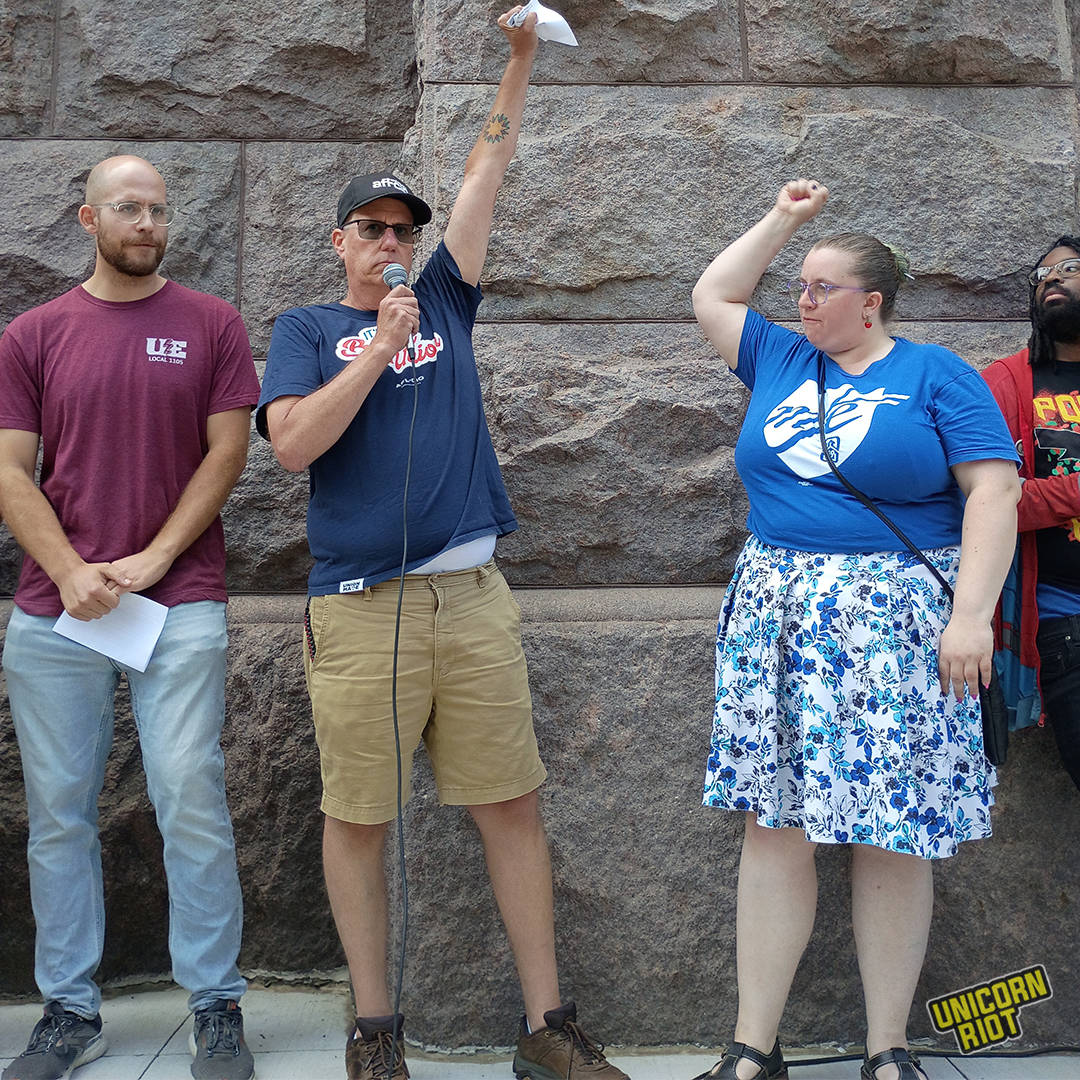
“I heard reports about ICE attempting to infiltrate patrols, pretending to be concerned citizens, wearing a reflective vest and a whistle,” defendant and Minneapolis Special education teacher Treasure Thoreson said. “They reportedly handed out flyers to fake food shelves to entrap families looking for support.”
Todd Dahlstrom from the AFL-CIO said that the White House is leveraging the Justice Department against an organized resistance movement of union members and left-wing activists alike.
“This past winter the Trump administration tried to break Minnesota solidarity. They failed,” said Dahlstrom. “Now they’re trying to break us in the courtroom. They will fail again.“
As of now, the next court hearing scheduled for 14 of ‘the Minnesota 15’ is a status conference on August 7 at 10 a.m. in Courtroom 12W in Minneapolis’ federal courthouse in front of Magistrate Judge David Schultz.
Cover image contributed by Clint Combs.
2025-2026 Unicorn Riot Coverage of the DHS / ICE Crackdown Campaign in Minnesota:
Click the image to see all UR coverage of federal law enforcement operations in MN.

Watch Unicorn Riot’s videos from ICE in Minnesota in playlist below.
Follow us on X (aka Twitter), Facebook, YouTube, Vimeo, Instagram, Mastodon, Threads, BlueSky and Patreon.
Please consider a tax-deductible donation to help sustain our horizontally-organized, non-profit media organization: