Hands Off Prosfygika: Eviction Threat Sparks Hunger Strike and Mass Mobilization
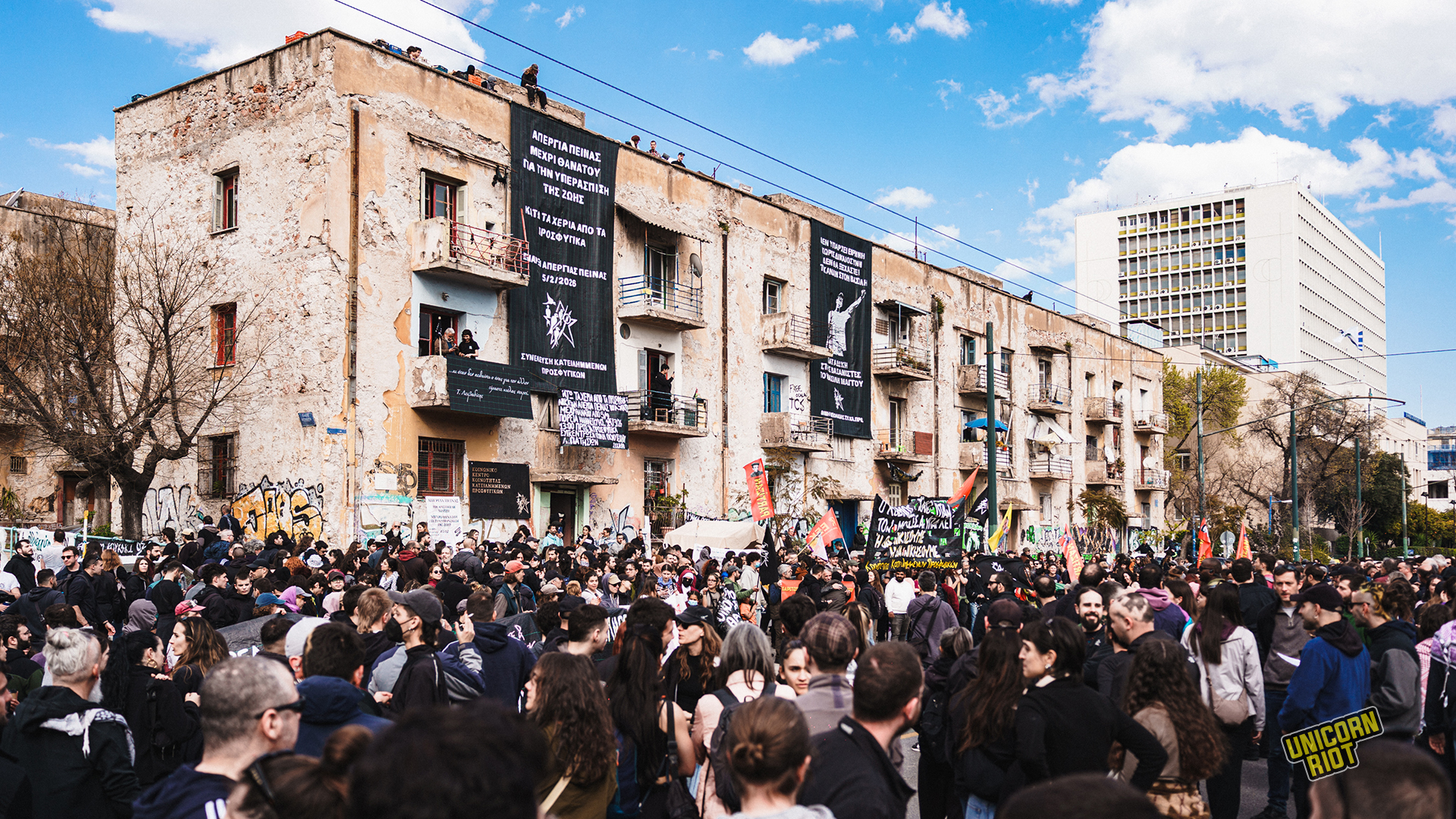
Athens, Greece — On March 14, more than 4,000 people joined a march organized by the Community of Squatted Prosfygika, a historic occupation in Athens now facing an eviction threat due to a regional “regeneration and development” plan. The protest unfolded amid growing mobilization, as community member Aristotelis Chantzis continues a hunger strike aimed at forcing authorities to take a clear position on the future of the area and its residents.
Between late 2025 and early 2026, several local media outlets reported that the Attica regional government had approved a renovation plan for the Prosfygika housing complex — a project that, according to the roughly 400 residents, would result in mass eviction.
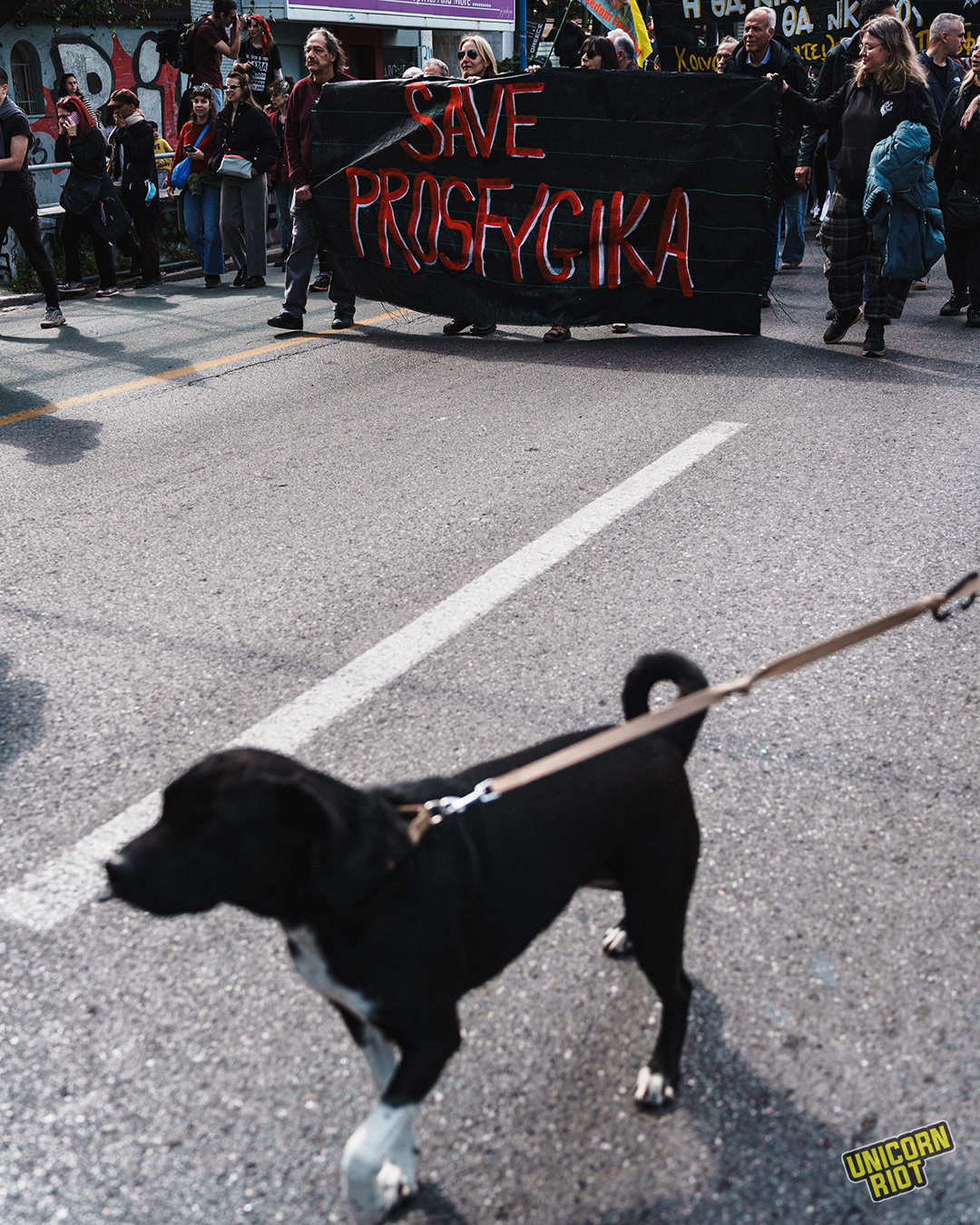
In response to the announcement, thousands of people filled Alexandras Avenue — one of the main arteries in central Athens — on the afternoon of Saturday, March 14. The march, led by a black banner bearing the words “Save Prosfygika” painted in red, drew far more than collectives already involved in housing struggles. Rather, it became a large gathering that brought together people from across the social spectrum: families with children, students, precarious workers, migrants, and pensioners.
According to the latest available data, households in Greece spend between 36% and 40% of their disposable income on housing costs, compared to a European average of around 19%. This figure is compounded by the overall cost of living, which — while not necessarily higher than elsewhere in Europe — is paired with significantly lower wages and weakened purchasing power, with Greece ranking second-to-last in the European Union in 2024.
It is therefore unsurprising that the call to mobilize in defense of Prosfygika received such a broad response. In a country shaped by years of austerity and economic policies centered on privatization and the attraction of foreign investment, the public welfare system has been steadily hollowed out.
Within this landscape, Prosfygika stands as a model of self-organized mutual aid, offering concrete support to a population that has become increasingly precarious and economically strained.
A Targeted Attack
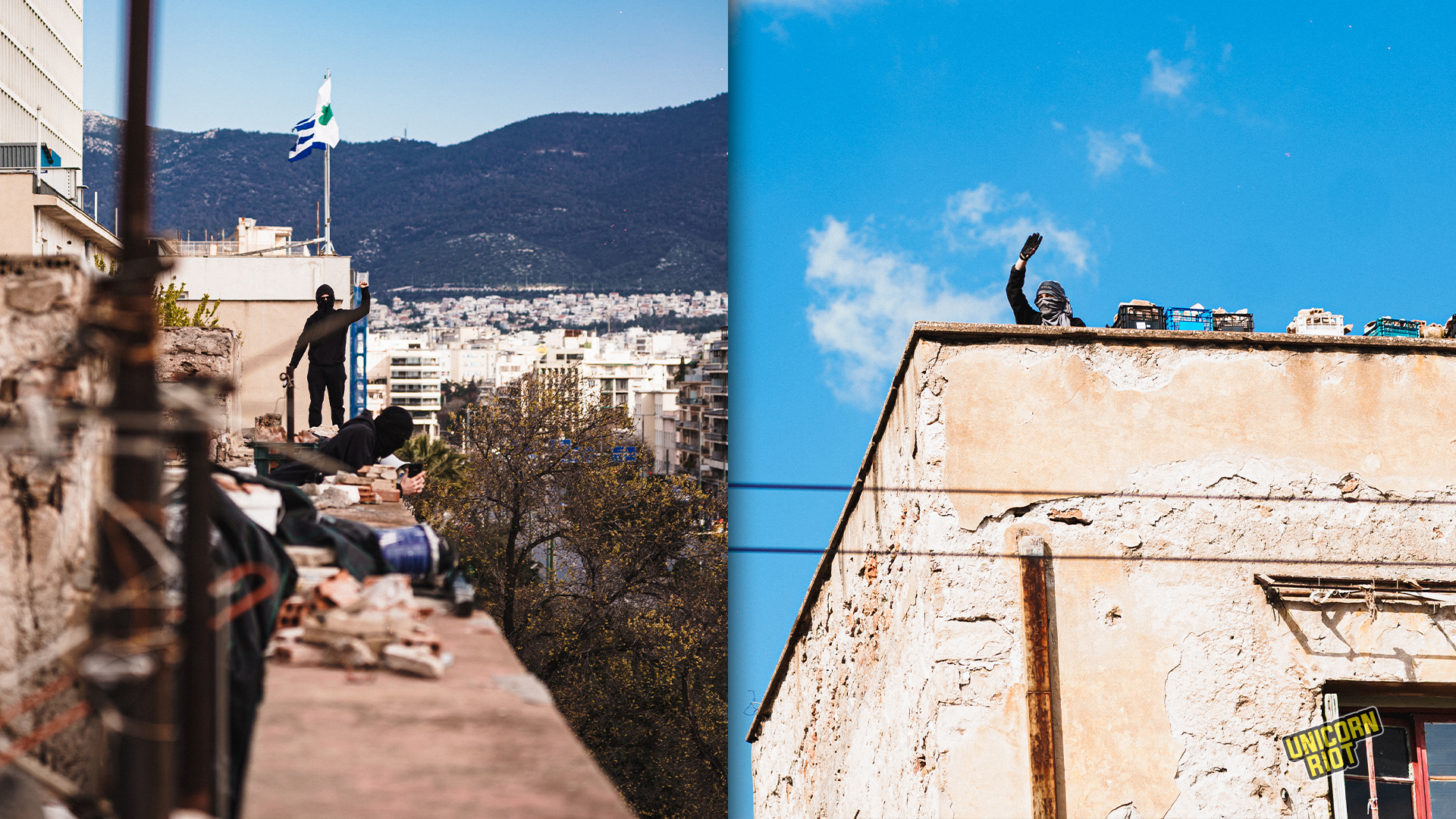
Prosfygika has never been a politically neutral place. Its 228 apartments — arranged in eight rows of buildings stretching along Alexandras Avenue — hold a collective memory that, over time, has shaped the community now sustaining the occupation.
In modern Greek, “Prosfygika” literally means “refugee settlement.” The complex was built in the early 20th century as a public housing project to accommodate Greek refugees from Asia Minor fleeing violence and mass expulsions following the Greco-Turkish War of 1919-1922. Two decades later, during the December 1944 uprising — when left-wing militias confronted the national army and British forces — Prosfygika became a strategic stronghold for resistance fighters.
Beginning in 2010, after years of gradual neglect and in response to the economic crisis, residents of Prosfygika launched a process of internal reorganization aimed at building a fully developed community structure.
“We like to remember that moment through an image,” said Suzon, who has been part of the community for five years. “Everyone placed the keys to their homes on the table in the middle, signaling the end of individual management and the recognition of the collective system that was about to emerge.”
The collectivization process reached its peak in 2012 with the formal establishment of the Community of Squatted Prosfygika (SY.KA.PRO). Today, the eight buildings are home to more than 400 people from 27 different countries. The community operates through a horizontal organizational model that, over the past 16 years, has developed 22 self-organized structures designed to meet material needs not only within the occupation itself, but also in the surrounding neighborhoods.
Prosfygika has faced recurring eviction threats for at least three decades, regardless of which political party was in power. But as Venetia — a member of the squatted community for about three years — explained, the recently approved regional plan “is the most serious of the last few years.”
The project, with an estimated cost of around €15 million, is intended to build public housing units and a hostel for relatives of patients receiving treatment at the adjacent Agios Savvas oncology hospital. According to the official timeline, the tender process is expected to conclude within the first quarter of the year, while construction is scheduled to be completed by 2028.
“The so-called regeneration plan actually means an attack on the whole neighborhood and community,” Venetia said, pointing to what many residents describe as the plan’s underlying contradiction.
For years, Prosfygika has already functioned as an informal model of social housing, providing shelter to marginalized groups who would otherwise remain locked out of Athens’ housing market. Through a dedicated structure, the occupation also already hosts relatives of patients from the oncology hospital.
This paradox exposes what residents see as the political logic behind the language of “urban regeneration”: the removal of a relevant, highly visible social experiment — one that challenges dominant models of property, consumption, and profit.
‘We Will Either Win or Win’
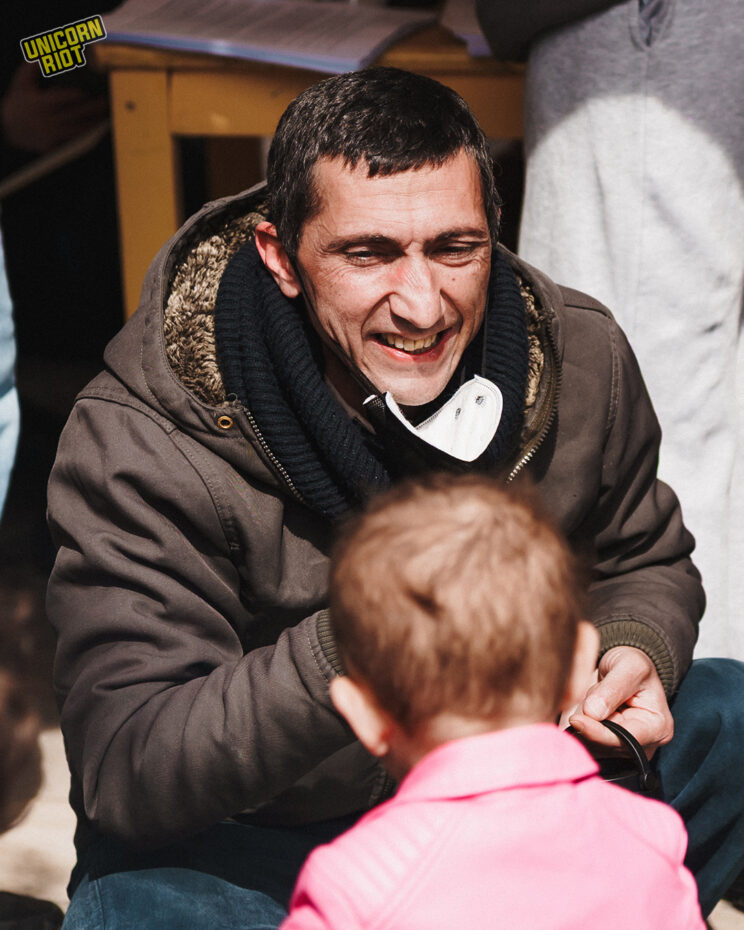
Against this backdrop, Aristotelis Chantzis embarked on a hunger strike, vowing to continue until death if necessary. In a statement released on February 5 — the first day of the strike — he described the decision as the outcome of a collective process, an act of responsibility aimed not only at defending a physical space, but also what that space represents: a social model grounded in self-organization, resistance, and solidarity, standing in opposition to “the world of loneliness, individualization, insecurity, homelessness” produced by the capitalist system.
In this sense, the struggle of the Prosfygika community unfolds within a broader landscape in which gentrification operates as a powerful political tool for reshaping urban life — in Athens as in many other European cities.
In recent years, so-called urban regeneration policies and large-scale real estate investment have transformed entire neighborhoods, driving up the cost of living while gradually pushing out low-income residents. A striking example can be found in Exarcheia — the historic anarchist neighborhood located a short distance from Prosfygika — where aggressive gentrification has profoundly altered the area’s social fabric.
As Aristotelis emphasized during a press conference on February 11, the resistance of the Prosfygika community must therefore be understood within a wider pattern of pressure directed at forms of self-organization that, through their daily practices, expose the limits of the dominant system. Their experience shows that alternative ways of living, organizing, and caring for one another not only exist, but can function effectively and provide tangible benefits to the broader society.
Aristotelis’ hunger strike has now lasted over 50 days, and each week it is accompanied by symbolic short-term hunger strikes carried out by other members and supporters of the community.
The latest medical bulletin released by the collective monitoring his condition reports a rapid deterioration that could lead to severe complications or a fatal outcome, and places direct responsibility on the authorities, who have so far remained completely silent.
For his part, Aristotelis has shown no intention of stopping. “This struggle is against the ruling class that has brought society to its knees,” he said during the February 11 press conference. “They’re killing us. We have to take up this fight so we don’t just die waiting.”
Meanwhile, mobilization across the Prosfygika squatted community continues, with regular weekly events and a second protest march already planned for April 5. The demands put forward by residents remain clear: the immediate cancellation of the regional plan, guarantees that all current residents will be allowed to remain in their homes, and formal recognition of the renovation proposal developed by the community itself.
[Update] April 5 protest coverage:
For more media from Greece, see our Greece archive page.
Follow us on X (aka Twitter), Facebook, YouTube, Vimeo, Instagram, Mastodon, Threads, BlueSky and Patreon.
Please consider a tax-deductible donation to help sustain our horizontally-organized, non-profit media organization: