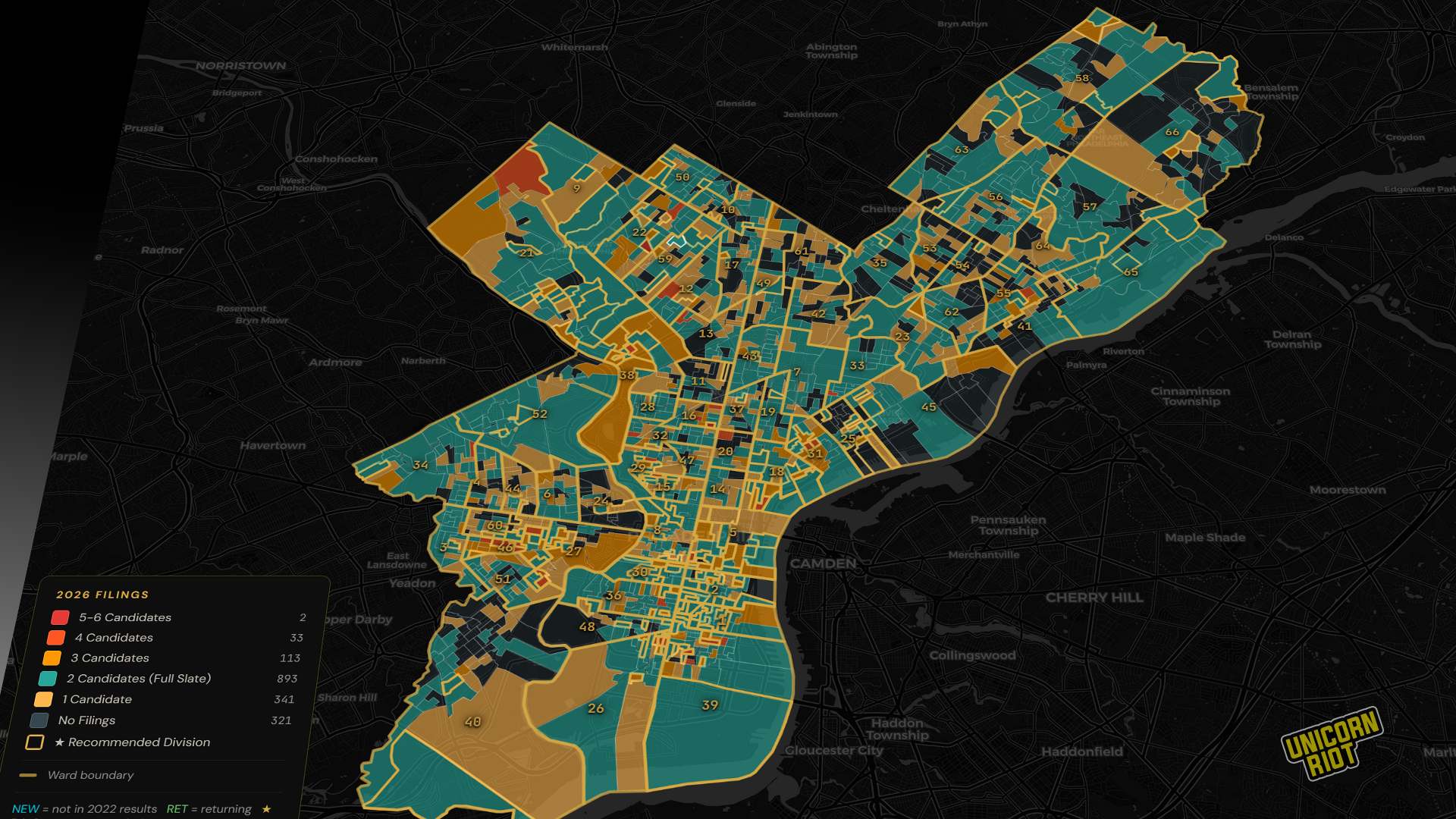
Philadelphia Socialists and Progressives Organize Ward Races in Major Challenge to ‘Old-Fashioned Big-City’ Political Machine
Groups Jump into Philadelphia Democratic Party Ward Races in Third Challenge to Entrenched Local Players, Say Mamdani Win in NYC an “Energizing” Factor
Philadelphia, PA — “Wards that Work” is a campaign around Philadelphia to challenge the city’s establishment in this year’s May primary election. Groups including the Riverwards Area Democrats, Reclaim Philadelphia, the city Democratic Socialists of America (DSA) chapter, and the city Communist Party USA chapter (CPUSA – Debbie Amis Bell Club), have organized more than 100 events to rally residents. They are running more than 350 committee candidates in the May 19 primary under the Democratic Party line.
A political surprise might be coming. As they see it, organizing through the obscure Democratic Party ward system could have a major effect on their neighborhoods and shift the direction of city politics, at a time when many residents are deeply upset as the Trump administration trashes the country, while the city’s Democratic Party sputters along in an apathetic, opaque, entrenched and entitled fashion.
We went on a deep dive into city politics with three people involved, from Philly DSA, CPUSA and the Riverwards Area Democrats (which operates in wards 18, 31, 25 & 5). The year-long campaign is built around local “pods” across the city along with an organizing spine of other working groups, backed up with a training blitz to introduce this system to newcomers.
[ Third Time’s the Charm? Ward Movements and the Political Machine System • Mamdani Inspires More Involvement in Philly • Openings around City, Write-In Candidates Sought • Democratic Party Expelled Ward Committee Members over Support for Working Families Party in 2023 • Contested U.S. House CD3 Race Linked to Wards Campaign ]
June 13 Update: Philadelphia Ward 22 Democratic Organizing Meeting Controversy, Fraud Accusation & Scuffle Outside • Reformers aimed for leadership change in ward • ‘Wards that Work’ Nets 300+ committee people, Claims Helped Six Ward Wins • Rabb Seeks Change in City Political System • 5th Square Touts Successes in Local Ward Races
Every four years in primary season there’s an opening for a shake-up. During the 2018 and 2022 an “Open Wards” movement tangled with the Democratic Party establishment. They aimed to remove endorsement control from the ward leader and move it to the whole committee, along with other reforms. “This whole undertaking started nearly ten years ago,” said Shawn Moss from Philly DSA. “Only recently, like in this cycle and the cycle before that, we’ve really increased our organizing, increased our scalability, our operations to what we have now.”
“It came as a surprise when so many of our candidates won in the last cycle, right? It came as a surprise to ordinary people, the establishment especially,” said Moss, who expects a similar result this time.
“I think the party establishment is pretty complacent right now. I think they are prone to underestimate how disgruntled everyday voters are. It’s not just progressives or leftists that have a lot of concerns about the decisions being made by party leadership right now. there are many centrists, many everyday voters, people who don’t even follow politics very closely right now who are feeling really frustrated and disgruntled with the Democratic Party and looking for change. I see efforts like Wards that Work as an opportunity to channel that frustration into something positive, and while keeping people within the folds of the Democratic Party,” rather than via independents or the Republicans.
Kate Rivera, Riverwards Area Democrats
By door-knocking their neighbors they are finding new local connections and a sense of community, and they hope to change how the wards and thus the entire city function. “Democracy in our neighborhoods, in our city, is only so good insomuch as we are willing to fight for it, to maintain it, to strengthen it,” Moss said.

Wards that Work has a policy platform which includes rent stabilization, a higher minimum wage, a wealth tax on capital gains, and pushing giant nonprofit institutions to make “payments in lieu of taxes” on “billions of dollars of real estate that they own tax-free”, protecting residents from ICE, opposing incinerators and more.
It started “very grassroots, very organically with people from a number of different groups. Very open invite… very open ended. … A way for each group to be able to feel like we had a voice in developing and framing the initiative,” said Kate Rivera from Riverwards Area Democrats. “There’s a good core backbone… If I’m doing organizing in my neighborhood, I know that somebody else is working on a training template that we’ll be able to use to train our folks… leaving lots of room for the people who are leading the organizing in their neighborhoods to take it a direction that will be most effective” in their area, she said.
“I’ve seen so much joy from people who have gotten involved in this project, and have found this to be such an incredible way to connect with their neighbors. … The first step to get on the ballot is to get signatures from your neighbors. People who never canvassed before going out and knocking doors and coming back and saying, wow, I’ve connected with my neighbors on a new level. I had no idea the power of local politics. Now I’m going to make up for lost time.”
Kate Rivera, Riverwards Area Democrats
Moss said, “We are doing something – the progressive left is coalescing together. And we are doing two things that the Democratic Party is not doing…. These are all little schools of democracy, which we are embedded in, something that the Democratic Party does not practice, right? Everything is very top-down.” Their alternative?
“A unified vision, a policy platform. … If I were to ask you or any person living in Philadelphia, what are our Democratic leaders unified around? What is their policy position? People wouldn’t be able to identify that. It’s not identifiable. Right? So we here in the progressive left have put together those platforms and those policy positions that we want to see to make a better Philadelphia.”
Shawn Moss, Philly DSA
The Democratic party assumes that it has elections won and “take voters for granted,” making promises and “cycle after cycle after cycle, never delivers,” Moss said. “All those people would have been replaced” after getting “thoroughly beaten by a felon twice” in a European context, Moss said, “But that doesn’t happen here, right? Because you know, they’re complacent. They believe that these seats, these positions of power are owed to them and they don’t need to leave, right?”
Emma Glazer from CPUSA noted, “We see in open wards that voter turnout is much higher.” After Trump won in 2024, aside from the “‘blame game’ between the Philadelphia Democratic establishment and the Harris campaign,” the organizations that drove turnout “were doing the leg work … which is what we’re trying to bring together.”
Voter turnout in Philly “is very important. Anybody you know nationally would say that, and we’ve seen that the establishment in Philly is not doing everything that can be done to encourage the voter turnout. And that extends to not giving a vision for what is actually needed in our city.”
Opening the wards could encourage turnout, grassroots involvement and “building new leadership. The ward system and the committee person system holds power within certain people and doesn’t bring new community members into the democratic process,” Glazer said.
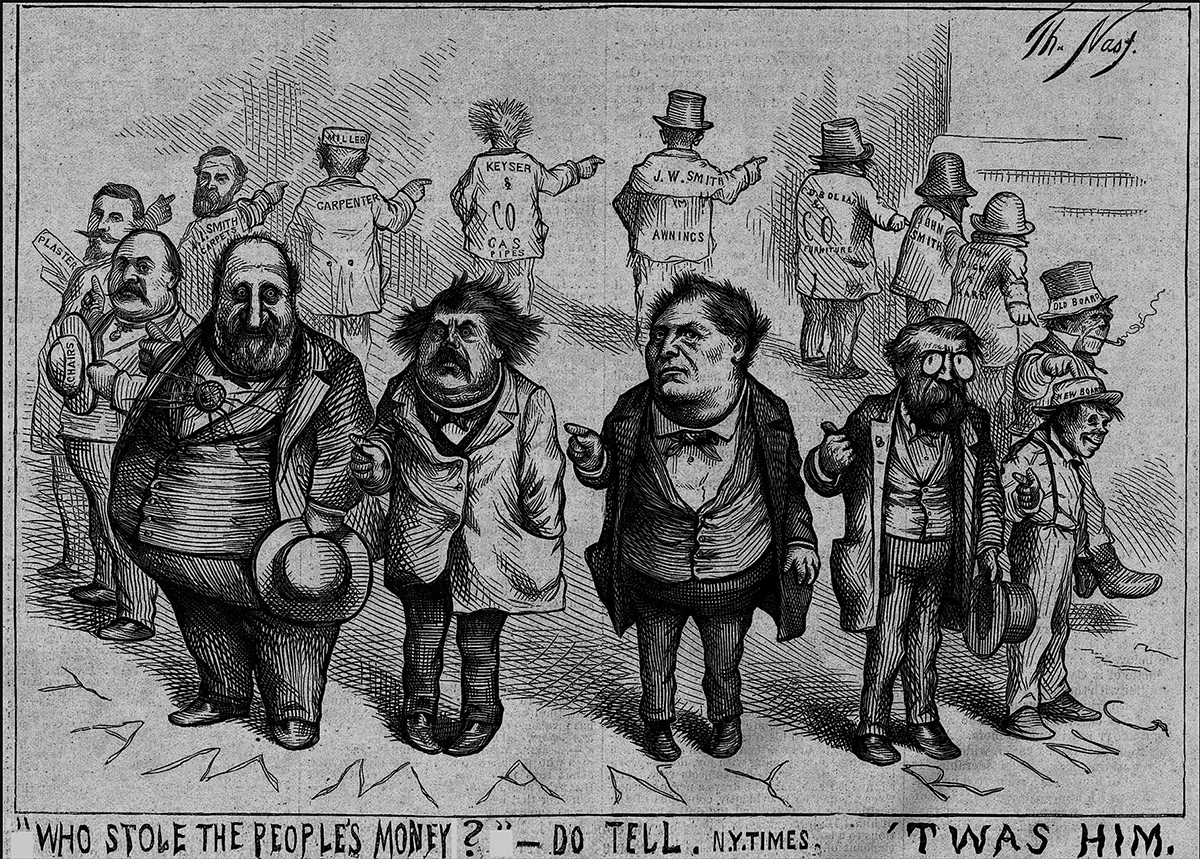
Third Time’s the Charm? Ward Movements and the Political Machine System
“There’s actually an incredible amount of power and a good deal of money as well is flowing through [the ward] system, and it is largely invisible to most people in Philadelphia, including people who consider themselves to be engaged voters, well-informed voters.” said Rivera. “It’s a system that is very top-down and we really want to flip that on its head.”
In Philadelphia the foundation of political parties is at the ward system level. Philly’s dates back to the 1700s, a highly traditional system of transactional politics. Classic “machine politics” like New York’s Tammany Hall was built on a boss & ward heeler system.
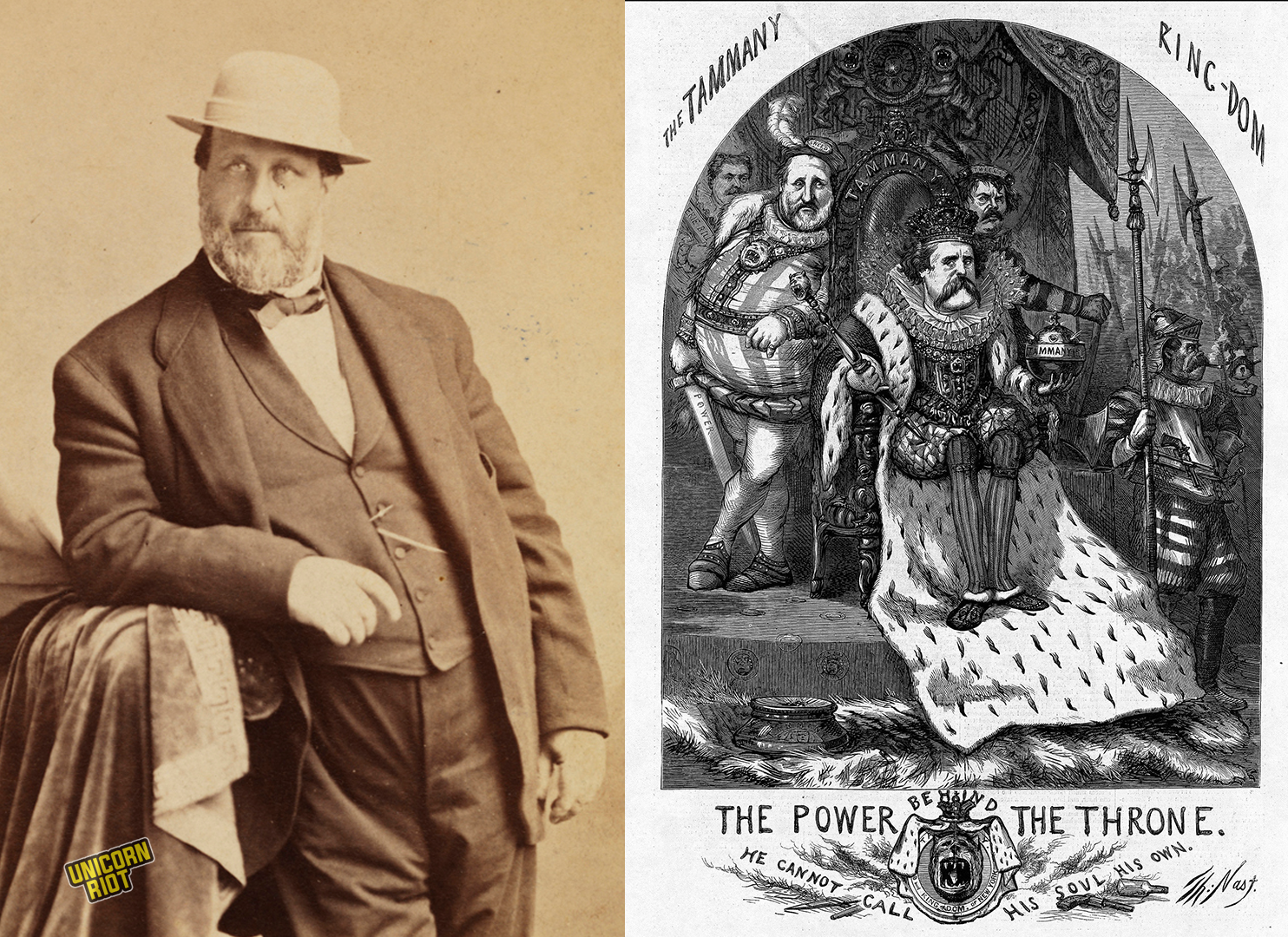
Since roughly forever, ward leaders have held unchecked influence over decisions and turnout organizing, without the committeepeople holding much power. The Democratic Party under its “city committee” has 3406 committeepeople in each 4-year cycle, who are essentially political block captains. Ward leaders follow the party chair’s direction, and control candidate endorsement. The party chair largely controls how much money the ward unit receives.
“If your endorsement decisions don’t match the Philadelphia Democratic Party’s recommendations, you may receive less funding from the party to carry out GOTV [get out the vote] activities. So open wards have fundraisers… a lot more activity in the ward, like working groups, a lot more conversations. … Once you have a voice in that endorsement process you’re going to be a lot more empowered and motivated to get out there and knock on your neighbors’ doors and explain to them why you selected this candidate.”
Kate Rivera, Riverwards Area Democrats
The committee people should be actively connecting with their neighbors and bringing that to their ward leaders, which “should be happening with greater transparency than we see now,” said Rivera. “There are many committee people who do an amazing job and there are many current committee people who don’t knock a single door.”
“Opening a ward means it’s transparent, small-d democratic and effective,” said Rivera, although all wards operate a bit differently. “It means that there is very little engagement happening at election time, or even leading up” to it. They are supposed to meet monthly but many don’t. Open wards will also post more financials on their website; Wards should be filing campaign finance reports and “a lot of them don’t even file those even though they are supposed to. So there is often a lack of transparency… on what funds the wards are receiving and how the funds are being used,” said Rivera.
The makeup of ward leadership greatly influences the city council and the Democratic Party city committee, chaired by former congressman Bob Brady since 1986. The Inquirer said he ran “one of the few old-fashioned big-city political machines left. Running against him could equal career suicide” in 2018. He started his climb to power getting elected as a 34th ward committeeman at age 24.
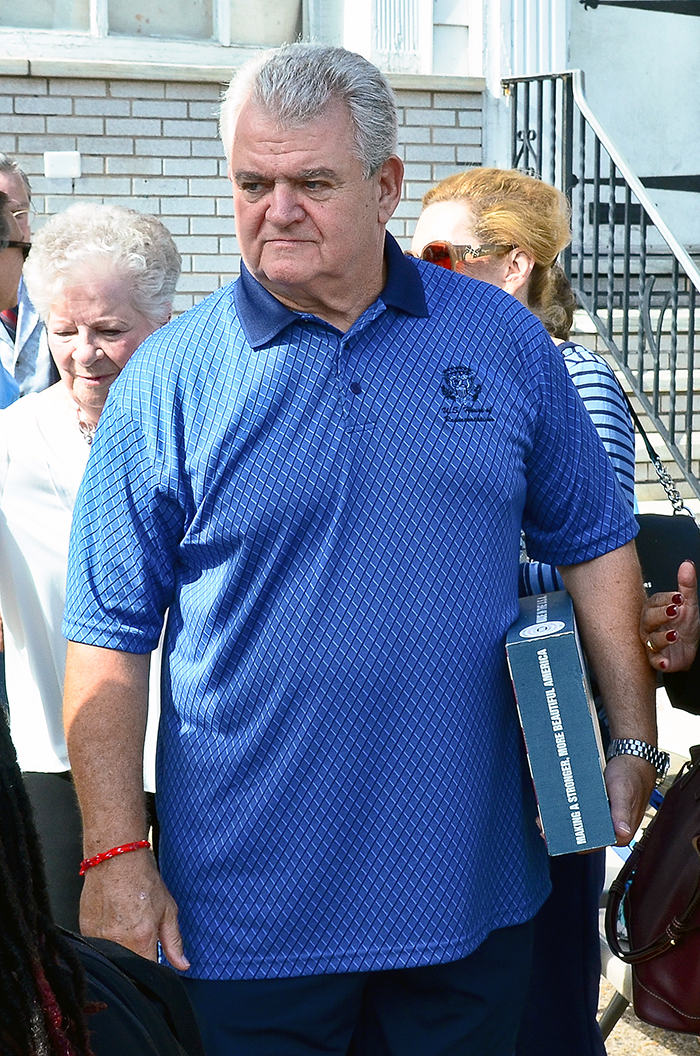
The consequences from Philadelphia’s local elections can go far: “If Hillary Clinton had gotten just 27 more votes in each polling place in Philadelphia, she would have won Pennsylvania’s 20 electors,” a 2017 piece in Philadelphia magazine noted wondering why Bob Brady was still in charge of the city’s Democratic Party city committee — and nine years later he still is.
“Within each ward, the wards will decide who the endorsements will be. And in a closed ward, which is what many of the wards in Philadelphia are, essentially the ward leader is just the person who decides the people that will be listed on the sample ballot you get handed when you go to vote. That is usually in line with what the party chair and the kind of people at the top of the party” prefer, said Rivera. “We are working for more open wards where the committee people themselves research and interview the candidates and then have a vote on who the ward should be supporting… This is a very small-d democracy process… we see this as an opportunity to elect more progressives into office.”
The sprawling northeast city has more than 1.56 million people. (As an electoral force in most of the city, the GOP is nearly a ghost, except the northeast end.) In 2024 more than 568,000 residents voted for Kamala Harris and 144,000 for Donald Trump; city turnout declined about 1.3% in that election, a warning sign for the Democrats’ city committee that its strategy was going awry. Trump went on to carry Pennsylvania by around 120,000 votes (50.37% to 48.66%). U.S. Senator Bob Casey (D) lost reelection to Dave McCormick (R) by just 15,115 votes.
Back in 2008 Barack Obama operated independently from the city system. Both candidates skipped handing out “street money” to the ward committee people, another old feature of machine elections. He won Philadelphia but lost by 210,000 votes to Hillary Clinton in the statewide primary — then beat John McCain (R) by more than 620,000 votes.
Mamdani Inspires More Involvement in Philly
Wards that Work is not just about getting younger people involved, they say. “We’d like to bring our neighbors with us, right? We don’t want to be in opposition with our neighbors. We are all progressive people who want the best for ourselves and our community… Power is something that should be a rotating door… It’s not healthy democracy when you have the same people in power for 50, 60 years, right? We just want to bring the neighborhood with us,” Moss said.
“If we are engaging with our neighbors year round around the issues that matter to them, that’s a response system that we need” for the issues the city is facing today, Glazer said.
“People have been very inspired” and energized by Zohran Mamdani’s win in New York, Rivera said, and people have been looking at what they can learn from Mamdani’s success. “I mostly hear people going, ‘why can’t we have that?’ and you’re like, getting mayor envy.”
Since the 2024 election a lot of people have been wanting to “do something, but they don’t know what to do or how to get involved,” and then Mamdani “invigorated people. It made people want to get involved, whether its in their workplace” apartment buildings, neighborhood, or schools, Moss said. “So when we began promoting Words that Work, we had a lot of people come along from all over.”
In one of the trainings, said Rivera, “Someone said, how do we find our Zohran Mamdani? And somebody else said, how do we know they’re not in the room with us right now?”
Rivera noted that Trump’s election in 2016 led to a big push for open wards in 2018, really growing out of the presidential election, and a lot of organizing after the Bernie Sanders campaign transpired with groups like Reclaim Philadelphia. This led Reclaim Philadelphia to push to open up wards 1 and 2 and was how Riverwards Area Democrats was formed.
“You are seeing a lot of people with that exact feeling, so depressed and hopeless, … and you have just given me a tangible achievable concrete thing” to do in their own neighborhood and make a long term difference, “and that has meant so much to so many of the people that I talk to,” said Rivera. “Something that I have ownership over, that I have stake in,” said Moss, who is “tired of an unresponsive Democratic Party” and wants to oppose “corporate landlords charging exorbitant rents,” while getting progress on issues like removing asbestos from public school buildings. “We don’t just have to sit here and take it. We don’t have to ask the Democratic leadership for things. We are going to organize to get exactly what we need, right?” asked Moss.
Rivera said that every single person at a typical organizing meeting earlier in the process had a negative thing to say about the Democratic Party, even though they were all Democrats. “Not doing enough, apathetic, you know, disappointing… You read the news and you’re mad. You doom scroll social media and you’re mad…. Then they found out, there is something I can do. It is not going to fix the Democratic Party overnight to better reflect my values, but there’s something I can do that can make a change in my neighborhood,” said Rivera.
Openings around City, Write-In Candidates Sought
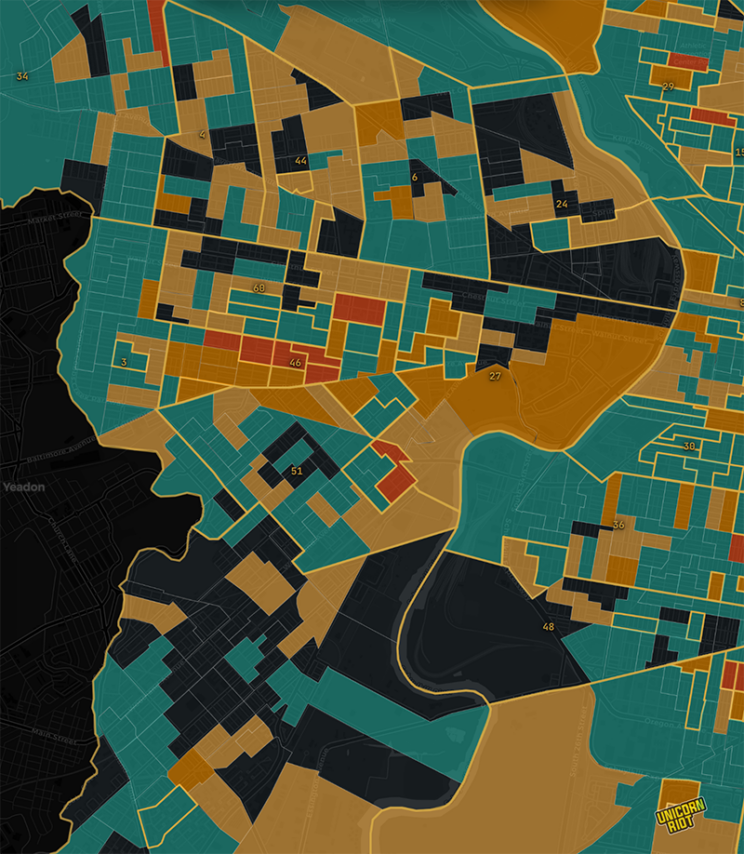
Rivera noted that there are many vacant divisions where no one filed paperwork to run as committeeperson. Each division has two seats.
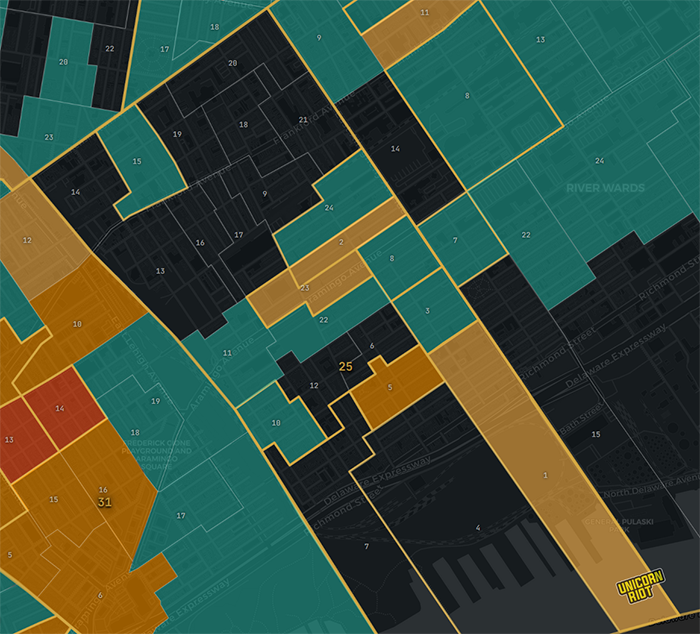
In ward 25 (Port Richmond) most of the divisions have no candidates: “The ward leader actually did not file the petition forms for the incumbents and there were a lot of vacant seats in that ward,” Rivera said, “so we’re recruiting a lot of write-in candidates for Ward 25.”
Democratic Party Expelled Ward Committee Members over Support for Working Families Party in 2023
“It really feels at some level in the local party, they’ve made this calculation that progressives are more of an enemy than Republicans,” said Rivera, who got kicked out of her ward committee in 2023. Chairman Brady ordered actions against city committee people that backed Working Families Party (WFP) candidates that year. It’s been growing into a formidable alternative force in the northeastern U.S. In New York City Mayor Zohran Mamdani appointed WFP leader Ana Maria Archila as international affairs head; WFP endorsed Mamdani for mayor.
“The Working Families Party candidates were not running against Democrats, they were running against Republicans. And that tells us how far the Democratic Party in Philadelphia is willing to go to maintain power,” Glazer said.
The ward leader left Rivera “a voicemail that said, ‘you’re no longer a committeeperson for supporting Working Families Party. Have a great life.’ And that was the message… I had really not technically done anything wrong” but the ward leader thought she had been door knocking for the party. “There was not a thoughtful systematic process where the heads of the party sat down and identified all of the people who may have broken the bylaws and had them removed. It was really a situation whereby Brady had sent out an email out to all the ward leaders saying, basically… if they do [support WFP] kick them out. And it really seemed like ward leaders were just here and there using that as a reason to get rid of people who they disagreed with or saw as a threat to their leadership, rather than it being an actual thoughtful process, especially since there have been documented cases of Democratic committeepeople and even ward leaders supporting Republican candidates at points in the past.”
The Philadelphia city committee expelled committeepeople who endorsed WFP after Brady emailed the ward leaders. Philadelphia has a peculiar at-large city council system — only 5 of 7 seats can be held by Democrats. Usually Republicans get the other two but WFP challenged the GOP hold. Brady kicked out committeepeople for endorsing WFP council candidates Kendra Brooks and Nicolas O’Rourke (the Riverwards Area Democrats also endorsed Brooks and O’Rourke). Brooks was hardly opposed by major party figures: she was endorsed by Gov. Josh Shapiro, U.S. Senator John Fetterman, and state senator Nikil Saval.
“They would rather have Republicans in office than Working Families Party. … The way that Philadelphia works is that we have two minority seats set aside and those are the seats that Kendra [Brooks] and Nick [O’Rourke] were running for. And by Kendra and Nick winning those seats they were able to make it so there’s one Republican on city council but there’s no Republicans within those minor party seats. … This is the importance of open wards, right? The people who endorsed council members Brooks and O’Rourke — the committeepeople who did so, did so because they understood that the Working Families Party candidates, rather than Republicans, were the ones who were going to represent the interests of the people who live in their divisions, who live in their wards, right? And because those wards were not open wards, that is what allows for them to be kicked out of their seats. In open wards there was not quite the same level of dismissal of people who endorsed Nick and Kendra because there is that ability, baked into being an open ward to have some type of say. Whereas in closed wards there is nothing baked into the closed wards that defends people who endorse Working Families Party.”
Emma Glazer, CPUSA
The WFP whomped the Republicans and won both at-large seats in 2023, which has spurred more progressive legislation from the council. More than 100 committee people signed a letter confirming their WFP endorsements as a way to push the GOP off the city council and protect liberal statewide Supreme Court candidates — both efforts that succeeded. Brooks was elected in 2019 and O’Rourke in 2023. (WFP also called for volunteers to oust U.S. Sen. John Fetterman in 2028.)
“Brooks and O’Rourke won their elections because progressive groups across the city came together in coalition to support their candidacy. There had been a couple cases in years previous where someone had tried that same strategy, running for the minority party at-large seats as more to the left of the Democratic Party and not been successful. Even early on … multiple other people were also getting ready to run as well. Folks kind of got together and said, you know what? Let’s get our ducks in a row as progressives, as leftists, and support these two really powerful experienced people and get them in office. And it worked. That shows how much power our progressive and left movements have when we do come together in coalition and for me was a big reason why I was so excited to be a part of Wards that Work. … When there have been elections in the past where groups are supporting different candidates, it’s very easy for the powers that be to say, ‘Oh, we just got some kids running around there, whatever, we don’t have to worry about that.’ And then really seeing these groups come together and achieve victory that they did, that was not expected. It’s a really hard race to win. .. it’s a hard thing to convey to people at the door but they were able to do it successfully.
“That win really showed the power of local organizing and the party’s reaction to kick people out shows how threatened they felt when they saw there really is a strong progressive leftist wing in Philadelphia that could be a threat to the status quo they’re trying to maintain.”
Kate Rivera, Riverwards Area Democrats
Thus it’s not hard to see why progressive and leftist groups are trying to organize Philadelphia wards and the 1703 smaller divisions therein. On the other hand some believe “sub-parties” weaken the Democratic Party.
“Even despite the areas of disagreement I may have with people with more centrist views in the party, I’d still much rather be fighting together for a lot of the things that we agree on, than I would want to be collaborating with Republicans who are destroying our country right now,” but “I don’t believe in holding a grudge. I’ve told people, I don’t have some sort of vendetta,” said Rivera. She continues to do door knocking despite the 2023 expulsion.
Contested U.S. House 3rd Congressional District Race Linked to Wards Campaign
Another primary event to watch is the open seat contest to replace retiring U.S. Rep. Dwight Evans (D-PA3) in the west, south and much of Center City. State Senator Sharif Street is leading the fundraising right now with support from Brady and several wards. Physician Ala Stanford has major PAC support. State Senator Chris Rabb is backed by many WFP and some of the “Wards that Work” groups including Philly DSA, and Reclaim Philadelphia. (All candidates are listed here). Shawn Griffith has also been making the rounds. Notably, Rabb has claimed Stanford is being backed by independent expenditures from pro-Israel hawks in the election, because the 3.14 Action PAC which put millions into this race was used as a conduit for pro-Israel spending during the 2024 cycle.
Moss, whose organization is backing Rabb, said, “We collaborate when we launch canvasses, not only to promote ourselves, our candidates around our divisions, but also to let our neighbors know that there is a person running in this race who truly means to represent us. … As [U.S. Rep. Alexandria Ocasio-Cortez] said, ‘They’ve got money, we’ve got people.’ Our coalition is doing activities with the Rabb campaign and we have seen interest from that… There’s something in the air that’s changing, right? A lot less complacency.” Riverwards Area Democrats didn’t endorse Rabb because their area is outside of the district, Rivera said.
“If you’re not interested in electoral politics, that’s okay. We are still going to do anti-ICE activities, work with improving our schools, work to push Medicare for all. If you’re not interested in electoral politics there is a place for you still,” Moss said, “because all of it is organizing, all of it.”
“If you have a desire and a willingness to affect change in your neighborhood and your city, there is a place for you,” Moss said. “it doesn’t matter whether you’re brand new to politics, whether you’ve been in politics for decades, whether you’re young, whether you’re old, male, female, whatever. It doesn’t matter. … We’d love to have as many people as we can take.”
If you want to learn more about the ward system check out the Committee of Seventy ward and division maps and their index of ward leaders. The Committee also has an extensive guide about the entire system and how to run for a seat (pdf). The Wards that Work Website has more info and the 5th Square Political Action Committee has recommendations for 2026.
The interviews have been edited for length and clarity.
Follow us on X (aka Twitter), Facebook, YouTube, Vimeo, Instagram, Mastodon, Threads, BlueSky and Patreon.
Please consider a tax-deductible donation to help sustain our horizontally-organized, non-profit media organization: