Protests Continue After Prairieland Trial Targeted Elements of Dissent
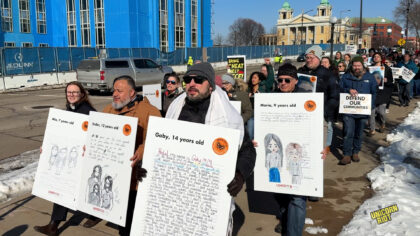
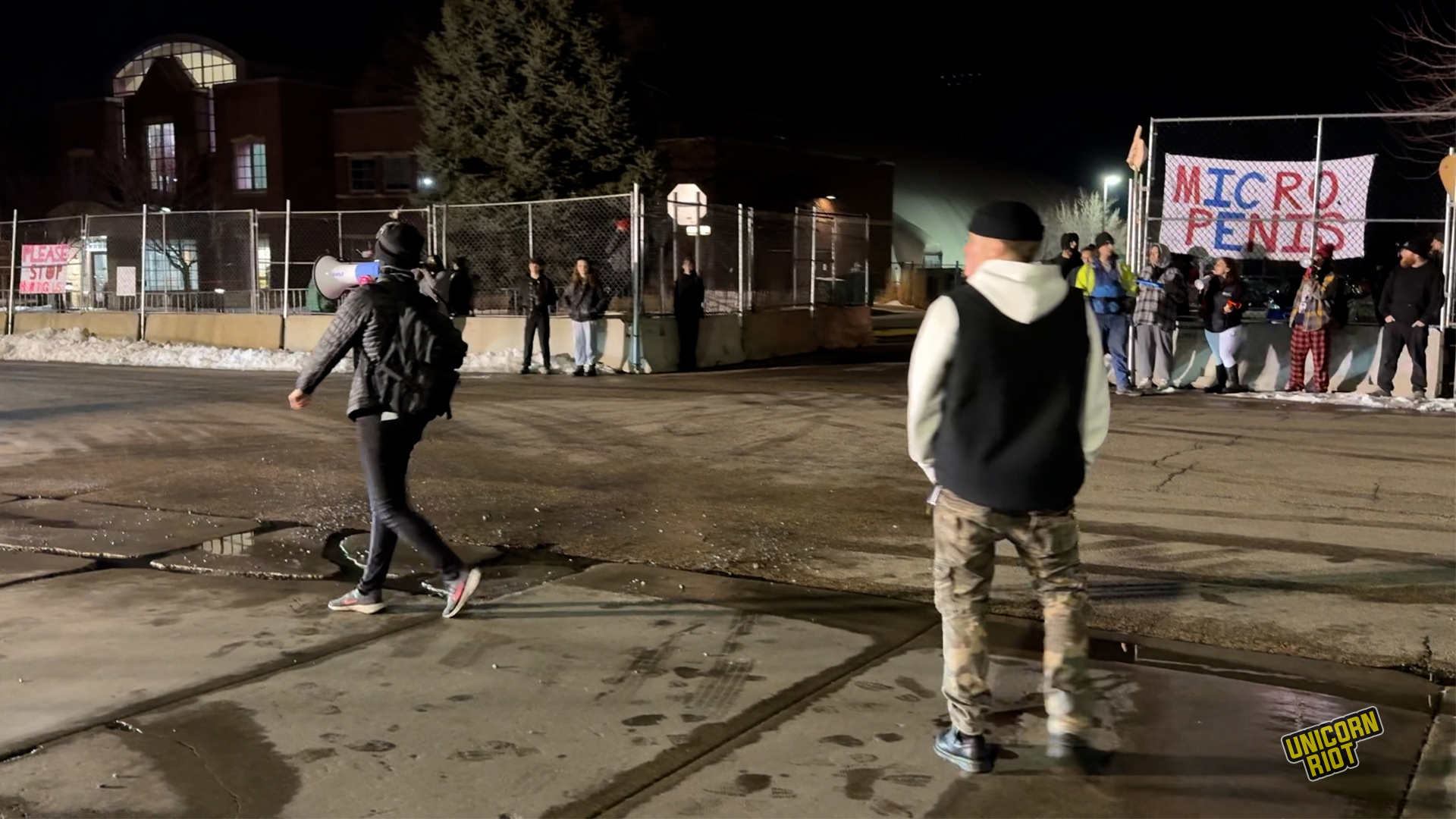
Minneapolis, MN – Roughly 30 protesters gathered outside of the Whipple Federal Building on March 19 to protest the federal government’s guilty verdict in the hotly contested “Antifa” test case that sprung from a noise demonstration in Texas last year.
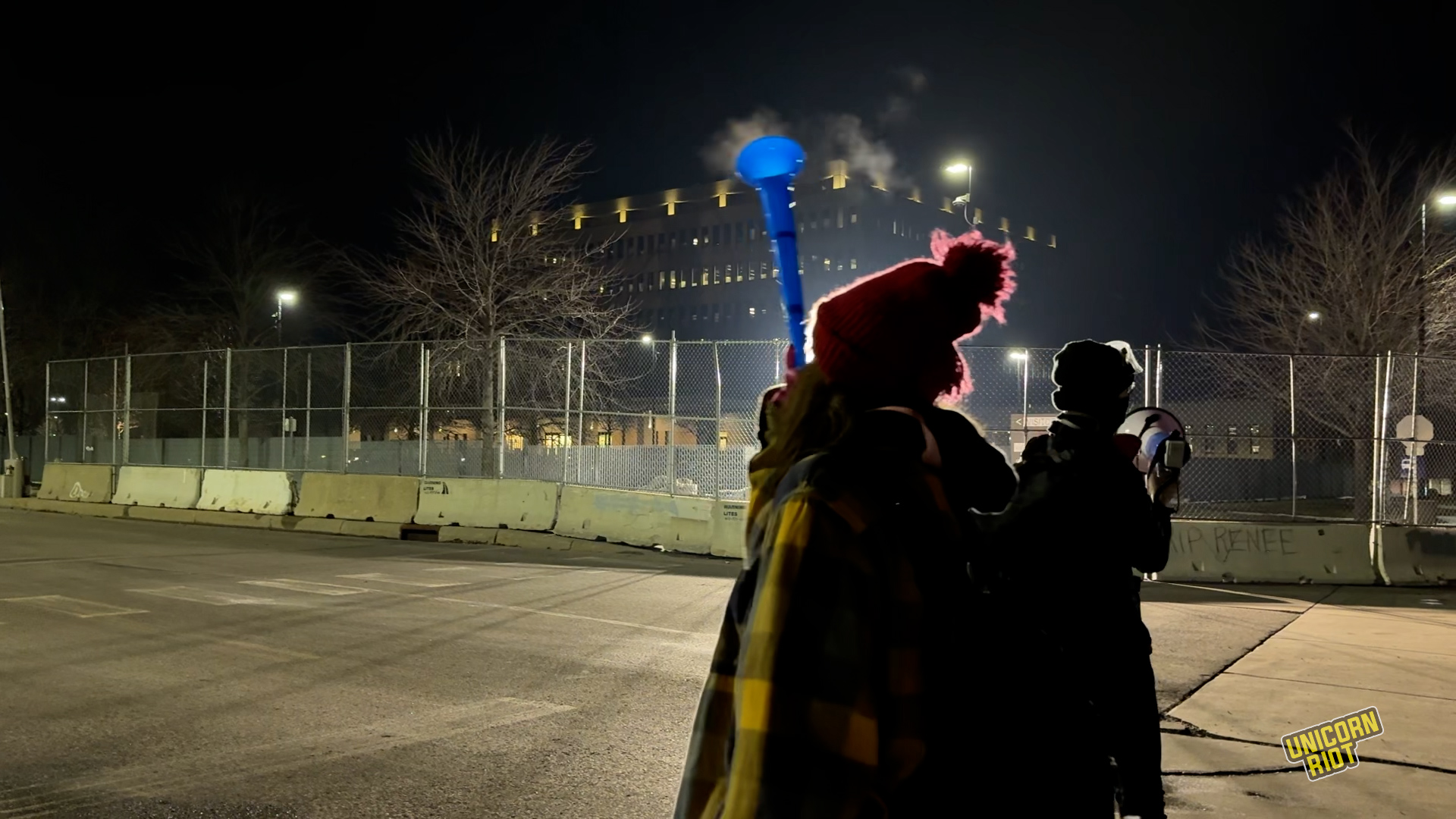
The Whipple building, located to the south of Minneapolis, has been the site of protest since the beginning of Operation Metro Surge last year, as it houses a detention center and is being used as the headquarters for immigration-related activities in the Upper Midwest.
The demonstration, which lasted a couple hours, was policed by deputies from the Hennepin County Sheriff’s Office. Protesters chanted from the fenced off sidewalks and moved into the roadway in front of the building’s northeast entrance. At least 12 squad cars positioned themselves in the area by the end of the protest, one for every two to three protesters. No arrests were made.
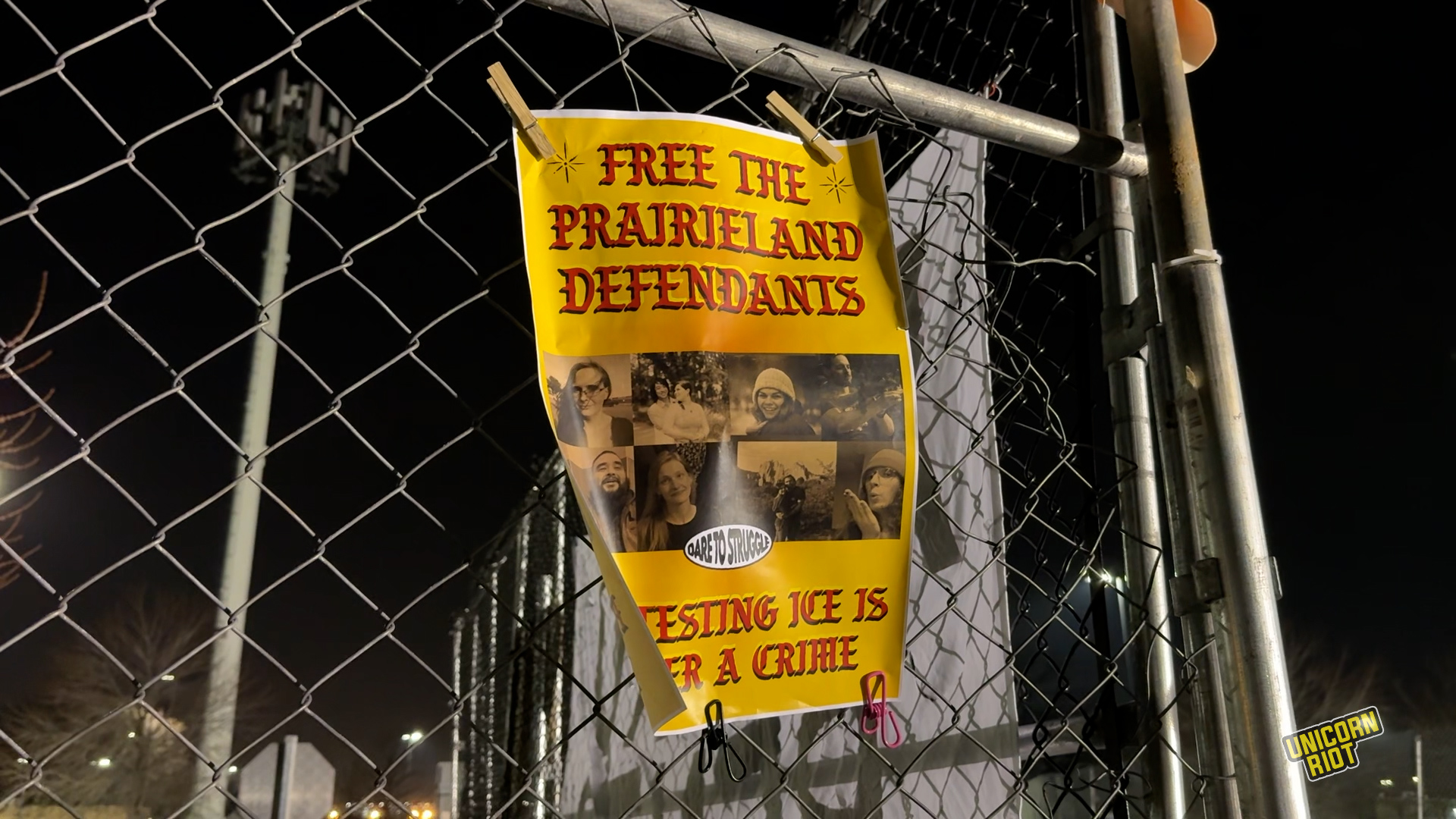
The Friday night protest was a reaction to the guilty verdict passed down to 9 defendants in the highly contentious Prairieland case, where the federal government prosecuted 18 protesters who held a noise demo at the Prairieland ICE detention facility in Alvarado, Texas, in July 2025.
The March 13 verdict, overseen by a Trump-appointed judge, saw eight of the nine defendants convicted of federal terrorism charges based largely on their use of “Black Bloc” tactics during the demonstration. Put another way, that simply means the protesters were each dressed entirely in black, but that assertion was proven to be false during the trial with testimony and video evidence.
For Kyle Shideler, the prosecution’s resident “Antifa” expert, wearing black was evidence of a much deeper criminal conspiracy, integral in his construction of a fictional “North Texas Antifa” terror cell that he alleged every defendant was a member of.
Nine Prairieland Defendants Found Guilty in First ‘Antifa’ Test Case
The jury was not independent of the court’s direction in this case. When the court — which the National Lawyers Guild said “attacked the right to a fair trial” — discovered that finding a jury that was not already biased against ICE was going to be difficult, U.S. District Judge Mark Pittman claimed the selection process for himself, hand-picking who would be able to weigh in on the case. Any questions a defense attorney might have would first have to be cleared by Pittman, effectively weighing the scale in favor of the state.
The fallout of the case was not limited to those present. Daniel “Des” Rolando Sanchez Estrada was not present at the demonstration, but his wife, who was present, requested that he move a box of zines in their shared home in the days following the demonstration. The simple request resulted in the court charging him with corruptly concealing a document and conspiracy to conceal documents, which could send him to prison for up to 40 years.
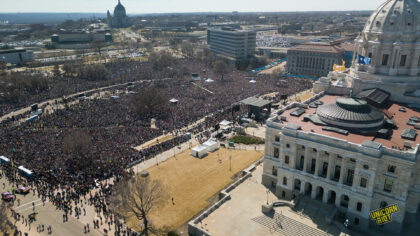
Civil rights advocates and legal experts say this case will have severe consequences for the First Amendment rights of protesters around the country as the Trump Administration moves to stifle dissent. The case opens the door for further attacks against protesters as well as warping and altogether manufacturing evidence as a means for this administration to crush them.
The broader outline of the Trump administration’s strategy in outlawing dissent was first laid bare by National Security Presidential Memorandum 7, a presidential decree outlining an extremely broad set of characteristics that the federal government will target: people whose beliefs or activities can be construed in some way as “anti-Americanism, anti-capitalism, and anti-Christianity […] extremism on migration, race, and gender; and hostility towards those who hold traditional American views on family, religion, and morality.”
The Prairieland defendants fit somewhere in this broad categorization, and so do many others whether they know it or not.
[Newsletter] Prairieland: A Cautionary Tale [Sign up for UR newsletters]
One of the most glaring examples of this outside of Prairieland is the Cities Church protest in St. Paul in January, where several dozen protesters disrupted a Sunday church service to protest one pastor’s leading role in local ICE operations.
The Department of Justice spent the last two months building cases against 39 protesters and journalists who embedded with them, portraying the incident as an anti-Christian riot and charging them with conspiracy against religious freedom and interfering with the right of religious freedom.
Trump Admin Targets Press and Activists in Minnesota, Indicts ‘The Righteous 39’
The main throughline in the Cities Church case is a deliberate smearing of constitutionally protected protesting as anti-Christian hate, which fits well with the scope laid out by NSPM-7 last year.
For the federal government, the reality of the situation doesn’t really matter, and what facts they choose to focus on are subordinated to political ends. Whether the protesters did what the government is charging them with is less important than whether the government can convince a jury of its choosing that they are guilty as charged, which happened in the Cities Church protest case when prosecutors had to go to a grand jury for charges after judges denied them.
Five members of the press, including Georgia Fort and Brixton Hughes, and 34 activists — many of them community-oriented professionals — have been federally indicted as of late February, making up what some are calling “the righteous 39.”
During multiple waves of arrests, many of the 39 have had their doors broken down by armed federal agents and were arrested in front of their families and neighbors.
Adding to the militarized nature of the suppression of dissent, after the court hearings for many of the indicted, masked federal agents donning riot gear have pushed out press, family members and community from the main lobbies and closed down federal courthouses in both St. Paul and Minneapolis, citing “security reasons.”
Despite what’s become a countrywide crackdown, noise demos and protests like the one at Whipple last Friday were said to have been held in over a dozen cities across the country, including Austin, Texas.
Noise demos outside jails and prisons have long been a tactic of protest movements to show solidarity with incarcerated people and speak against the carceral system. The demos typically feature a wide range of attendees and have included marching bands, lit flares, fireworks, chants, banners, and participants banging on pots and pans or street signs outside of jails, prisons, detention centers and other targets.
The tactic, which grew in popularity with the broader movement against ICE in 2026, had already been criminalized locally. In 2021, Minneapolis police mass-arrested 36 people taking part in a New Year’s Eve noise demo in downtown Minneapolis and charged five people with felonies. This year, over 100 people have been arrested at numerous noise demos outside hotels hosting federal agents.
Relaying their experiences defending their community during the federal occupation in the Twin Cities, a slew of activists from Minnesota are speaking at 23 different cities on a tour starting March 31 that will also seek to raise money for the legal defense of ICE arrestees.
2025-2026 Unicorn Riot Coverage of the DHS / ICE Crackdown Campaign in Minnesota:
Click the image to see all UR coverage of federal law enforcement operations in MN.
Watch Unicorn Riot’s videos from ICE in Minneapolis in playlist below.
Follow us on X (aka Twitter), Facebook, YouTube, Vimeo, Instagram, Mastodon, Threads, BlueSky and Patreon.
Please consider a tax-deductible donation to help sustain our horizontally-organized, non-profit media organization: