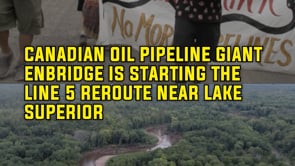
Canadian oil pipeline giant Enbridge has begun construction of its Line 5 crude oil pipeline Northern Wisconsin; it has secretive deals with two counties to reimburse sheriff’s departments for responding to Line 5-related protests. Anishinaabe leaders and local residents are concerned about the potential for constitutional rights violations.
Wenipashtaabe Gokee, Anishinaabe, spoke at the Feb. 24 Ashland County Board meeting, opposing the law enforcement deal: “I’ve got a duty and obligation to stand up for water. Indanishinaabekwe. I’m an Anishinaabe woman, and that’s part of my role…. I don’t like the feeling of having a target on my back.”
Enbridge had similar deals in Minnesota during the 2020-2021 construction of its Line 3 pipeline. Minnesota law enforcement agencies received $8.3 million from Enbridge through a state-run escrow account. It led to biased policing. Indigenous leaders and allies say officers committed “egregious civil and constitutional rights violations,” including surveillance, harassment, ‘pain compliance’ torture, use of rubber bullets and pepper balls, denying medical care, strip searches, and more.
Wisconsin’s deals are worse than Minnesota’s. Enbridge will pay sheriff’s departments using the Wisconsin Counties Association, a lobbying group, as the pass through. The Association is not subject to state open records laws. The public will not know how much Enbridge is paying law enforcement, names of funding sources, or how the money was spent.
Bayfield County rejected the deal on a 10-2 vote. Board Member Mary Dougherty said, “Bayfield County has a responsibility to public safety, civil liberties, and public trust—not to quietly formalize a quasi security partnership around a highly controversial pipeline project with vague funding and extremely limited transparency.”
Line 5 is a 73-year-old pipeline that carries oil from Canada, crossing the Bad River Reservation. In 2019, the Bad River Band of Lake Superior Chippewa sued Enbridge for illegal trespassing and demanded Enbridge leave their watershed. Several of Enbridge’s easements had expired in 2013, and the Bad River Band refused to renew them, citing the risk of tremendous environmental damage from any crude oil spills.
Enbridge is now working on a 41-mile pipeline reroute around the reservation. The reroute crosses hundreds of rivers, streams, and wetlands that flow into the reservation, threatening the Band’s internationally recognized wild rice beds and walleye spawning grounds. Indigenous leaders call the reroute an act of cultural genocide.