Hundreds Rally for Global Cannabis March in Durban South Africa
Durban, South Africa — Just a day after International Workers Day, yet another global movement saw thousands of people around the world hit the streets this year. Since 1999, the annual Global Marijuana March — now known as the Global Cannabis March — has provided a platform for users and advocates to voice their collective demands for the full legalization of the drug. Since then, a wave of decriminalization efforts has progressively gained steam resulting in some 30 countries at least partially legalizing the use of cannabis. In 2018, South Africa joined this wave by becoming the first African nation to partially legalize the plant for medical and recreational purposes.
Cannabis still remains largely outlawed in most countries and even in places like South Africa where it is partially allowed, the laws and regulations that govern its use are often complex, vague and restrictive. This has made it nearly impossible for average citizens to grow and consume the plant legally for any purpose. This along with the enormous financial investment necessary to enter into the estimated multi-billion-dollar cannabis industry has kept many local and traditional farmers out of the legal business.
Though cannabis related arrests appear to have plummeted since 2018, some small-scale cannabis farmers and users are still being targeted by police raids and state prosecution. In April, a group of cannabis advocates and lawyers filed a challenge through South Africa’s High Court which “seeks urgent relief against ongoing arrests, the destruction of cannabis plants and the exclusion of traditional growers from the legal economy.”
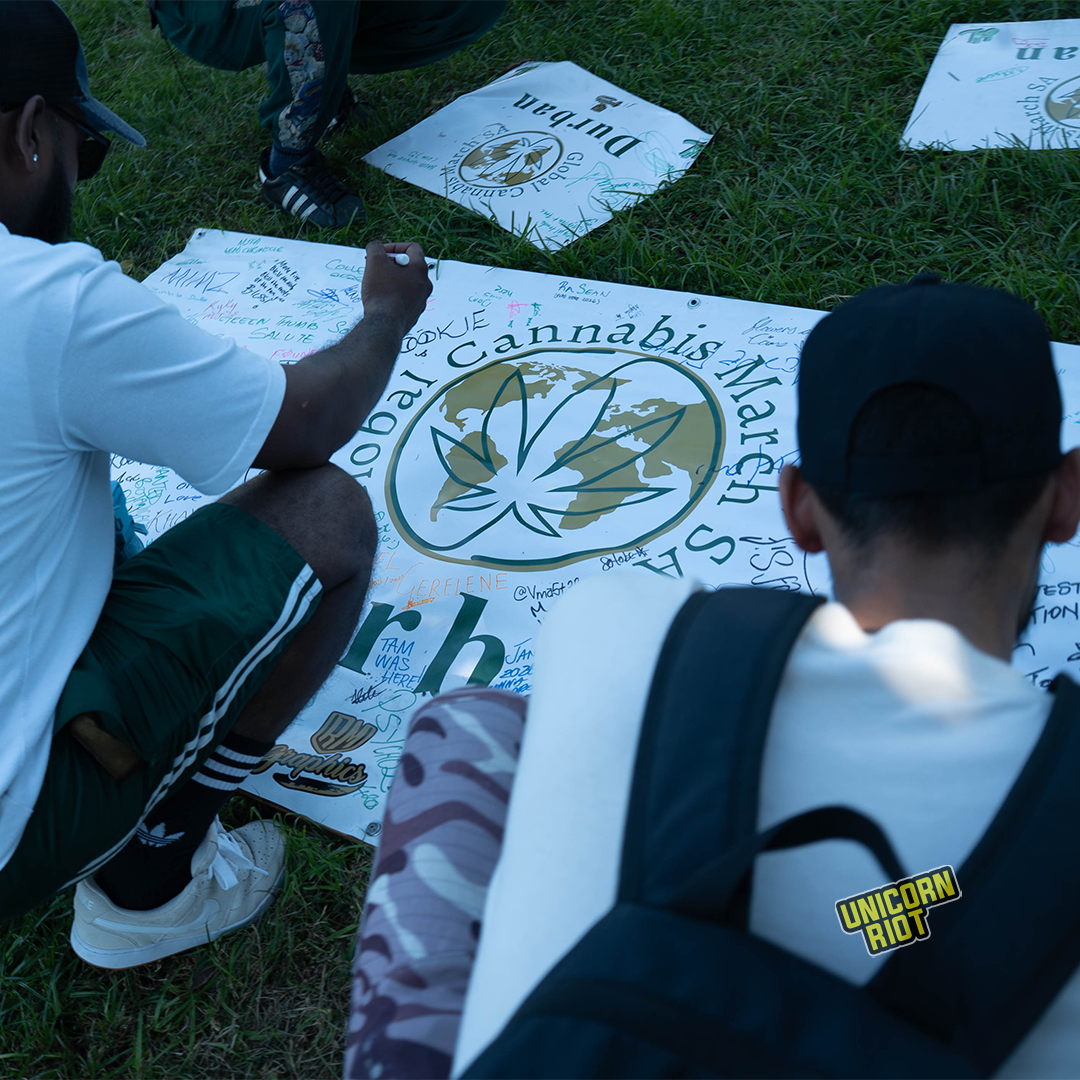
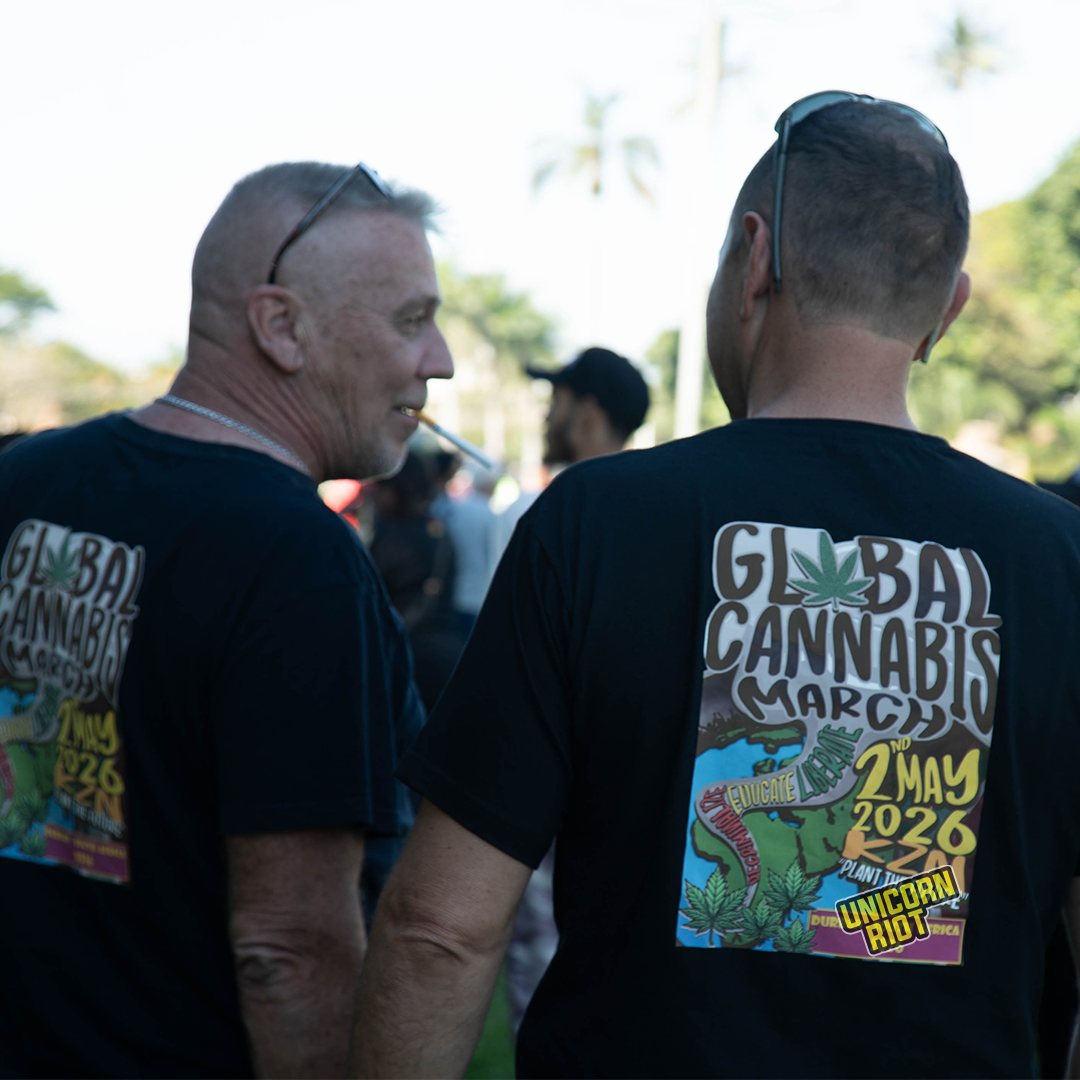
This was followed up by the Global Cannabis March a month later where thousands of South Africans marched across the country, particularly in the major cities’ of Cape Town, Durban and Johannesburg — Unicorn Riot was on the ground to cover the march in Durban.
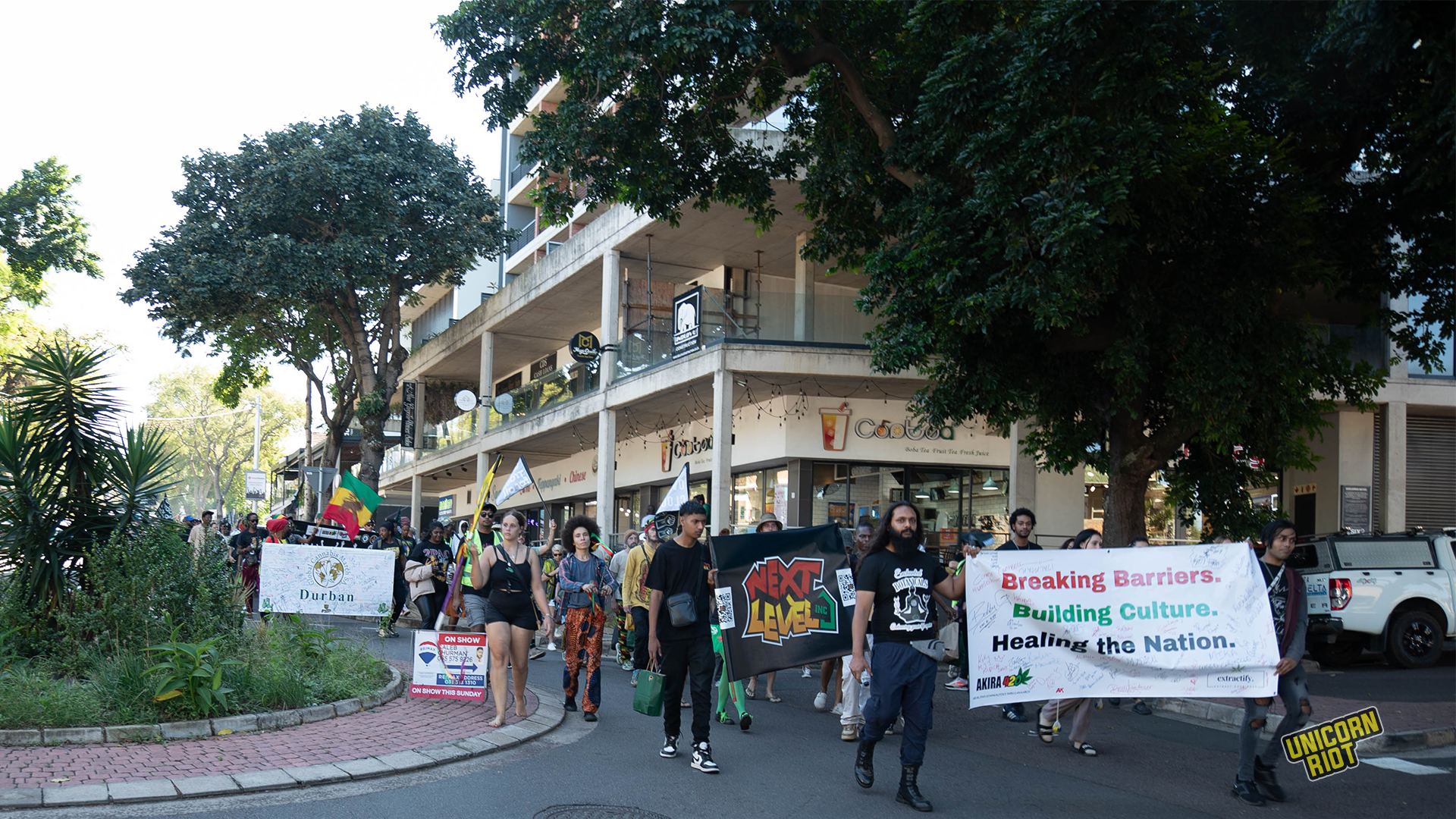
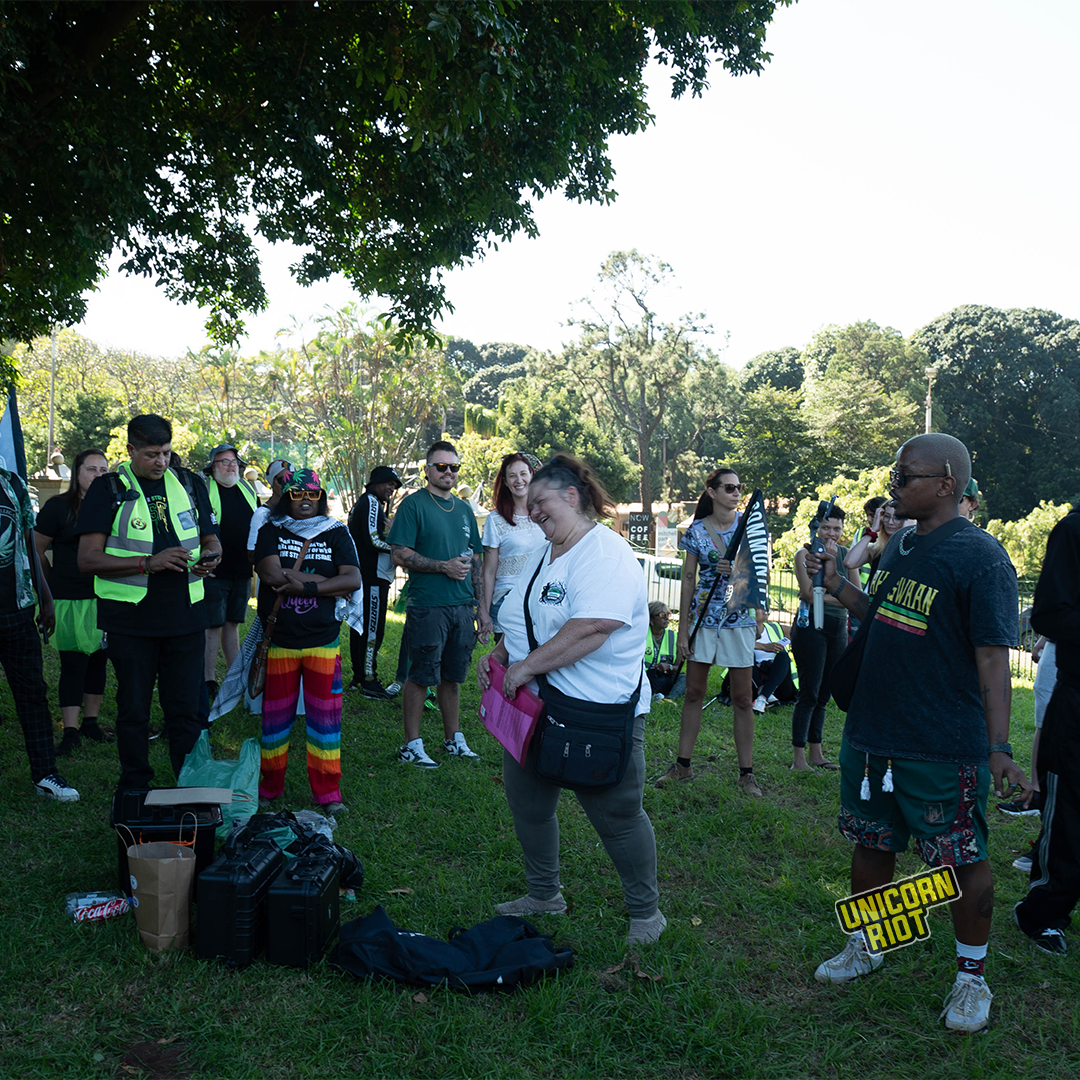
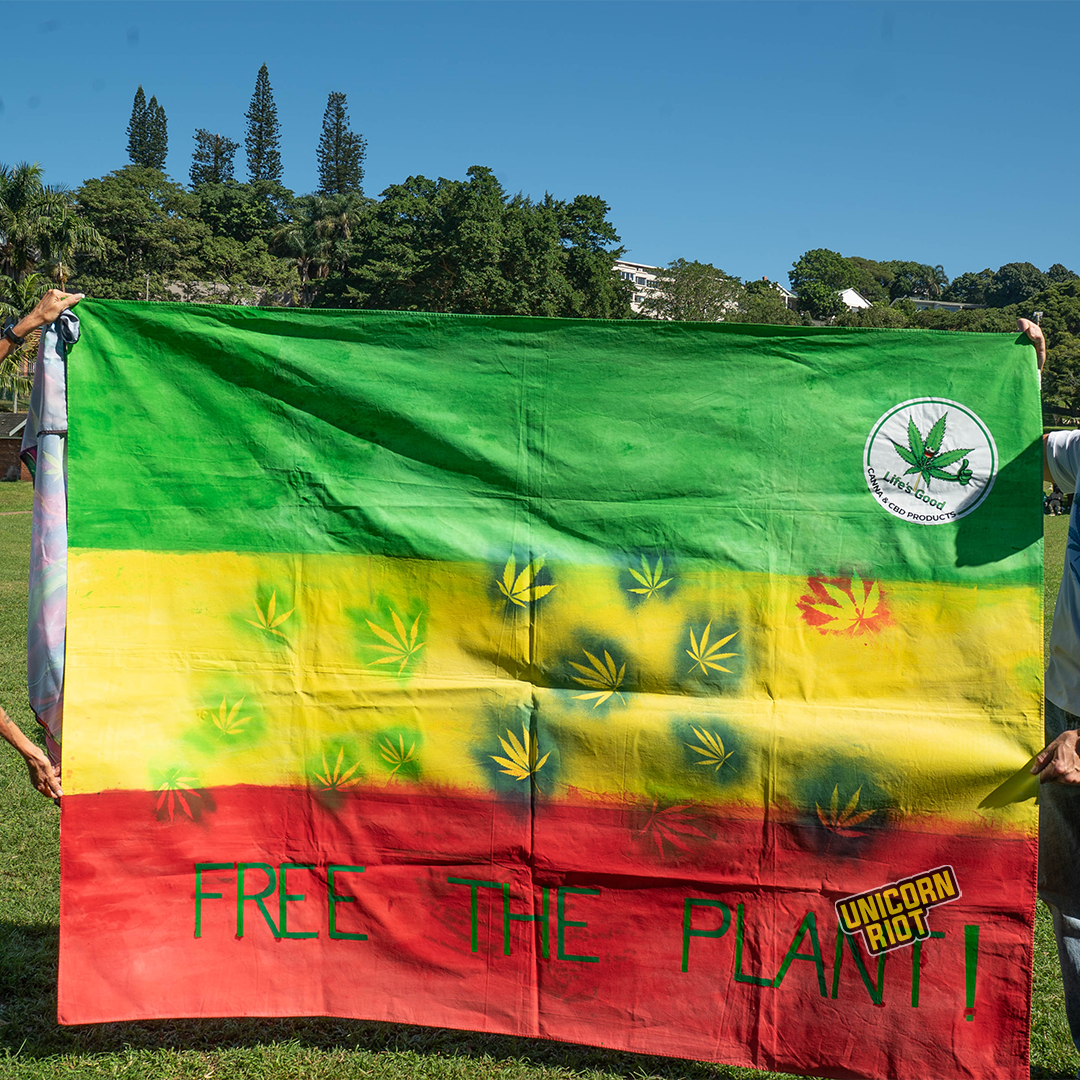
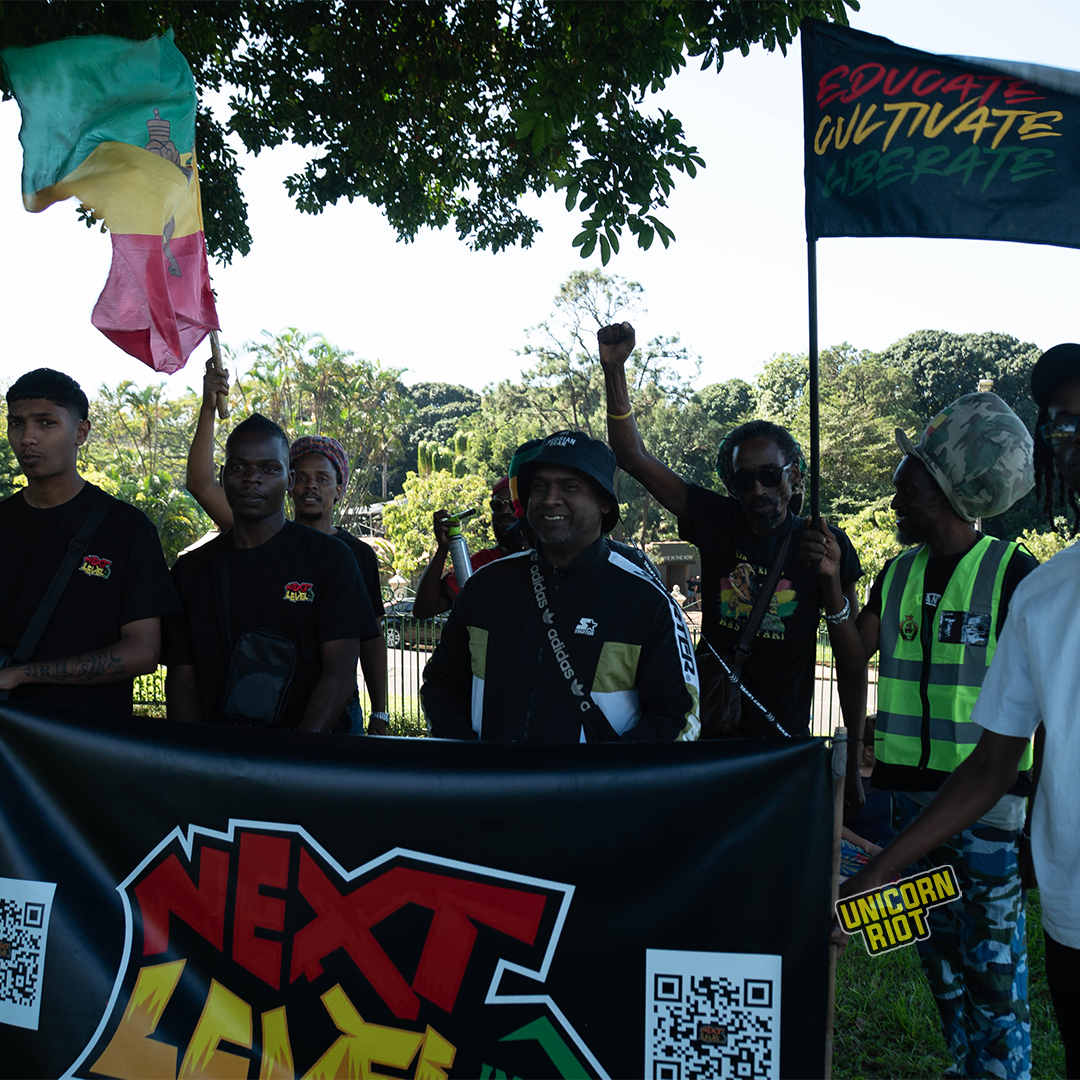
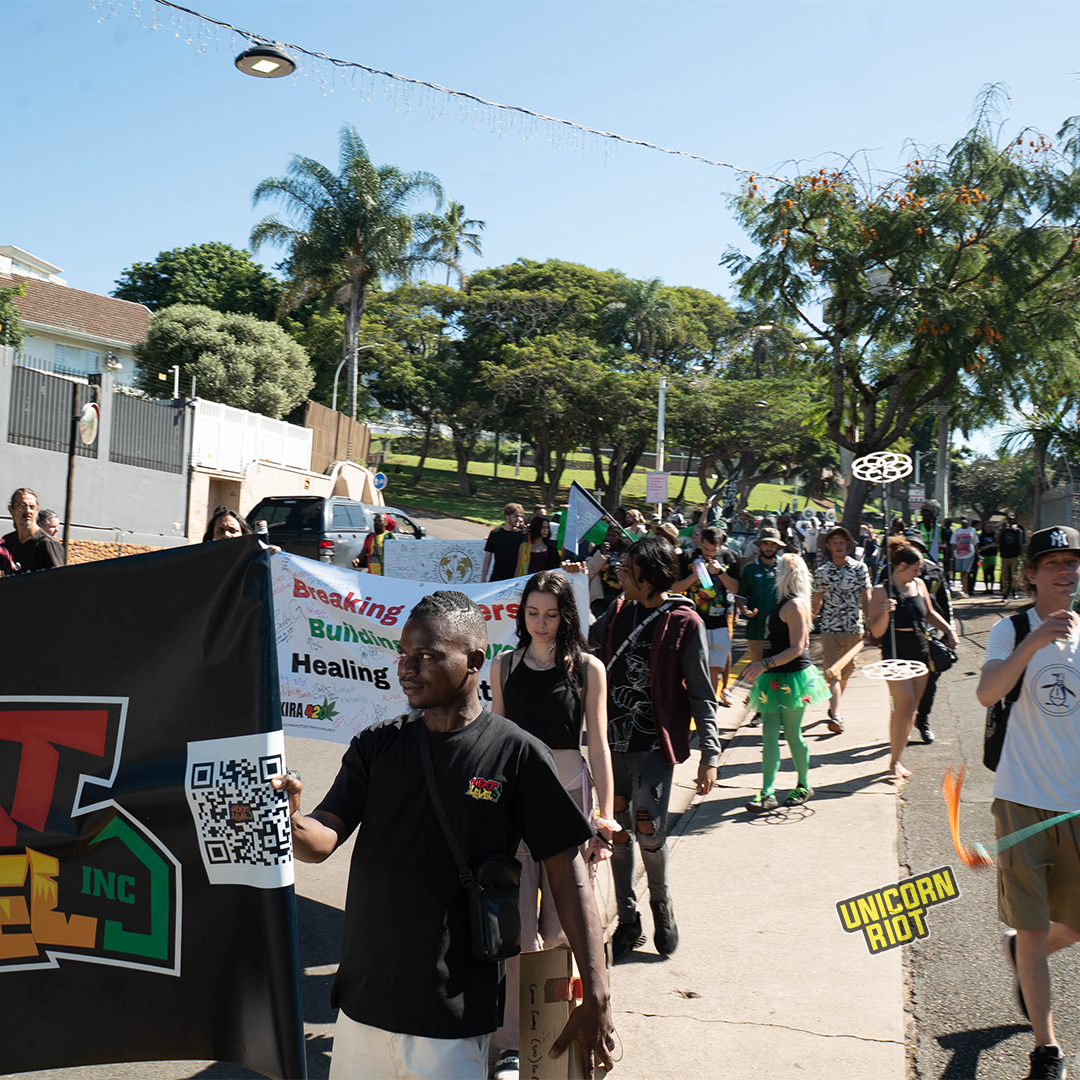
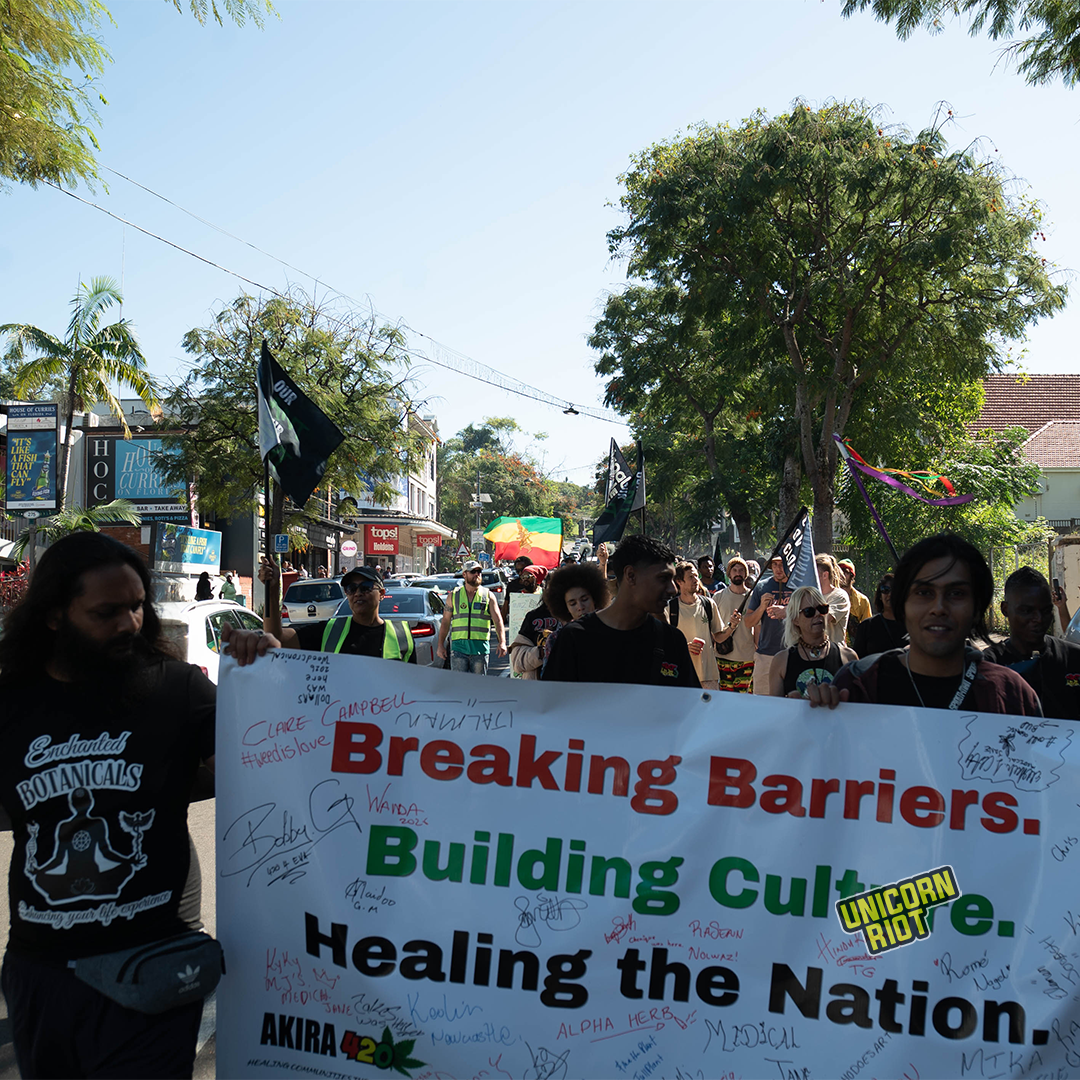
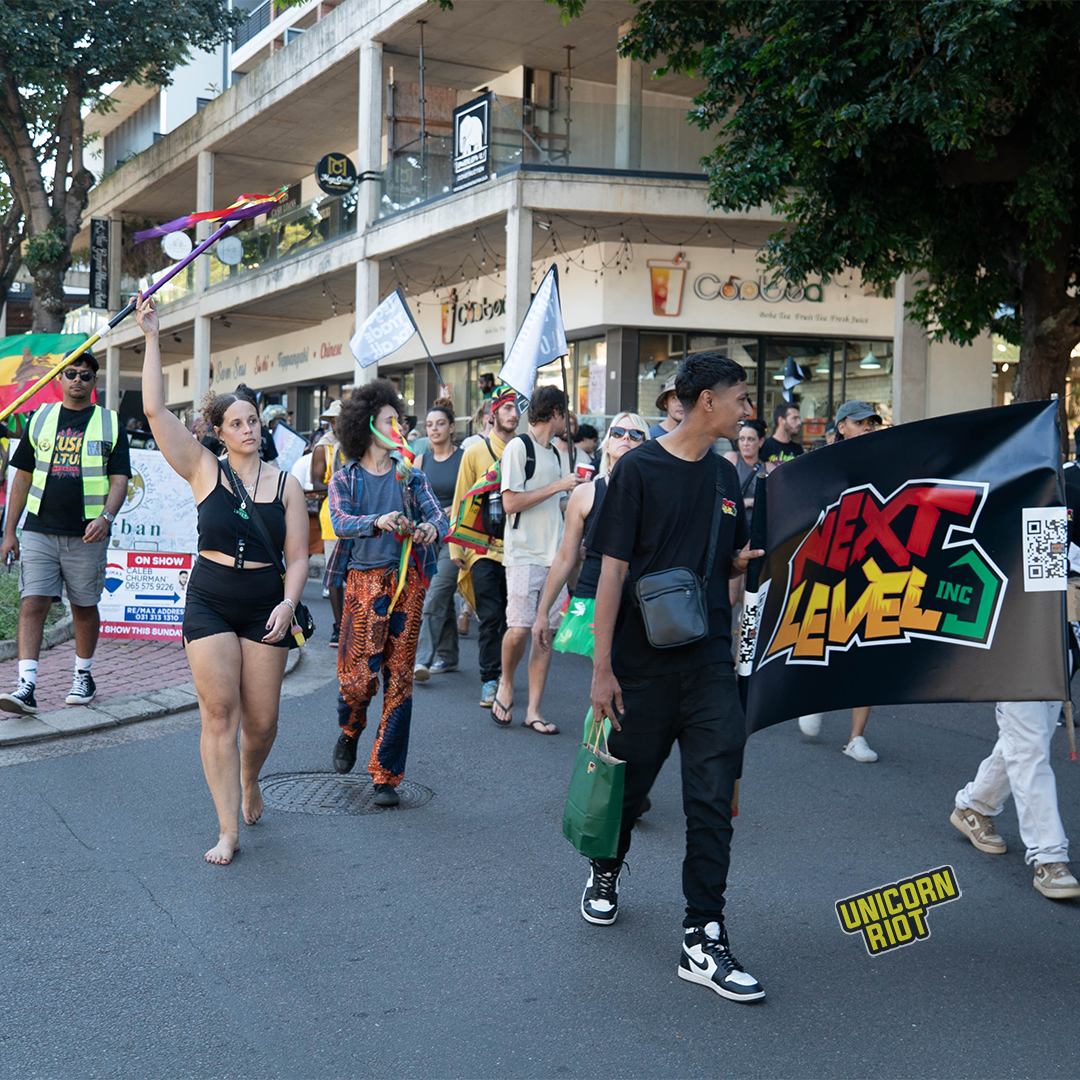
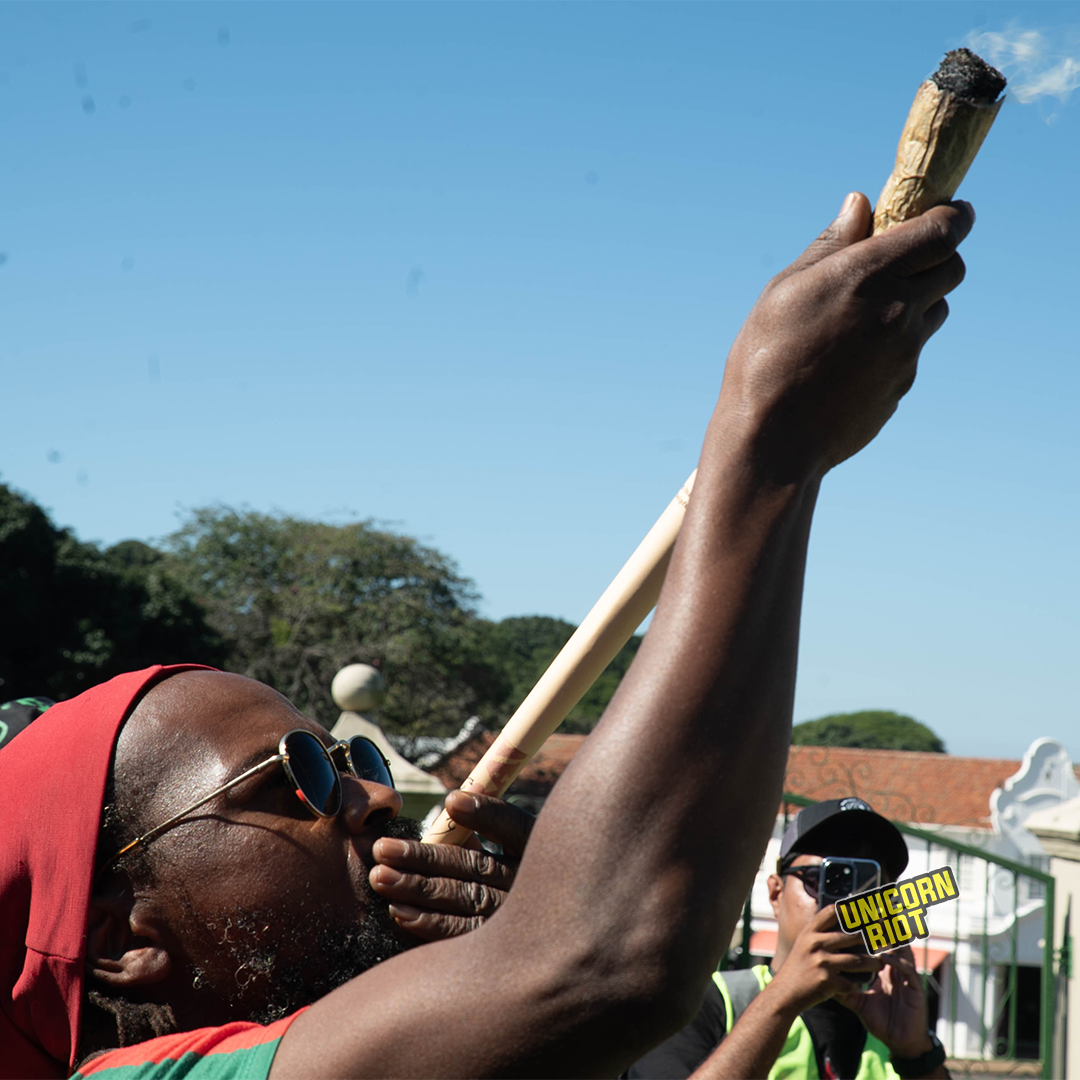
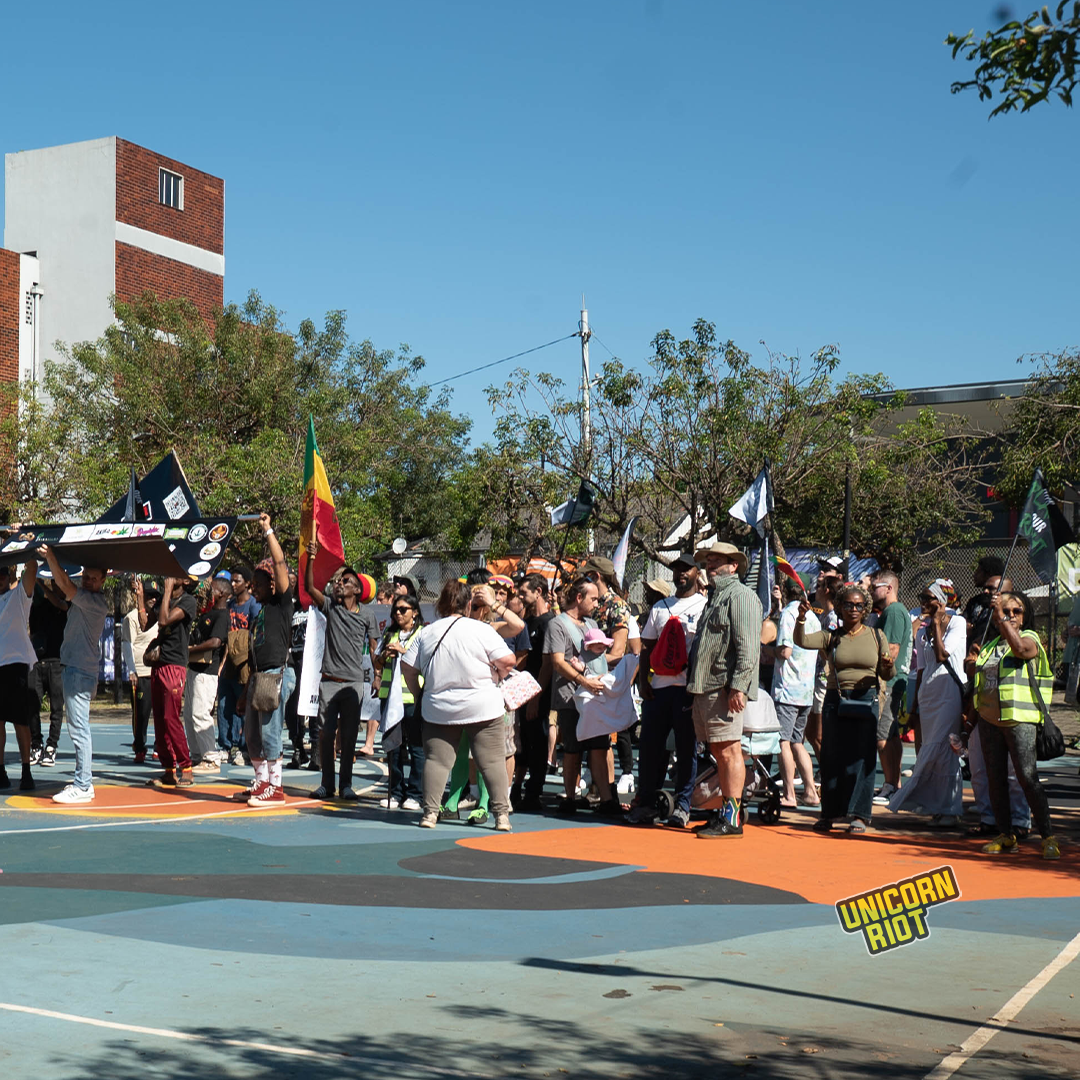
Around 200 to 300 people showed up for the march in Durban which brought together a diverse and broad mix of individuals and groups from a variety of backgrounds. Event organizers also noted how many more people showed up for this year’s event compared to last year, when only 50 or so were estimated present.
The march rallied at Durban’s Windermere neighborhood — an area that’s home to a large number of cannabis clubs and shops. After waiting nearly two hours for police escort, one squad car finally arrived after which marchers proceeded a short distance from Jameson Park down Florida road — a historic and iconic center for Durban tourism and nightlife.
While the draft, Cannabis for Private Purposes Act of 2024, decriminalizes the private possession and use of cannabis it does not address its sale or distribution, which remains illegal for recreational purposes. The government has further clarified that the act has yet to become formal law as it is still subject to review by the Department of Justice and Constitutional Development before being submitted to Parliament for final approval.
They further state: “Matters relating to the commercial cultivation, buying or selling of cannabis or cannabis products, as well as the recognition of traditional growers, fall outside the scope of the Act and are being addressed by other government departments, including those responsible for Trade, Industry and Competition, Agriculture, and Health.”
Accordingly, the Department of Trade and Industry (DTIC) is currently working on a draft policy which is expected to address ongoing legal disputes and confusion specifically over the sale and distribution of cannabis products. However, when the department revealed it’s “National Cannabis Master Plan” in April it made no mention regarding domestic sales of recreational or medical cannabis and is entirely focused on government plans for the cultivation and export of the non-psychoactive cannabis bi-product known as hemp.
The DTIC further states, “an Overarching Cannabis Bill is also in development to unify existing regulations, including the Cannabis for Private Purposes Act, 2024,” and that the bill “is set to be presented to Parliament by mid-2027.”
Thus, while progressive reforms in South Africa drug policy have been achieved, the actual implementation of those reforms has been a slow and confusing process. Both cannabis producers and users alike in South Africa currently walk along a precarious legal tightrope. One in which police are seemingly able to selectively enforce the law against anyone suspected of dealing and or using cannabis, while blatantly ignoring the rest.
Adding more risk is the lack of clear regulation and policy that has also produced a flood of semi-legal cannabis products, which are generally not subjected to any kind of quality control measures.
Longtime cannabis activist and organizer Louis Maxwell stressed to the crowd that education is key to keeping advocates safe both in terms of the law but also understanding one’s own personal health and what cannabis may and may not be good for. She also urged participants to make their voices heard at the various public hearings where new draft cannabis bills and policies are still being decided on.
“I expect every single one of you here today to do your duty and comment publicly … out of millions of cannabis users in South Africa only 2,196 people commented on the proposed bill … out of those people 87 percent were against the proposed bill, so public comment will come up again and it will go back to the drawing board.”
Louis Maxwell
Related:
South Africa’s Complex New Marijuana Laws Produce Hope, Fear and Confusion [2025]
South Africa Becomes the First African Country to Partially Legalize Cannabis [2024]
Follow us on X (aka Twitter), Facebook, YouTube, Vimeo, Instagram, Mastodon, Threads, BlueSky and Patreon.
Please consider a tax-deductible donation to help sustain our horizontally-organized, non-profit media organization: