Northern Thailand Communities March to Defend the Kok River from Mining Pollution
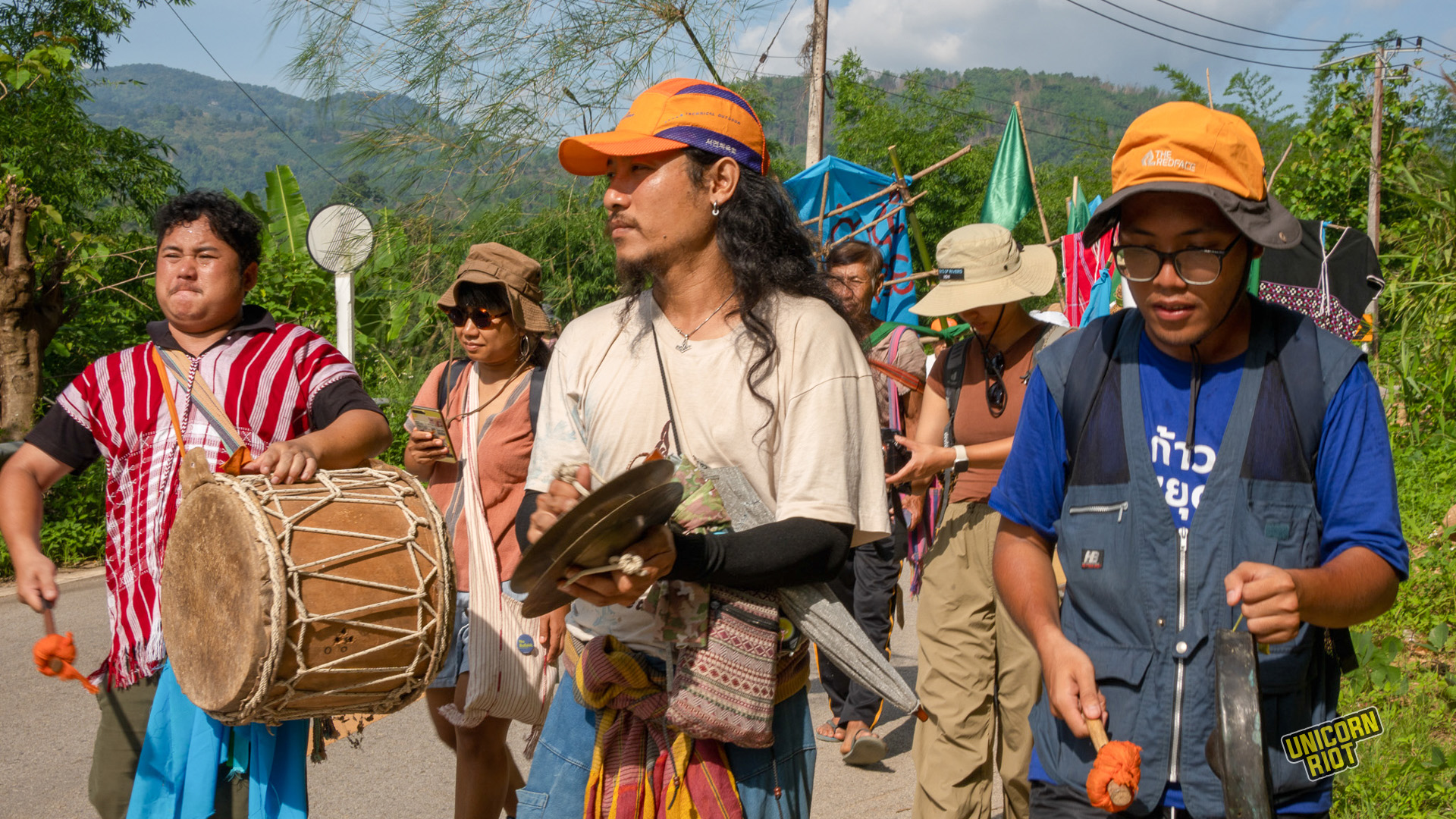
Chiang Rai, Thailand — Hand-painted banners reading “Protect the Kok River” and “Bring Back Clean Water” waved above a crowd of farmers, fishers, scientists, and environmental activists as they walked along northern Thailand’s Kok River. For five days, hundreds of people marched 68 kilometers from Tha Ton in Chiang Mai province to Chiang Rai city, demanding action over toxic contamination flowing downstream from unregulated gold and critical minerals mines across the border in Myanmar (Burma).
As the march passed through riverside villages, participants stopped to discuss the issue with residents who have lived in harmony with the river for generations and whose livelihoods depend on it. In recent years, however, the river has become a source of worry rather than life.
Fishers described declining catches and fewer customers, as many people fear eating fish from the polluted river. Farmers worried about irrigating their fields, while mothers spoke about trying to keep their children away from swimming and playing in the water. For many, the demonstration was about more than pollution — it was a fight to protect a river that sustains entire communities.
The march concluded at Chiang Rai City Hall, where protesters delivered their demands after a planned meeting with Thailand’s prime minister was canceled. Although government representatives listened to the concerns of local residents, demonstrators left without clear commitments or a timeline for action.
The contamination has become an increasingly urgent issue for communities in northern Thailand, where attention is turning toward the rapid expansion of critical minerals mining in neighboring Myanmar.
As demand for rare earth minerals grows worldwide, residents along the Kok River say they are paying the environmental price for an industry that operates beyond their control. According to the Stimson Center, nearly 800 unregulated mining sites along Mekong tributaries are potentially threatening waterways across the region. These sites pose a risk of contaminating rivers with toxic materials, including arsenic and cyanide, as well as heavy metals like mercury that can accumulate in river ecosystems.
A River Under Threat
The Kok River begins in Myanmar’s Shan State before crossing into northern Thailand, where it flows through Chiang Rai province and eventually joins the Mekong River. Together, the Kok and Mekong rivers support some of the world’s richest freshwater ecosystems and have sustained communities for generations, providing water for drinking, farming, fishing, transportation, and cultural traditions.
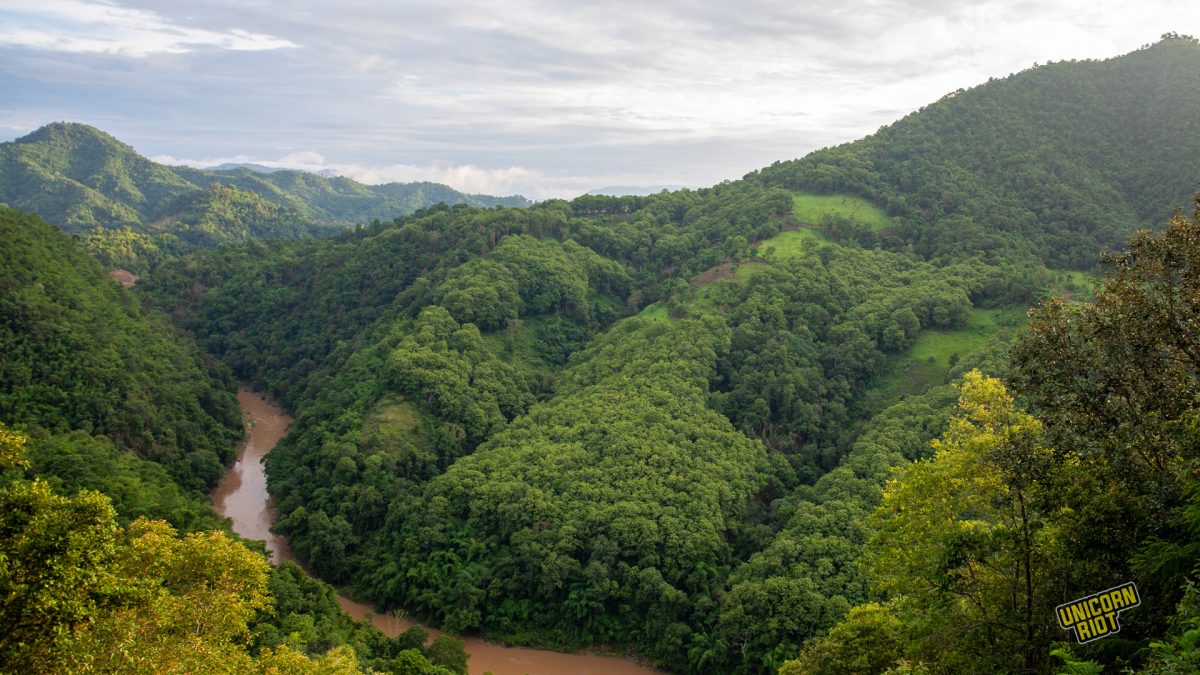
For many residents, the river’s ecological transformation began after severe flooding struck northern Thailand in 2024. As communities worked to recover, local researchers started testing the river’s water and sediments. In July 2025, they released findings showing increased concentrations of arsenic and other heavy metals in the Kok River downstream.
Since then, regular water sampling at multiple monitoring stations along the Kok, Sai, and Ruak rivers has continued to detect high levels of contaminants.
Although the long-term health impacts remain uncertain, exposure to arsenic and heavy metals is associated with an increased risk of serious illnesses, including cancer and damage to the liver, kidneys, and nervous system. Residents say the lack of clear information from authorities has only deepened their anxiety. Many first learned about the contamination through social media rather than official government announcements, and affected communities say they have received no support from the government.
While some residents have stopped fishing and avoid eating fish from the Kok River, many still depend on it for their daily survival. As concerns over contamination grow, access to safe food and clean water has become another form of inequality. For many, safer alternatives are too expensive or inaccessible, leaving them with little choice but to continue relying on the river.
“Before the flooding, we lived close to nature. We swam in the river and used it every day,” said Kru Nu, a teacher from a village on the banks of the Kok River. “After the flood, and then after the discovery of the toxic pollution, we realized that the river we had lived in harmony with for generations could be dangerous.”
Voices From the Walk
For many participants, the Kok River is more than a waterway. It is an ecosystem, a livelihood, and a shared responsibility that extends beyond national borders.
Among those who joined the march was Chak Kineesee, a bird researcher and volunteer with the Mekong School. Walking along the river, he described noticing a troubling decline in insects and birds — small but telling signs of a changing ecosystem. For him, the crisis is also a challenge to rethink how people relate to nature.
“In the past, we thought in terms of the state or our own community,” Chak said. “The young generation has to look beyond borders to create balance and harmony to connect with the forest, the water, the soil, and the animals.”
Another participant of the walk, Moe Satt, a member of the Myanmar Students’ Association at Mae Fah Luang University who’s originally from Taunggyi in Myanmar’s Shan State, said the pollution cannot be separated from the region’s political realities. He described how critical minerals mining in areas controlled by the United Wa State Army has become intertwined with the interests of the Myanmar military and Chinese investors. The contamination flowing into Thailand, he argued, is the product of a cross-border industry whose profits and responsibilities extend far beyond Myanmar alone.
Because of that, he believes no single government can resolve the crisis on its own. Meaningful progress, he said, will require dialogue between Thailand, Myanmar’s military authorities, ethnic armed groups, and the Chinese investors. So far, however, no such cooperation has materialized.
Despite the political obstacles, he found hope in the response from communities along the river. Residents welcomed the walkers and repeatedly expressed their determination to protect the Kok River.
“They were born with the Kok River. They grew up with the Kok River. They will die with the Kok River,” he said. “They don’t want to see it die. Their eyes are still full of hope.”
The Mining Boom Inside Myanmar
Since the February 2021 military coup, Myanmar has descended into civil war. Mass protests that erupted across the country were met with brutal military crackdowns, resulting in thousands of arrests and killings. According to the Assistance Association for Political Prisoners (AAPP), at least 31,686 people have been arrested since the coup, while at least 8,239 people have been killed by the military junta and pro-military groups.
The instability of the past five years has created conditions for the rapid expansion of extractive industries operating with limited oversight, including rare earth mining. In the Wa- controlled region of Myanmar’s Golden Triangle, an economy once associated with poppy cultivation and opium production has increasingly shifted toward another lucrative resource: critical minerals.
Hillsides that once fueled the global narcotics trade are now being dug up for rare earth extraction. These minerals are essential components in products ranging from electronics and electric vehicles to renewable energy technologies, aircraft engines, and military systems.
Critical minerals are found across the globe, from every continent to the depths of the ocean. Despite their name, many are not geologically rare, with some existing in the Earth’s crust at concentrations comparable to more commonly mined metals such as copper and tin. What distinguishes Myanmar is not the presence of these resources, but the conditions under which they are being extracted.
Years of military rule, armed conflict, and weak environmental governance have created an environment where mining operations can expand with limited regulation and no protections for affected communities.
The Human Cost of Mining
Due to ongoing conflict and limited access to mining sites, working conditions in Shan State’s gold and critical mineral mines are less documented than those in Myanmar’s jade and gemstone sectors, which have been linked to armed conflict, corruption, and unsafe labor conditions. However, many of the same patterns of risk are emerging in Shan State’s mining sector.
While jade mining is notorious for deadly landslides, gold and critical mineral workers face exposure to hazardous chemicals, unsafe conditions, and limited access to protection or compensation. The Shan Human Rights Foundation has also reported allegations of trafficking and forced labor involving workers transferred from Golden Triangle scam compounds to mining sites in Shan State as a form of punishment.
In conflict areas where resource extraction is controlled by powerful actors, safe and fair working conditions remain extremely difficult to achieve.
The experience of other rare earth producers shows the environmental challenges associated with the industry. In the United States, the Mountain Pass mine in California was once the world’s dominant source of rare earth elements. However, production declined sharply in the late 1990s and early 2000s following regulatory and environmental challenges. The shutdown of domestic processing contributed to growing U.S. dependence on imported rare earth materials, particularly from China.
China, while remaining the world’s largest producer and processor of rare earth elements, has also closed and restricted some mining operations in response to pollution concerns and efforts to strengthen environmental regulation. In Myanmar, however, communities living near rare earth mining sites have been left without meaningful environmental safeguards or protection from the consequences of extraction.
Cross-Border Supply Chain
Several mining sites along the Kok River are linked to Chinese state-owned companies. Dr. Suebsakun Kidnukorn, a social scientist known for his research on transboundary water pollution and heavy metal contamination in the Kok and Sai rivers, says Thailand plays an important role in the supply chain linking Myanmar’s critical mineral deposits to processing facilities in China. For minerals extracted in Myanmar’s Shan State, Thailand serves as the main overland transit route.
Among the minerals transported through the region, Tungsten is in particularly high global demand. Its exceptional hardness, high density, and the highest melting point of any metal make it a key material used in the production of aerospace and defense equipment.
For communities downstream along the Kok River, the global demand for critical minerals has created an environmental crisis with consequences they say they did not choose and cannot control.
A Fight for Clean Water
Participants in the walk agree that any lasting solution will require cooperation between Thailand, Myanmar’s military authorities, and ethnic armed groups, as well as China, whose demand for rare earth minerals drives much of the extraction. Yet none of them expressed optimism that such cooperation is likely anytime soon.
As long as Myanmar’s civil war continues, they said, holding mining operators accountable for environmental damage will remain extraordinarily difficult.
In the meantime, communities along the Kok River are focused on more immediate demands. They are calling on Thai authorities to provide safe alternative water supplies while supporting efforts to diversify local economies that have long depended on fishing, farming, and tourism.
For the activists who completed the walk, the struggle extends far beyond pollution. It is a fight to defend a river that sustains entire communities and to affirm that access to clean water is a fundamental human right.
“Water is our basic right. We don’t ask for privileged things,” said one participant from Myanmar’s Shan State.
Despite the scale of the crisis, Pavee, an artist from Bangkok who joined the march, sees hope in the growing movement across the region.
“At least we can speak openly about the problem here,” Pavee said. “In Myanmar and Laos, people cannot speak freely about these issues because of government censorship. Thailand has an opportunity to become a leader in raising awareness about what is happening.”
Follow us on X (aka Twitter), Facebook, YouTube, Vimeo, Instagram, Mastodon, Threads, BlueSky and Patreon.
Please consider a tax-deductible donation to help sustain our horizontally-organized, non-profit media organization: