Waging Peace in a Time of War in Thailand and Cambodia
The fog of war has not fully dissipated from the mountains and dense forests of Cambodia and Thailand’s borderlands, well over a year after the two nations became ensnared in deadly clashes. It is still unclear who fired the first shot, although both governments blame the other side for starting the conflict. Both armies left a wake of destruction in many of the normally peaceful, serene villages and towns along the border. It may take years to repair the damage caused by the fighting.
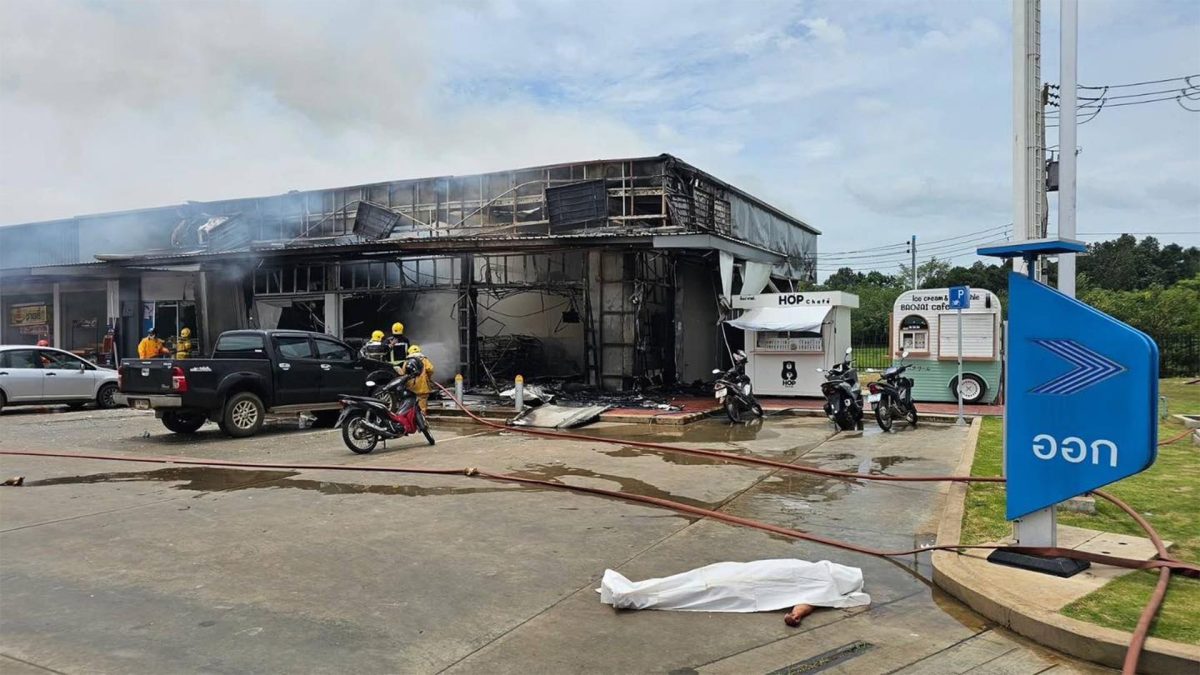
At the peak of the conflict, rockets rained down on houses and hospitals in Thailand. Civilians at a 7-Eleven in Thailand met their fate in an inferno of flames caused by a Cambodian rocket that struck the building. In Cambodia, children ran in a panic when their schools were evacuated. Thai F-16 fighter jets flew over Cambodia on bombing missions.
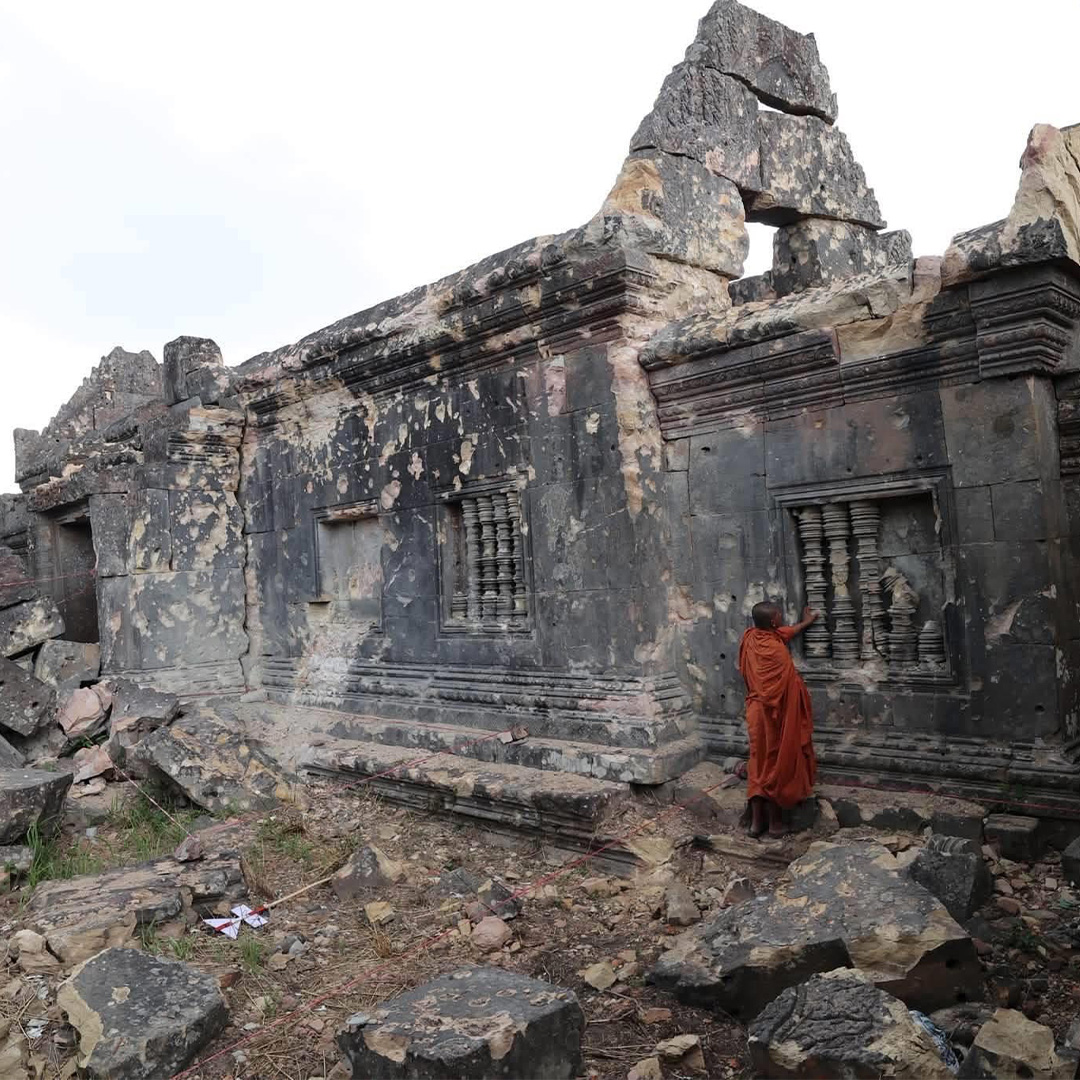
The ancient Khmer (Cambodian) temple and UNESCO World Heritage site Preah Vihear was barraged by ordnance from the Thai army, shattering parts of it into pieces. Hundreds of thousands of Thai and Khmer civilians were displaced from their villages, and moved into makeshift shelters. Many have not yet returned home.
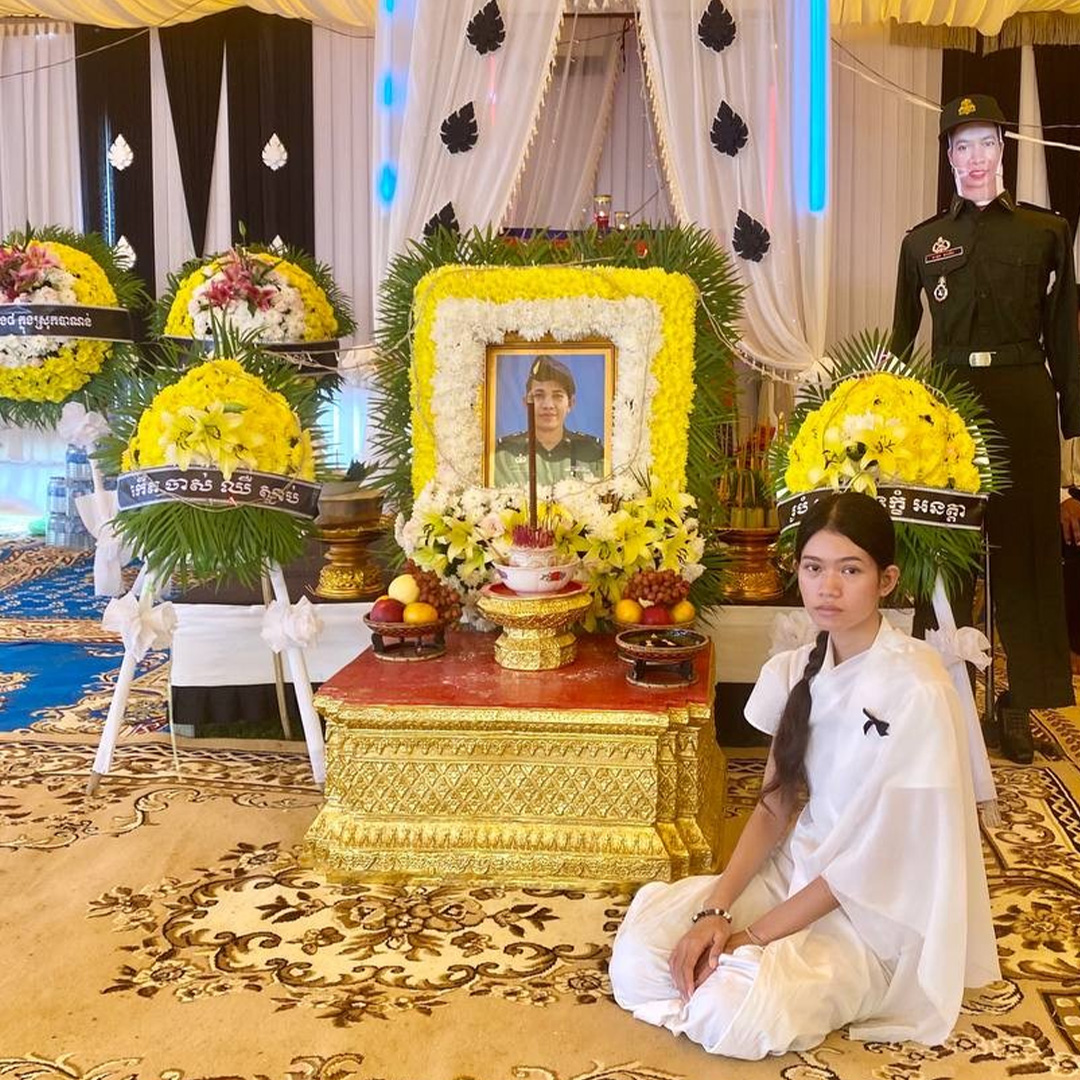
In total, at least 30 civilians in Cambodia, and 44 in Thailand were killed, with many more wounded. The Royal Thai Army laid to rest 43 soldiers. The Cambodian government has not publicly disclosed the total number of soldiers killed but estimates range from 73 to over 160.
Both countries agreed to a ceasefire in December, brokered by the U.S. and Malaysian governments, but this peace hangs delicately in the balance in a political environment overshadowed by the dominance of hyper nationalism and militarism, and the rapid spread of hatred and bigotry between Thai and Khmer people. Much of this has been fueled by social media, conspiracy theories, and AI. Since the conflict started, ruling elites and military hardliners in Thailand and Cambodia have consolidated more power and tightened the gears of repression.
In the midst of the politically volatile whirlwind where many citizens have lined up in support of their respective governments and militaries, a scattered network of Thai and Khmer activists forged solidarity with each other, spoke out against war and demanded peace at a time when it seemed impossible, even dangerous to do so.
‘We Firmly Oppose this War’
Paw Cratchang said she shut down her social media accounts when the fighting started between Cambodia and Thailand. The nationalist views expressed by many Thais, even from her friends, was “overwhelming,” she says. “People always think that war is black and white. They should have someone to lose and should have someone to win, and they hope the winning side is going to be their country,” she says. The reality, she explains, is much more complex.
“I was born in Surin province. It’s on the border with Cambodia,” she says. “Sometimes we speak a little bit of Thai and Cambodian language. It’s kind of like a mix.” Growing up so close to the border left an imprint on her understanding of national identity. “We are friends, we are relatives. People cross the border many times. They don’t think there’s a difference between each other,” she says of Khmer and Thai people.
And although she is a Thai citizen she says her family is “100% Lao” but were “colonized by Thailand” over the years. She also feels a deep affinity with and affection for Khmer people.
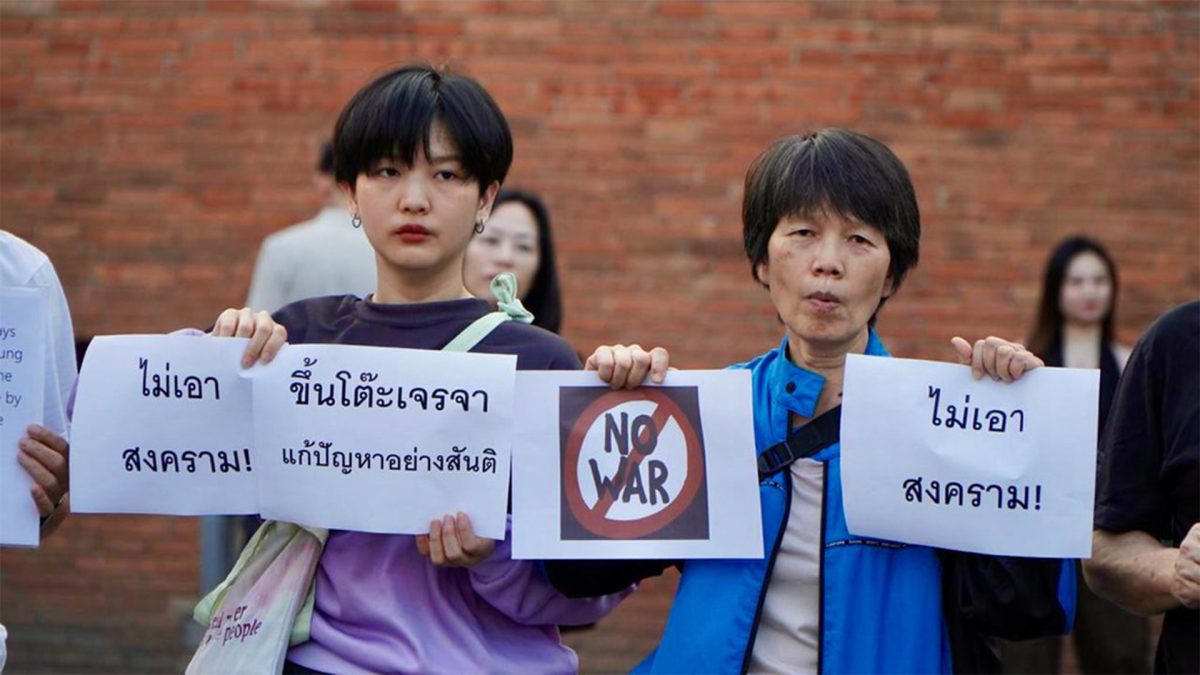
Cratchang is an anarchist. She holds a sharp critique of nationalism, nation-states, and borders. The Cambodian-Thai border, to her, is an arbitrary line that has ushered in a history of disaster and violence. Unable to sit back while the dispute intensified between Thailand and Cambodia, she helped organize antiwar protests with the Slash and Burn Collective and Solidarity Collective in Chiang Mai on June 7, 2025. It was ten days after a Cambodian soldier was killed by the Thai Army, and weeks before major clashes broke out at the border.
Other small protests sprouted up across Thailand. Activists created the hashtag #NoWarThaiCambodia and tried their best to push back against the torrent of nationalism and hatred on social media. The effort was small, and spearheaded by anarchists, socialists, and other activists.
Cratchang and other Thai activists interviewed said they were not worried about harassment from the authorities for their organizing, but were more concerned about nationalists who have a history of threatening leftists. Some more odious nationalists like the Thai social media influencer Gun Jompalang who “believes in vigilante justice,” whips up racist sentiment against Khmer people, and played ghost sounds on loudspeakers on the frontlines to intimidate Cambodian soldiers was held in particular contempt.
When fighting intensified in December, Cratchang and other activists spearheaded an effort to bring together 39 Khmer and Thai activist organizations in a coalition called the Thai-Cambodian People’s Alliance for Peace. They signed onto a statement that blamed both governments for starting, then prolonging, the conflict to deflect from “internal political instability” and to “conceal their failures in governing their countries, including failures to suppress transnational criminal businesses.”
This was a nod to the scam industry in Southeast Asia, which has been allowed to flourish in Cambodia in recent years, accounting for what amounts to half the country’s GDP. Thailand says that the scam industry is its target in some of its military incursions. However, scam centers have also grown in Thailand and neighboring countries.
The Thai–Cambodian People’s Alliance for Peace said that they “firmly oppose this war, which has never been necessary and exists only to divert attention from the real internal political problems in both Thailand and Cambodia.”
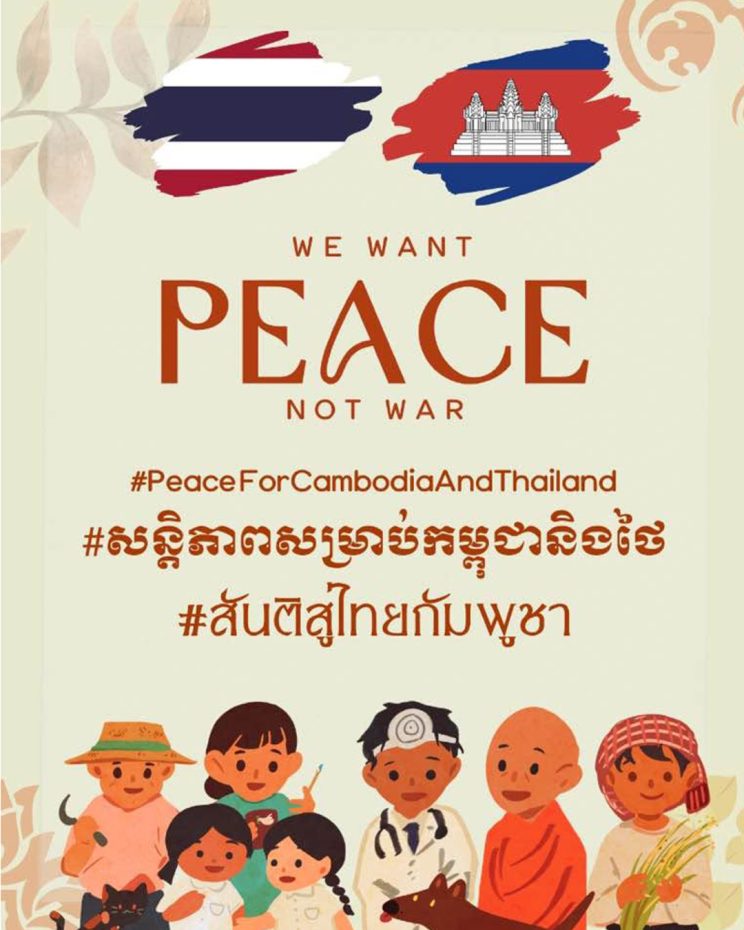
The alliance gave a list of demands to both governments: namely to stop the fighting, implement a ceasefire, and ensure the safety and livelihood of people and workers on both sides of the border. To the signatories of the letter, this conflict was not between nations, but one waged by a ruling class against poor and working class Khmer and Thai people.
Preah Vihear in the Crosshairs
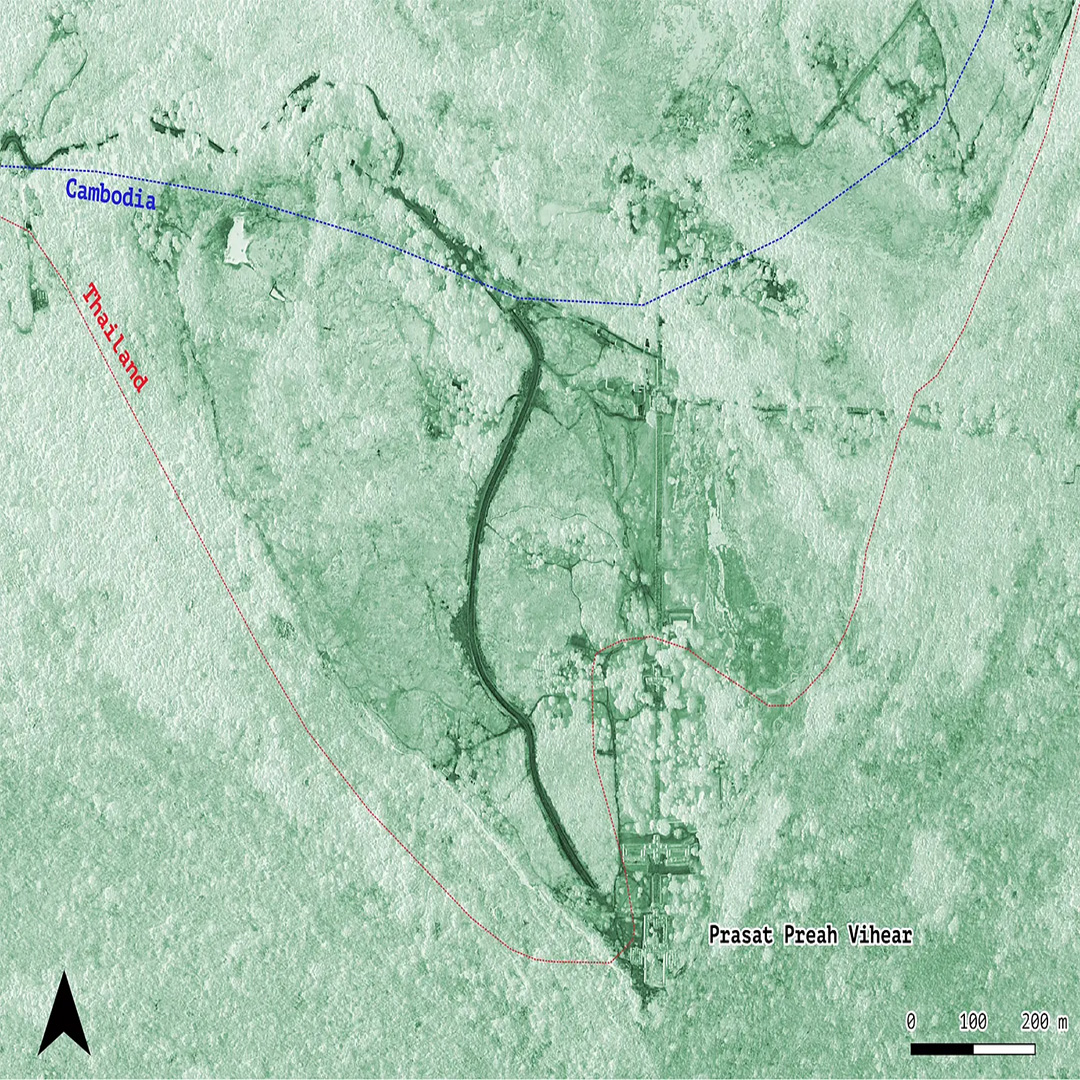
The ancient Preah Vihear temple sits at the center of this conflict. The Hindu temple was first built during the 9th century during the rise of the powerful Khmer Empire. At its peak the empire’s territory stretched to include much of Thailand and swaths of surrounding countries. It was home to some of the largest temples and cities in the world.
Under the rule of the Khmer Empire, and other kingdoms, there were never fixed borders like today. States rose and fell, boundaries expanded, contracted, and overlapped. People sometimes paid tribute to two rulers at once.
It wasn’t until the conquest of Southeast Asia by Europeans that a peculiar new concept was introduced to the region which disrupted ancient political practices: fixed borders, and modern nation-states. The neighbors of Thailand, then called Siam, fell victim to European colonization. Many Thais today have pride in the fact their nation was never under direct European colonial rule. But Siam played by colonial rules and served as a buffer between the British and French. This is where the roots of the modern conflict can be traced.
In 1907, the French drew a map of the border and signed a series of treaties with the rulers of Siam. Preah Vihear was marked as Cambodian territory. It was not until the 1930s under the fascist rule of Plaek Phibunsongkhram that Thailand, the new name he gave to Siam, rejected the boundaries established in the map. Where precisely the border is has been in dispute ever since.
After Cambodia’s independence and the end of the French occupation in 1953, Thai soldiers moved in to occupy Preah Vihear. Cambodia took Thailand to the International Court of Justice (ICJ), using the 1907 map in their claims over Preah Vihear. The court ruled in favor of Cambodia in 1962, Thailand withdrew their forces, but contested the ruling.
Cambodia again went to the ICJ after violent clashes between the two nations broke out at Preah Vihear in 2011. The court again ruled in Cambodia’s favor in 2013, and both armies left the area. The tension between both nations never fully faded.
Bitterness between Cambodia and Thailand does not only surround ancient history and Preah Vihear. Thailand was a close ally of the U.S. during the Cold War. Airbases were opened up to the Americans to launch bombing campaigns into Vietnam, Laos, and Cambodia during the war in Vietnam. Over 40,000 Thai soldiers fought alongside American soldiers in Vietnam. Thailand also fought a domestic communist insurgency, and in 1976 students and leftists were massacred at Thammasat University in Bangkok.
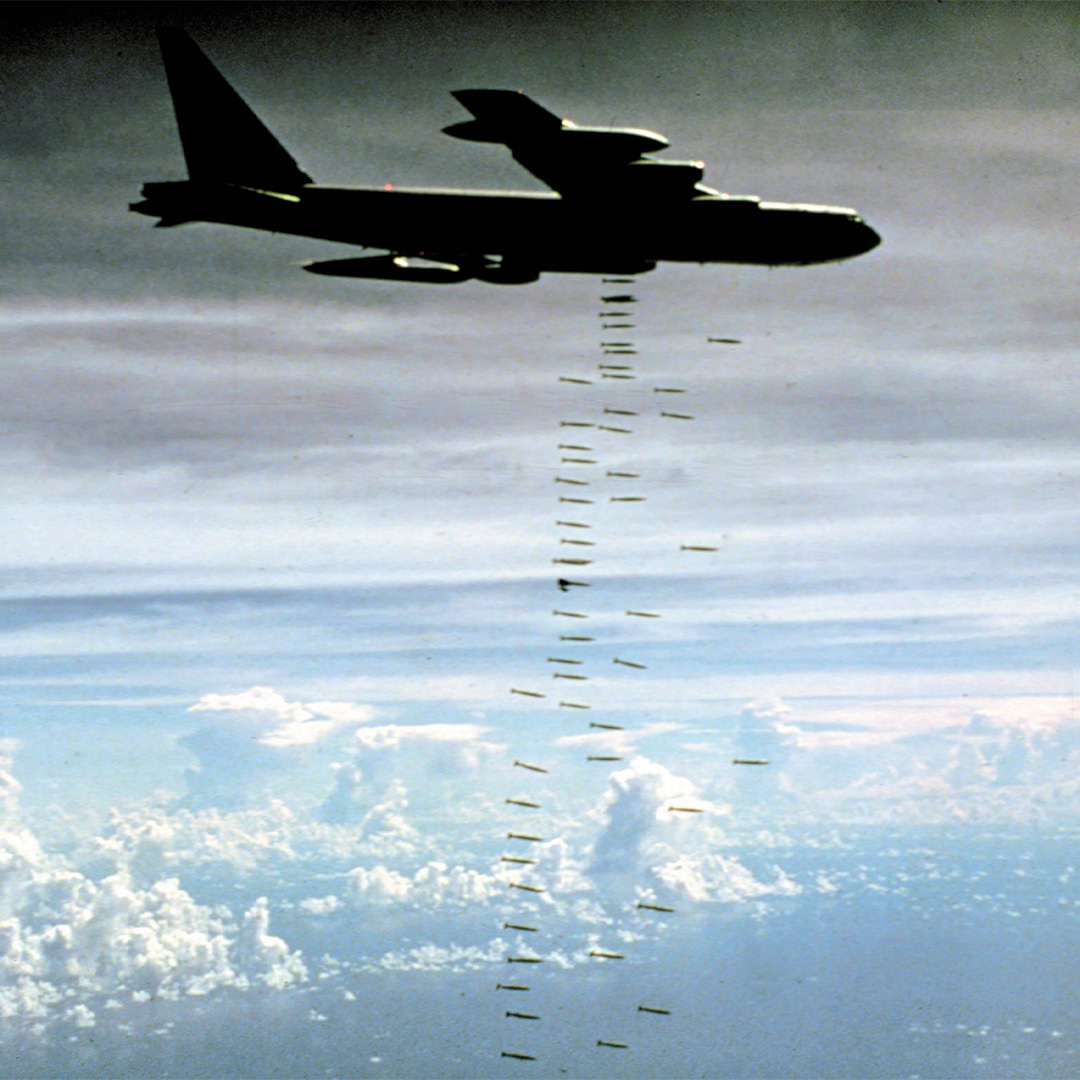
Thailand’s relationship was so close to the U.S. that former military strongman and prime minister Marshal Kittikachorn boasted that the U.S. could consider Thailand the 51st state.
In Cambodia the authoritarian communist Khmer Rouge rose to power in 1975 and ushered in a bloody genocide that is estimated to have killed off between 1.5 to 3 million people. The genocide ended when Vietnam invaded in 1979. The remaining Khmer Rouge fighters fled to the borderlands of Thailand where they continued to fight the newly formed pro-Vietnam government until 1997. It was during this time that the Khmer Rouge found support from the U.S., the West, and Thailand, who preferred them over the Cambodian government.
A particularly tragic episode after the fall of the Khmer Rouge was the Preah Vihear massacre in 1979. At that time Thailand’s border region swelled with refugees from Cambodia. The Thai army turned away 45,000 Khmer refugees and forced them into the minefields surrounding Preah Vihear. Nearly 10,000 refugees that survived the genocide fell victim to Thai bullets, landmines, starvation, or malaria.
When the Thai Army attacked Preah Vihear in 2025, claiming that the Cambodian army used the historic site for military purposes, it tapped into an anger going back generations in Cambodia.
Peace Developer — From Education to Action
Nhouv Yuminea is a university student in Phnom Penh who joined a group of Thai and Khmer researchers in 2024 to write about online conflict between people in Cambodia and Thailand. The collective research the group did was published in a book. This further inspired them “to make something impactful together,” says Nhouv. They wanted to move beyond purely academic work and take action against the war. “We organized a youth network called Peace Developer,” says Nhouv.
On July 24, 2025, Peace Developer released a statement urging both governments to stop the conflict and work towards peace. “We do not want to witness the loss of any more lives—whether it’s a soldier, a sibling, a neighbor, or someone who simply shares the same stretch of land we call home,” the statement said. “Both Cambodia and Thailand have walked long roads marked by pain, loss, and conflict. Our histories have shown us time and again: war solves nothing. It only leaves behind broken homes, destroyed schools, and dreams reduced to ashes.”
Thai Peace Developer Rungrot Tatiyawongwiwat said the statement even garnered the attention of Cambodian government officials. In jest he speculated that Peace Developer could be on a government “watch list” but was quick to add there was “no solid proof” for that.
The fear is not unfounded. Both the Cambodian and Thai governments have increased political repression in recent years, with dissidents sentenced to long prison terms, forced into exile, and protests at times violently repressed.
Other members of Peace Developer made efforts to call for peace during the earliest stages of the conflict. Rungrot Tatiyawongwiwat attended a political gathering organized by activists from the progressive People’s Party at Srinakharinwirot University. A group of Thai socialists that staged an antiwar demonstration earlier that day was also present. “We were there, listening to what their political party members talked about – the solution of how we can get out of this conflict peacefully,” says Tatiyawongwiwat. “We are the living proof of the anti-war movement.” he says.
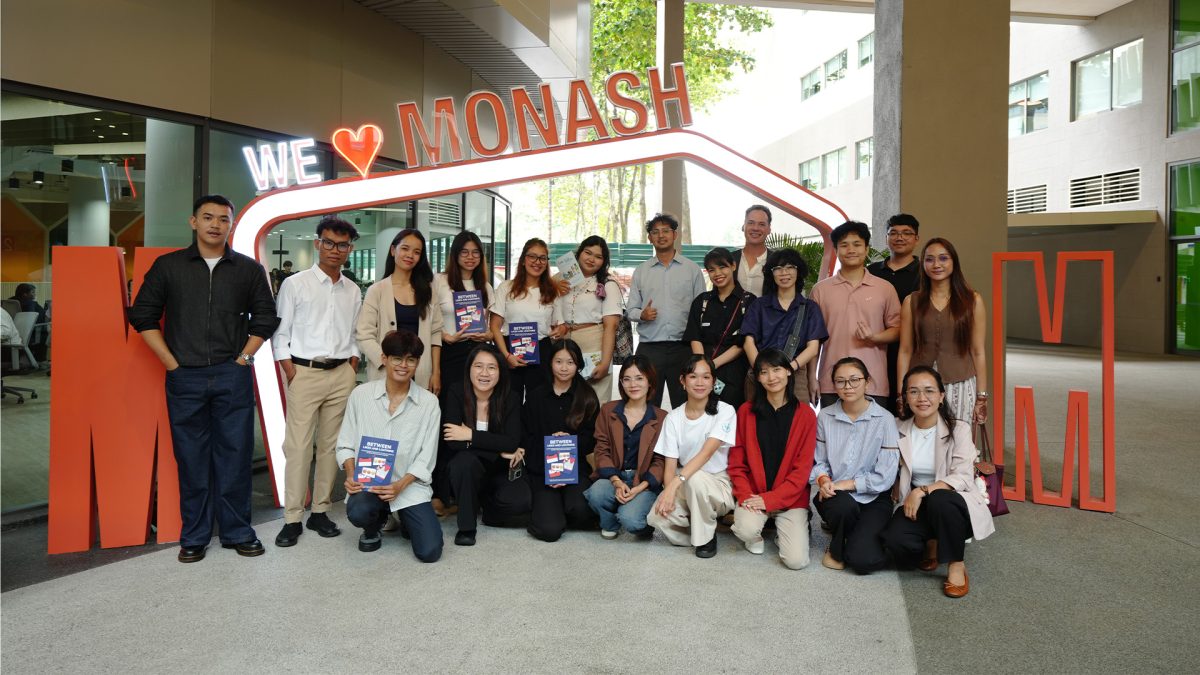
Peace Developer gave public presentations across Southeast Asia about their research and continued to advocate for peace and dialogue.
Although Thais were allowed to travel freely to go to Cambodia to speak, Khmer participants were blocked by Cambodian immigration officers from departing at the airport in Phnom Penh for what they were told by officials were “safety concerns,” says Nhouv. “During that time, only foreigners and Thais were allowed to go,” she says.
Many Khmer people have found it incredibly difficult to travel to and from Thailand. Before the conflict, 1.2 million migrant Khmer workers were in Thailand, and tens of thousands of people crossed the border daily. The Cambodian Ministry of Labor offered 230,000 jobs to Khmer workers returning home from Thailand. Some returning Khmer migrants described horrific treatment by Thai soldiers. One 18 year old Khmer woman said she was gang raped by Thai soldiers after she and a group of migrants were extorted and beaten by them while trying to return home. The Thai government denied these claims.
Over 900,000 people returned to Cambodia, but many have found it challenging to secure jobs, especially while Cambodia is suffering from an economic crisis caused by the conflict, the war in Iran, and the shakeup of the scam industry in Cambodia. The land border crossings remain closed.
Nhouv says that her experience with Peace Developer has been both illuminating and transformative. She grew up hearing negative views about Thailand from the older generation. “When I joined the project, I think something changed a bit inside me, especially my perception,” she says. She started to view people more as global citizens, and less as purely shaped by their nationality. It’s a perception shared by others in the group who started to question or criticize the nationalist views they were raised to believe.
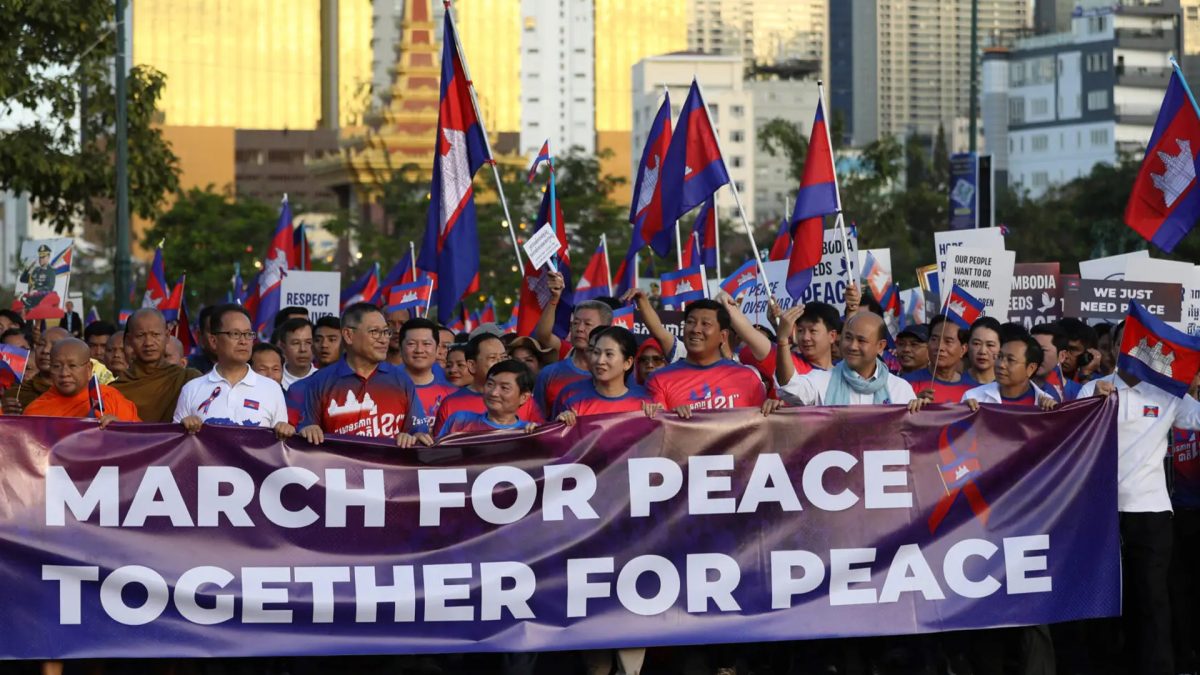
Peace Developer members had their critiques of nationalism tested on December 18, 2025, when a government-backed “March for Peace” was held in Phnom Penh. A reported 30,000 people attended the march which was led in the front by Cambodian government officials.
“The protests in Thailand happened with a very small number of people, but what they do is they call for peace” says Chan Somnang, a member of Peace Developer who is withholding his real name for fear of government repression. “The protest in Cambodia is about supporting Cambodian soldiers, about supporting the government. It’s more about that solidarity and also the nationalist spirit. It’s a different picture compared to Thailand.”
‘Used as Tools To Preserve Elite Power’
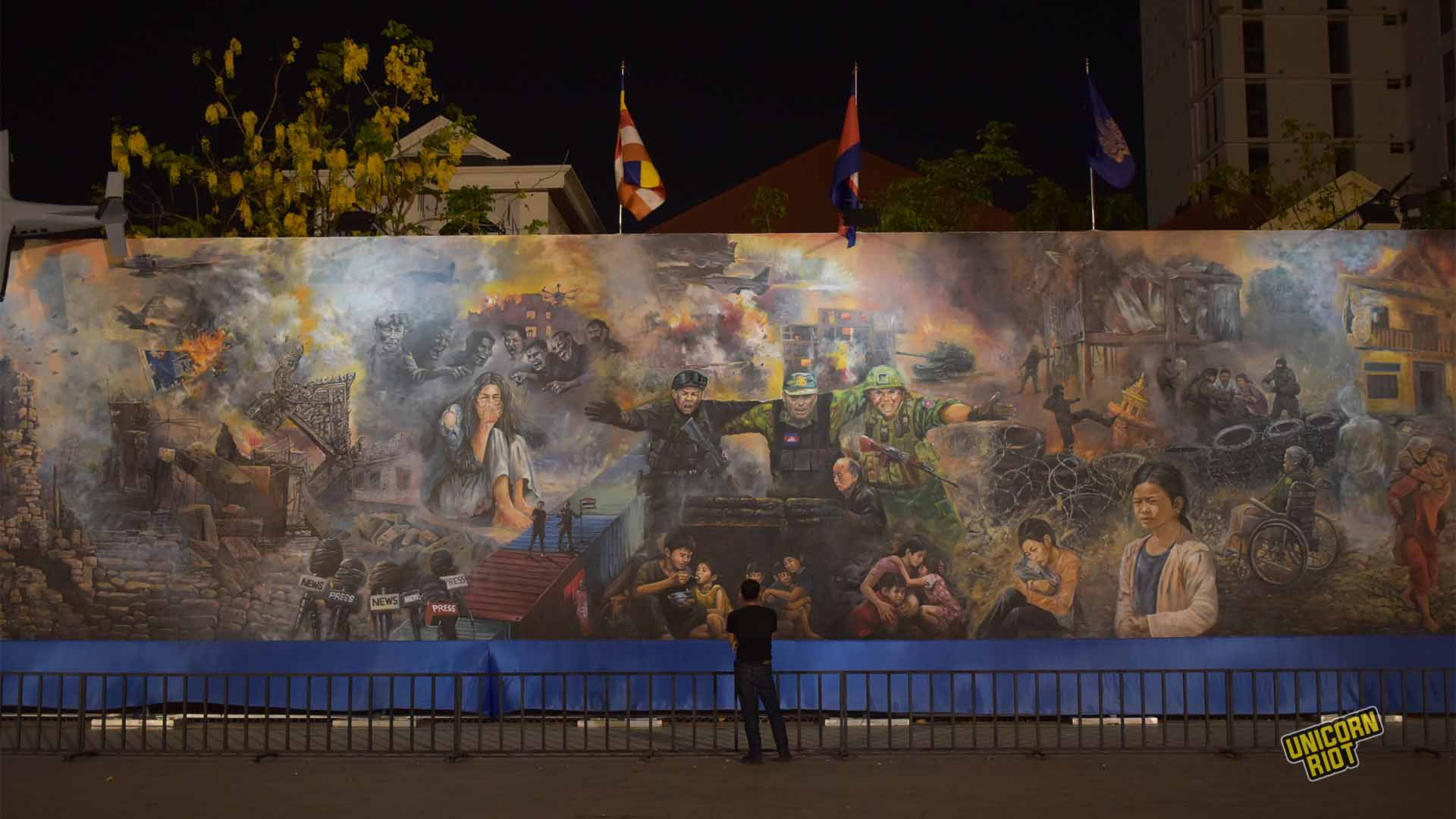
A short walk from the Royal Palace in Phnom Penh stands an impressive mural on display in Wat Botum Park. Part public art, part propaganda, it’s a collage of heartbreaking events from the conflict alongside images of Thai soldiers depicted as malicious invaders. Cambodian soldiers, Prime Minister Hun Manet, his father and de facto leader of Cambodia Hun Sen, and their wives are prominently displayed as heroes of the nation. It’s a raw testament to the power of nationalism in Cambodia.
Questions abound over who exactly will benefit from this conflict long term. The Thai-Cambodian People’s Alliance for Peace did not mince words when they stated that “extreme nationalism and militarism” was being used by elites “to strengthen the power of the armed forces of both countries and to foster hatred among the people, who are being used as tools to preserve elite power.”
Since the conflict started, politics in Thailand have been shaken up. When tensions first flared up at the border, Prime Minister Paetongtarn Shinawatra attempted to calm the situation and called Hun Sen, a close friend to her father and former prime minister Thaksin Shinawatra. A recording of the phone call was leaked to the public, and Shinawatra was soon removed from office. With the fall of Shinawatra, conservative pro-royalist forces close to the military were brought to power with the ascendance of Anutin Charnvirakul and in national elections on February 8.
The rise in power and popularity of the military worries activists like Paw Cratchang. “They know they were less popular in Thai society, especially after the 2020 uprising,” she says. The military has long played a central role in Thai politics and has launched multiple coups in the last 100 years.
Mass protests in 2020, the ascendance of a larger political opposition on the left, and increasing public criticism of the military has put the Royal Thai Army in check. However, support for the armed forces has dramatically risen since the start of the conflict.
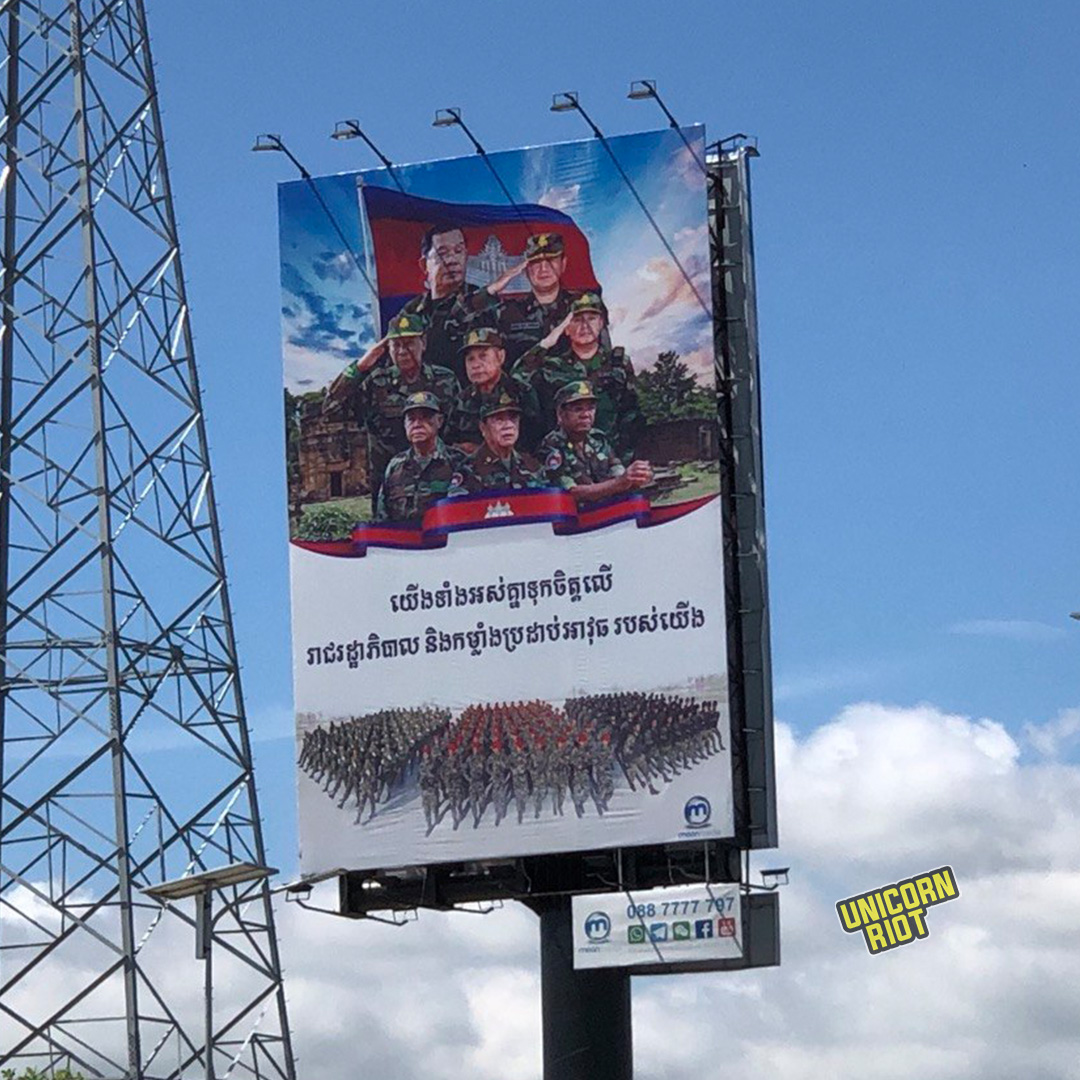
The ruling Cambodian People’s Party and the Prime Minister Hun Manet and his father Hun Sen have been successful in shoring up more support for their government. Concerns over the economic crisis, the scam industry, and repression are often drowned out by the clamor of nationalism and unity. The conflict has also enabled the government to ratchet up its repression of journalists.
Nhouv Yuminea surmises that “maybe those who are at the top” gained the most from the conflict. Her focus in building peace however is on those most directly impacted at the border. “I can see a lot of people have been hurt by this war, especially those civilians who live at the border when they have to evacuate and they have to flee to the refugee camps,” she says. Many are still struggling.
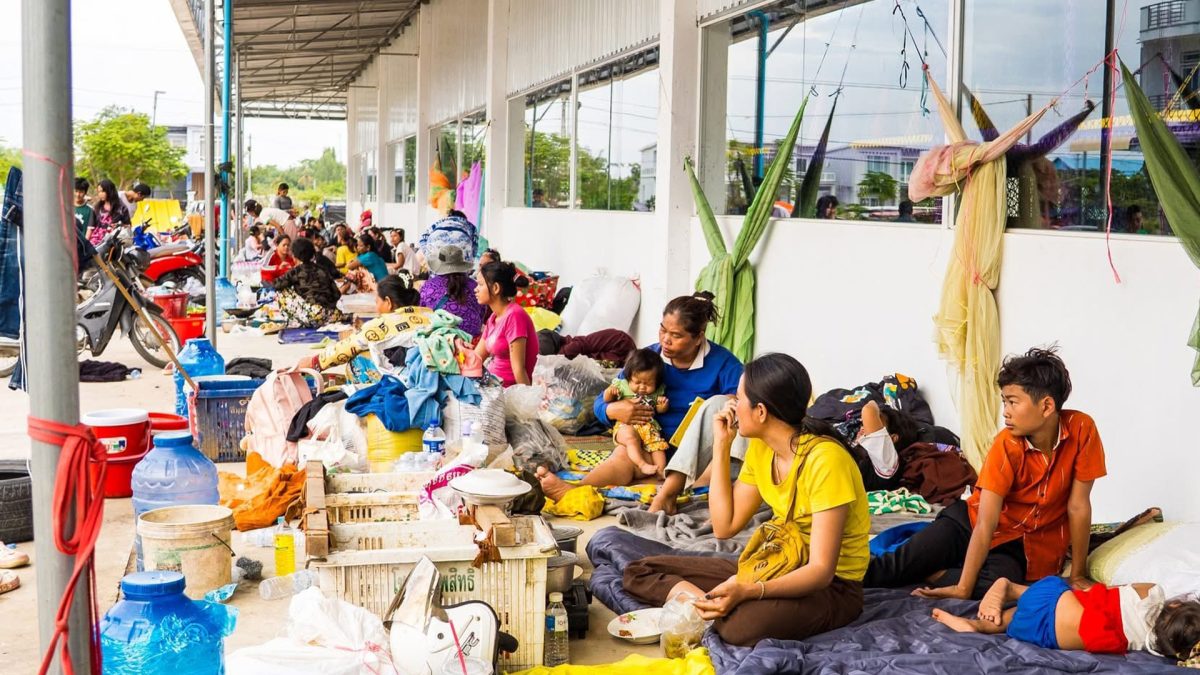
The people of Cambodia and Thailand are still on edge, not certain if or when fighting may break out again. Although much stands in the way of any efforts for Thai and Khmer people to develop more understanding and to build more solidarity with each other. Much more work has to be done by activists to form a larger movement.
“A lot of people want peace,” says Nhouv Yuminea, who remains hopeful. “The kind of peace work to bring people together between and across the border is possible.”
Editors’ note: On Khmer (Cambodian) names. Names are normally written in the Khmer language with the surname first, and the given/first name last. This form was used in this article.
Cover image: A man stands in front of the “Art for Peace” mural in Wat Botum Park, Phnom Penh. (Photo: Brendan Maslauskas Dunn)
Follow us on X (aka Twitter), Facebook, YouTube, Vimeo, Instagram, Mastodon, Threads, BlueSky and Patreon.
Please consider a tax-deductible donation to help sustain our horizontally-organized, non-profit media organization: