TikTok Revolt in France: A New Generation Takes To The Streets
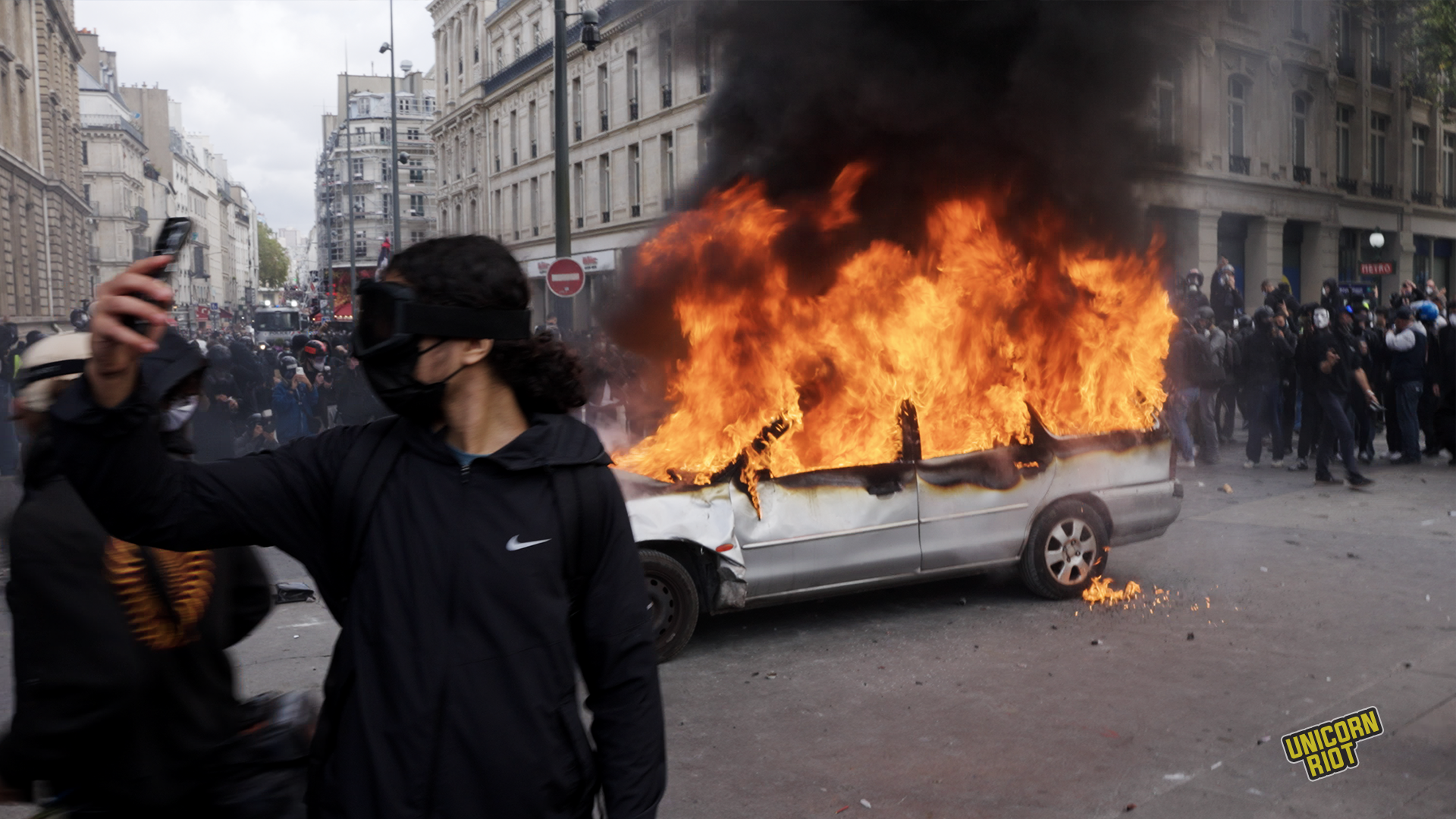
On October 17, France witnessed some of the most intense urban unrest in its recent history. Hundreds of thousands of people demonstrated across the country, while clashes with police, widespread looting, and burning barricades transformed the streets of numerous cities. Activists described the events to Unicorn Riot as among “the fiercest riots France has experienced since World War II.”
The protests were not confined to Paris. From Marseille and Lyon to Bordeaux, Limoges, and numerous smaller cities, demonstrators confronted police, occupied streets, and attacked commercial and government buildings.
The mobilization had begun weeks earlier. On September 7, a young TikToker called for a revival of the Yellow Vests movement, which had shaken France in 2018 and 2019. The immediate trigger of the original movement was the rising price of fuel, which had climbed above two euros per liter.
Meanwhile, an independent wave of high school protests was spreading across France. Students were protesting deteriorating school infrastructure, chronic underfunding of public education, and worsening conditions in classrooms. Hundreds of schools were reportedly occupied or blockaded during the preceding weeks.
These two mobilizations began to reinforce each other, turning October 17 into a focal point for broader social discontent. On TikTok, a veritable media storm unfolded. AI-generated videos, influencers, humorous memes, and countless short clips promoted the demonstrations and in the prospect of a Yellow Vests comeback. Old footage from the movement was recreated, remixed, and circulated to a new generation. High school students were particularly active. In videos shared across social media, groups of students danced to the viral song “Hey Mr. Policeman” in front of police lines during their demonstrations. By Saturday, the mobilization had reached an extraordinary scale.
According to organizers, approximately 800,000 people demonstrated across France. The Interior Ministry estimated 550,000 participants, including 110,000 in Paris. For comparison, during the massive mobilization against the Loi Travail labor reforms on June 14, 2016, organizers estimated that 1.3 million people had taken to the streets nationwide.
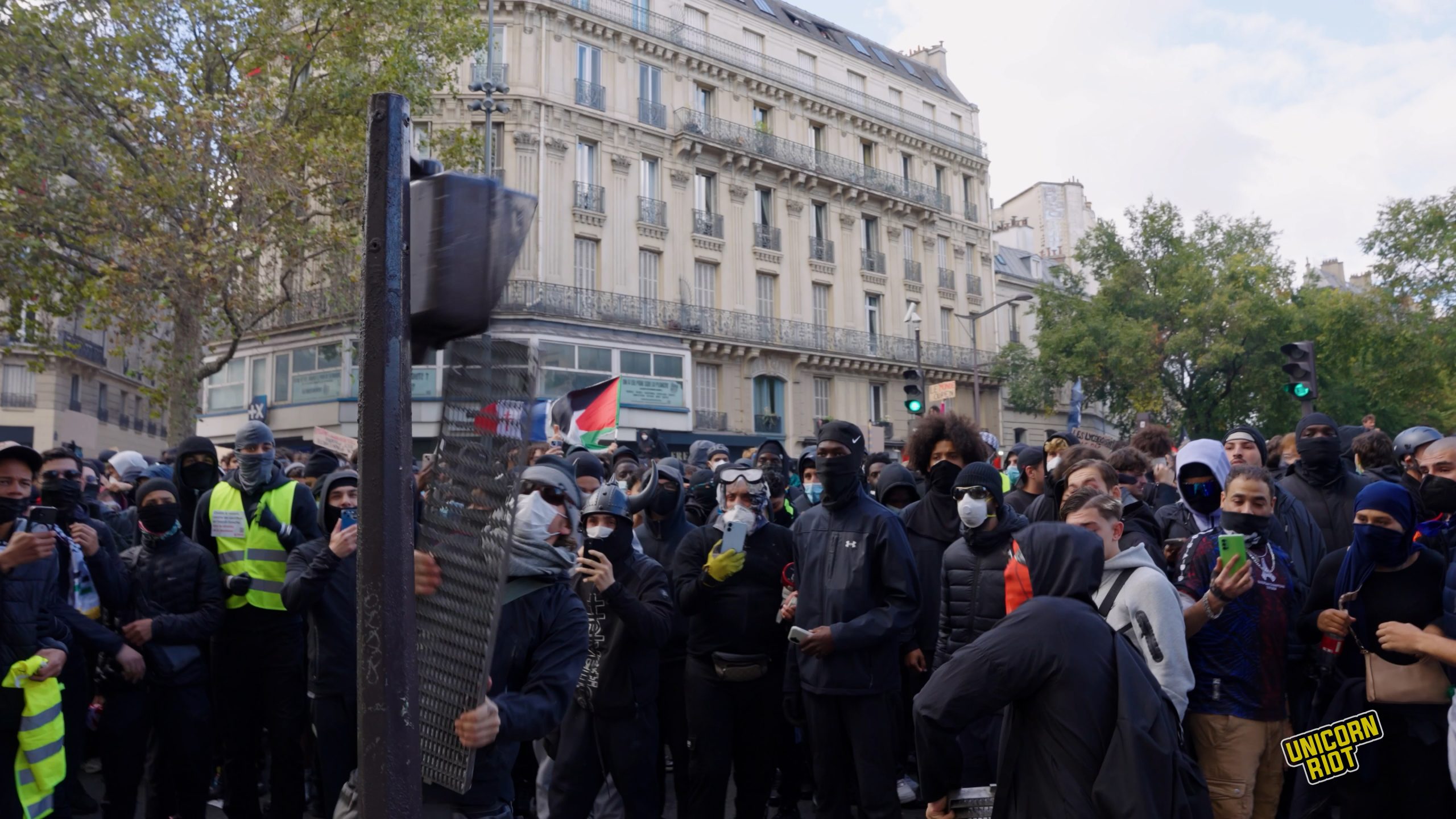
The protests developed into widespread urban unrest with more than 2,000 businesses attacked or looted, vehicles set on fire, and government buildings targeted. In Limoges, masked individuals entered the historic 19th-century city hall and set it ablaze. The fire destroyed large parts of the building, including its roof. In Marseille, protesters forced their way into city hall.
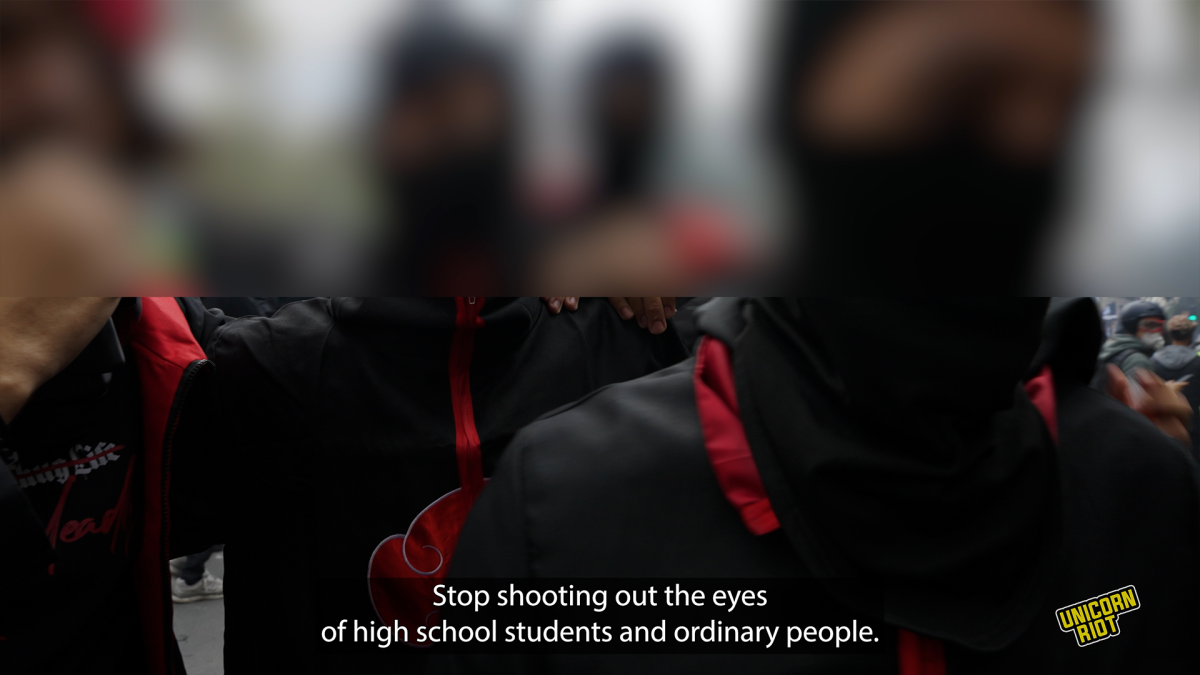
“Stop shooting out the eyes of high school students and ordinary people. These are people who are studying. And you’re blinding people, you’re blinding people who are studying. These are people, they’re victims, and you’re hurting them.”
Paris: The Streets Breakaway From the Official March
The morning in Paris began with relatively unsuccessful attempts to mobilize around several railway stations. Groups of protesters were repeatedly surrounded or dispersed by police, preventing them from gathering in larger numbers.
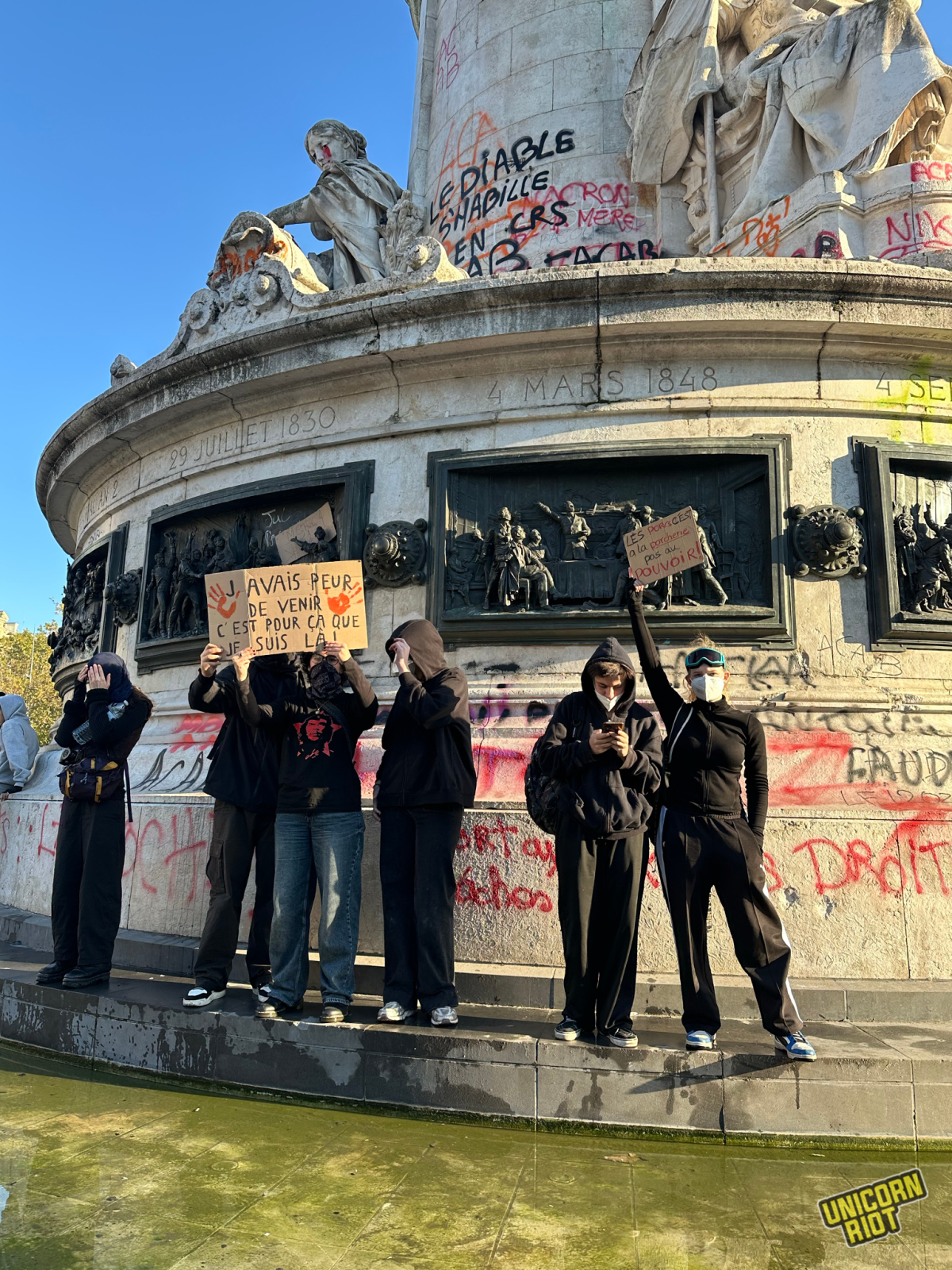
By approximately 2 p.m., however, the center of the mobilization had shifted to Place de la République, where tens of thousands of people assembled.
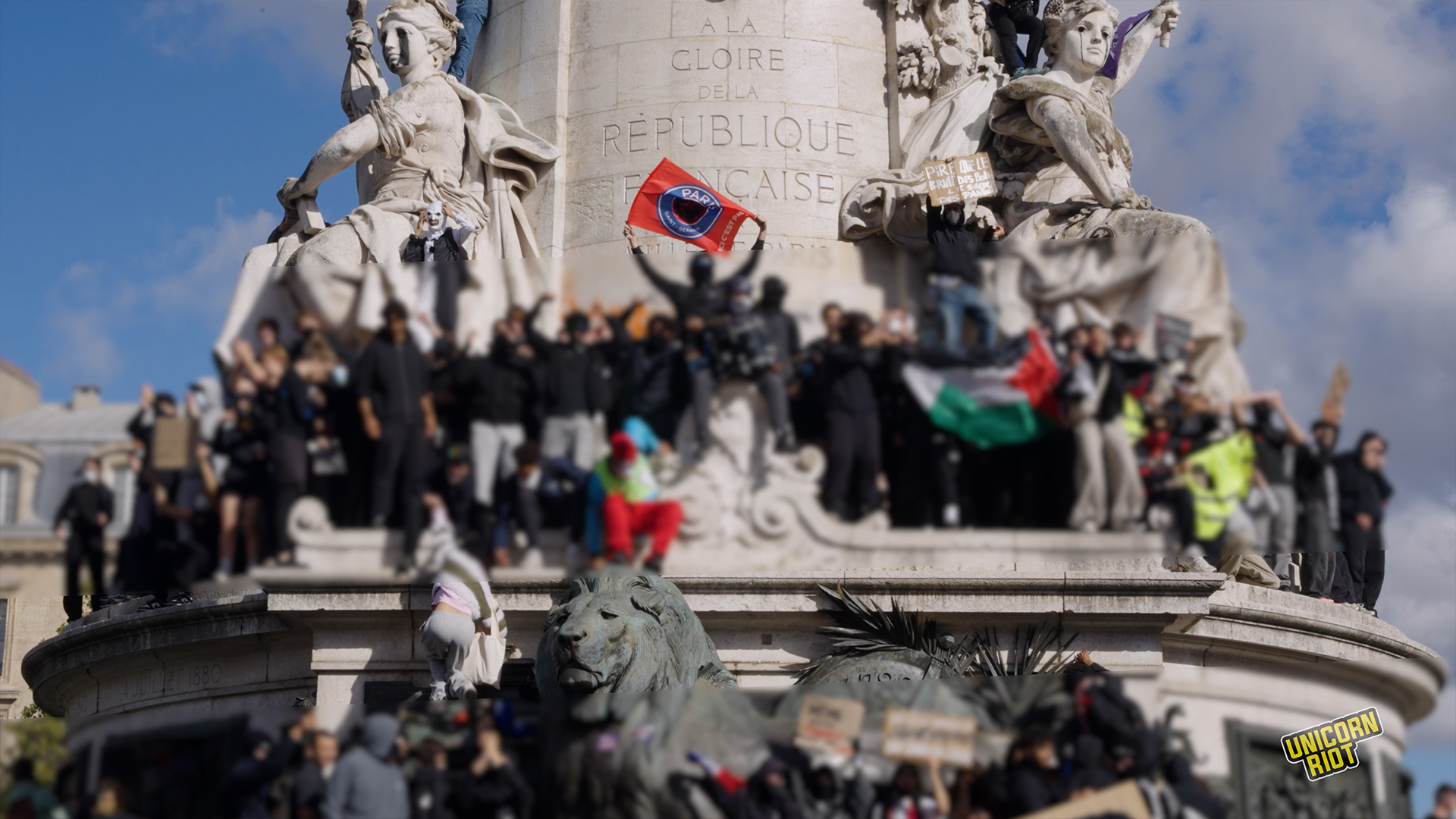
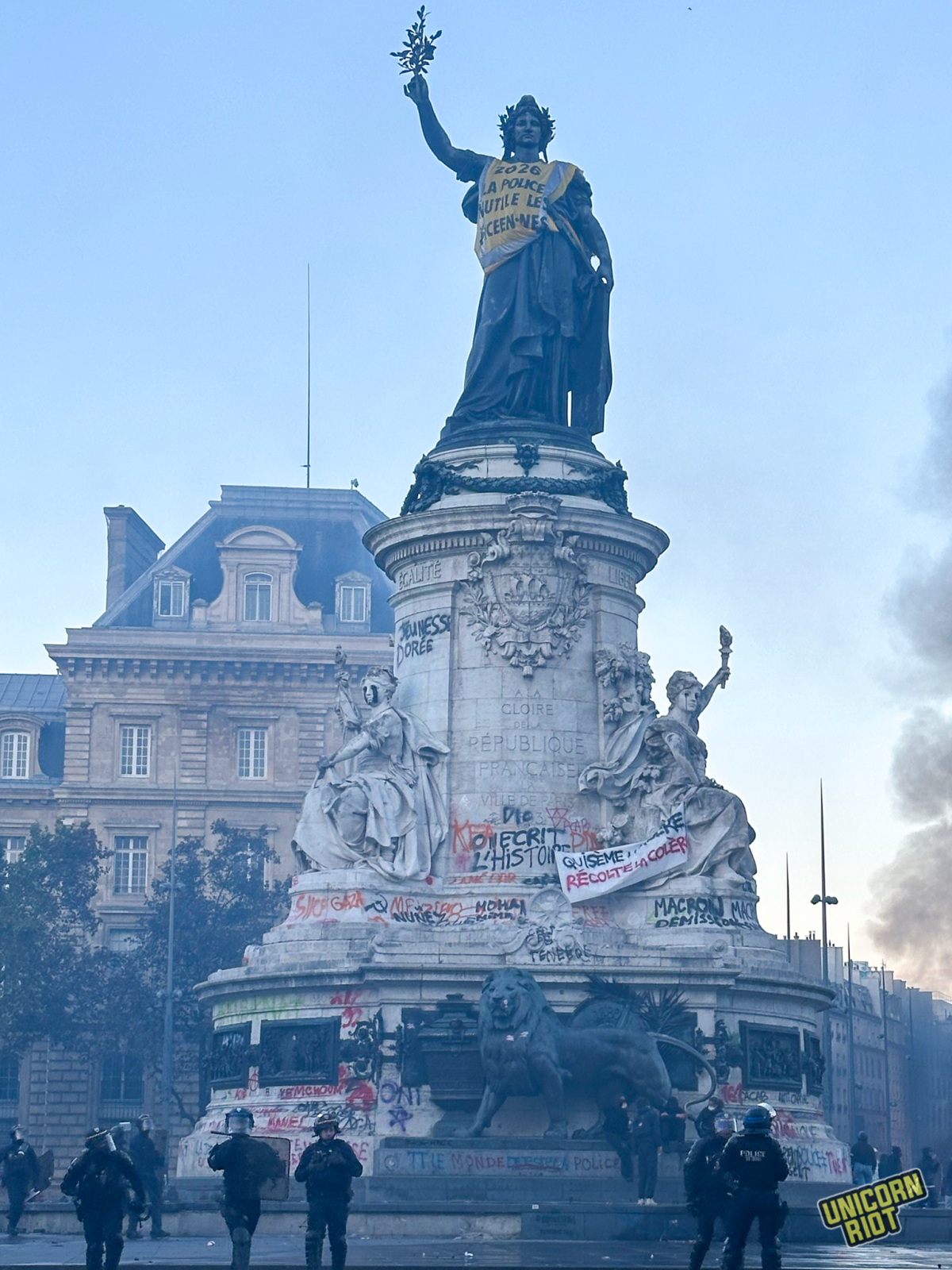
As the first confrontations with police began, protesters gathered around the monumental statue of Marianne, the symbolic representation of the French Republic. Activists had dressed the statue in an enormous yellow vest. One side carried a message referring to October 17, 1961, when Paris police massacred Algerian demonstrators protesting a discriminatory curfew. The other side denounced the treatment of students by police in 2026.
The symbolism was unmistakable: the current revolt was being connected to France’s history of colonial violence and contemporary police repression.
What followed was difficult to describe: rather than following the conventional and thus predetermined demonstration route, large groups of protesters began moving in multiple directions.
Traditionally, major demonstrations in Paris follow routes negotiated between unions and authorities, often connecting large squares such as République, Bastille, or Nation. These routes allow police to concentrate their forces and contain demonstrations within relatively predictable boundaries. On October 17, that model collapsed.
Instead of remaining within a single march, protesters dispersed throughout the surrounding streets. Near Place de la République, supermarkets, tobacco shops, and other businesses were broken into and goods were taken and at times dispersed to those who are unhoused.
As the afternoon progressed, crowds formed in different parts of the city. Entire intersections and stretches of road were taken over, while police struggled to respond to simultaneous confrontations. In some neighborhoods, officers appeared to lose control of the streets for hours.
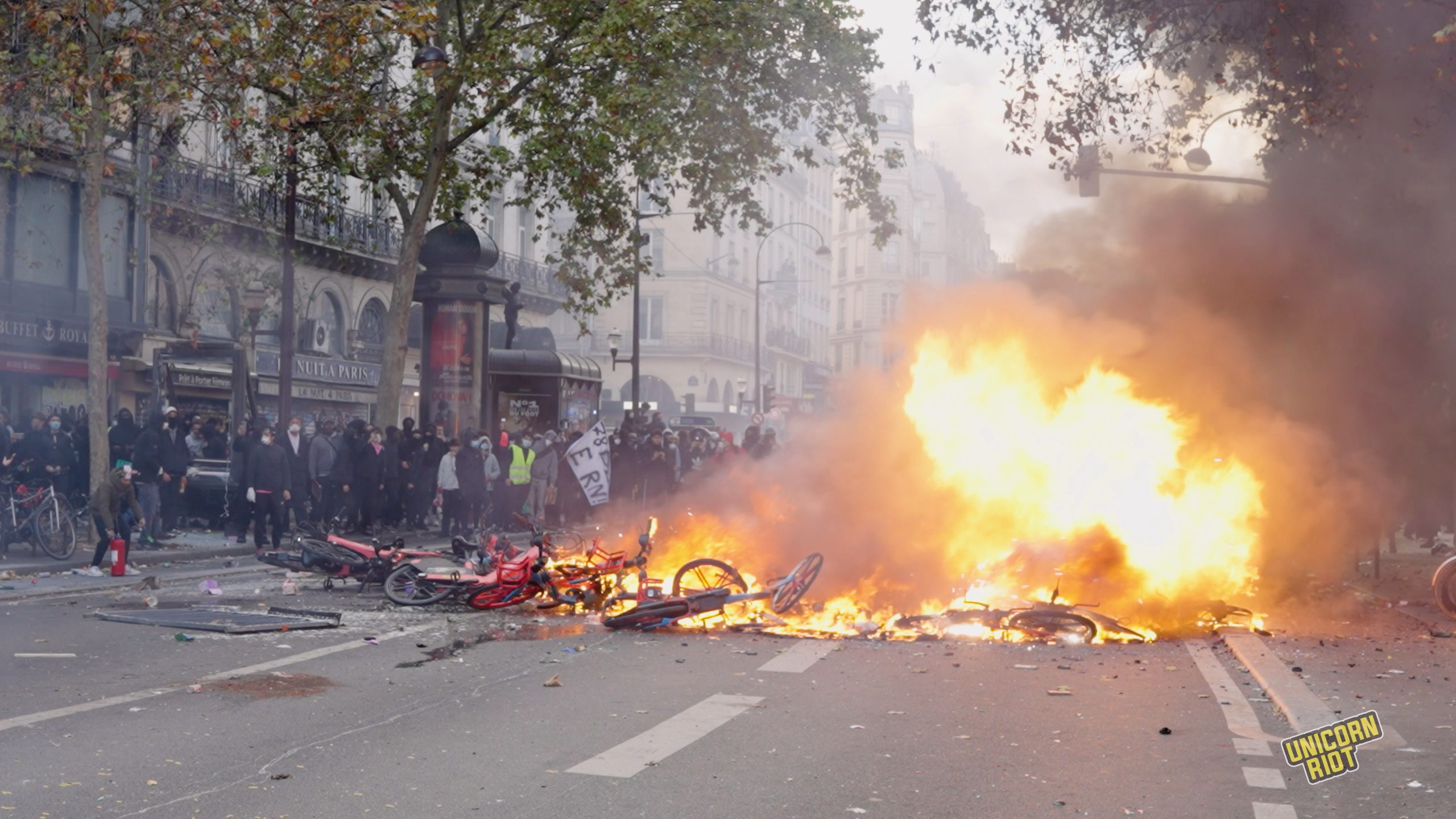
The unrest spread across several Parisian arrondissements, or administrative districts. Barricades were erected, vehicles were set on fire, and police deployed large quantities of tear gas in attempts to disperse the crowds.
Groups moved through side streets, regrouped at intersections, and reappeared elsewhere as police attempted to contain them. Some areas were under total occupation of those groups.
The decentralized nature of the unrest made it exceptionally difficult for authorities to regain control. Only the following morning did the full extent of the destruction become visible. Shattered storefronts, burned vehicles, and debris covered streets across the capital. Similar scenes had unfolded in cities throughout France, extending far beyond the country’s major metropolitan centers.
Scenes from Paris, France on October 17, as nationwide protests brought together masses of people protesting rising fuel prices, in solidarity with the student mobilizations, and opposition to nearly a decade of Macronism. 🧵
— Unicorn Riot (@unicornriot.bsky.social) October 17, 2026 at 6:03 PM
Hundreds of thousands marched across France today. Vandalism of state and corporate institutions were reported as tensions escalate ahead of next year’s presidential election. This video shows protesters attacking a surveillance camera in Paris as the crowd cheers when the camera gets knocked down.
— Unicorn Riot (@unicornriot.bsky.social) October 17, 2026 at 6:07 PM
“The economy is collapsing. There’s more demand than supply in France, with the recession and everything what’s going on. The problems in schools. So we’re here to demand our rights.”
The Youth at the Center of the Revolt
But who were the people taking to the streets? As Unicorn Riot’s video report shows, anyone who took the time to speak with protesters at Place de la République quickly discovered that many were young people fighting for a better future. Their grievances went far beyond fuel prices.
Some were demonstrating for better schools and adequate funding for public education. Others spoke about the rising cost of living, declining purchasing power, and the lack of opportunities for employment or internships.
For many of these young people, Emmanuel Macron has dominated the political landscape for almost their entire adolescence. Since taking office in 2017, Macron has pursued economic reforms, reductions in certain taxes on wealth and capital, and controversial changes to France’s social welfare and pension systems. His policies have repeatedly triggered large protest movements.
The generation now entering the streets has grown up amid these conflicts, with little expectation that established political institutions will address their concerns.
The original ambition behind October 17 was to bring together two different social forces: the young people who had been protesting outside their schools and the older Yellow Vests movement. So far, this convergence appears only partially successful.
Individual Yellow Vests could be seen among the demonstrators, but the broader social base that characterized the original movement was not present on the same scale. The Yellow Vests had mobilized significant sections of the working class and lower-middle class, including many people from rural areas and smaller towns who had previously felt excluded from traditional political movements.
The current revolt, by contrast, is driven predominantly by urban youth. Among them are high school students from different social backgrounds, but also large numbers of young people from the banlieues, the migrant working-class suburbs surrounding France’s major cities.
These neighborhoods have experienced decades of social marginalization, underinvestment, discrimination, and aggressive policing. The memory of Nahel Merzouk remains particularly significant. On June 27, 2023, the 17-year-old was shot and killed by a police officer during a traffic stop in Nanterre, outside Paris. His death triggered nationwide protests and several nights of intense unrest.
For many young people in the banlieues, police violence and racism are not abstract political questions but part of their everyday experiences.
The current mobilization therefore brings together grievances that cannot be reduced to the price of fuel or the condition of school buildings. It is also a revolt against social exclusion, racial discrimination, and a political system that many young people believe offers them little future.
Whether these different social forces can unite into a broader movement remains an open question. More people associated with the Yellow Vests are beginning to express solidarity with the protests. A larger convergence could still emerge in the coming weeks and months as the French elections approach.
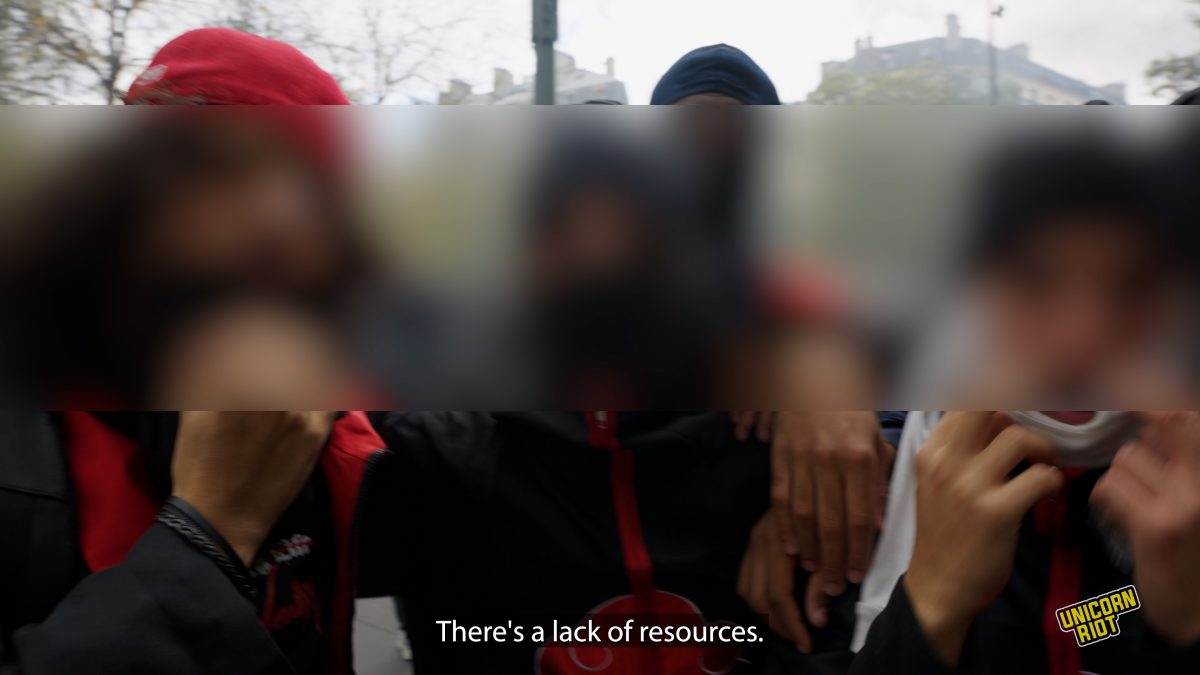
“There’s a lack of resources. Petrol prices are rising too. There are too many problems in France. It’s all hard. There are no work-study placements. There are no jobs, there is nothing. We’re fed up.”
Macron’s Response, a Second Day of Unrest and Repression
In the aftermath of October 17, public debate quickly shifted toward the widespread looting and destruction. Political leaders and much of the media focused on the attacks against businesses and public buildings, often separating the political demands of demonstrators from the actions of those involved in the riots.
President Emmanuel Macron in a speech to the nation condemned the violence and argued that people protesting over legitimate social concerns should not be confused with those seeking to create chaos. The distinction between supposedly legitimate protesters and violent troublemakers became central to the government’s response. Interior Minister Laurent Nuñez offered his resignation, but Macron refused to accept it.
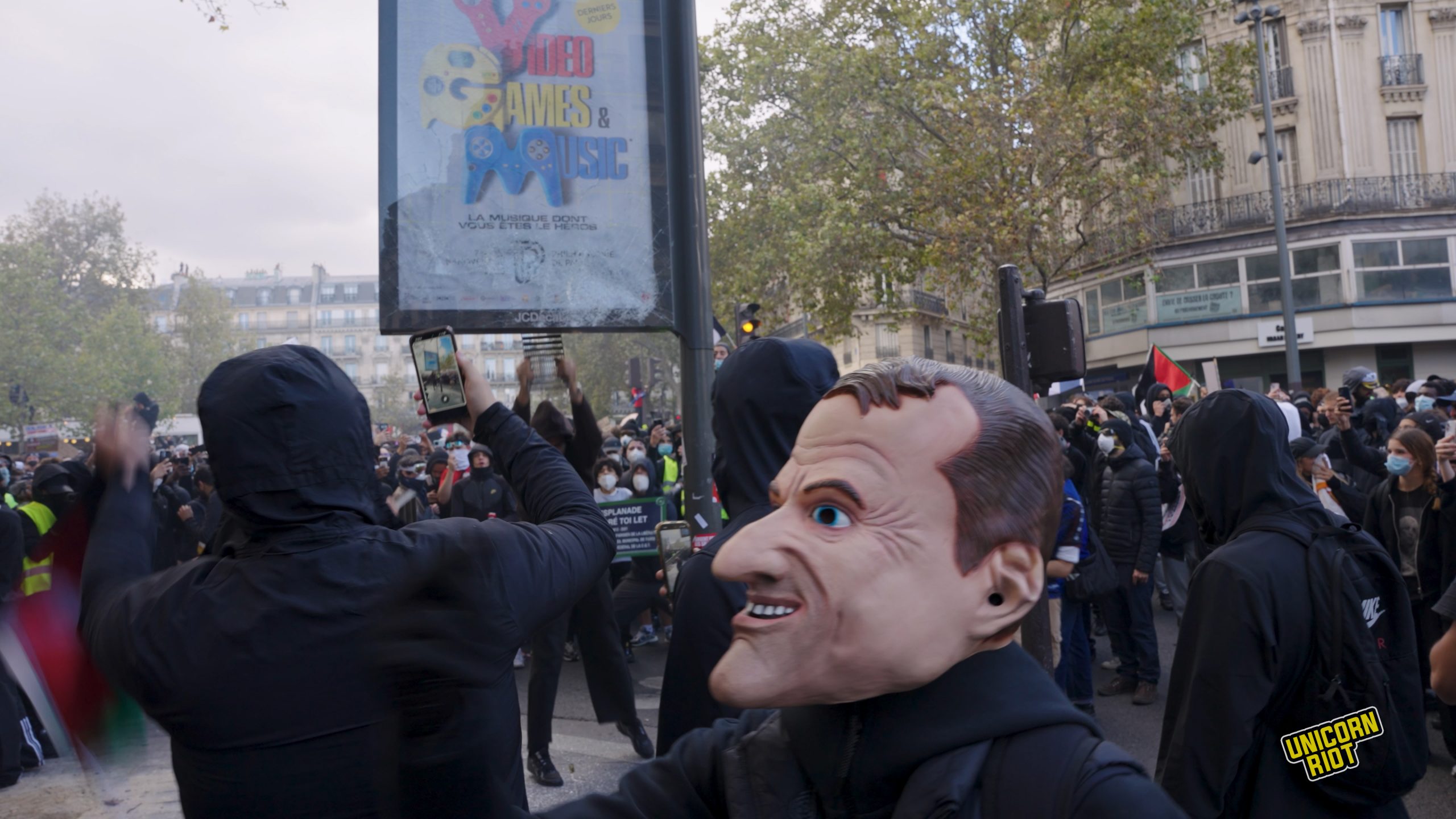
On Sunday, October 18, demonstrators returned to Place de la République and the surrounding streets. Once again, predominantly young crowds confronted police, erected barricades, and set them ablaze. The confrontations continued for hours, with police using tear gas to disperse groups that repeatedly regrouped in nearby streets. While the government was calling for order, parts of the capital were experiencing another day of unrest.
Nuñez reported that more than 1,800 people had been arrested across France following the previous day’s demonstrations and riots.
In Paris alone, police reported 855 arrests connected to Saturday’s events. The figures continued to rise in the following days. By October 20, Justice Minister Gérald Darmanin reported 2,513 placements in police custody since the beginning of the unrest.
Hundreds of detainees were being referred to the courts, with many facing accelerated criminal proceedings known as “immediate comparisons.” Under this procedure, defendants can be brought before a judge shortly after police custody, leaving limited time to prepare their defense. The government has demanded a particularly severe judicial response to attacks on police officers, public buildings, and businesses. Prosecutors have been instructed to seek pretrial detention in serious cases.
One case attracting particular attention concerns the destruction of Limoges’ historic city hall. Investigators reportedly detained a 34-year-old activist suspected of involvement in the fire. French media described him as having connections to radical left-wing environmental activism and reported that he was classified as fiché S.
This designation refers to a French security-intelligence file used to flag individuals considered potentially relevant to state security. It does not establish criminal guilt or prove membership in a terrorist organization.
The authorities are also preparing for further demonstrations. Reports of local curfews, discussions about restrictions on social media, and plans to deploy military personnel to protect strategic buildings have intensified concerns about the government’s security response.
Police themselves have faced criticism for failing to contain the unrest on October 17. In several cities, the simultaneous and highly mobile nature of the confrontations overwhelmed their capacity to respond.
Meanwhile, striking images of security operations have circulated online. One video shows a helicopter hovering over Paris at night, sweeping the streets with a powerful searchlight. The scene looks less like an ordinary evening in the French capital than something from Gotham City.
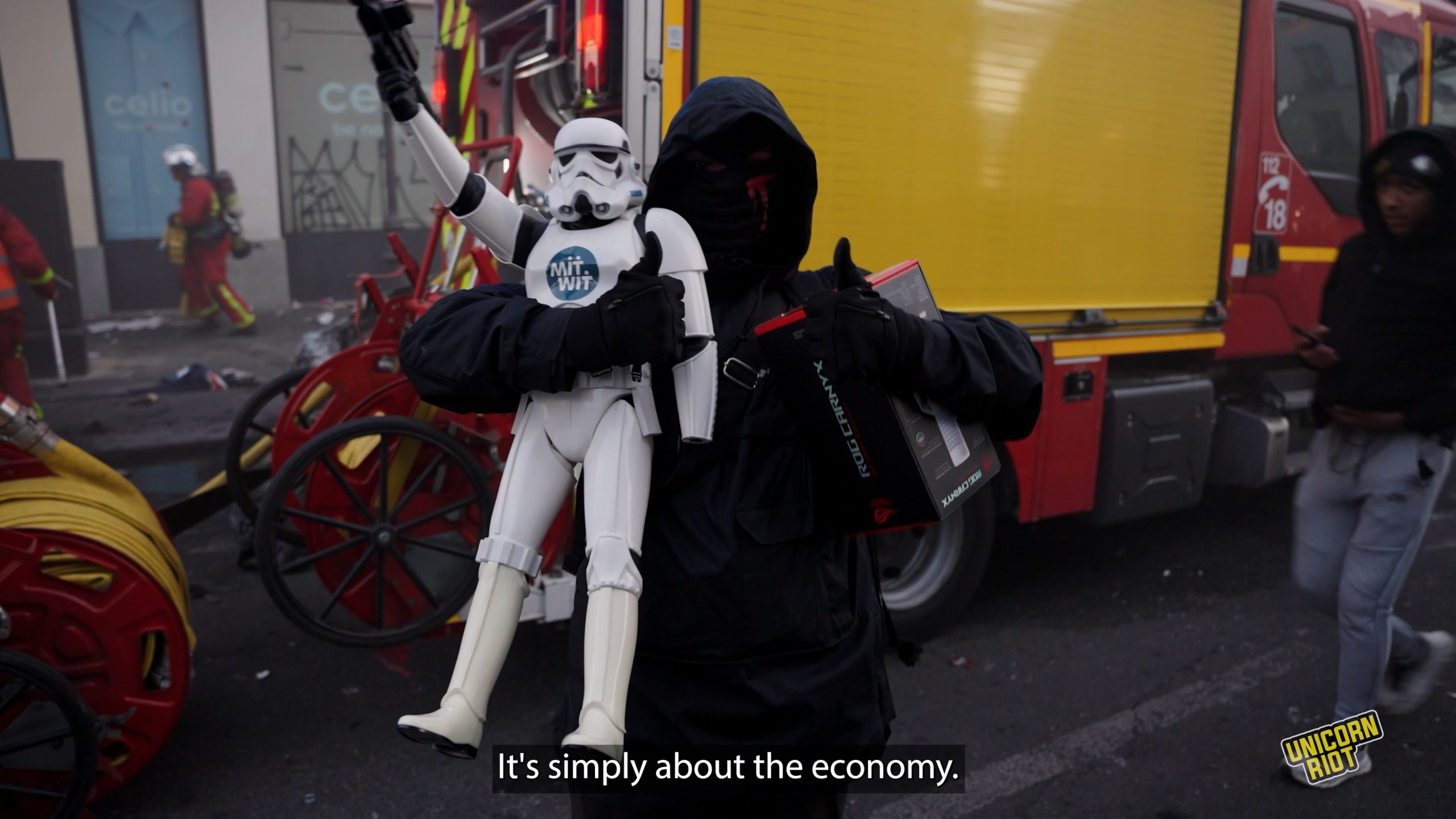
“It’s simply about the economy. We no longer have any means to survive, we no longer have any means to live. Petrol at €2 a litre, wages going down, our money flying off to Ukraine“
More Protests Planned
The next major day of protest is expected on Saturday, October 24.
Once again, calls to mobilize are circulating on TikTok and other social media platforms.
Further demonstrations are being promoted for October 31, coinciding with Halloween. It remains unclear whether the next mobilizations will reach the scale of October 17 or whether the government’s intensified security response will change the dynamics on the streets.
Protests in France are not likely to break down, especially because of the looming presidential elections in April. The far-right around Marine Le Pen from the National Rally, who is favorite in the elections, together with many establishment figures blame the far-left party Unbowed France (LFI) for instrumentalizing the riots or even creating them as a plot themselves.
The chief of LFI is, according to the current polls, also a favorite to enter in the second round of the presidential election.
Protests and clashes last weekend also took place in Italy, including Milan and other cities. Elsewhere in Europe, social media users have begun circulating calls for similar youth-led demonstrations.
In Germany, TikTok videos are promoting protests on October 31 under slogans suggesting that Generation Z should take matters into its own hands. Student protests have also taken place in Greece, while calls are circulating for a broader European day of youth and student action on November 20.
Across Europe, young people are confronting rising living costs, deteriorating public services, uncertain employment prospects, and a growing sense that established political institutions are unable or unwilling to respond to their demands. France may be offering an early glimpse of how these frustrations can erupt into a much broader confrontation.
Cover image via screen grab from video contributed by John Malamatinas.
More Unicorn Riot media from France.
Follow us on X (aka Twitter), Facebook, YouTube, Vimeo, Instagram, Mastodon, Threads, BlueSky and Patreon.
Please consider a tax-deductible donation to help sustain our horizontally-organized, non-profit media organization: