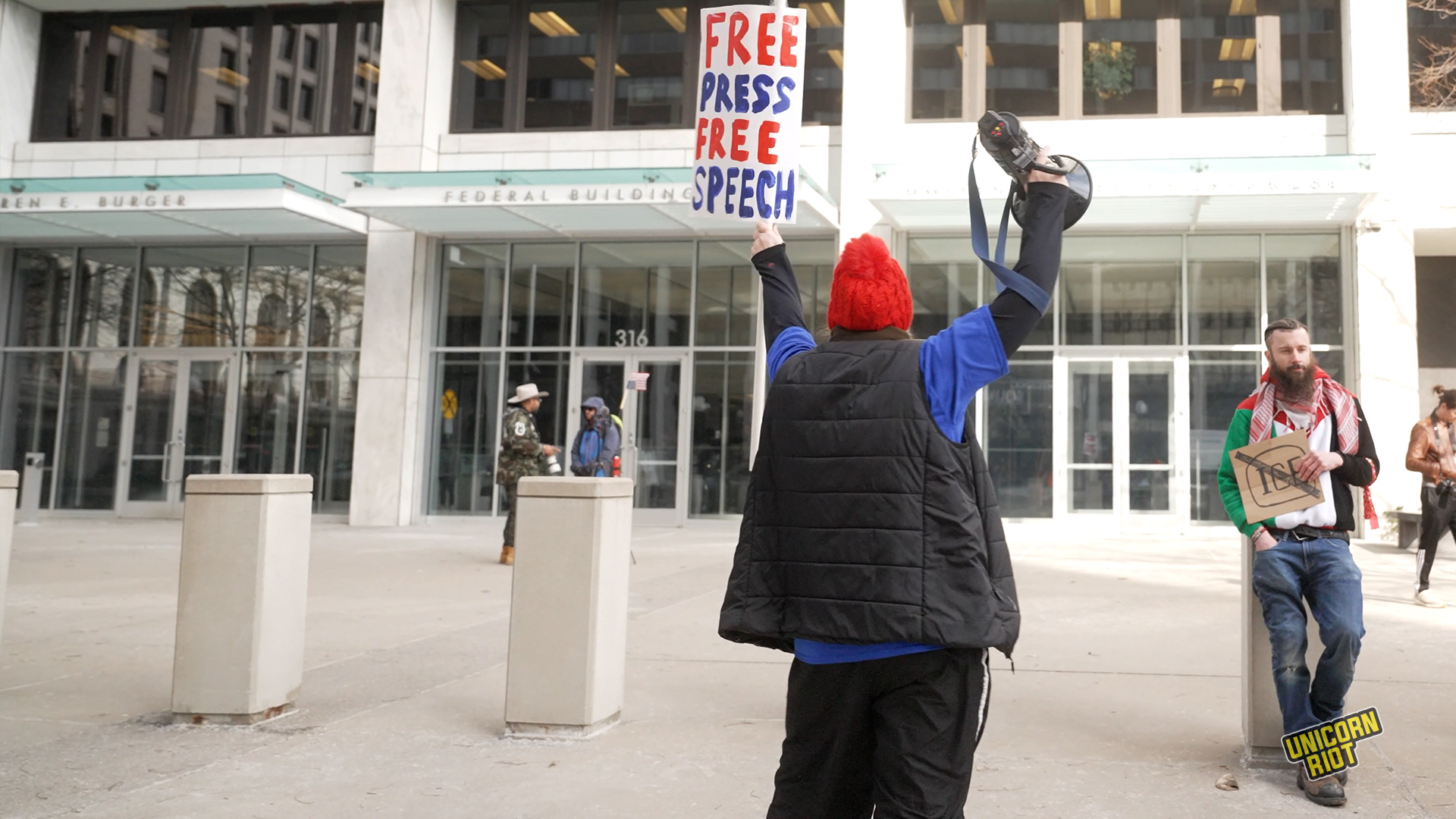
Unsealed Court Docs Spotlight Judge’s Rejection of Federal Search Warrants in Cities Church Case
St. Paul, MN — A lot of people don’t seem to want Robert Keenan, Orlando Sonza and Timothy Gerber around.
For two decades Keenan was repeatedly denied promotions at the Department of Justice (DOJ), only assigned light caseloads usually reserved for rookie prosecutors. His big break came when the Trump Administration picked him to argue for the release of a former FBI informant. Alexander Smirnov, a Ukrainian-Israeli, had been convicted of tax evasion and lying to the FBI about a fake bribery scheme involving President Joe Biden and his son Hunter.
“There’s a great book by Dennis Prager called ‘Think a Second Time,’” Keenan told a judge. “There’s no harm in looking at something anew and making sure we got it right,” he declared.
“Seriously,” Judge Otis Wright II responded.
The obscure federal prosecutor found himself shining on President Trump’s radar after signing as the only U.S. attorney on a legal memo recommending a one-day jail sentence for Brett Hankinson, the former Kentucky cop sentenced to three years in prison after shooting an unarmed Black woman Breonna Taylor in 2020.
Sonza tried electoral politics in Ohio without success. Cincinnati rejected his bid for State Senate by a 45-point margin. Two years later, Sonza lost another election in Ohio’s first congressional district by nine points.
This year, Keenan and Sonza got a chance to work on a politically high-profile case, the DOJ’s prosecution of Cities Church protesters and five members of the press.
Trump Admin Targets Press and Activists in Minnesota, Indicts ‘The Righteous 39’
Their first two targets were civil rights attorney Nekima Levy Armstrong and St. Paul School Board Member Chauntyll Allen.
“They disrupted a Sunday morning service at the Cities Church and terrorized children and families, causing them to flee from the church, resulting in injury to one female parishioner,” the pair argued in court last January.
Independent journalists Georgia Fort, Brixton Hughes, Junn Bollman and Don Lemon along with his producer filmed and documented the protest against Pastor David Easterwood for his role as St. Paul ICE Field Director on Jan. 18 – all were subsequently arrested.
Independent Journalists Georgia Fort and Don Lemon Arrested by Feds Along With Three More Activists
The Justice Department’s Civil Rights Division under Harmeet K. Dhillon then rolled out indictments against whom activists dubbed as the Righteous 39 for allegedly violating the FACE Act.
“This is not a legitimate use of the Face Act,” former head of the DOJ’s Civil Rights Division Kristen Clarke said. “This is wholly outside the core purpose that law was passed and I will not be surprised if these cases are quickly thrown out.”
Keenan and Sonza’s chaotic debut in federal court is also a good example of why Homeland Security Special Agent Timothy Gerber wasn’t prepared when he filed for five search warrants.
Gerber was trying to convince the court to force YouTube to hand over the names, addresses and phone numbers of anyone who subscribed and or even viewed the channels of Lemon, Fort and activist William “Da Woke Farmer” Kelly.
U.S. District Magistrate Judge John Docherty scolded prosecutors for failing to meet even the most basic legal probable cause requirements. To obtain a warrant the government had to show a judge specific facts that make it reasonable to believe that evidence of a crime took place. Gerber’s warrants failed on nearly every count. Rather than laying out facts connecting Lemon, Fort and Kelly to alleged criminal activity, each application told the judge to go read the indictment and figure it out.
“None of these probable cause statements actually set out probable cause,” Docherty wrote in his opinion. “There is no attempt made to explain why the compilation by the government of a comprehensive index of subscribers to ‘The Don Lemon Show’ is evidence that a crime was committed.”
For example, prosecutors pointed to a video titled No Rest for Demons! If you support Kristi Noem you are a demon! Judge Docherty called that “paradigmatic political speech protected by the First Amendment” and rejected the warrants. The DOJ later withdrew the requests.
Unsealed court filings show that Docherty admonished prosecutors for failing to mention the Privacy Protection Act and blasted them for not meeting the basic legal standards. The 1980 law generally requires the government to use subpoenas rather than search warrants when seeking journalists’ work product or other newsgathering materials.
A subpoena gives journalists and news organizations advance notice that prosecutors are seeking records or materials. Subpoenas give defendants an opportunity to hire counsel and assert First Amendment or other legal protections before turning anything over.
By contrast, if a judge approves a search warrant, agents can immediately seize reporting materials, with any legal challenge occurring only after the search has already taken place.
Watching YouTube streams of the Cities Church protest should be protected by the First Amendment. The disputes fueled concerns that prosecutors viewed the Privacy Protection Act as an obstacle to overcome, not a safeguard that had to be respected.
“This now appears to be the second time we know of where the federal government has failed to alert judges reviewing warrant applications to the existence and application of a federal law providing strong protections against the seizure of journalists’ unpublished work and records,” Gabe Rottman, vice president of policy for the Reporters Committee for Freedom of the Press said. “Fortunately these warrants were withdrawn after the reviewing judge raised concerns, but the government’s actions are incredibly concerning nonetheless.” (Rottman’s organization recently sued DOJ and ICE for related records.)
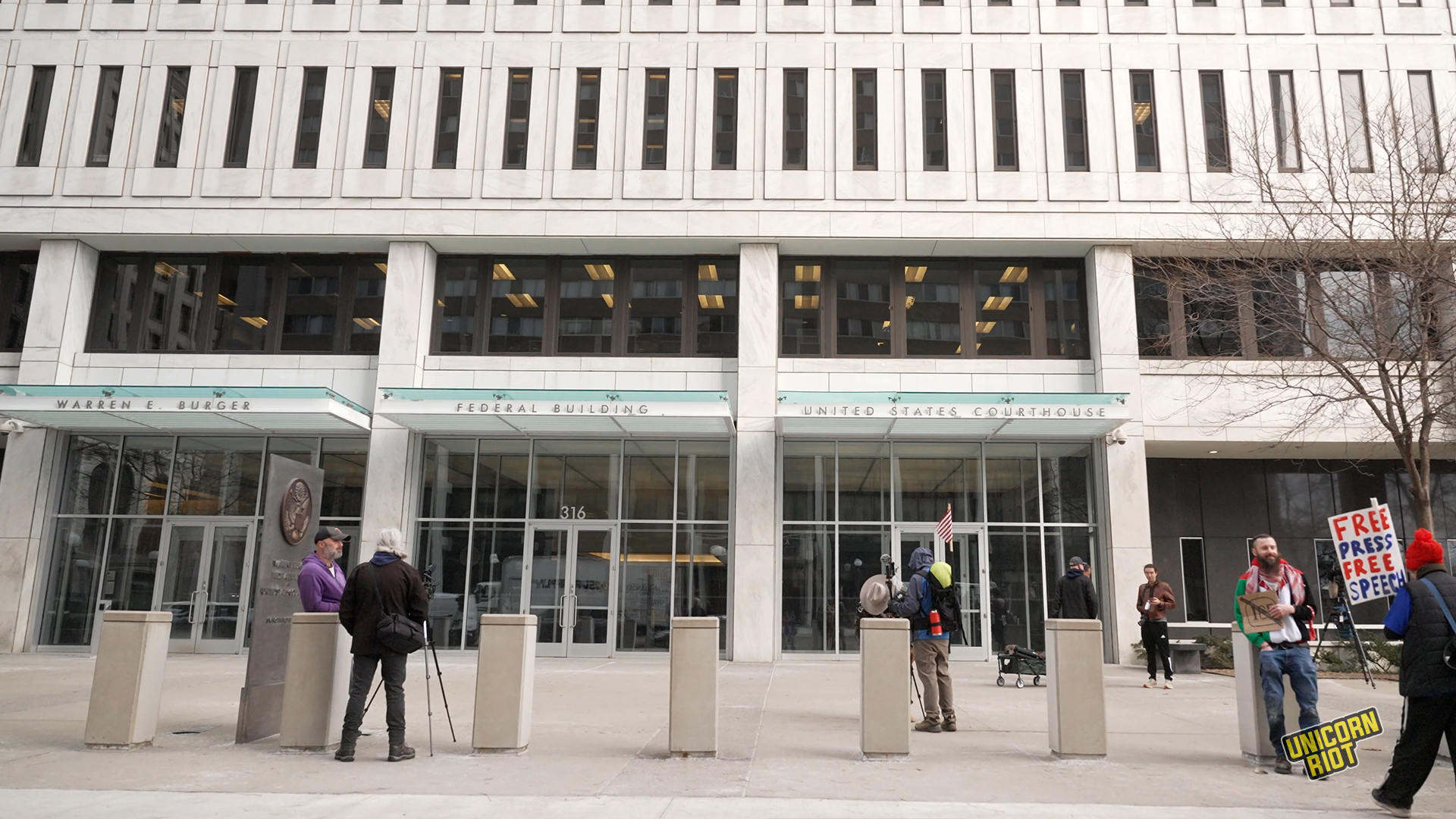
In January 2026, FBI agents raided the home of Washington Post reporter Hannah Natanson seizing two laptops, a smartphone, an audio recorder and smart watch.
U.S. District Magistrate Judge William Porter said that he may have rejected the search warrants had he been alerted to the Privacy Protection Act.
“Even so, had the government disclosed the PPA, the Court may well have rejected the search warrant application and directed the government to proceed by subpoena instead,” Porter wrote in his opinion. “At the very least, it would have asked more questions. The government deprived the Court of the opportunity to make those real-time decisions.”
Keenan rejected that standard entirely, writing in his Minnesota brief that Natanson’s case is “contrary to Eighth Circuit precedent to the extent it suggests that the Government has a duty to address the applicability of the PPA in any search warrant application.”
The argument comes in the wake of an unusual setback for prosecutors. Search warrants are rarely rejected by judges, and warrant materials are even more rarely unsealed, giving the public a glimpse into disputes that normally remain hidden.
Other press-freedom advocates argue that the failed warrant applications reflect broader problems with the Justice Department’s latest culture war against journalists and protesters.
“These failed search warrants are what happens when incompetent prosecutors pursue political vendettas instead of justice. Having or watching a YouTube channel aren’t crimes, and neither is reporting on a protest,” Freedom of the Press Foundation (FPF) Senior Advocacy Adviser Caitlin Vogus said.
“Before the Department of Justice embarrasses itself even more, it should immediately drop the prosecutions of Don Lemon, Georgia Fort, and Junn Bollmann.”
All defendants have pleaded not guilty to FACE Act charges.
It is not clear that courts will stop assuming prosecutors in Trump’s Justice Department are acting in good faith. Judges rarely reject or closely scrutinize search warrants in cases involving journalists and First Amendment activity. They seldom make the underlying details public.
Even with Pam Bondi no longer serving as Attorney General, it remains unlikely that her potential replacement, Todd Blanche, would move to dismiss prosecutions against the Righteous 39. Overall, there appears to be limited willingness to hold government attorneys accountable for alleged ethical violations.
“Once again, the DOJ also conveniently left out of its applications any mention of the Privacy Protection Act of 1980 and later wrongly insisted that prosecutors don’t need to tell judges when the warrants the government seeks may violate federal law,” said Vogus. “At this point, every judge should assume the DOJ will try to sneak illegal search warrants past the court. Congress should pass the Privacy Protection Updates Act before this abuse gets even worse.”
Agent Gerber also requested the court force Apple to turn over accounts and iPhone records tied to Levy-Armstrong and veteran-activist Ian Davis Austin. Prosecutors wanted messages, photos, and other stored digital information. The requests would have given agents access to broad categories of cloud backups, account logs, and potentially location and communications data.
Austin, for his part, went viral after being detained at a separate protest at the Federal Whipple Building on Jan. 16. He was later released without charges and his cell phone. Austin tells the story of how agents unlocked his phone.
“They tricked me,” Austin said. “They brought me in for a second interview, and I was talking to one guy, and then he’s like, ‘hey.’ And I looked over and he was just holding the phone up.”
HSI Agent Gerber mentioned the Jan. 16 arrest in his first warrant requesting Austin’s iCloud data.
Gerber re-submitted a warrant suggesting that agents at the immigration detention center knew that there was an outstanding warrant stemming from the Cities Church protests.
His friend Max Adamson said Austin was well aware of agents trailing him. “He pointed out a van he believed belonged to the FBI,” Adamson said. “Then another vehicle appeared, agents jumped out, arrested him, and drove off.”
“I was pointing them out, yelling ‘FBI,’” Austin said. “Then all of a sudden, they all came after me.”
Gerber recalled what Austin allegedly say to protesters as he was arrested Jan. 30 writing in his warrant request: “I was at the church” and continues, “they want to turn me into a fucking terrorist.”
The DOJ’s publicity stunt framing protesters as “domestic terrorists” is not an isolated event. Civil rights advocates say it reflects a long pattern of framing protected protest activity as a security threat.
“From the beginning, we have said that the targeting of protesters and organizers in this case raised profound concerns about government overreach, abuse of power, and efforts to criminalize dissent by the authoritarian Trump regime,” said Levy-Armstrong. “The Constitution does not disappear when people speak out against injustice.”
U.S. District Magistrate Judge Doug Micko briefly halted an earlier hearing after Keenan and Sonza failed to immediately produce the warrant materials supporting the chaotic arrests and publicized arrests at the Aloft Hotel. Vogus warned that these routine investigations can expand into broader inquiries with limited public oversight.
“Secrecy around search warrants can be dangerous. These applications only became public because the government failed so badly, and Judge John Docherty properly recognized the public’s right to see them,” said Vogus.
“Given the DOJ’s repeated attacks on First Amendment rights and flagrant abuse of the legal system, journalists and all Americans should be asking what’s still buried in sealed search warrant applications around the country.”
Freedom of the Press Foundation (FPF) Senior Advocacy Adviser Caitlin Vogus
Read Judge Docherty’s unsealed court filing from Feb. 24, 2026, denying five search warrants by HSI (download):
Read Judge Docherty’s unsealed court filing from March 6, 2026, ordering applications for search warrants be under advisement (download):
2025-2026 Unicorn Riot Coverage of the DHS / ICE Crackdown Campaign in Minnesota:
Click the image to see all UR coverage of federal law enforcement operations in MN.

Watch Unicorn Riot’s videos from ICE in Minnesota in playlist below.
Follow us on X (aka Twitter), Facebook, YouTube, Vimeo, Instagram, Mastodon, Threads, BlueSky and Patreon.
Please consider a tax-deductible donation to help sustain our horizontally-organized, non-profit media organization: