Why Was the Prairieland Jury Persuaded to Convict Given the Government’s Weak Case?
Questions linger about a “loud uproar” in the jury room on the day of the verdict, as juror misconduct is alleged in a post-verdict motion seeking a new trial.
Johnson County, TX — In a surprising verdict, nine activists were found guilty last month in the Prairieland ICE Detention Center protest case. The defendants—Savanna Batten, Zachary Evetts, Autumn Hill, Meagan Morris, Maricela Rueda, Daniel “Des” Rolando Sanchez Estrada, Benjamin “Champagne” Song, Elizabeth Soto, and Ines Soto—were convicted of numerous federal charges, including riot, material support for terrorism, possession and conspiracy to use explosives, and conspiracy to conceal documents. Song was found guilty of attempted murder for allegedly shooting an Alvarado police officer.
The government was able to convince 12 jurors that a routine noise demonstration on July 4, 2025, in support of detained immigrants being held at Prairieland, was instead a terrorist plot to ambush police, carried out by a “North Texas Antifa Cell.”
Minor vandalism was turned into rioting. Consumer grade fireworks shot into the air were considered explosives, and simply being present at a protest became material support for terrorism. The transportation of First Amendment-protected political literature was characterized as concealment and menacing activity worthy of 20 years in prison.
Even the alleged shooting of Alvarado Police Lt. Thomas Gross, a focus of the government’s case, is draped in mystique. The medical records for Lt. Gross, which would have shed light on his injury, have never been disclosed. Testimony from Lt. Gross on cross-examination revealed that his alleged injury may have been caused by a ricocheted bullet from suppressive shots fired at the ground after Lt. Gross was seen pointing his gun at the backs of departing protesters, just seconds after he arrived on the scene.
In other words, Song could have been trying to de-escalate a tense situation and prevent police from shooting protesters, but the government, and ultimately Judge Pittman, blocked Song from using such a defense at trial.
There has been a storm of press coverage around the verdict and its implications from media outlets across the political spectrum. But very little coverage focuses on how the jury was convinced by the flimsiest of cases.
Even four co-defendants who pled guilty before trial and testified on behalf of the prosecution failed to validate the government’s claims that the protest was a planned ambush or that the defendants were “operatives” of a non-existent organization called antifa.
Related: Nine Prairieland Defendants Found Guilty in First ‘Antifa’ Test Case
So, what persuaded the jury to convict on so many empty charges?
Part of the answer to that lies in the prejudicial actions repeatedly taken by officials at the highest levels of government, undermining the defendants’ ability to get a fair trial.
President Trump and others in his administration have claimed since the arrests that this was the first “antifa” case. In September, President Trump designated antifa a domestic terrorist organization, despite the absence of any statutory framework allowing him to do so, and despite the widespread knowledge that the term “antifa” comes from an antifascist political ideology and is not an organization. Soon after, the White House released National Security Presidential Memorandum-7, which ordered all federal law enforcement agencies to prioritize combating antifa as a domestic terrorist threat.
Part of what likely persuaded the jury were the actions of the judge in what can only be seen as trying to rig the outcome of the trial. Early on, multiple defense lawyers were sanctioned for filing routine pretrial motions, a favorite tactic of Trump-appointed US District Court Judge Mark Pittman.
Weeks before trial, Judge Pittman declared that the trial would be held in a courtroom that could only accommodate a few dozen people and that there would be no livestream broadcast or overflow space made available, despite widespread public interest in the Prairieland case. It was only after significant public pressure that Judge Pittman opened an overflow room in a Dallas federal courthouse nearly an hour away from where the trial was being held in Fort Worth.
Toward the end of jury selection in mid-February, when it appeared that a jury would be empaneled which was critical of the Trump administration and its immigration enforcement practices, Judge Pittman declared a mistrial.
His excuse was a t-shirt meant to commemorate Rev. Jesse Jackson who had died that day, worn under the blazer of a Black defense lawyer. Instead of simply ordering her to change clothing, Judge Pittman declared a mistrial.
Related: Judge Declares Mistrial on First Day of Prairieland Trial
Jury selection for the next trial, which started the following week, was drawn from a jury pool almost twice the size, and Judge Pittman asked all the questions of the prospective jurors, preventing the trial lawyers from asking jurors follow-up questions.
Perhaps most notably, the government objected to the defense’s use of a ‘self-defense’ or ‘defense of another’ argument for Song, and Judge Pittman upheld the objection, thereby blocking a key defense strategy.
In addition to the hostile conditions imposed by the court, supporters suspect that there may have been undue influence on one or more jurors to convict. At the end of jury deliberations and in the courtroom during the reading of the verdict, there were some revealing signs worth investigating.
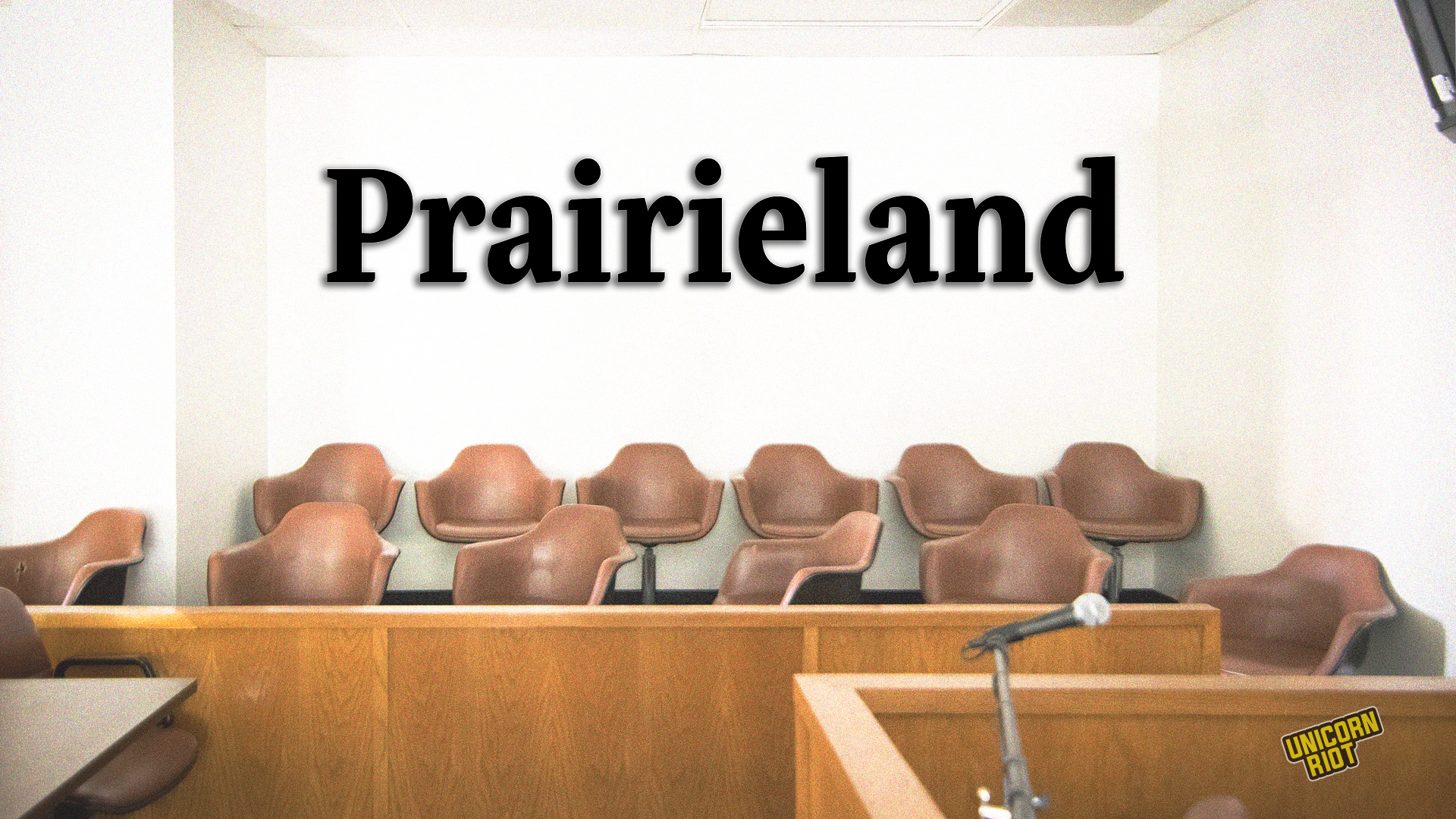
On the day of the verdict, Friday, March 13, shortly after the jury returned from lunch, a “loud uproar” could be heard coming from the jury room at approximately 1:00 p.m., according to Amber Lowrey, the sister of Prairieland defendant Savanna Batten.
Lowrey was sitting on a bench with her mother, and numerous other people were milling around in a relatively quiet hall outside the trial courtroom. Lowrey said everyone in the vicinity could hear the ruckus, and while she couldn’t hear exactly what was being said, she did hear several people yelling. The loud uproar went on for about a minute and a half and was so noteworthy that she recalled commenting with others about it.
The uproar occurred about an hour before the jury reached its verdict, according to Lowrey. As she and her mother entered the courtroom for the reading, Lowrey said the room was “packed with police officers and US Marshals and the atmosphere was much more hostile than it had ever been before.”
Once the jury was seated, Lowrey noticed that two male jurors were visibly crying which, in retrospect, was notable when combined with the fight she heard earlier in the jury room.
And after the shock of the verdict that few expected, Lowrey and her mother walked to their car, completely forgetting about the incident that took place in the jury room earlier that afternoon. As she and her mother sat, stunned, someone who works in the legal profession approached their car.
The person, who chose not to reveal their identity for this story, told them there had been a fight in the jury room and one of the defense lawyers had to alert US Marshals to break up the fight. Lowrey said the person was visibly shaken and crying while conveying this information.
A few days later, Lowrey was contacted by Tamera Hutcherson, a paralegal who had worked on her sister’s case. Hutcherson confirmed that a fight had taken place in the jury room.
Coercion of jurors, whether by the court or by other jurors, is a serious issue and could constitute juror misconduct. Coerced verdicts violate a defendant’s Sixth Amendment right to a fair trial, and can lead to mistrials, overturned convictions, new trials, or reversals on appeal.
Juror coercion need not be physical and can include pressure through intimidation, harassment, or verbal abuse to conform to the majority view, against a juror’s conscience or honest belief. If a juror is found guilty of intimidation, they can face fines and imprisonment.
On Friday, March 27, defense lawyers filed post-verdict motions for judgments of acquittal and a new trial.
In one of the motions for a new trial, Batten’s attorney Christopher Tolbert argued that juror misconduct and irregularities during jury deliberations compromised the integrity of the verdict and deprived Batten of a fair trial.
Tolbert commented on the “loud and sustained disturbance emanating from the area of the jury room” observed by several people on the day the verdict was reached.
“Based on information obtained after the verdict,” Tolbert stated that there is reason to believe “jurors engaged in a heated confrontation inside the jury room and that certain jurors may have been subjected to intimidation or coercion during deliberations.”
Tolbert argued that because there is credible evidence the jury’s deliberative process was disrupted by misconduct and possible coercion, and because such conduct “creates a reasonable probability that the verdict was affected, the Court should grant a new trial in the interest of justice.”
At a minimum, Tolbert said the judge should conduct an evidentiary hearing and permit examination of jurors in order to determine the extent and impact of the misconduct. The Fifth Circuit has made clear the trial court has an affirmative duty to investigate and ensure the integrity of the verdict, requiring the involvement of all parties in a properly conducted hearing.
The government filed its response to the motions on April 1, and US District Court Judge Mark Pittman is expected to rule on the post-verdict defense motions in the coming days.
Meanwhile, eighteen Prairieland defendants are still facing trials in State court, with the first trial against Dario Sanchez scheduled for April 20. Sanchez, the only defendant currently released on bond, is charged with hindering the prosecution of terrorism and tampering with and/or fabricating physical evidence for removing someone from private group text chats.
The other remaining Prairieland defendants will continue to fight their charges from inside prison, held on multi-million dollar bonds, further hindering their ability to adequately defend themselves and to counter the government’s empty narrative.
Kris Hermes is an author and freelance reporter, and member of the National Lawyers Guild.
Follow us on X (aka Twitter), Facebook, YouTube, Vimeo, Instagram, Mastodon, Threads, BlueSky and Patreon.
Please consider a tax-deductible donation to help sustain our horizontally-organized, non-profit media organization: