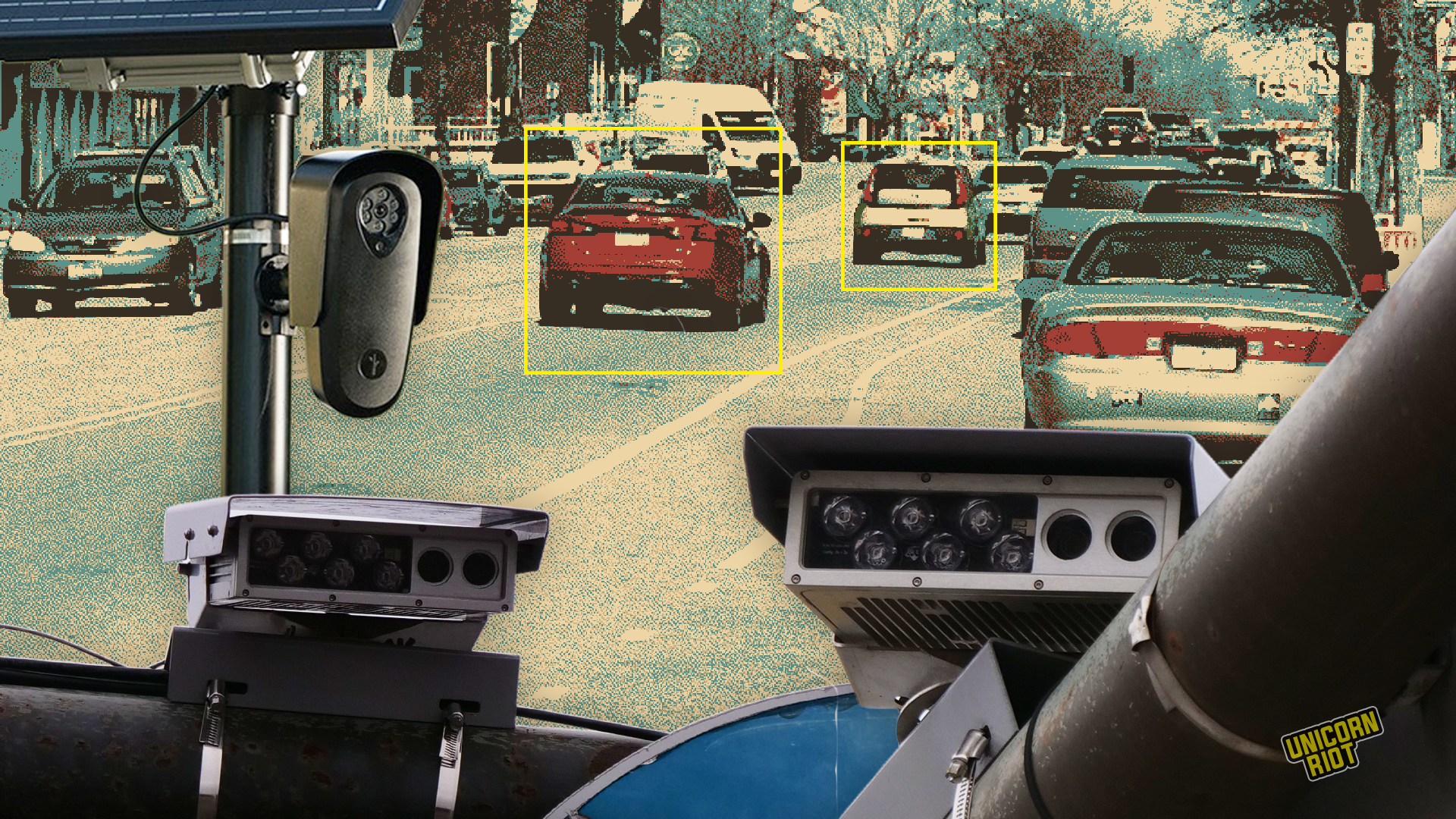
ALPRs and Minneapolis’ Growing Discriminatory Surveillance Dragnet
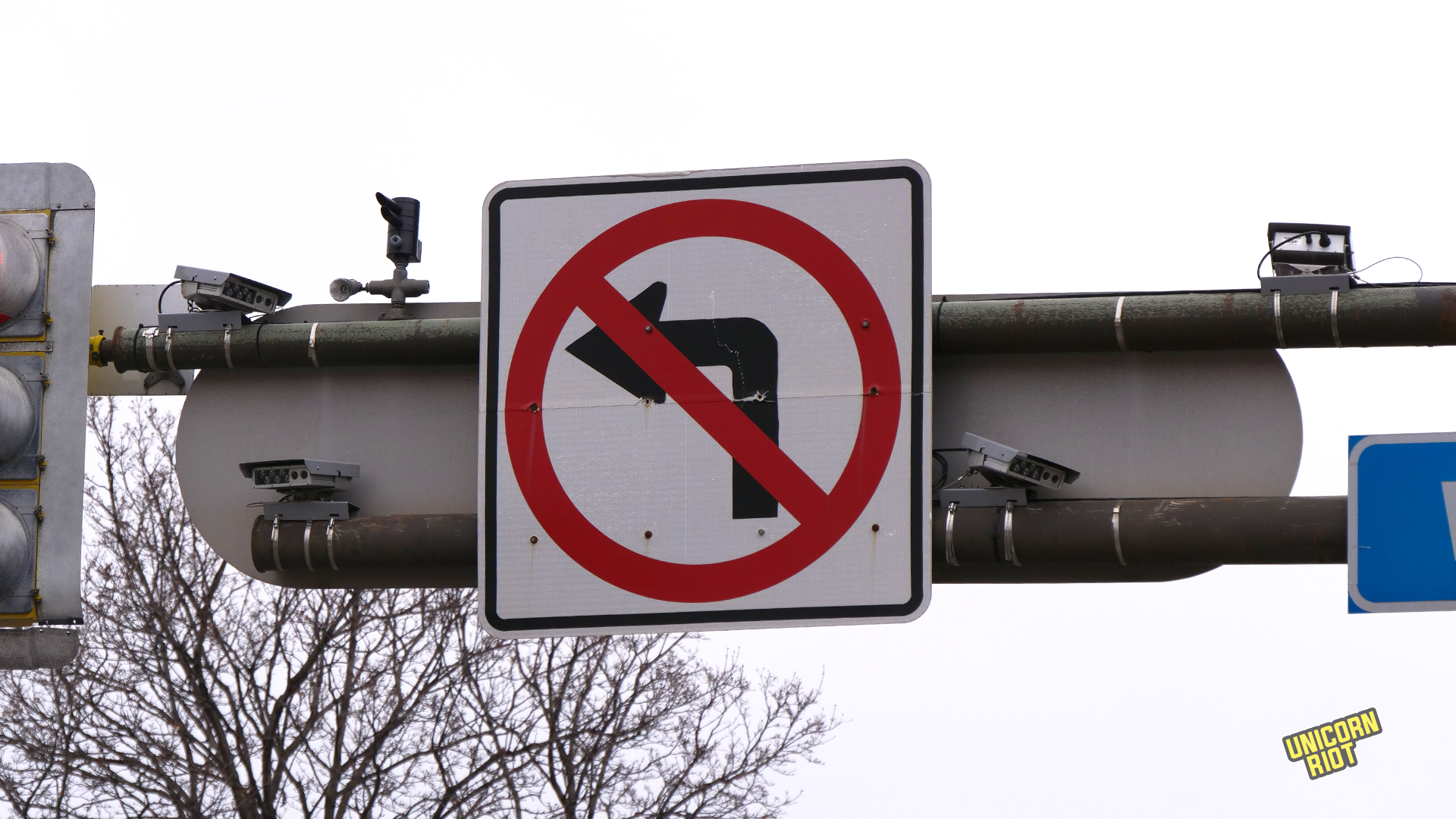
Minneapolis, MN — In Minneapolis, like in other cities across the United States, cameras cover the tops of light poles like barnacles revealed by a low tide.
Motorists are no stranger to their growing ubiquity and mostly pay no mind to them as if they’re another natural part of the urban ecosystem, no different than all of the cigarette butts and wrappers on the street.
In the last several years, however, a new apex predator of surveillance has emerged largely unnoticed. The Minneapolis Police Department (MPD) and private businesses have been installing Automatic License Plate Readers (ALPRs) at numerous locations, little cameras perched in discreet locations like ugly, bald-headed vultures that make CCTV cameras seem archaic in comparison.
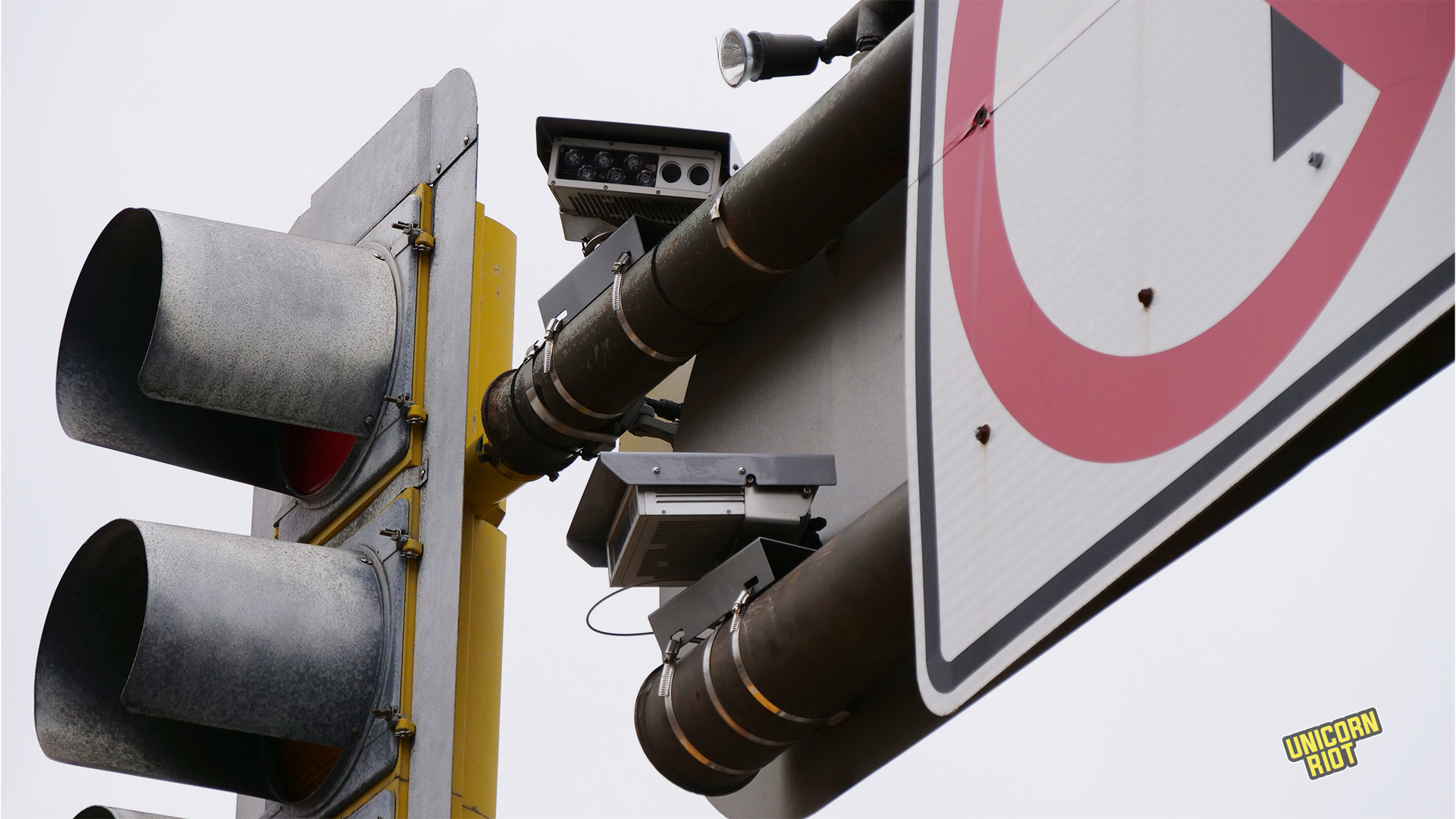
ALPRs, as the name suggests, automatically read license plates, often with the help of artificial intelligence, and store that data for later without the need for any human eyes. There’s not much limiting them to plate numbers, though: they’re able to recognize the vehicle itself by color, scratches and even cargo.
MPD’s ALPR cameras alone, set up at 30 intersections in the city, collected data at all hours every single day on more than 31 million vehicles in the two months from January 9 to March 9 this year. That averages out at more than one million at each intersection.
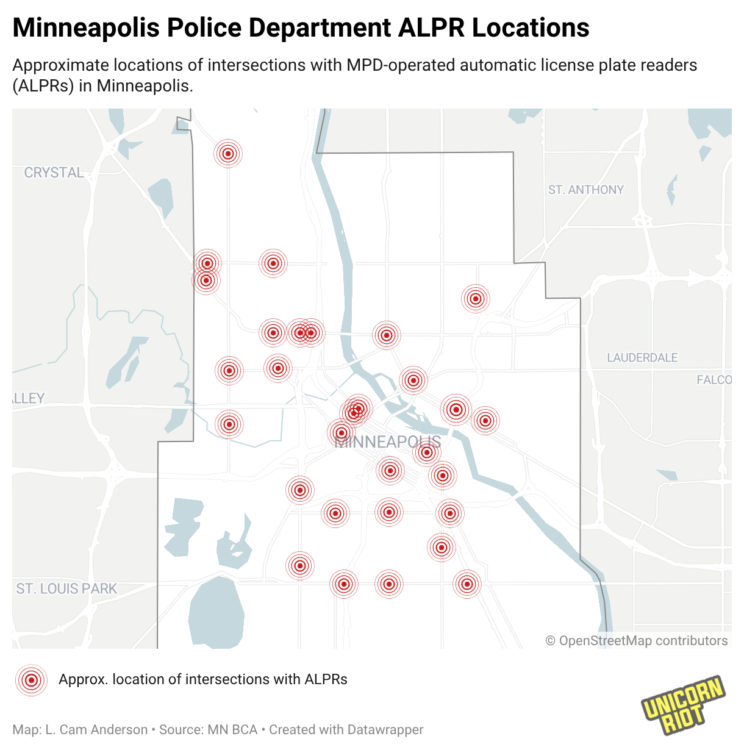
In total, there are nearly 100 of these cameras set up throughout Minneapolis, including privately owned ALPRs guarding the parking lots of big-box stores like Home Depot, according to data from the ALPR-tracking website DeFlock.
The utility of these cameras for the police department is mostly in identifying stolen vehicles; the cameras are even set up to automatically send out alerts when stolen or hot listed plates are scanned. Of the millions of cars tracked in the two-month period, only 12,446 were identified as stolen, or a rate of 0.039%.
Car theft has been on the rise in Minneapolis, but is that reflected in the use of these cameras?
Comparing two neighborhoods, Near North in North Minneapolis and Whittier in South Minneapolis, proves instructive. Near North, with a population just over 7,000, had an auto theft rate of 478 per 100,000 residents and five intersections equipped with ALPR cameras. Whittier, with twice the population of Near North, had an auto theft rate of 931 per 100,000 residents and three intersections with ALPRs.
If the cameras aren’t where the crime is, then what are they there for? The clearest difference is that Black residents make up 65% of Near North’s population and only 26% of Whittier.
The cameras can be used for any “legitimate law enforcement purpose,” according to MPD’s ALPR policy. Similar vague policies elsewhere have allowed police to engage in using the products for discriminatory purposes, such as when an Arizona Police Department used ethnic slurs to query the ALPR database last year.
“Under the auspices of an objective AI tool, [they are] just going to reinforce the racist and classist ways in which police operate,” DeFlock researcher Ed Vogel said.
For the companies that peddle this hardware, namely Flock Group Inc., the business model lies not with genuine crime reduction but – much like social media – with all of the data the cameras hoover up and make accessible for a wide network of paying clients across the country. Flock reassures lawmakers and the public that the data is not shared, but does nothing to prevent law enforcement agencies from doing the sharing themselves.
For ALPRs, Minneapolis contracts with a company called Safeware, which provides a wide variety of tactical equipment for “our nation’s heroes,” including riot gear, surveillance technology and even appliances and mattresses for prisons.
The majority of MPD’s ALPRs are produced by Insight LPR, which has made strides to mimic the Flock brand, which has set the model for other companies in this field to follow. The most obvious example is Insight’s newest ALPR model, the MX Defender Q, which replicates Flock’s design.
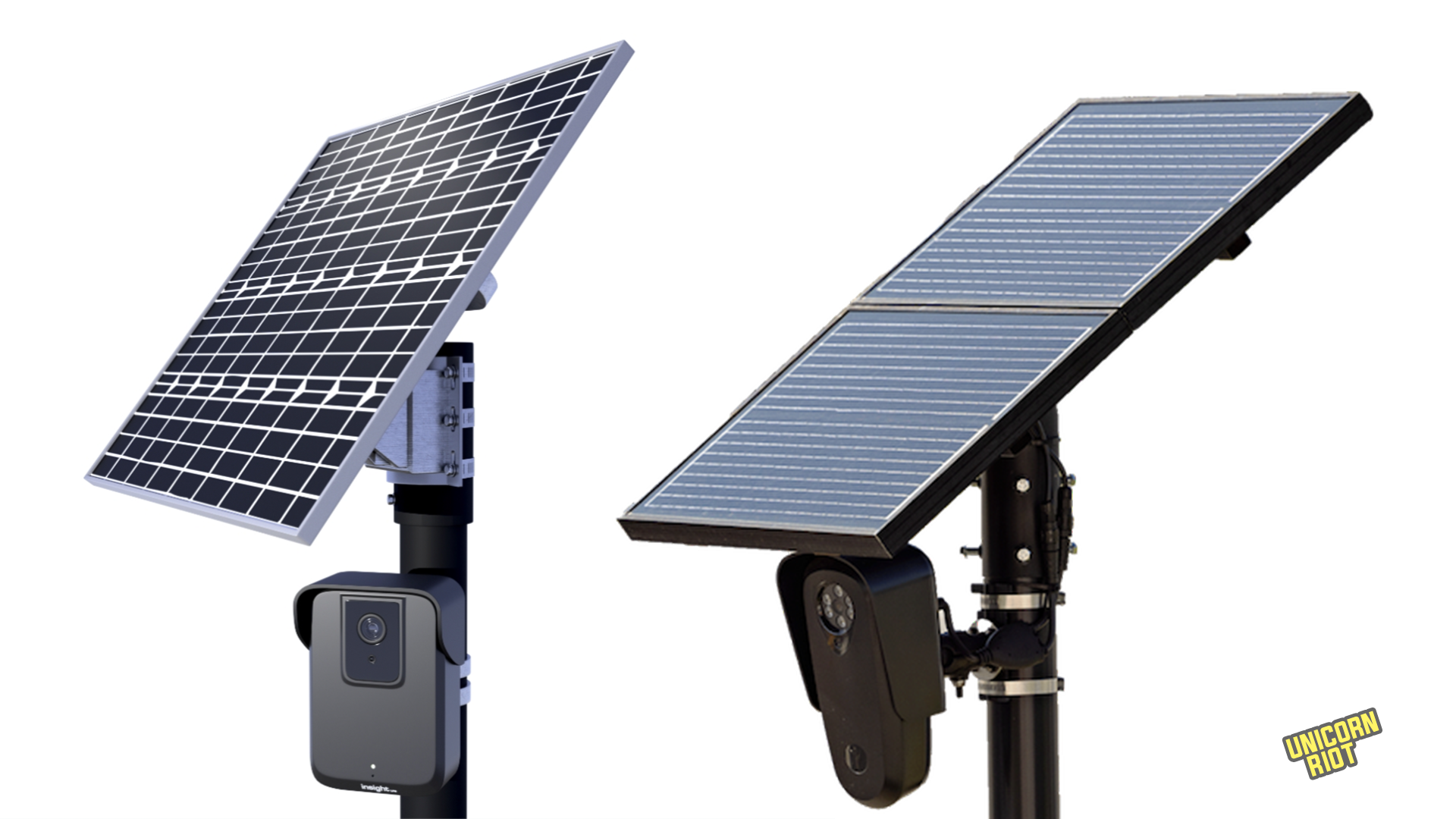
According to Twin Cities-based independent privacy and security researcher Ryan O’Horo, Flock’s data-centered business model, which sells cheaper and lighter hardware, allowed them to outpace competition that was reliant on making its profit off of more expensive hardware.
“They need to compete on price as aggressively as Flock is,” O’Horo said. “Now they need to use the same hardware model and switch to recurring revenue like the tech companies are doing.”
While MPD does not use Flock right now, a number of private companies continue to use them as a way to monitor parking lots or other private locations. The growing use of ALPRs in general, whether or not they are associated with Flock, and their acceleration toward more intrusive forms of surveillance are causes for concern that warrant a closer look at Flock Safety.
Read MPD’s list of ALPR scans — a total of 2,372 searches — from February 4, 2026 to March 9 in the XLSX spreadsheet document below.
Related: Criminal Intel Files Show Facial Recognition, Warrantless Surveillance in Minnesota [2022]
Flock’s Surveillance Dragnet
In January, a man named Jason Hellerman sued Flock Group in the United States District Court for the Central District of California for the security company’s repeated violation of California Senate Bill 34, a bill passed in 2015 to limit the capture, use, storage and sharing of ALPR data. Through this bill, the state outlawed the act of sharing ALPR data with out-of-state law enforcement agencies and federal agencies.
In spite of this law, Flock has facilitated this very act, allowing state and local law enforcement agencies to share with anyone, be it the Department of Homeland Security or the public at large. Instead, according to the class action complaint in Hellerman v. Flock Group, Flock pins the blame for any violation of the bill on California law enforcement agencies.
On Flock’s website, the company emphatically denies allegations that it works with ICE or any other Department of Homeland Security subagency, claiming federal agencies “are not a part of a statewide or national lookup” and that customers are ultimately responsible for any “sharing relationships.”
The sharing and wide dispersal of information is not an abnormality, but rather the standard for such tech companies where the entire business model is reliant on collecting and sharing data, according to Lucy Parsons Labs Co-Director Freddy Martinez.
“How do you enforce something like [California Senate Bill 34] when you have companies where the entire profit model comes off of sharing data? It’s just impossible to do,” Martinez said.
Lucy Parsons Labs is a Chicago-based non-profit that investigates the role of technology in societal harms, such as through mass surveillance.
The data sharing goes well beyond federal agents peeking over the shoulder of local law enforcement officers to see his or her desktop monitor.
The Hellerman complaint alleges that Flock’s failure to implement policy corresponding with Senate Bill 34 has allowed nearly 6,000 law enforcement agencies around the country to “run more than 1.6 million unlawful searches of San Francisco’s ALPR database” alone.
The political implications of such broad access are already being played out across the US. In May last year, the Johnson County Sheriff’s Office in Texas scoured the nationwide Flock database to track down a woman who was seeking an abortion in a state where the process is still legal, 404 Media reported.
The nationwide search, which Johnson County Sheriff Adam King claimed was intended only to make sure the woman was safe, included data from a total of 83,345 Flock cameras covering 6,809 different networks throughout the country.
What stands in the way of a single customer deciding to share this backdoor with ICE? Certainly not Flock.
Data leaked last year to 404 Media revealed numerous local police agencies around the country were routinely performing immigration-related searches, often at the request of federal immigration authorities. Flock’s denial of direct cooperation came the following year during the immigration surge in Minneapolis through a lawyerly massaging of the language.
Related: How Target Corp., the City of Minneapolis, and Hennepin County Created a Domestic Spy Program that Rolled Back Civil Rights on its Black Population [12-part series]
Debatable Efficacy
Data-sharing is a keystone of Flock’s business model, going as far as being cited in the company’s 2024 study of the hardware’s effectiveness.
The study asserts that the addition of one ALPR per police officer correlates with a 9.1% increase in the clearance rate, or the amount of cases closed. The study went further, declaring that increasing the amount of ALPRs networked within a 50-kilometer radius was associated with a 0.5% increase in the clearance rate, “highlighting the importance of broad access to Flock technology and collaboration among agencies.”
Naturally, the two people credited with authoring the paper are employed directly with Flock Safety and are listed as such, raising conflict of interest concerns. Additionally, all data used in the study was provided by law enforcement agencies voluntarily.
The authors also add toward the end of the study that it is unclear just how many of the cases that account for the “Flock-assisted” clearance rate would not have been solved otherwise.
According to O’Horo, Flock sells legislators and policing agencies on its ALPRs by telling them it displaces crime, moving criminals from one city to the next based on the presence of these cameras. If the logic is played out fully, crime should be near extinction given their use in nearly 6,000 cities and counties.
“Where is all of the crime occurring now?” Ryan asked. “It’s got to be in a cornfield in Kansas, right?”
Ryan attributes a decrease in crime corresponding with an increasing adoption of ALPRs to the pandemic, which saw both a spike in crime and the initial adoption of these surveillance tools.
Few studies have actually been done to prove whether ALPRs have any effect on deterring crime.
What ALPRs certainly can do and have done, however, is reinforce racist and discriminatory modes of policing. In addition to Arizona police searching the ALPR database with ethnic slurs, the New York Police Department used a network of early ALPRs to secretly monitor mosques in the 2000s, according to the Associated Press.
Related: Police use Private Database to ID & Racially Profile Roma in US [2022]
Fighting ALPRs
“The critical thing for [communities] to know is that this can be stopped,” Restore the Fourth National Chair Alex Marthews said. “It is possible to block Flock Safety in communities. We have done it.”
Restore the Fourth is a non-profit dedicated to combatting government surveillance and strengthening the Fourth Amendment protection against random searches and seizures.
According to the database maintained by DeFlock, 53 communities rejected contracts with ALPR providers or opted to disable already established ALPRs between August 2021 and March 2026. In most cases, the decision was the result of privacy concerns and public outcry.
“There is nothing that says that this has to be the way we go,” Marthews said. “We don’t have to bring these entities into the way that we relate to our public spaces, and have them tracking and profiting off of our own movements and our own activities.”
A major factor in this is showing up and speaking out at city council meetings whenever possible, and if not that then spreading awareness in your communities about the detriments of ALPRs.
Another factor Marthews mentioned that is effective in curbing the spread of this technology is supporting state-wide legislation on the matter. In Washington State, for example, the legislature passed a bill in March tightening regulations on the technology.
A similar bill has been introduced in the Minnesota Legislature by Rep. Brad Tabke (DFL-54A), requiring warrants for out-of-state access to ALPR networks and individual cameras while also limiting how the data is used by law enforcement and private companies. The bill, HF 4205, was first read in early March and cites misuse of the technology during Operation Metro Surge as a reason for its being. (There is also a Senate companion bill, SF 4739).
More recently, the Minneapolis suburb Brooklyn Park ended its contract with Flock Safety. Brooklyn Park Police Department Deputy Chief Elliot Faust told the Minnesota Star Tribune that the contract was allowed to lapse because of customer service complaints and concerns over multiple instances of agencies not providing case numbers and reasonable suspicion for their searches, violating state statutes.
However, Brooklyn Park instead opted to contract with Axon for ALPRs, which at the time of writing this do not have a data sharing function.
For advocates like Lucy Parsons Labs’ Martinez, however, the ultimate solution to ALPRs is the complete abolition of them, not measures made with the intent to improve the existing system.
“I don’t care if they’re secure or not, I don’t want them in my backyard,” Martinez said. “What we’ve seen with these surveillance technologies is that the harms are so great and that all of the ways people have tried to rein them in are so ineffective. If you care about civil liberties, if you care about human rights, if you care about all of these things, you’re going to end up in a place where the answer is ‘we have to just tear these things up.’”
Cover image created and contributed by L. Cam Anderson.
Follow us on X (aka Twitter), Facebook, YouTube, Vimeo, Instagram, Mastodon, Threads, BlueSky and Patreon.
Please consider a tax-deductible donation to help sustain our horizontally-organized, non-profit media organization: