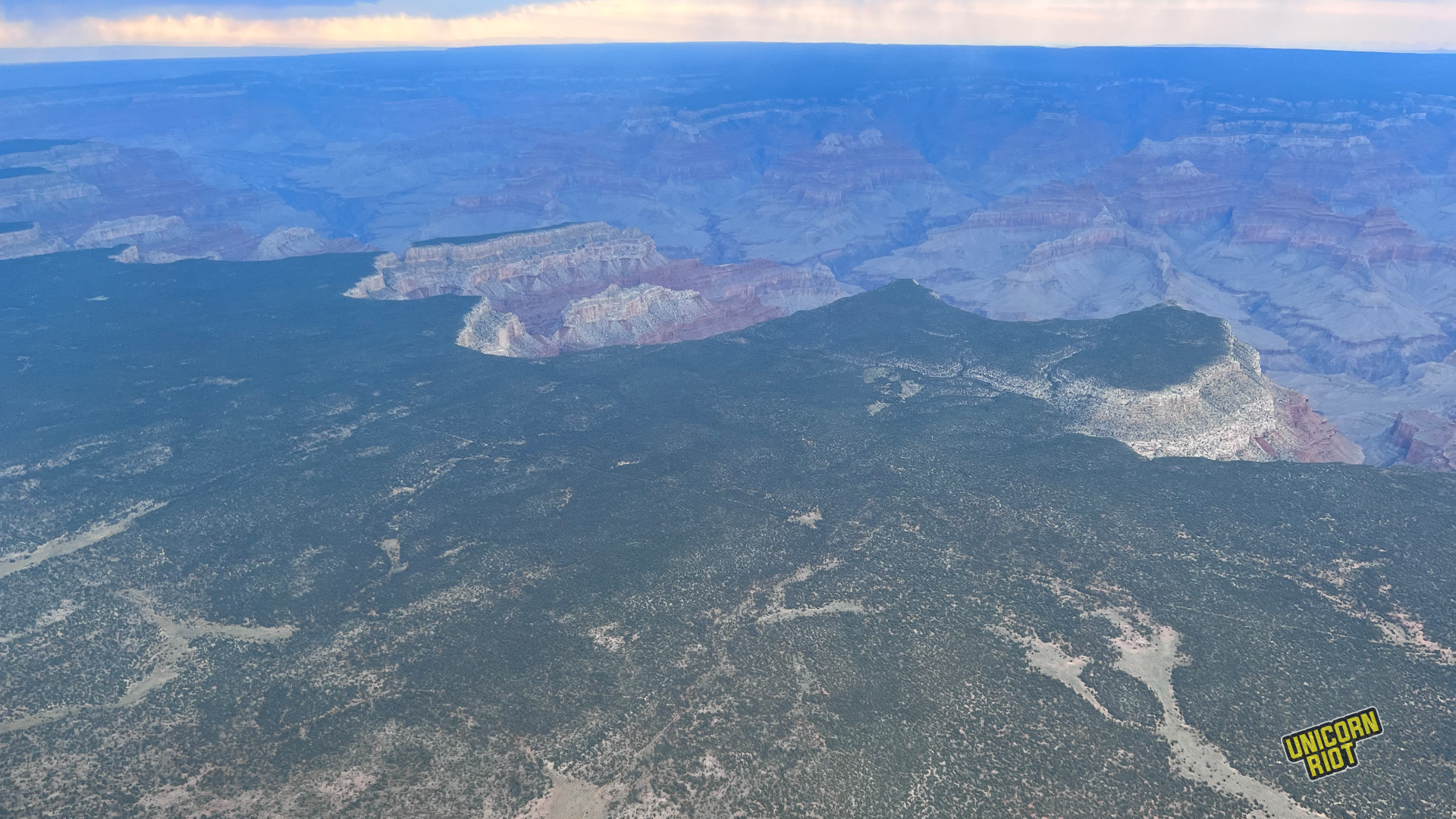
Indigenous Grand Canyon National Monument Designation Wins in Appeals Court
Arizona Republican-led lawsuit challenging Baaj Nwaavjo I’tah Kukveni monument unanimously dismissed
The U.S. Ninth Circuit Court of Appeals dismissed two lawsuits last month that alleged that the Baaj Nwaavjo I’tah Kukveni National Monument was unlawfully designated in 2023 by former President Joseph Biden. He issued a Proclamation on August 8, 2023, that created a 917,618-acre national monument under the Antiquities Act of 1906. The effort was largely led by Tribal Nations, who have cultural and historical relationships with the land.
“We are deeply grateful to the Ninth Circuit Court of Appeals for completely and definitively rejecting every argument made by the Arizona State Legislature, State Treasurer, and various local governments that wished to dismantle the Baaj Nwaaavjo I’tah Kukveni — Ancestral Footprints of the Grand Canyon National Monument,” said Havasupai Tribal Chairwoman Melinda Yaiva in a statement on May 6, 2026.
“The Havasupai Tribe stood proudly by when President Biden established the monument in 2023, which ensures that over 900,000 magnificent acres of the Grand Canyon region and the meaningful traditional, cultural and natural resources are protected and preserved for all generations to come.”
The two lawsuits were filed by the Republican-led Arizona State Legislature, the Arizona State Treasurer, Mohave County, Colorado City, and the Town of Fredonia, and were dismissed by the U.S. District Court for the District of Arizona on January 27, 2025.
The State of Arizona and the Governor of Arizona intervened as Defendants. Both courts agreed on claims from the Plaintiffs, including government entities, that the creation of the monument surrounding the Grand Canyon would prevent local and state governments from losing tax revenue on geothermal and mineral leasing in the future. A three-judge panel on the 9th U.S. Circuit Court of Appeals unanimously agreed with the lower U.S. District Court and said that Republican legislative leaders lacked standing because the harms they claimed the monument caused were speculative.
In a seven-page unsigned memorandum issued on April 1, 2026, the three-judge panel on the 9th U.S. Circuit Court of Appeals wrote, “The three local governments allege a future injury from lost tax revenue that they hoped to collect from companies that would mine uranium once the 2012 Withdrawal lapses. To qualify as an ‘injury in fact’ for purposes of establishing standing, a future injury must be ‘imminent,’ not ‘speculative.’”
“Plaintiffs fail to allege that any entity has ever sought to engage in ‘mineral or geothermal leasing,’ or that the monument land even contains those resources,” the judges wrote.
The Proclamation prohibits all mining, mineral, and geothermal leasing on monument land. Mining on the land had already been prohibited since 2012 under a ban issued by the Department of the Interior that is set to last until 2032, but for now the lands remain protected with the Appeals Court decision.
The Baaj Nwaavjo I’tah Kukveni National Monument — Ancestral Footprints of the Grand Canyon National Monument, is co-managed by the U.S. Bureau of Land Management and the U.S. Forest Service and includes ancestral homelands by several tribes who are also federally recognized, with some based in northern Arizona. Baaj nwaavjo translates to “where Indigenous peoples roam” in the Havasupai language, and I’tah kukveni translates to “our ancestral footprints” in the Hopi language.
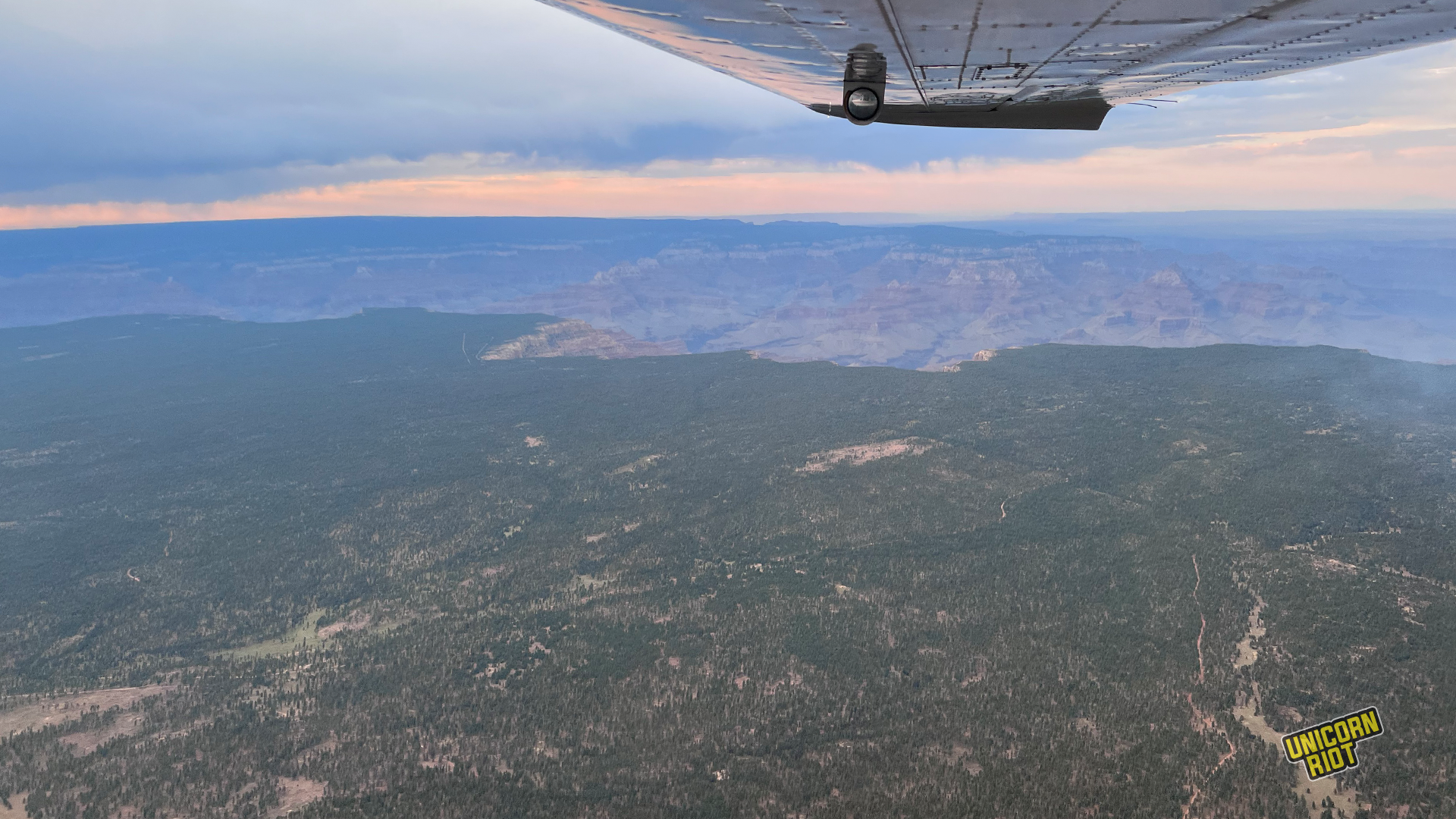
When former President Biden issued the Proclamation that designated the monument, details of how those lands were taken from Tribes were provided, as well as the Tribes’ efforts to maintain a relationship with the cultural resources and sacred places in the landscape. The Proclamation has since been removed by the Office of the White House and displays “Page Not Found.”
Tribes with ancestral lands within the national monument include the Havasupai Tribe, Hopi Tribe, Hualapai Tribe, Kaibab Band of Paiute Indians, Las Vegas Paiute Tribe, Moapa Band of Paiutes, Paiute Indian Tribe of Utah, Navajo Nation, San Juan Southern Paiute Tribe, Yavapai-Apache Nation, Pueblo of Zuni, and the Colorado River Indian Tribes.
“This court decision is a huge win for the sacred land and water of the region and for Arizonans and Americans alike,” said Amber Wilson-Reimondo, of Grand Canyon Trust, in a statement to Unicorn Riot.
“The plaintiffs sought to overturn an exceptionally popular and necessary monument based on made-up harms, and the court order confirmed that’s not acceptable. Especially in these times, when our public lands and those who cherish them are being treated as secondary to the profits of a few, it’s critical that unfounded political talking points aren’t allowed to pass as fact. Thankfully, in this case, we saw that principle win out.”
The Arizona Legislature claimed that the designation of the monument harmed the state by forcing members of the legislature to dedicate time and money to “passing laws, holding hearings, and publicly commenting” on issues caused by the monument.
Judges Consuelo Callahan, John Owens, and Michelle Friedland disagreed and wrote that the Arizona Legislature couldn’t manufacture an injury or harm by choosing to spend money. “A plaintiff may not ‘manufacture’ an injury by ‘simply choosing to spend money. A plaintiff ‘must instead show that it would have suffered some other injury if it had not diverted resources to counteracting the problem,’” the Ninth Circuit wrote.
In its argument against former President Biden’s Proclamation, the plaintiffs alleged that former President Biden abused the Antiquities Act and compared his Proclamation to an 11th-century British practice known as the Norman Conquest. The British Crown could declare land a royal forest and reserve it “solely for the king’s royal diversion” when conquering new lands. “The Biden Administration’s interpretation of the Antiquities Act, 54 U.S.C. §320301, et seq., creates a new royal forest law,” the 49-page suit filed on February 12, 2024, stated, and that harms local and state governments from future tax revenue.
However, both the district court and the appeals court dismissed the complaint, concluding that each argument brought to the court had no standing.
Related:
Permit for Pipeline Reconstruction Near Sacred Pipestone Site Rescinded After Tribal Pushback [Jan. 2025]
Follow us on X (aka Twitter), Facebook, YouTube, Vimeo, Instagram, Mastodon, Threads, BlueSky and Patreon.
Please consider a tax-deductible donation to help sustain our horizontally-organized, non-profit media organization: