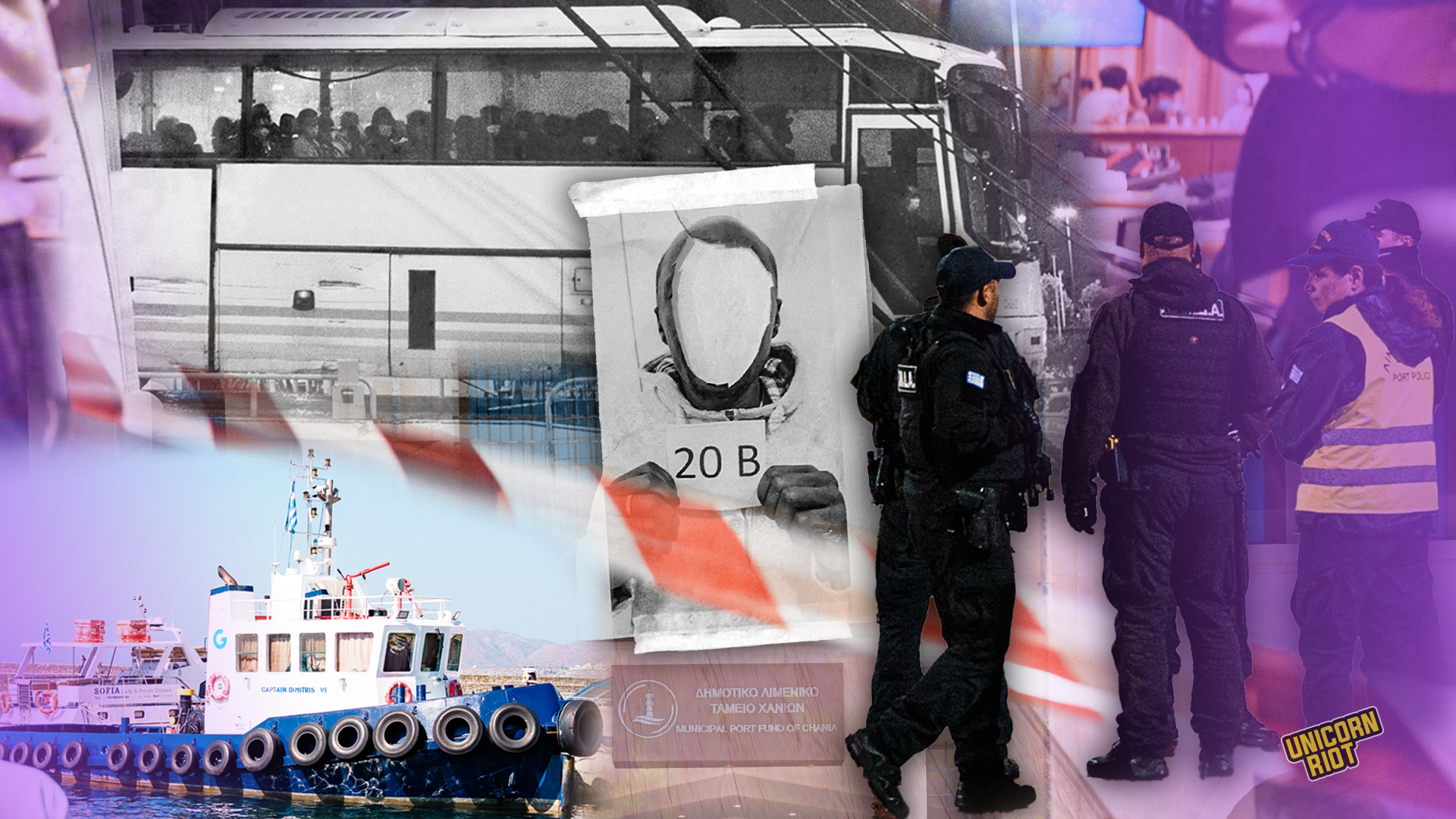
Greek Trials Turn Migrants Into ‘Smugglers’ and Minors Into Adults
Crete: Frontline of the New EU Migration and Asylum Pact – Part 3 of 3
Crete, Greece — Crete’s courts are convicting shipwrecked people on the move as “smugglers” in trials lasting minutes, with lawyers documenting minors registered as adults and sentences reaching hundreds of years.
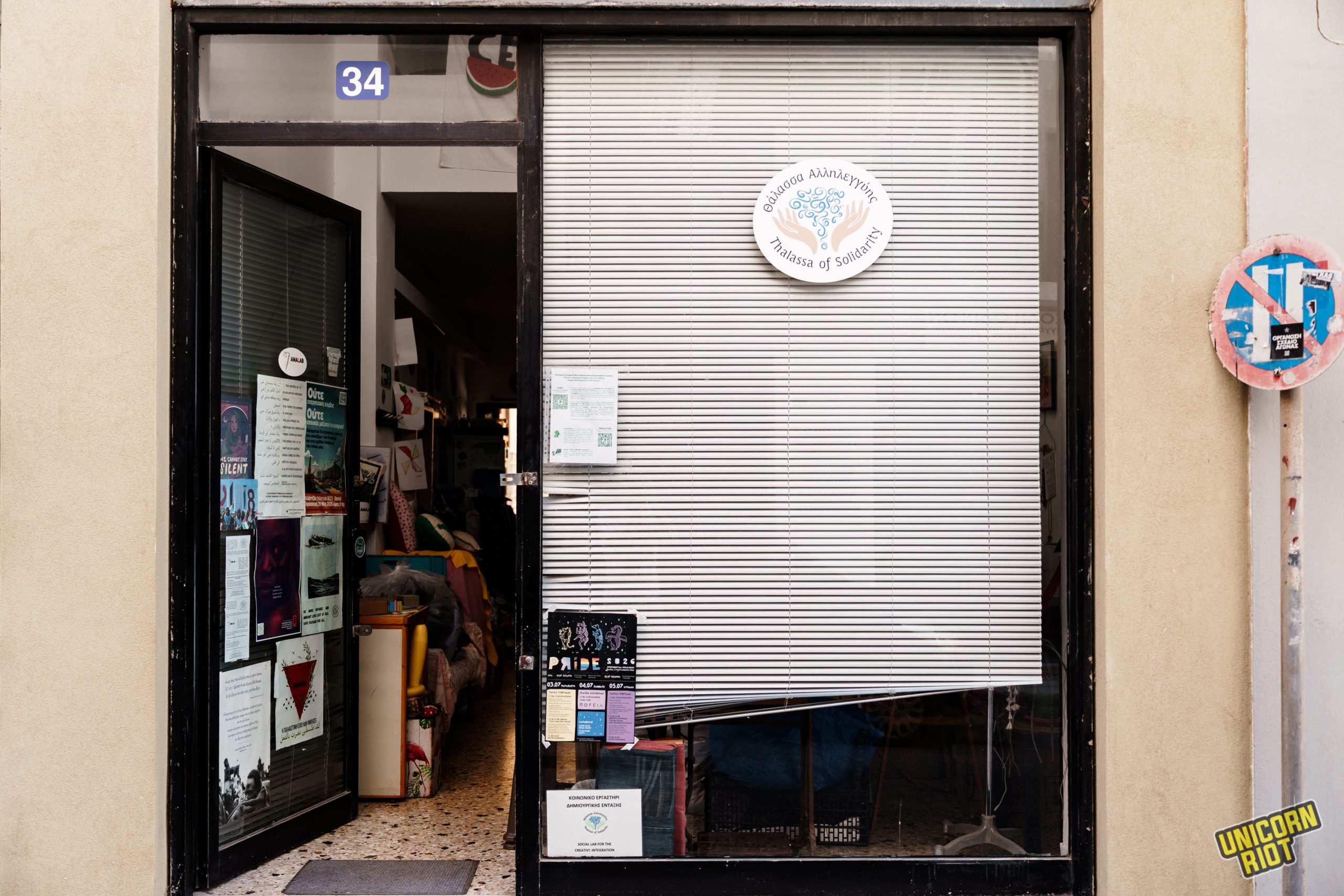
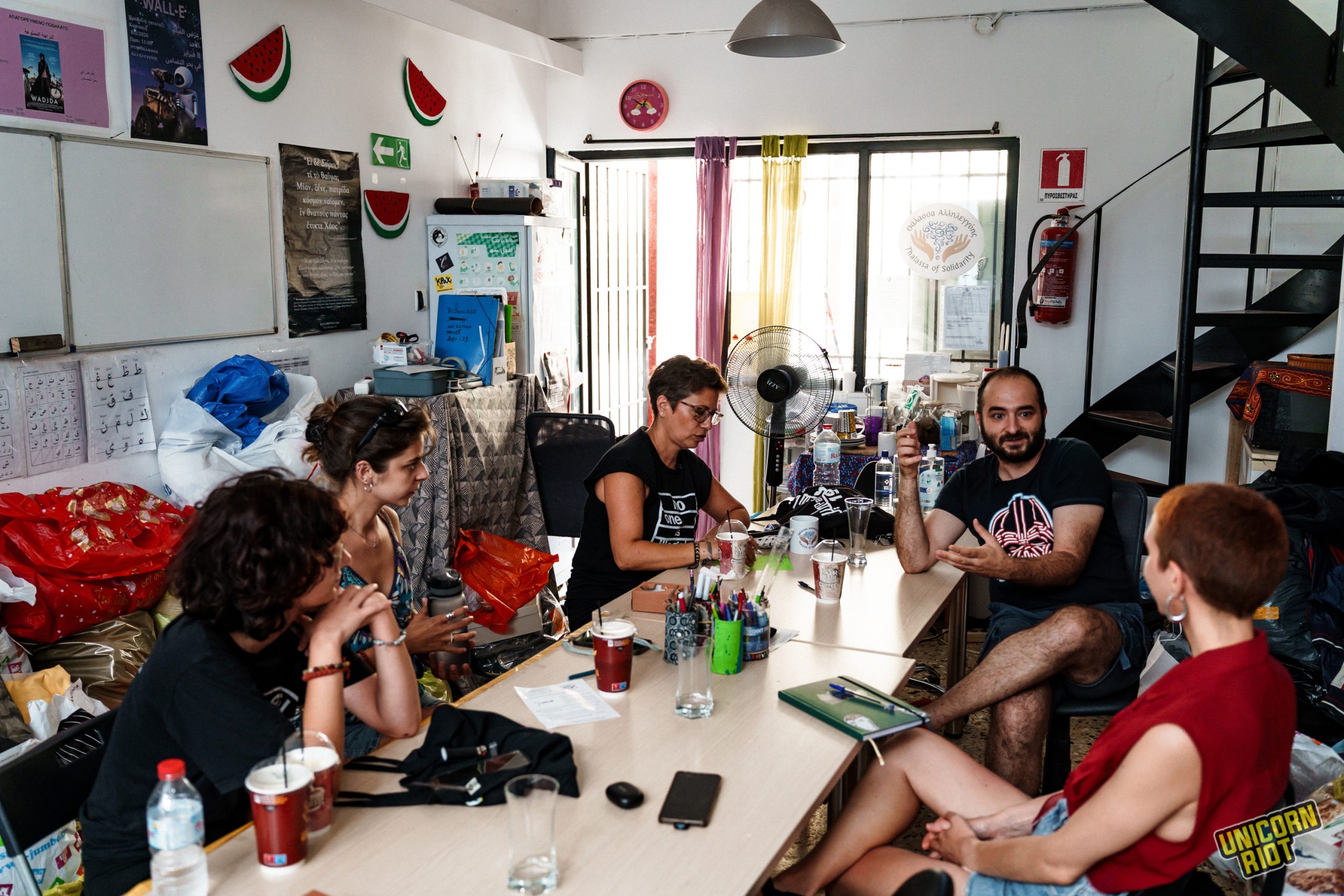
Eleftheria Iatraki lets her gaze wander along the walls of the room as she tells the story of Thalassa of Solidarity. The shelves are crowded with books, sewing machines, toys, and other objects. “We created this place as a space to meet each other through learning activities — sewing classes, language classes, computer classes,” she explains. She wears a black T-shirt reading “no one is illegal,” her elbows resting on the table that fills the small room where the collective carries out its activities.

Through the glass door facing the street, the white facades of the buildings in central Heraklion, Crete’s regional capital, are visible.
Thalassa of Solidarity was founded in 2019 by local activists as an independent, self-funded space. Even then, Crete was a secondary destination for people on the move and refugees who had arrived in Greece through Turkey, but there were no real spaces where local residents and communities on the move could meet each other. “The idea was to create situations where people could communicate with one another and identify common problems and struggles,” continues Eleftheria — a name that, fittingly, means “freedom” in Greek.
The collective has always provided social and legal support too, helping people navigate an often labyrinthine bureaucratic system. Consequently, as the migration route that has progressively made Crete Greece’s main entry point since 2023 became established, Thalassa of Solidarity expanded its scope of work.
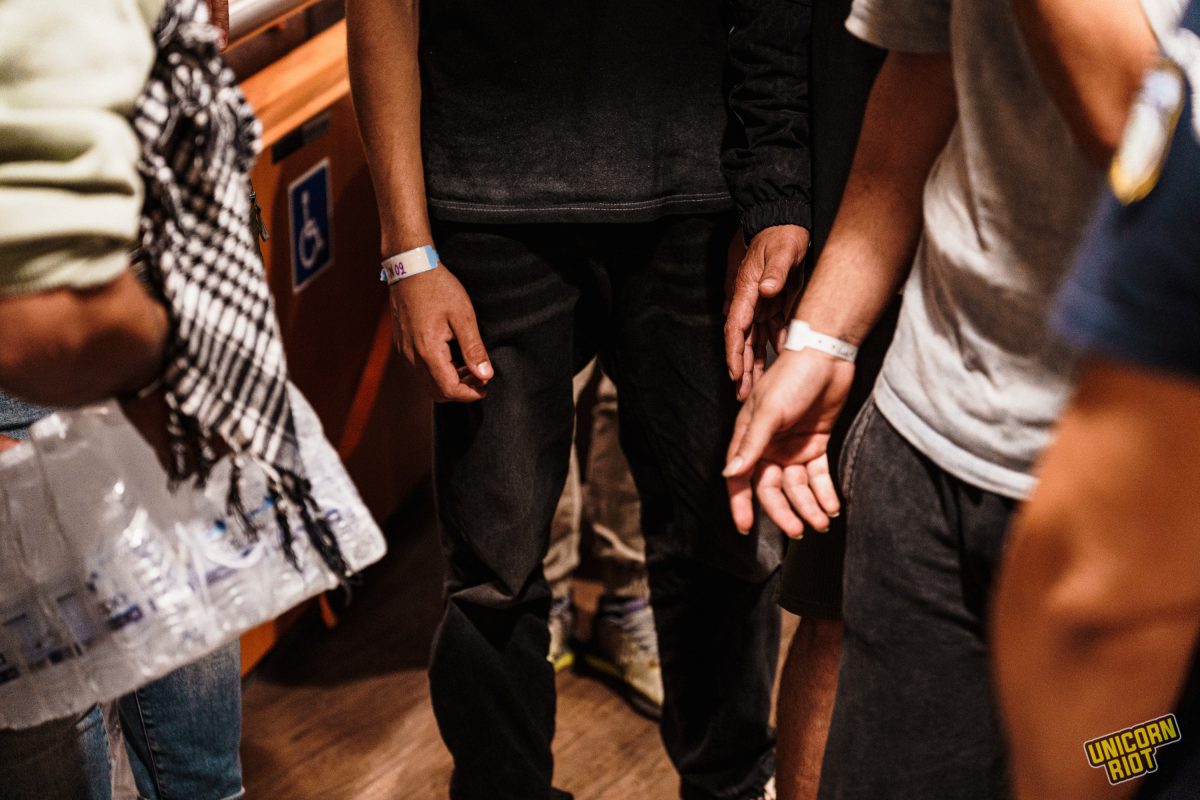
Faced with the lack of adequate reception facilities on the island and authorities’ often repressive handling of arrivals, the collective began monitoring the informal centers where people are effectively detained upon landing. This work has brought into focus increasingly troubling mechanisms of criminalization.
“From the moment they arrive, people are isolated and all contact with the outside world is blocked,” Eleftheria says. “Everything is under the control of the police and the Coast Guard. Human needs, basic rights, and asylum requests are all completely subordinated to one absolute priority: finding the boat drivers, and charging them as smugglers.”
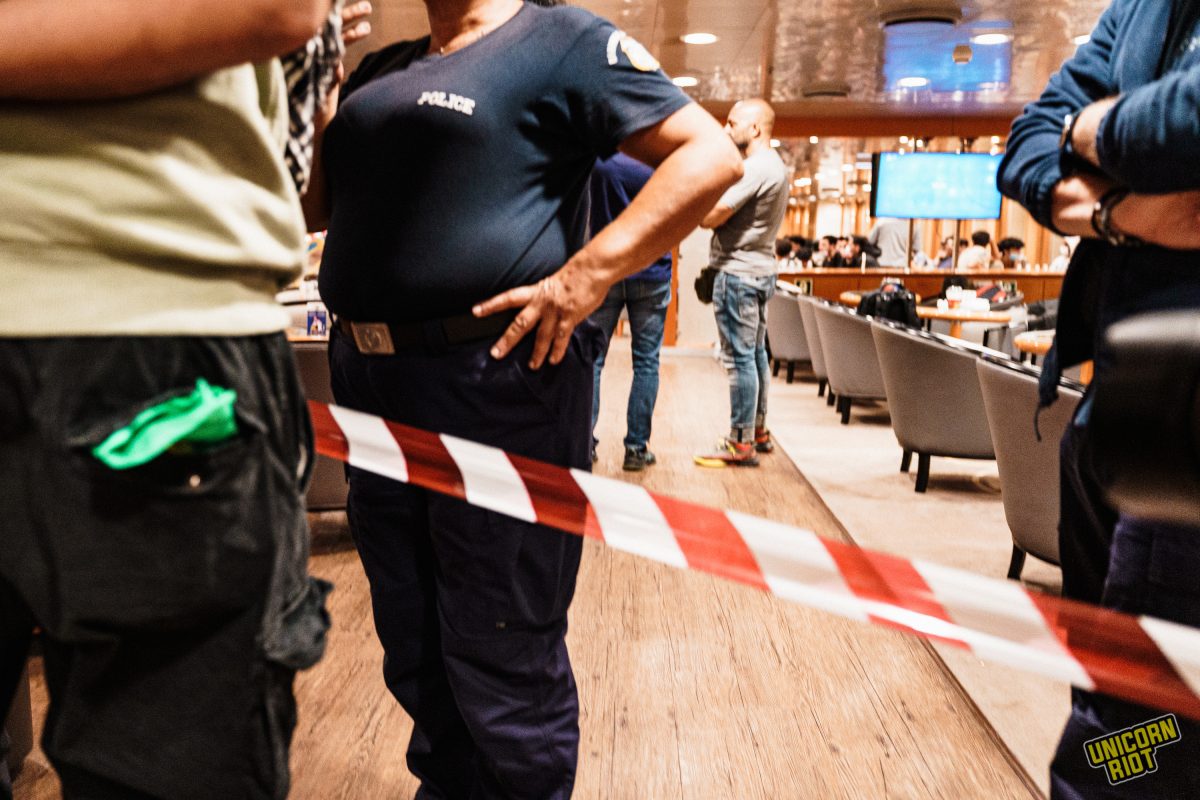
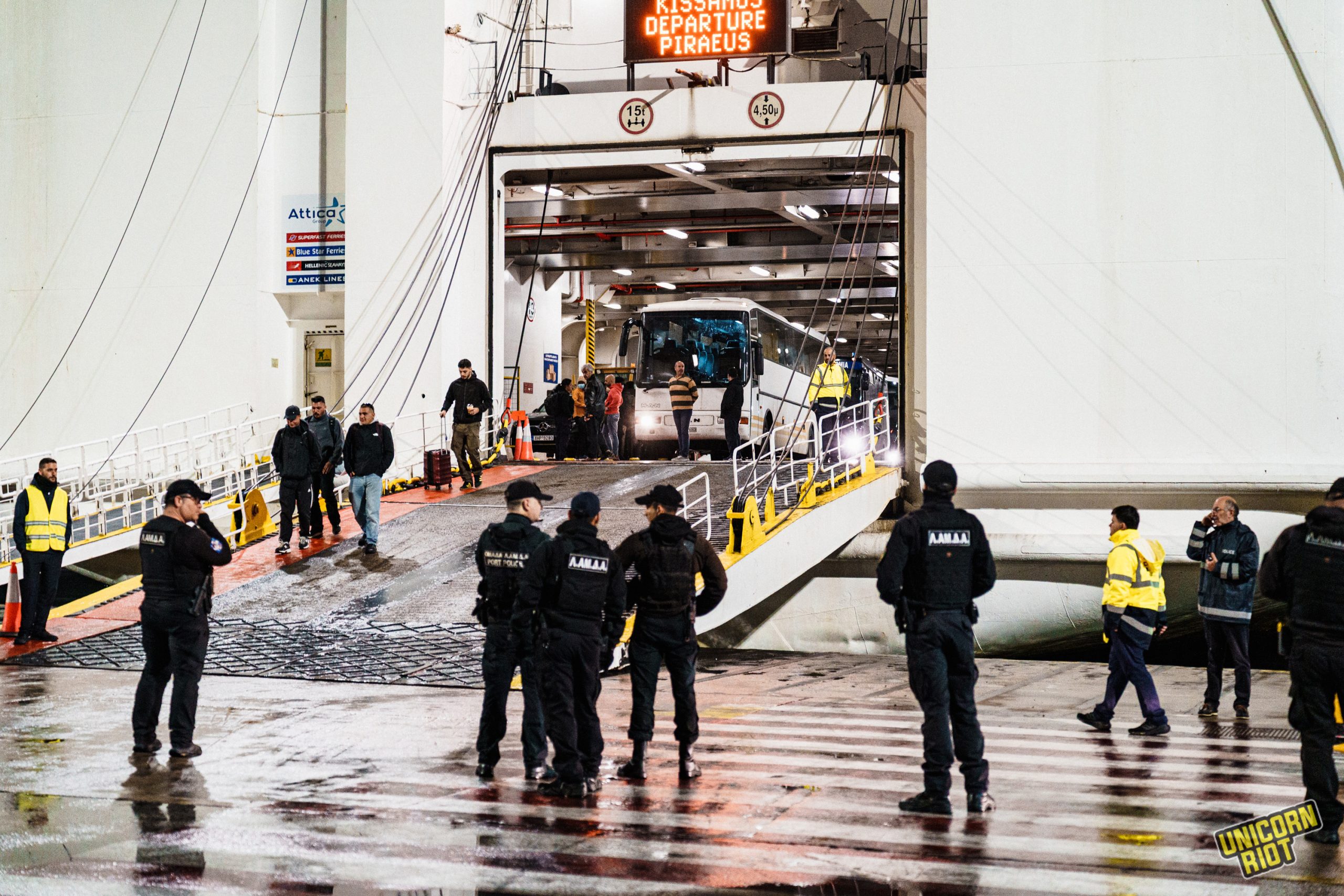
Activists from the collective Steki Metanaston, who are monitoring the situation in Chania, a city in the western part of the island, confirm this pattern. They describe how the search for boat drivers takes place during the custody phase at Agya, a former exhibition center used as a first-reception site.
“The very first step is the confiscation of cell phones,” they explain. “After that comes the so-called preliminary investigation, which consists of interrogations almost always conducted without interpreters and with extremely rough methods of communication.”
In this context, stripped of legal safeguards, police ultimately make an arbitrary designation: anyone who so much as touched the tiller or held a map is labeled a “smuggler,” with no verification of whether they drove the boat under threat or simply in an attempt to bring the group to safety — a charge that, once filed, can carry sentences of years or even decades in Greek courts.
Read Part 1 | Read Part 2
A Legal Shield That Exists Only on Paper
“We have never seen this scale of mass criminalization before in Greece,” says Iliana Bompou, a lawyer with Equal Rights Beyond Borders, which has been providing free legal support to defendants in Crete’s courts since late 2025. “Not even during the daily landings on the Aegean islands during the 2015 so-called refugee crisis did we see numbers like this. Today in Crete, for every single boat that arrives, at least one so-called smuggler is identified.”
Alongside Equal Rights Beyond Borders’ work, Thalassa of Solidarity and other collectives and organizations have spent the past few years building a network that tracks the criminal proceedings against everyone arrested on arrival in Crete on smuggling charges.
Under Article 31 of the 1951 Refugee Convention, which Greece has ratified, signatory states cannot impose criminal penalties for irregular entry or stay on people coming from countries where their life or freedom is at risk. That provision was written into Greek national law as an exemption from criminal liability for those who facilitate their own entry, or that of family members, in seeking protection. But this safeguard appears to be systematically ignored in practice, and the scale of that failure is difficult to quantify.
According to the Border Violence Monitoring Network, an independent organization that spoke to Unicorn Riot, no official data is currently available on the number of people held in Greek prisons on people smuggling charges.

However, a report published in late 2025 by Legal Centre Lesvos and the Human Rights Legal Project Samos stated that more than 2,400 people were imprisoned on such charges as of September 2025 — a figure that made smuggling the second most common charge among Greece’s prison population.
“The most shocking thing is how the trials are conducted. It’s a farce,” says Ioanna Pavlou, another lawyer with Equal Rights Beyond Borders. Reports published by the Border Violence Monitoring Network and the collective 50outofmany paint a stark picture of summary justice.

In Chania, for instance, in a sample of roughly 120 cases monitored in 2025, 96% of defendants had access only to court-appointed lawyers, who are frequently assigned just five minutes before the hearing begins. With no time to review the case file or consult with their client, the defense is almost always reduced to pushing for a plea deal — signed without the long-term consequences ever being made clear, including the automatic waiver of the right to appeal and to seek asylum.
Compounding this defense-side fragility is the sheer brevity of the hearings: trials last on average just seven to eight minutes, reducing criminal adjudication to a mere administrative formality.
That speed also translates into the total absence of any real evidentiary process. As detailed in the reports and confirmed by the Equal Rights Beyond Borders lawyers themselves, the boats’ passengers are almost never summoned to testify. Their initial statements are read into the record as nothing more than paper testimony, stripping the defense of its fundamental right to cross-examination. The result is “copy-paste” verdicts, in which the prosecution’s case is accepted uncritically while mitigating circumstances — or a state of necessity driven by survival or coercion — are systematically dismissed.
The outcome of this judicial machinery is reflected in the sheer severity of the sentences imposed. “If the consequence were a criminal record or a year in prison, that would already be serious. But here we’re talking about something very different,” Ioanna explains.
Because the Greek penal code multiplies the base sentence by the number of people transported, cumulative sentences on paper reach astronomical figures, with documented cases reaching 300 years in prison. Under Greek law, such sentences are capped at an effective maximum of 25 years. But the impact remains devastating: “People are barred from applying for asylum, with no alternative path to the documents needed to stay in Greece legally. The predictable outcome is that they end up arrested again for irregular stay.”
The Youngest Targets of the System
Another troubling element is the involvement of minors in these criminal proceedings. Out of a sample of 102 cases monitored in 2025 by 50outofmany, 13 involved people under 18. And the same Equal Rights Beyond Borders lawyers report that, at present, they are handling exclusively cases involving minors.
The organization’s work on this front began after reports received while monitoring the Malakasa reception center near Athens, where the lawyers started hearing from guardians of several unaccompanied minors. The boys were stuck inside the camp because of a restraining order issued by a Crete court that blocked their transfer to dedicated protective facilities.
When the lawyers traveled to Chania to access the criminal case files, something disturbing emerged: minors are frequently registered as adults and funneled into criminal proceedings with none of the safeguards their age should trigger.
Among the most serious distortions found at the point of landing is authorities’ practice of ignoring or confiscating minors’ identity documents. The Equal Rights Beyond Borders lawyers describe the case of a young man whose ID was seized by the Coast Guard at the time of his arrest, with no confiscation record ever issued.
“He told every authority he encountered that the Coast Guard had taken his ID, and it was even entered into the court record,” they explain. “But the judge never ordered the document returned. He just moved on to the next question and ordered a radiological age assessment.”
The age-assessment procedure represents a further flaw in the system, since the practice adopted by Crete’s courts appears to rely almost exclusively on wrist X-rays — a method medical and human rights bodies have long criticized for its wide margin of error. Equal Rights Beyond Borders lawyers have raised serious doubts about the impartiality and rigor of the local forensic doctor, whose reports are routinely reduced to a single line — “the patient is over 19 years old” — with no methodology or margin of error specified, even when the judge explicitly requests this information.
Demonstrating just how unreliable these assessments are, in one case the organization followed, a radiological exam that had declared a young man an adult in Chania was repeated six months later at a hospital in Athens — this time showing he was just 16 years old.
According to the lawyers, the choice to prosecute the youngest is no accident. Instead, it conceals a deliberate strategy. “These are the people who are most alone, who have often already been victims of trafficking and forced labor for years in Libya before ever boarding a boat,” they explain. With no family members traveling alongside them and no knowledge of their own rights, minors become the ideal scapegoats for a propaganda machine that needs to produce a culprit at every landing.
According to local activists, this mass criminalization responds above all to political calculation and a deliberate strategy of deterrence.
Crete — an island of crucial economic weight, with a major tourism sector and close political ties to Athens — categorically refuses to allow the construction of reception and identification centers, to avoid “reputational damage.” In this sense, the systematic arrests and trials send a clear message outward: anyone who tries to reach the island will find prison waiting.
This punitive approach seeps, unfiltered, into the courtrooms themselves, where the presumption of innocence gives way to openly ideological positions, and criminal justice becomes the operational arm of an ostentatious policy of deterrence.
Equal Rights Beyond Borders lawyers report that in a written opinion filed to justify the pretrial detention of a minor — not yet convicted — a prosecutor in Chania went so far as to put in writing that the boy had to face the consequences of his own actions: “He should have thought about that before coming to Greece. This is what happens when you cross the border.”
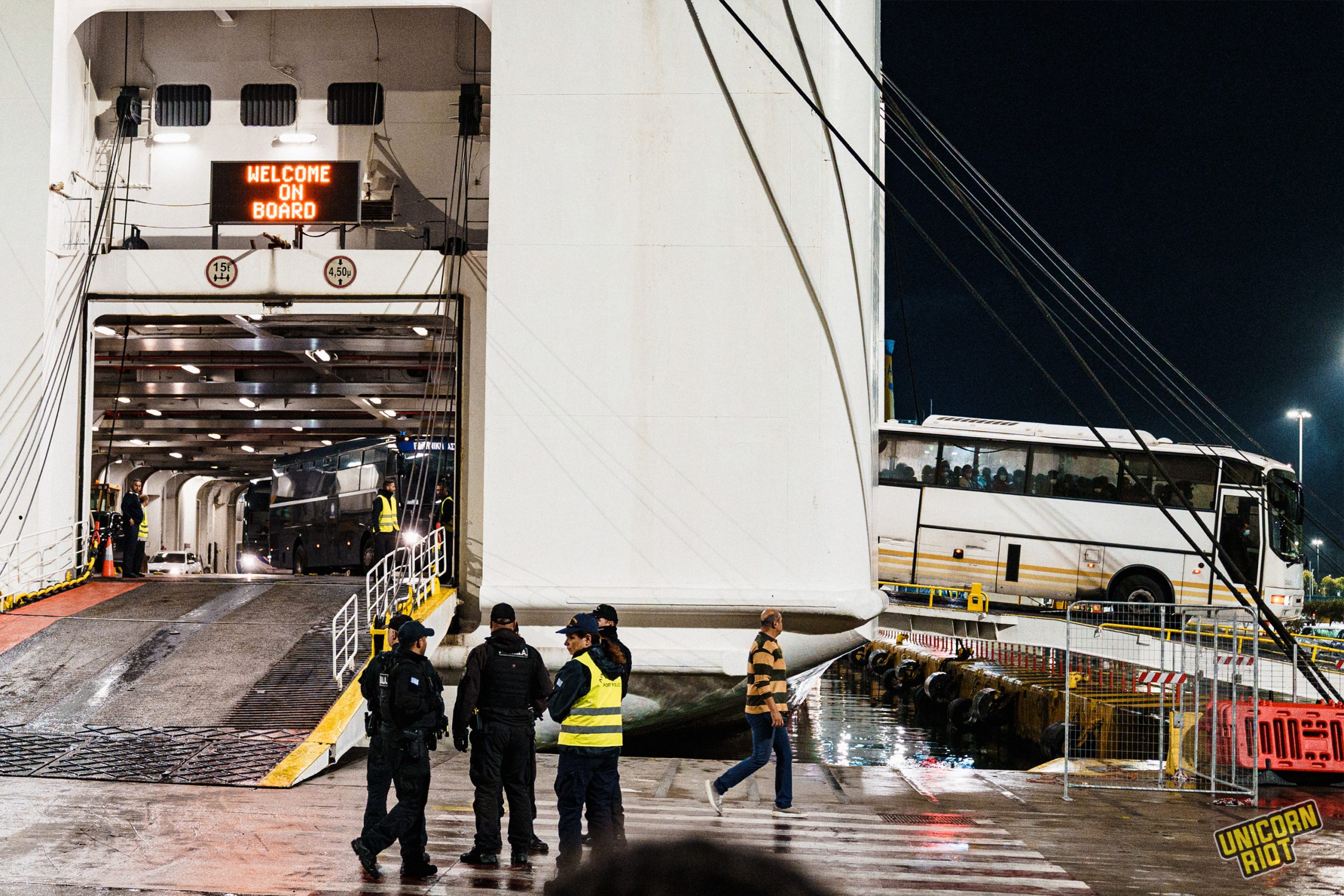
Cover image by Niko Georgiades for Unicorn Riot featuring photos by Romanos Lioutas
View all Unicorn Riot coverage from Greece by clicking on image below:

Follow us on X (aka Twitter), Facebook, YouTube, Vimeo, Instagram, Mastodon, Threads, BlueSky and Patreon.
Please consider a tax-deductible donation to help sustain our horizontally-organized, non-profit media organization: