Guilty on All Counts: The Historic Verdict Against Golden Dawn
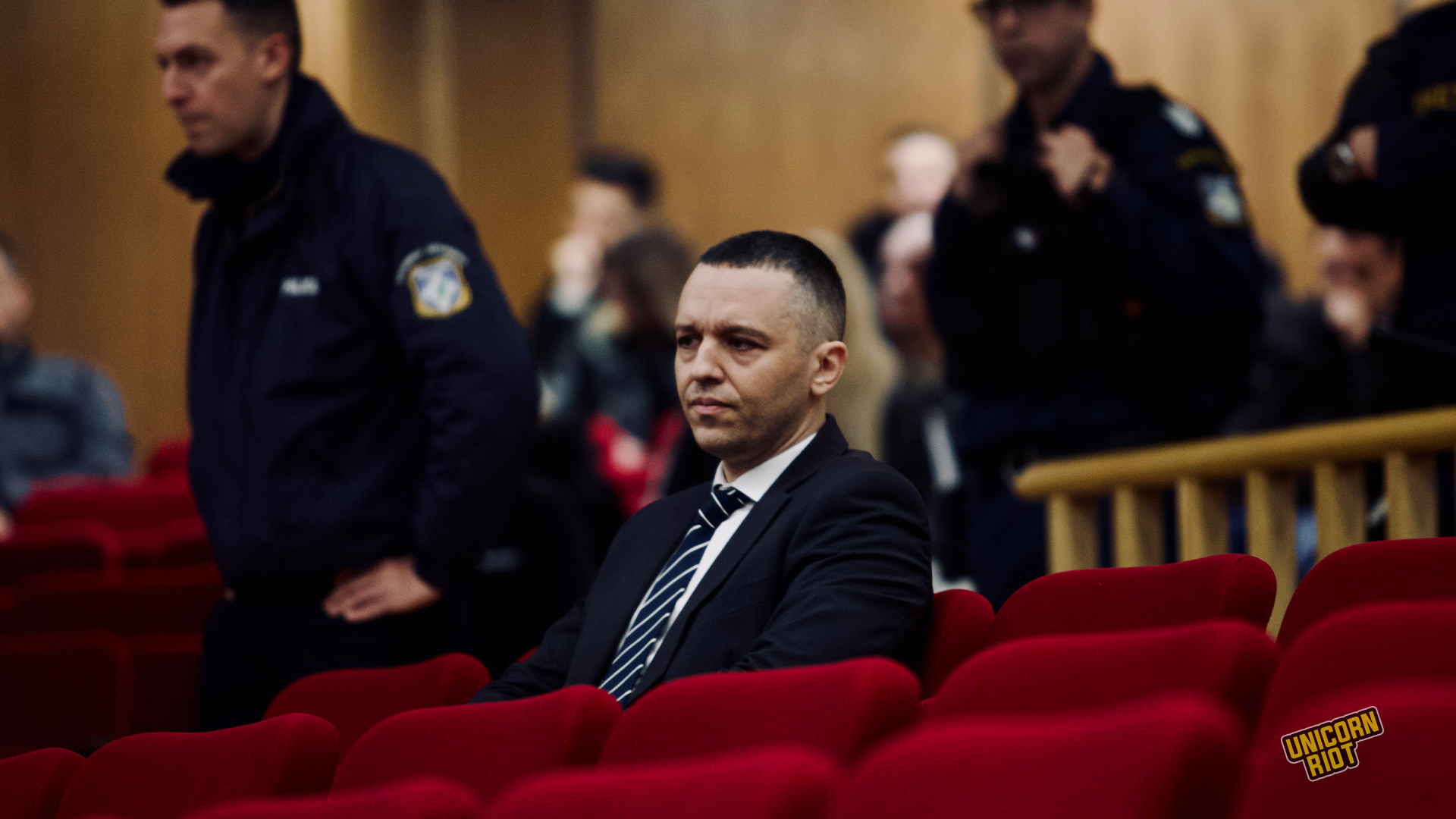
Athens, Greece — On March 4, the Athens Court of Appeals delivered a historic ruling: all 42 Golden Dawn members were held accountable for their crimes. They were found guilty of felony charges. Among those in court present on Wednesday were Ioannis Lagos, who was convicted in connection with orchestrating the murder of rapper Pavlos Fyssas in 2013, and senior party figure Ilias Kasidiaris. Both of them were visibly disappointed as the verdict was read.
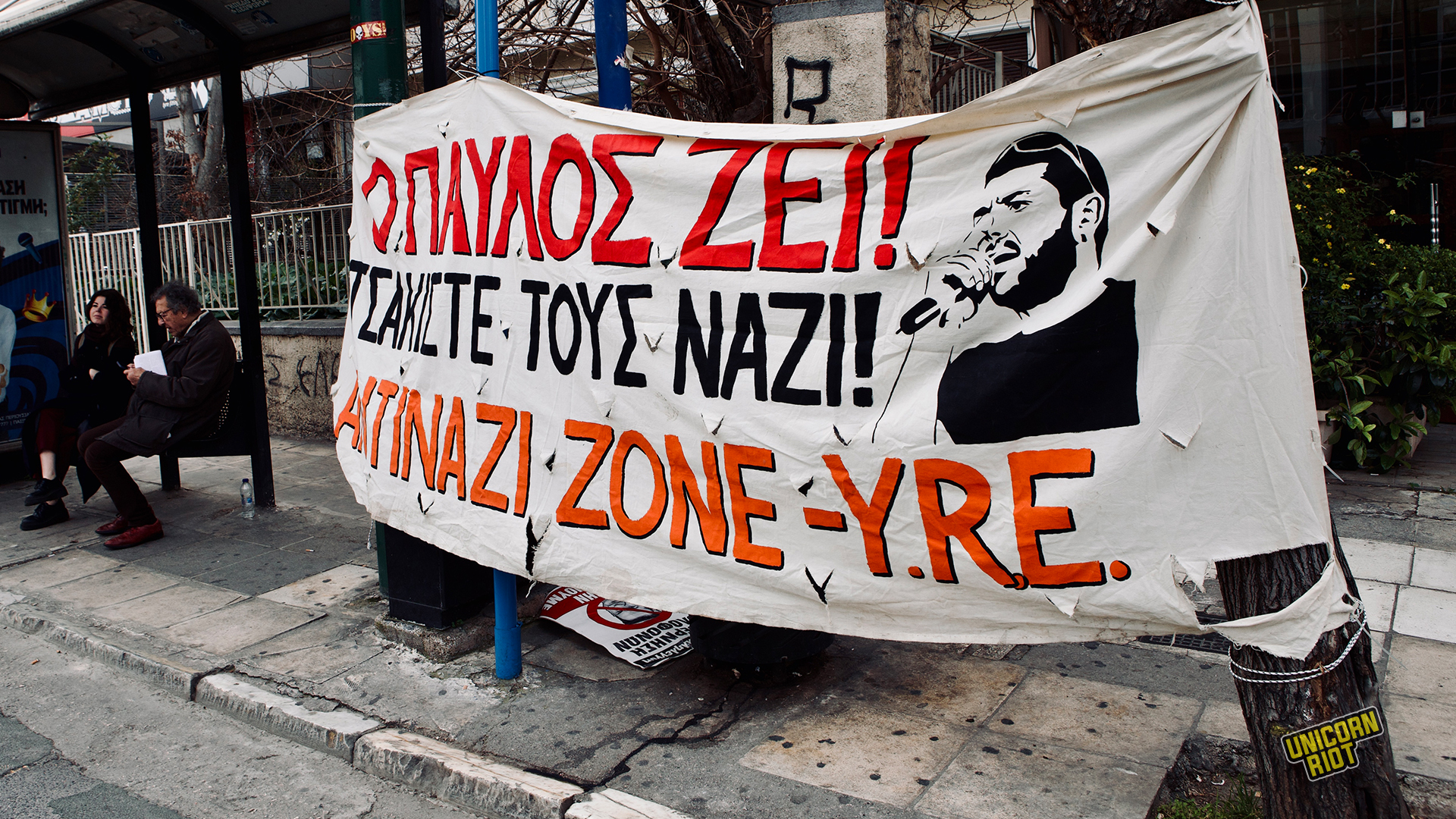
The neo-Nazi party, effectively banned and declared a criminal organization in 2020, has resurfaced in public discourse following the March 4 verdict.
The party, although controversial, reached its prominence during its heyday, roughly from 2012 to 2015, when it was at its highest influence with electoral success, ranking as the third-largest party in Greece and garnering 500,000 votes.
For the antifascists in Greece, this was an important day after a long fight for justice. Pavlos Fyssas, a 34-year-old rapper with the stage name Killah P, cherished by many as a symbol for antifascism, alongside migrants Shehzad Luqman and Alin Abdul Manan, were all targeted and killed by members of the neo-Nazi party Golden Dawn.
This created sorrow and anger in much of the political landscape within Greece, creating backlash against the far-right political party. In the years afterward, trials ensued over Golden Dawn’s brutal and racist attacks.
Less than two months after Fyssas was killed in 2013, antifascists killed Manolis Kapelonis and Giorgos Fountoulis, two ardent Golden Dawn supporters in a retaliatory attack. This shook the country again, as it was a response to the Fyssas killing.
The Greek government and the majority of political parties condemned the killing. Yet, Golden Dawn quickly utilized the incident politically, accusing the right-wing government of Antonis Samaras of failing to address terrorism. At the time, anti-terror units were focused on investigating Golden Dawn’s criminal activities.
Each year, fascist groups hold a commemoration gathering in Neo-Irakleio to honor the two Golden Dawn members killed by antifascists at the site of the attack. In response, anarchists and antifascists also organize counter-rallies in the same area to demonstrate their opposition to fascism. These recurring confrontations underscore the deep-seated conflict between the opposing political factions.
Police investigations into the killings suggested they were part of an escalating cycle of violence, highlighting how organized political aggression had evolved into a broader conflict surrounding Golden Dawn.
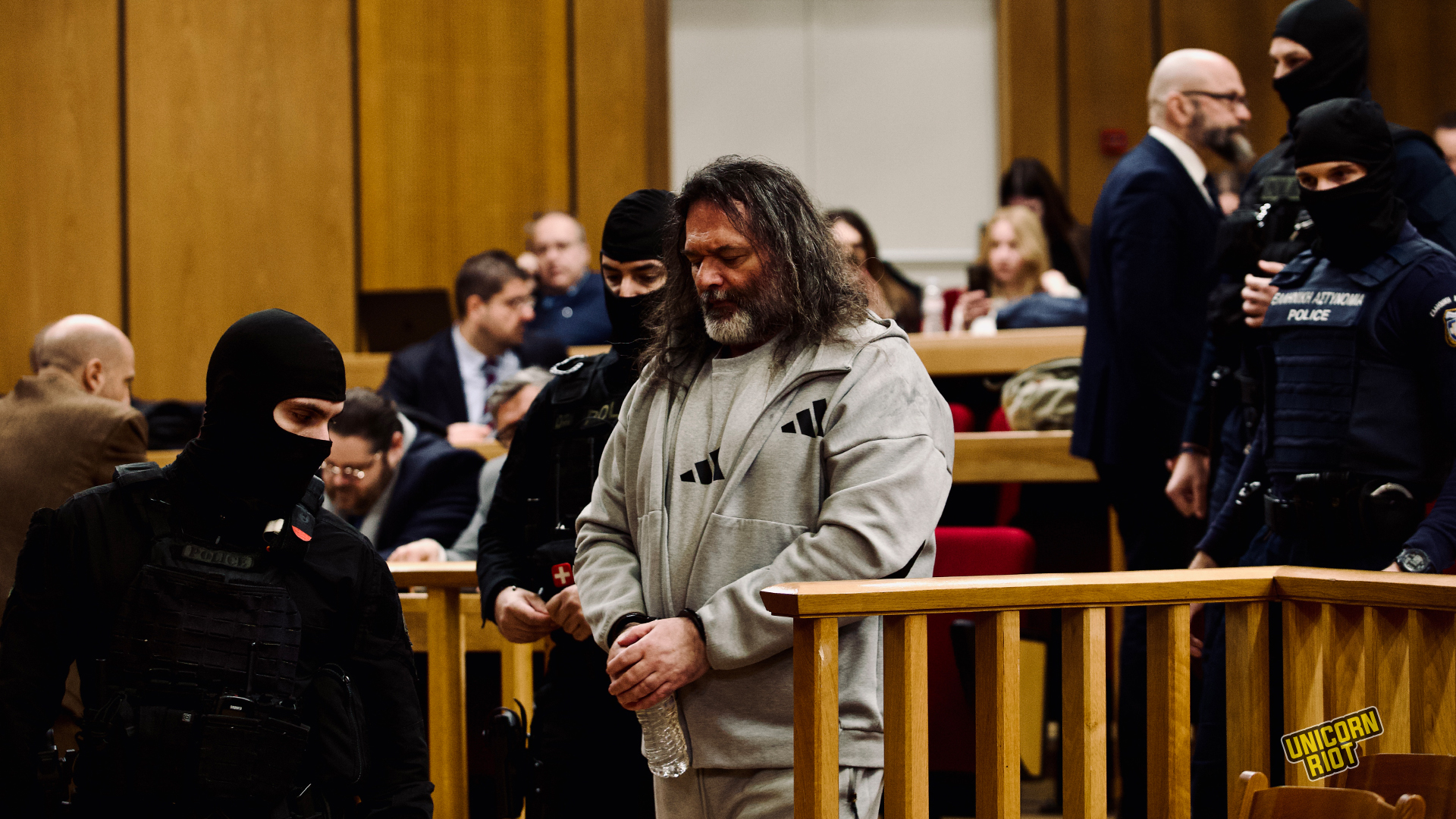
Golden Dawn rose to prominence as an anti-establishment group during the economic crisis in 2012, managing to enter the Greek Parliament despite evidence of their criminal activity already being known.
After a multi-year trial, the Five-Member Court of Appeals for Felonies in Athens upheld the 2020 verdict of the trial court, formally recognizing Golden Dawn as an organized criminal network.
The case involved extensive evidence-gathering over many years and was one of the biggest criminal cases against Nazis since the Nuremberg trials in the 1940s. Former members of parliament from Golden Dawn were ultimately found guilty of their participation in a criminal organization and related crimes.
At the court on March 4, only two defendants were present. Among them was the mastermind of the assassination of Pavlos Fyssas, Ioannis Lagos, who appeared in court dressed in a full tracksuit, mocking the press and maintaining a smug persona.
On the other hand, Ilias Kasidiaris, the poster boy and spokesperson for Golden Dawn – and the leader of the Greeks for the Fatherland party – appeared in well-dressed attire, contrary to Lagos. Kasidiaris maintained a quiet demeanor – a departure from his behavior during previous years’ court hearings and on the streets.
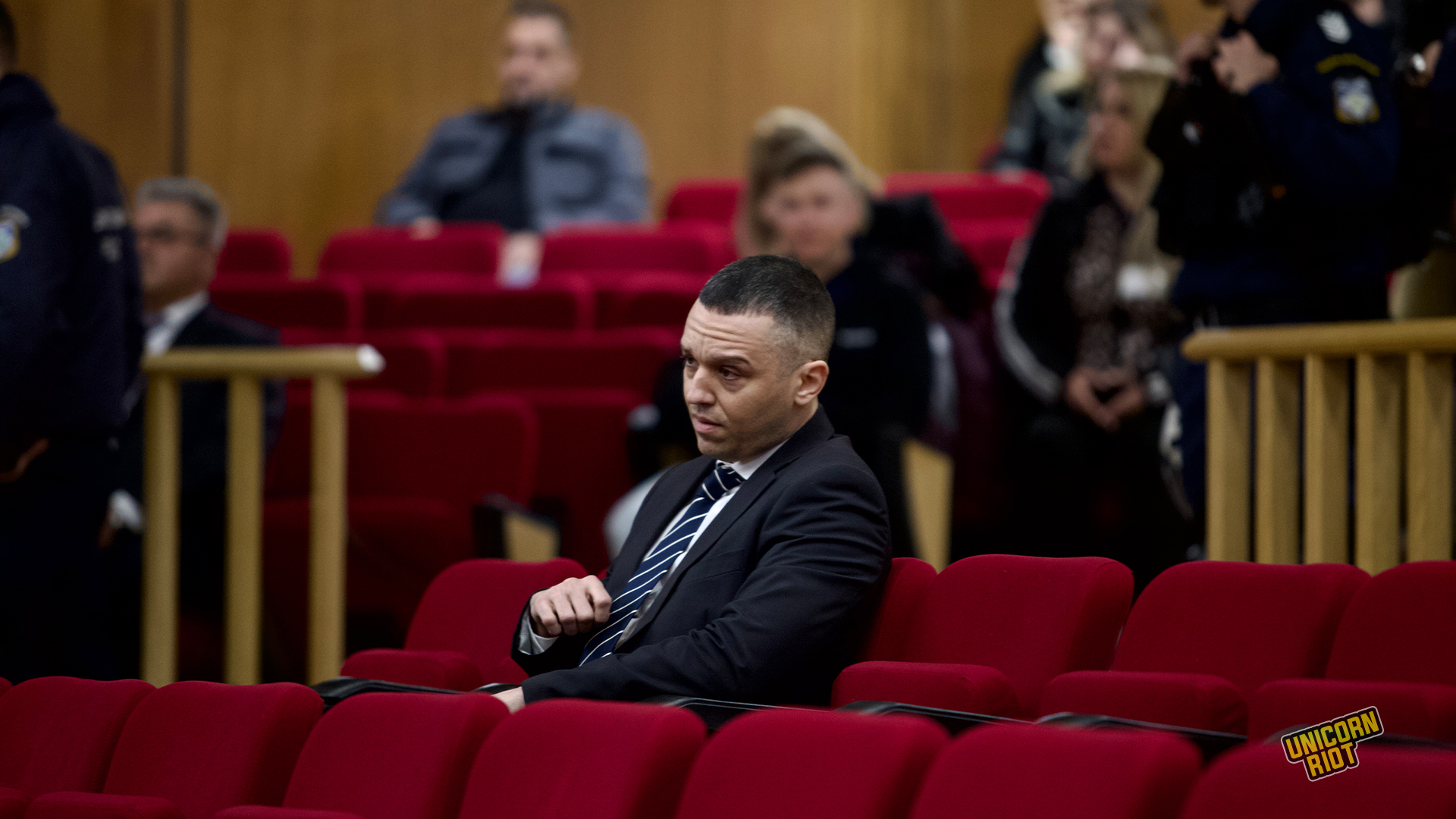
Kasidiaris cultivated a persona rooted in violence. He relied heavily on altercations, physical aggression, and intimidation as a political tactic. One of the most notorious televised incidents occurred in 2012, shocking international media. During a heated political debate on live TV, Kasidiaris began throwing water at one female participant and proceeded to strike aggressively at another female Member of Parliament (MP) multiple times.
As the spokesperson of Golden Dawn, Kasidiaris’ rhetoric often encouraged street-level violence. His ideology targeted migrants, political opposition, and journalists. He relied on these hyper-masculine, macho tactics, among others, to project power and consolidate support amongst his followers.
On the other hand, Ioannis Lagos remained a Member of European Parliament (MEP) until the end of his term in 2024, despite his 2020 conviction for leading the criminal organization Golden Dawn. He was able to continue functioning as an active politician due to legal loopholes and procedural delays within both Greek and EU legal frameworks. After his conviction, Lagos fled to Brussels and initially benefited from parliamentary immunity, which further complicated efforts to enforce the Greek court’s ruling.
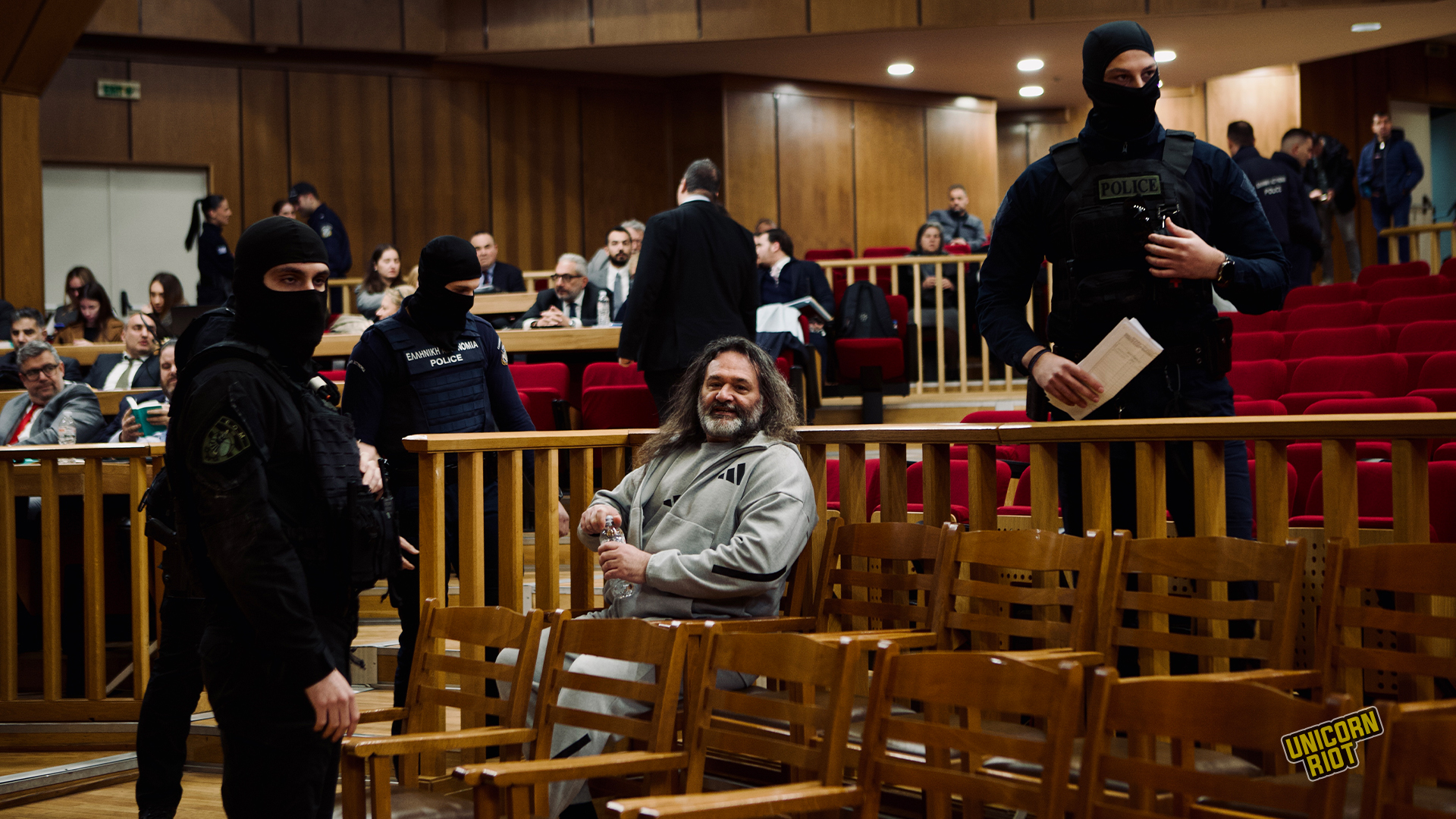
Despite his conviction and fleeing the country, Greek authorities did not fully remove him from office. Even after he was incarcerated, Lagos would retain his seat in the European Parliament. Throughout his imprisonment, he was able to continue communicating with the public through social media and became involved in controlling prison work shifts and having a significant level of influence within prison.
Lagos also continued to access significant EU funds despite his conviction and imprisonment. He received nearly €30,000 in Parliamentary benefits and approximately €1,700 in travel reimbursements from the European Parliament, while it remains unclear if he was paid his full monthly MEP salary. These circumstances highlighted shortcomings and gaps between Greek and EU legal systems in addressing criminal cases involving elected officials.
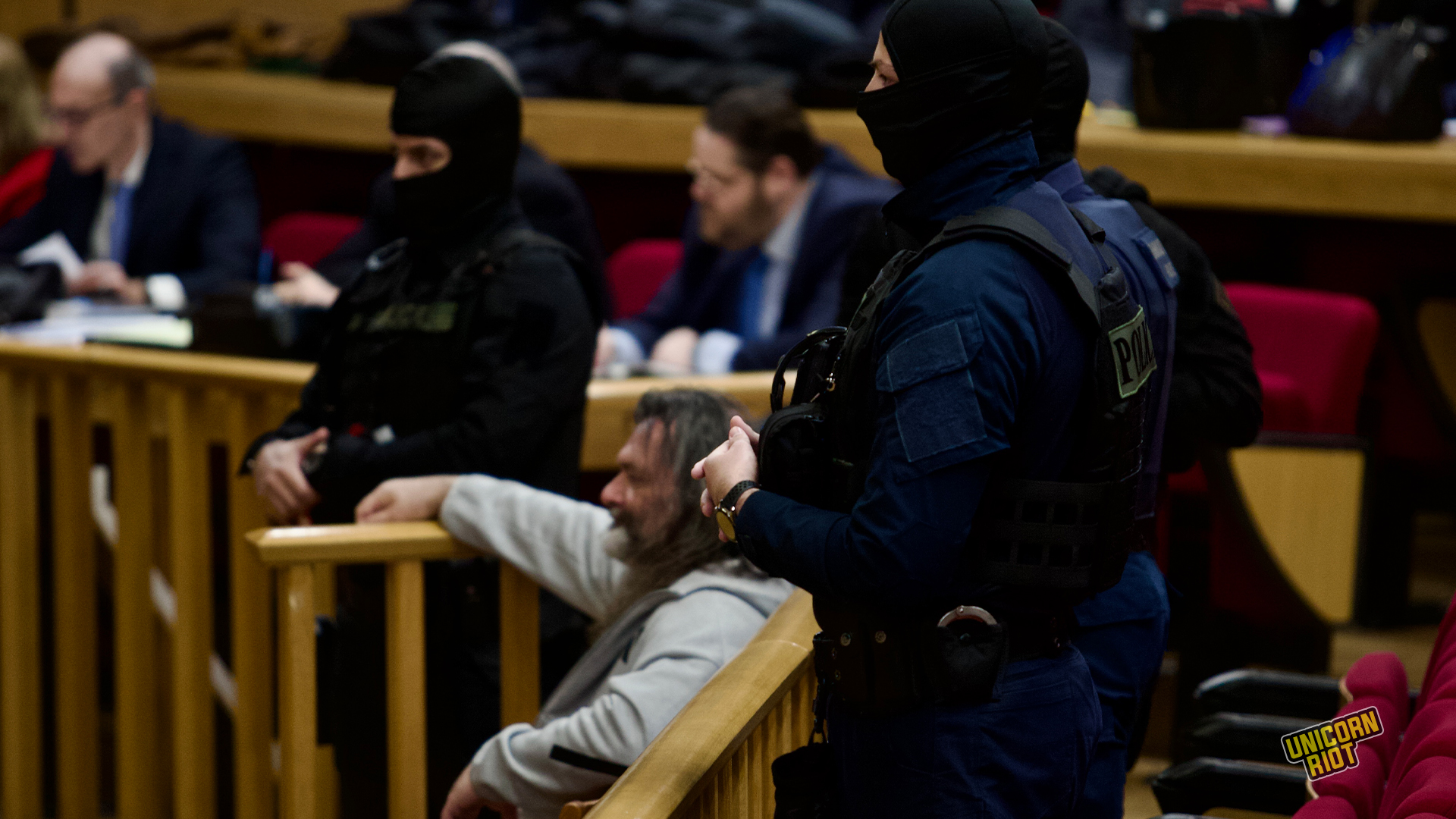
Lagos also continues to portray himself as a political prisoner. He frequently employs nationalist and religious slogans, presenting himself as a martyr. Through communications with his lawyers and supporters, he depicts the Golden Dawn trial as politically motivated and alleges that the Greek state is suppressing opposition through illegitimate judicial means.
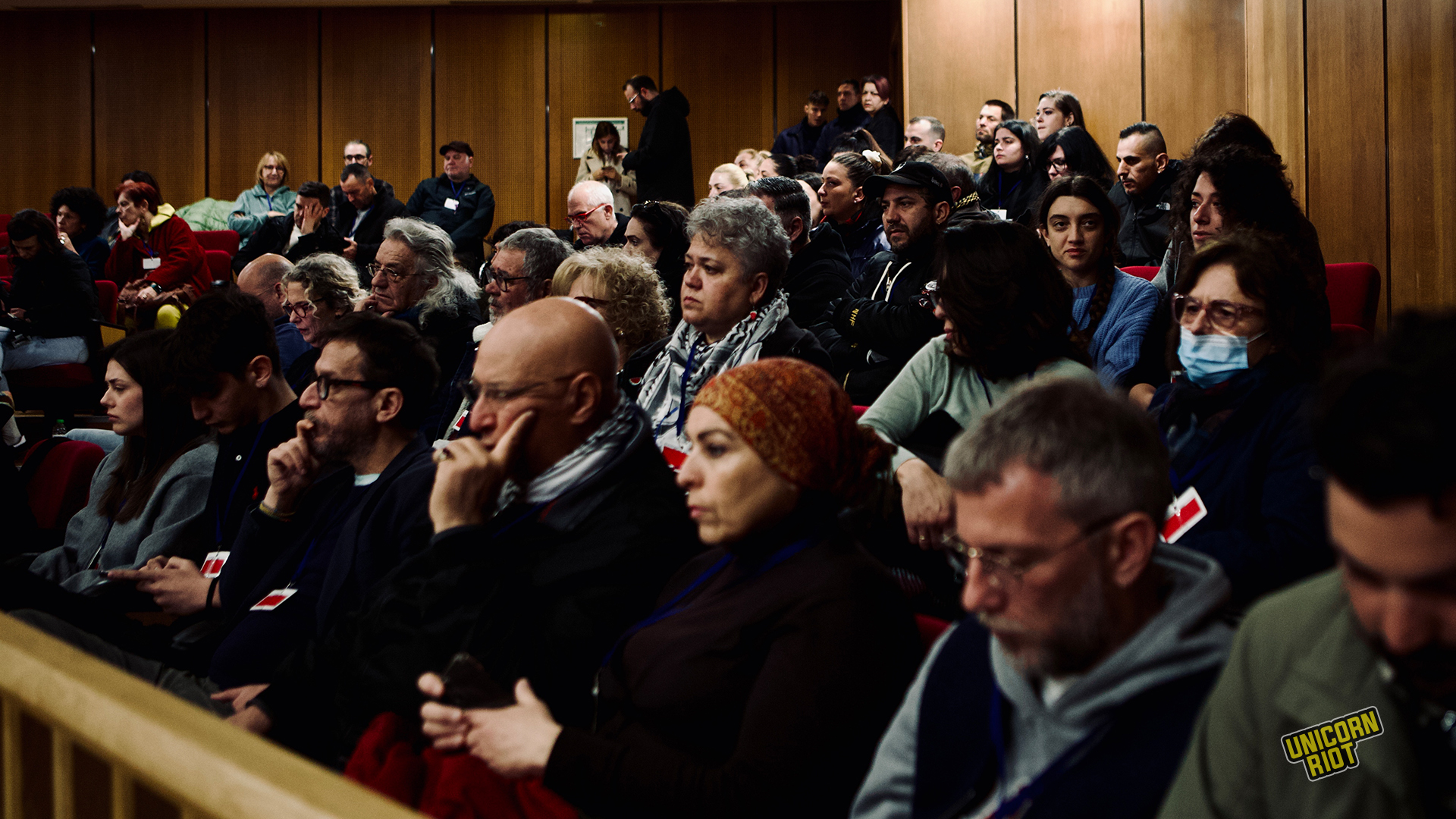
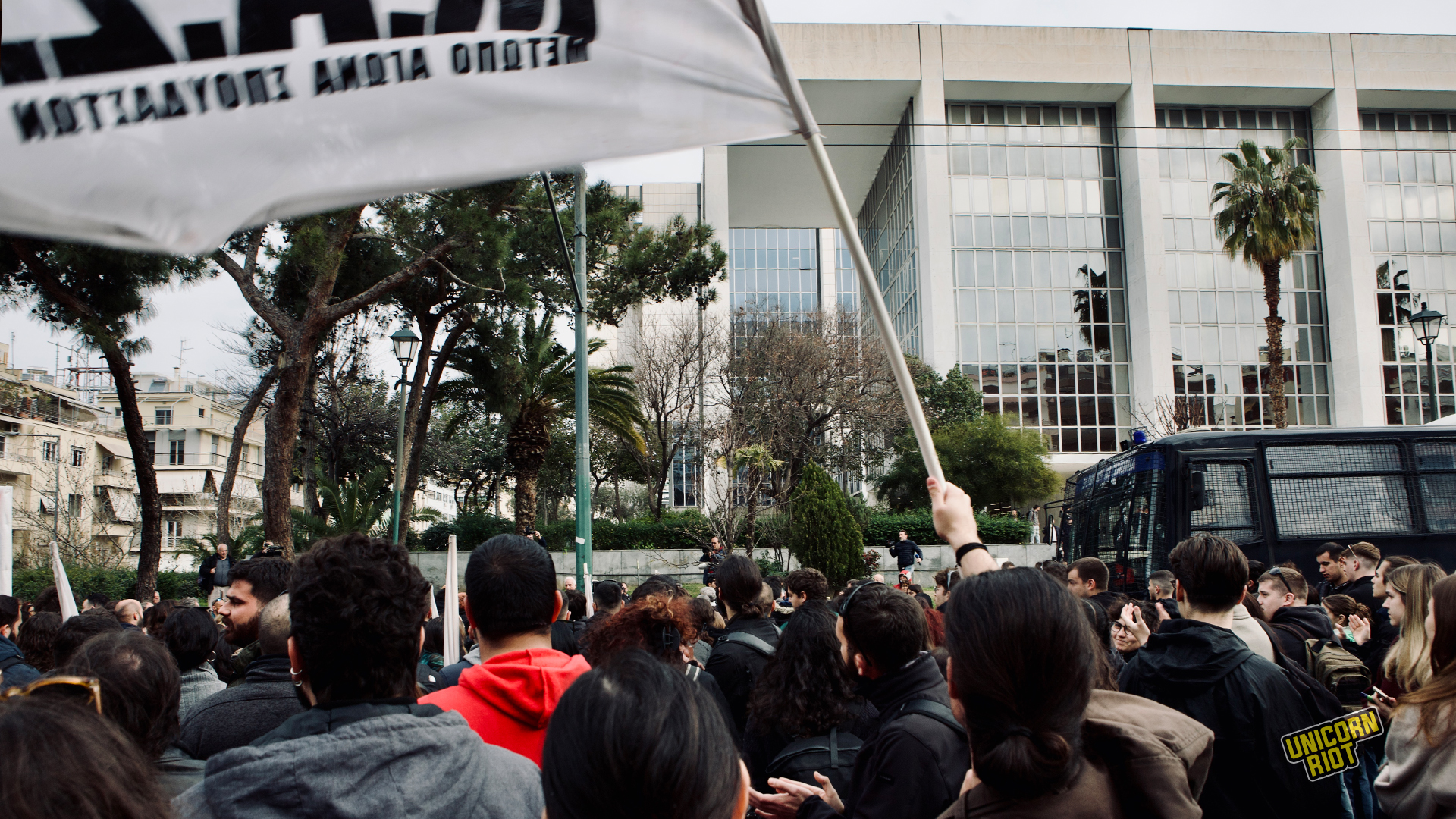
At the trial, family members and supporters of Pavlos Fyssas were at the courthouse early in the morning. They seemed anxious and stern as they waited for the verdict.
After the guilty verdict was handed down, Magda Fyssa, mother of slain rapper Pavlos Fyssas, gave a statement in front of the courthouse, saying that victims of fascism had been vindicated. She expressed joy in the court’s decision and emphasized that she never wanted to see or hear from her son’s killers ever again, as she bore witness and had to deal with them for years, fighting for accountability.
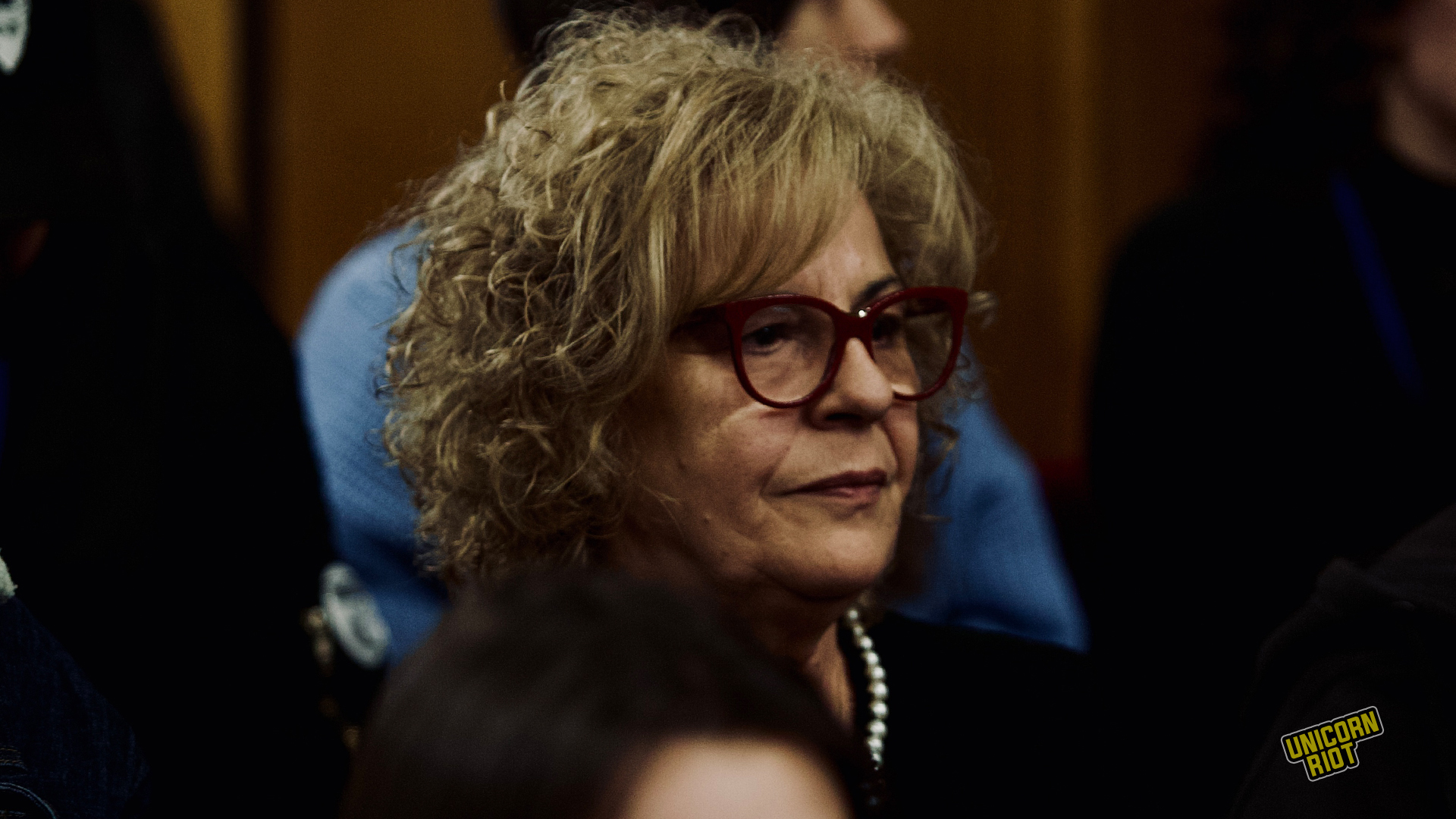
The verdict was heavily influenced by years of pressure from activists and the victims’ families. Additionally, Golden Dawn’s declining public support relating to its failure to enter the Greek Parliament in 2019 significantly weakened the political protection that had long shielded the organization from prosecution.
The recent judgment not only gave justice to the victims of Golden Dawn’s crimes but also confirmed that its top leadership were found guilty of forming a criminal organization. Although Michaloliakos has accepted political responsibility for the murder of Pavlos Fyssas, he continues to deny any criminal responsibility.
After a years-long battle for accountability, the judicial process delivered its final verdict in what stands as a rare and significant criminal case.
The prosecution found that Golden Dawn, whose members held seats in Parliament and which grew to become the country’s third-largest political party, operated as a Nazi-inspired criminal organization responsible for violent crimes.
The verdict confirmed and sealed the initial convictions against the Golden Dawn criminal organization. The court-imposed prison sentences of 13 years on the organization’s leadership, including Nikos Michaloliakos, Ilias Kasidiaris, Ioannis Lagos, Christos Pappas, Giorgos Germenis, and Ilias Panagiotaros.
Artemios Matthaiopoulos, a former member of the group, received a 10-year sentence.
Former MPs convicted of joining a criminal organization received sentences ranging from five to seven years.
Giorgos Roupakias, the murderer of Pavlos Fyssas, was sentenced to life imprisonment for homicide, plus 10 years for membership in a criminal organization. His accomplices received sentences ranging from seven to 10 years.
Local organization leaders and other members of Golden Dawn received sentences between four and 10 years, depending on their level of involvement.
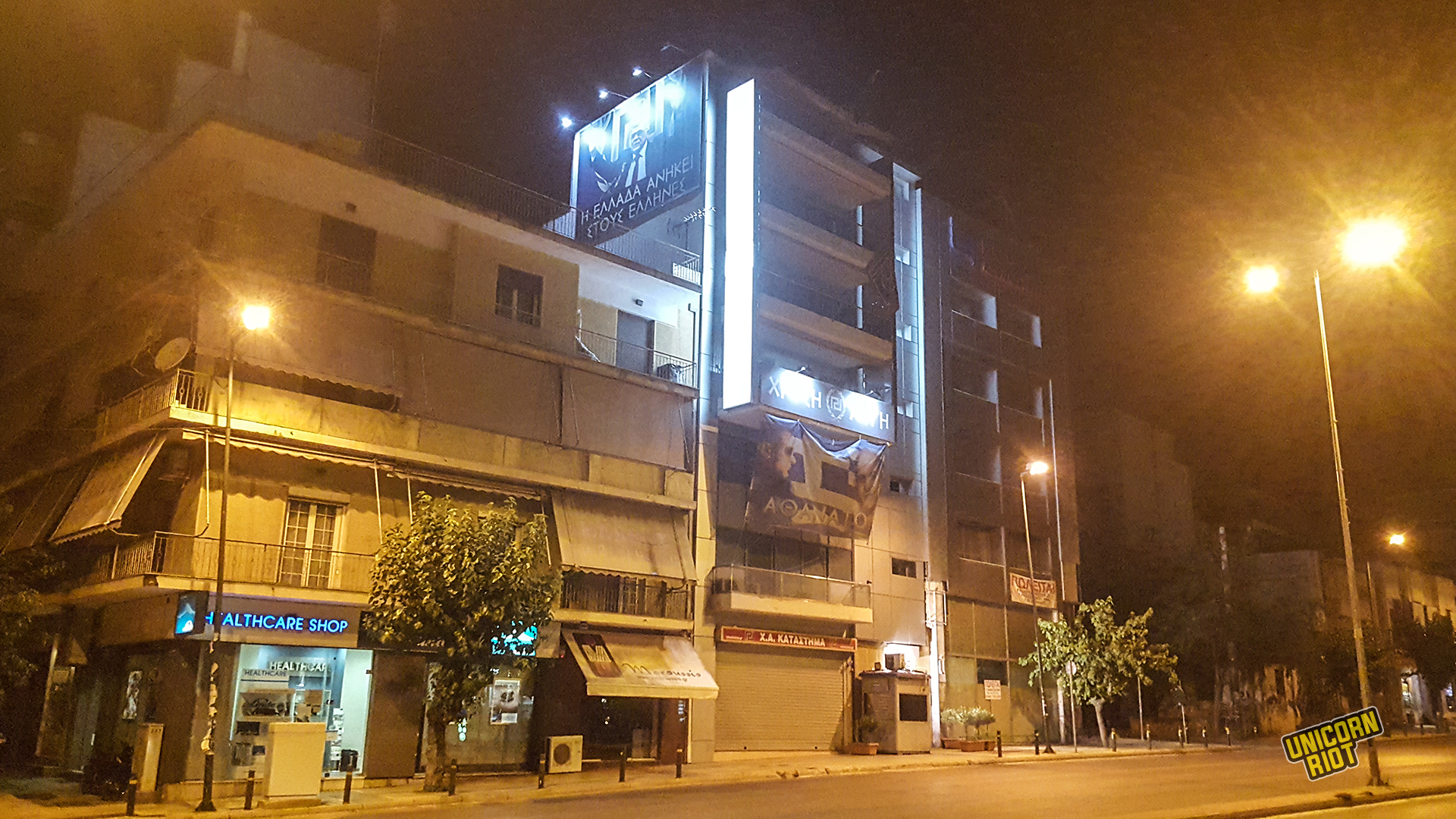
Related [2023]: A Decade After the Murder of Pavlos Fyssas, the Battle Against Fascism Remains Urgent in Greece
The verdict shakes up the Greek political landscape significantly by reshaping how far-right political parties operate. The rise and subsequent restriction of newer political formations like the Greeks for the Fatherland, led by Ilias Kasidiaris, came after court interventions prohibited his candidacy. The party has frequently been seen as a successor to Golden Dawn, with many judicial findings and experts noting ideological continuity between the two.
However, the far-right in Greece has increasingly become fragmented. While Kasidiaris remains a symbolic figure for segments of youth and ultranationalist circles, the wider far-right space has split into more varied formations. These include parties with nationalist, conservative, or religious orientations, such as the Greek Solution political party.
Parties like these distance themselves from explicit neo-Nazi imagery and rhetoric that characterized the Golden Dawn era, even as critics argue that elements of extreme nationalism persist.
The crackdown on the Spartans, another party publicly endorsed by Kasidiaris, signaled that the Greek judiciary is no longer willing to tolerate “front” parties directed by incarcerated leaders. As a result, much of the far-right landscape has backed down from the mainstream political spotlight.
Far-right movements still exist in Greece, and concerns about extremism remain. But the current groups have not approached the level of popularity or organizational strength reached by Golden Dawn at its peak.
Related [2023]: Neo-Nazi Group Golden Dawn Makes Resurgence in Greece
The verdict also marks a historic moment as it is the first time since World War II that a neo-Nazi party not only entered a European parliament but was later officially designated as a criminal organization. The decision sets a crucial legal precedent in Europe for prosecuting far-right extremist parties.
For Magda Fyssa, the ruling comes as the culmination of a decades-long struggle waged not only for her son but also for the migrants, activists, and ordinary people who suffered at the hands of Golden Dawn.
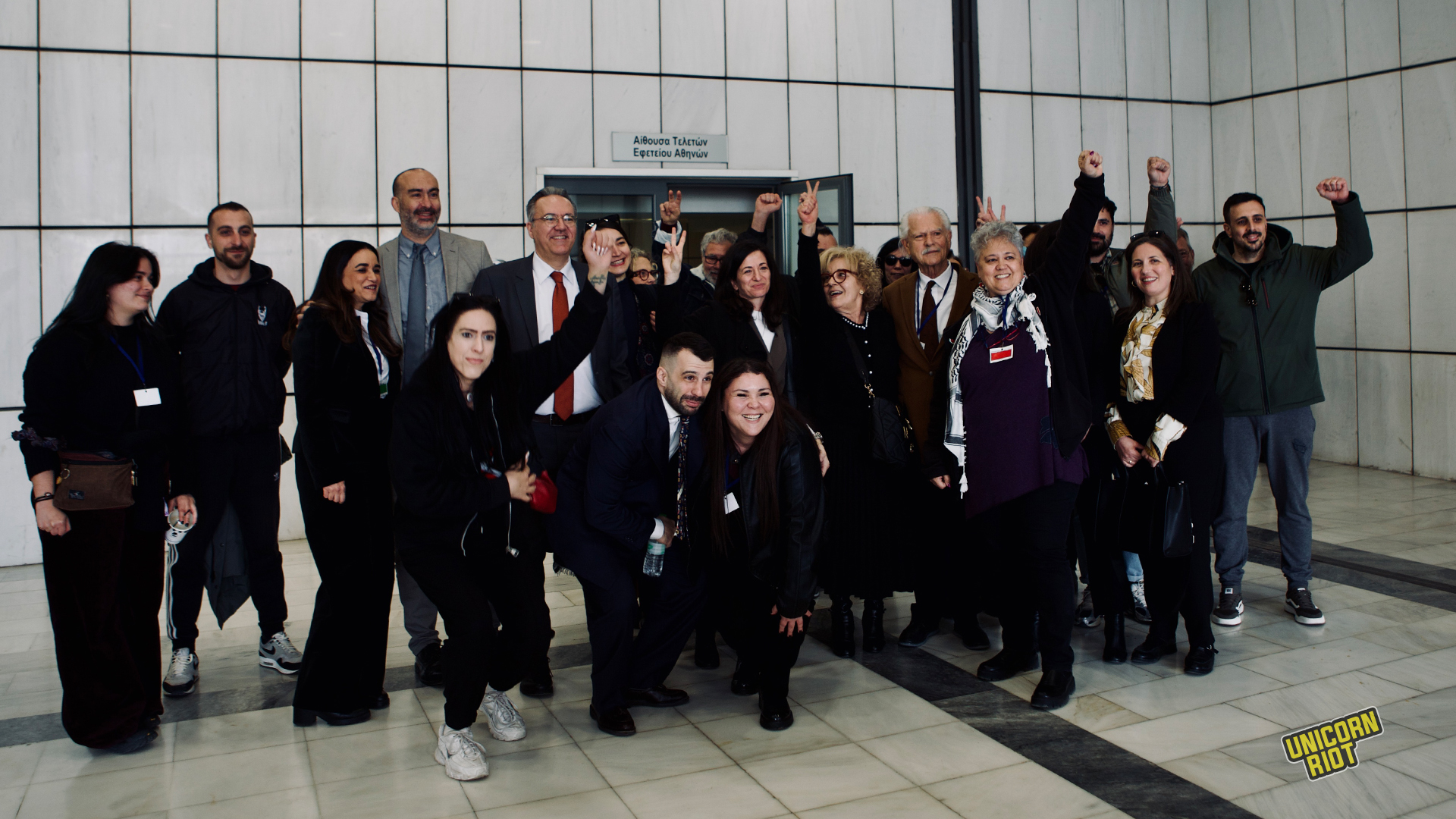
“Today I’m going home with my heart just as heavy, but also a little more relieved, a little lighter. Eleven years of struggle, and I thank everyone who fought this battle alongside us. Fortunately, there were many of us. Pavlos, we won, even though we have lost. You crushed them. You crushed them, my child. Not an inch of land to any fascist. Not a step back. I’m taking my Pavlos and leaving,” Fyssa said.
Magda, alongside supporters and activists, stood as a symbol for an entire society against fascism. They confronted hatred and violence directed at the innocent. The decision of the court was a day to celebrate for many, yet the wounds remain, and the deeper ailments within society still linger beneath the surface.
All photos, unless noted, were contributed by Elvis Takahashi Mantello.
For more media from Greece, see our Greece archive page.
Follow us on X (aka Twitter), Facebook, YouTube, Vimeo, Instagram, Mastodon, Threads, BlueSky and Patreon.
Please consider a tax-deductible donation to help sustain our horizontally-organized, non-profit media organization: