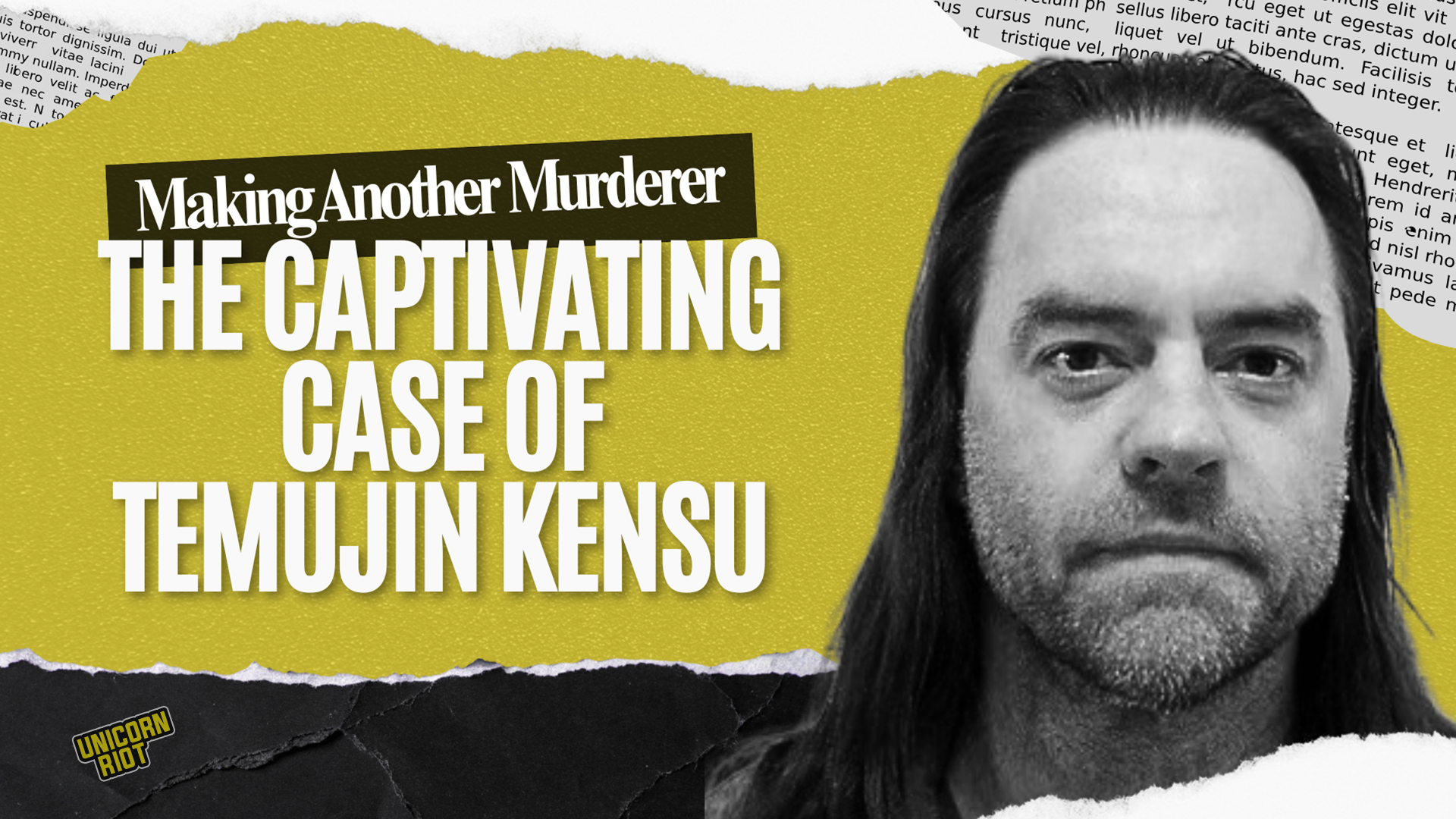
Making Another Murderer: The Captivating Case of Temujin Kensu
Nearly a dozen witnesses have placed Temujin Kensu 450 miles away from a 1980s murder in Michigan. Yet, 40 years later, his conviction stands.
Nearly a dozen witnesses have placed Temujin Kensu 450 miles away from a murder committed about 40 years ago, and a decade and a half has passed since Chief Judge Denise Page Hood ruled that he should be freed or awarded a new trial. Yet, to this day, and despite being afflicted with autoimmune and heart and lung diseases, Kensu remains behind bars in Michigan.
Worse, the man born Fredrick Freeman has been placed in complete lockdown by prison officials and corrections officers, in retaliation for the poor publicity created by the efforts from justice organizations and industry thought leaders to free him.
In her ruling on his 2010 habeas (Fredrick Thomas Freeman v. Jan Trombley), Judge Hood stated that Kensu and his attorneys had made a credible claim of innocence, and that previously:
• He’d been denied his constitutional right to testify.
• He’d suffered from ineffective counsel from David Dean, who failed to call Kensu’s primary alibi witness and would later be disbarred for alcohol and cocaine misuse during Kensu’s trial.
• The prosecutor, Robert Cleland, who retired as a federal judge in 2025, was guilty of misconduct in using the perjured testimony of an incarcerated informant, who would later recant — in full.
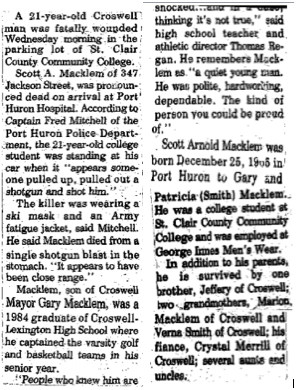
While Cleland suggested at trial that Kensu could have committed the murder and then flown by private plane to Escanaba, where he was seen by multiple witnesses, it is more likely a scapegoat was needed — and quickly; the person who was killed was Scott Macklem, the son of a prominent local politician.
No murder weapon was ever produced, and no gunshot residue was found on Kensu’s clothing. An ammunition box found at the murder scene contained a fingerprint that did not belong to Kensu.
Nevertheless, Judge Hood’s ruling was appealed by the State of Michigan, and the Sixth Circuit Court overruled her on purely procedural grounds: for a late filing. Additional legal appeals to multiple Michigan governors, state attorneys general, Michigan Department of Corrections (MDOC) officials and parole board members have proven unsuccessful.
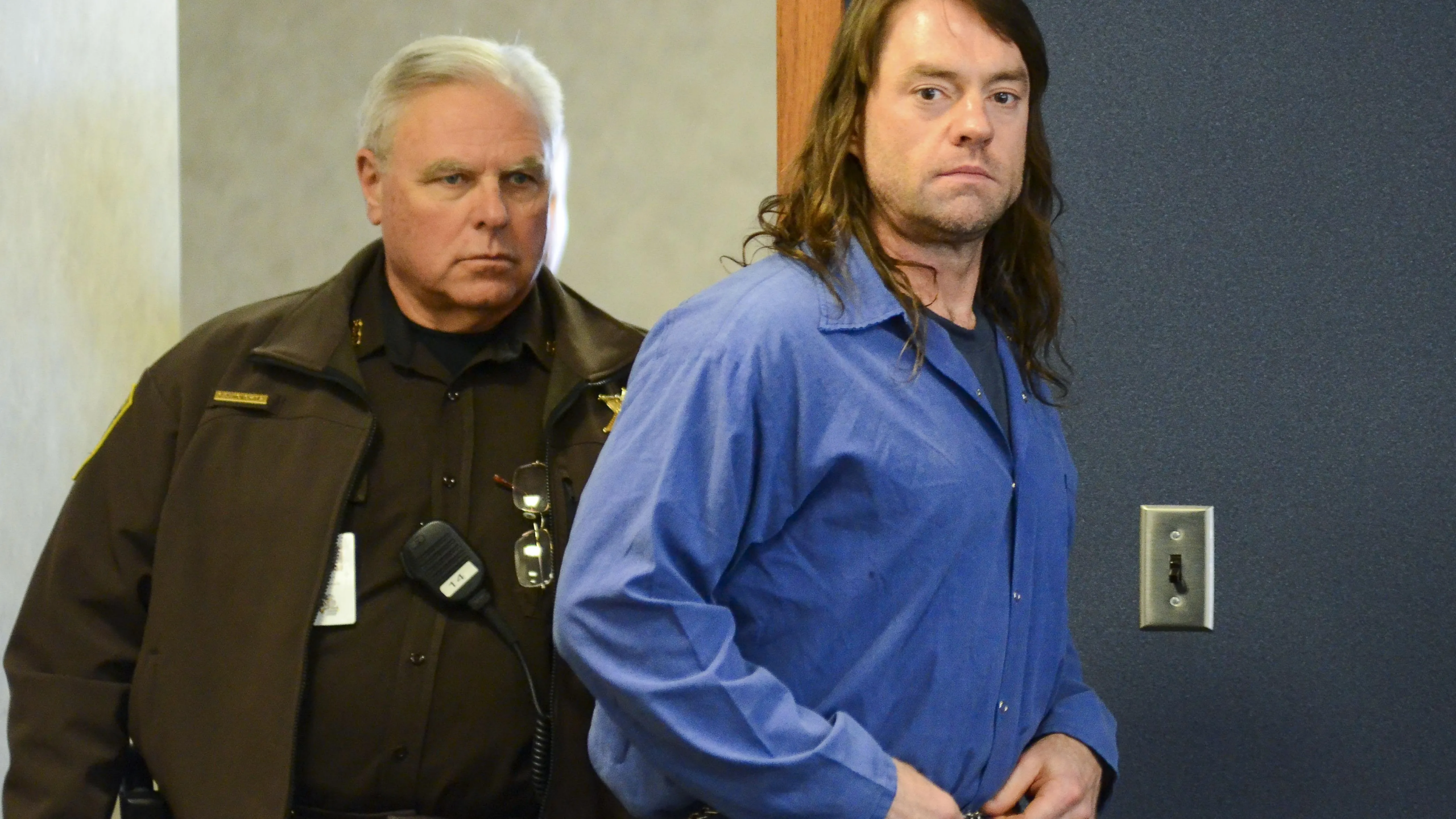
In 2016, as reported by CBS News, Kensu successfully sued the Michigan Department of Corrections for neglect in handling his medical care. However, criminal legal efforts continued to fail.
In 2020, the Conviction Integrity Unit (CIU) established by Michigan Attorney General Dana Nessel rejected Kensu’s claim of innocence; the decision was condemned, including by congresspeople Andy Levin and Rashida Tlaib, who wrote that their “point of view” was “based on the fact that Kensu could not have committed and did not in fact commit the crime for which the state is taking away the entire rest of his life.” Then, in 2022, an emergency clemency petition from the Michigan Innocence Clinic at the University of Michigan Law School was denied by Michigan Governor Whitmer.
We interviewed Kensu in 2020, and again in February 2026; in the last five-plus years, Kensu’s case has continued to draw increasing attention, but he remains imprisoned.
How Temujin Kensu Got Framed
It has been agreed by numerous experts who have looked at the Kensu case that there’s something untoward.
First, Kensu says, “I was framed to cover up and misdirect from the real reason for Scott Macklem’s death — that he was killed as part of his drug dealing at the college.”
Second, Scott’s father Gary was a prominent figure: the mayor of a small-town named Croswell and a wealthy business and land owner.
Third, Gary was well aware of Scott’s drug issues and used his influence with Cleland and the police “to keep Scott out of trouble.”
And fourth, I was an “easy patsy,” Kensu says. “I had no roots, no family, very few real friends, and no money or resources to defend myself.”
Even Law Enforcement Today reported that “[p]rosecutorial misconduct, a hypnotized witness, a jailhouse informant who later recanted, and a defense attorney too deep in addiction to properly represent his client all played roles in sending an innocent man to prison for life.”
In a 2024 article on the case, authors Herbert Welser and Jim McNeil confirm a litany of authority figures in Michigan question the case. Former FBI special agent Harold Copus, Michigan State Police polygraph expert Chester Romatowski, former Michigan Supreme Court chief justices Thomas Brennan and Bridgette McCormack and 30-year federal prosecutor Ross Parker all believe Kensu’s case “represents a grave miscarriage of justice.”
As Kensu told us: “The federal court system was never going to admit that a federal judge with a lifetime appointment not only framed an innocent young man for murder and sent him away to die but also violated almost every known legal standard to do so — including having me tortured to break me.”
According to Kensu, this has meant confinement in “a dark, cold cell, with no visits, no phone calls, no showers and no books, forced to drink from the toilet, starving and isolated.”
Disappeared, for Four Decades
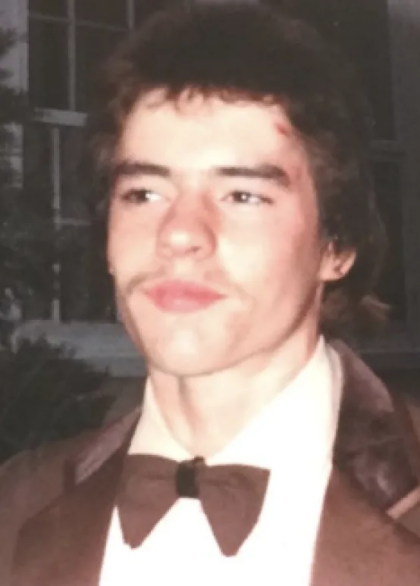
Now nearing 63, Temujin Kensu entered the prison system at 23.
“I came to the Michigan Department of Corrections during one of its most brutal periods, which included the 1987 murders of two corrections officers, one of which I was present for: the brutal stabbing of guard Jack Budd, who died in front of me,” Kensu says. “Michigan State Prison, or Jackson, was a war zone. I watched men robbed, beaten, raped and even murdered while guards did nothing or turned their backs and walked away.”
Kensu refused to succumb to the violence, instead focusing on researching and fighting to appeal his and other’s cases and improve prison conditions. This, he says, only put him in further danger.
Kensu was in “excellent health” when he was first incarcerated, but now says he suffers from multiple progressive diseases and disabilities. “I had two heart attacks at only 27 years old from untreated heart disease and almost died again in 2014, after 25 years of their refusal to provide any treatment or exam for bowel disease.”
According to Kensu, it was “only by going to the hole and lying unable to move for two days on camera” that he was able to persuade prison officials to provide him transport to a hospital. There, he says, he received a CT scan and, after “pleading my case to civilians” from his hospital bed, was rushed to another hospital for emergency surgery.
When we asked him to describe the worst part of being behind bars, here’s what he told us:
All the things that matter in life are stripped away. The feel of my kitten’s fur as she snuggled my face and purred in the morning. A fresh cup of coffee as the day begins. Driving under the stars at night. Riding my bike along trails, my puppies yipping around my heels, and just feeling alive. The touch of a lover’s embrace. Real food. Enjoying a glass of wine or a cold beer. A slice of pizza. Walking through a mall. Playing guitar and singing along with an album you just bought. Holding my children and squeezing them while they giggle. Soft kisses. Travel. Faith. Friends and family passing away, and you are powerless to help, and cannot even be there for them just to say goodbye… You are sure you are going to die in this place, like so many before you. Despondency, nightmares, frustration, disgust, anger, bitterness, hopelessness, and even thoughts of suicide, no matter how strong you are.
At times, “you just want to give up,” Kensu told us. “But you can’t because that is exactly what they want you to do, what they hope you will do, what they pray you will do.” Instead, “you turn all the negative to the positive, you steel your resolve, if you can, and you fight back. You use all the horror to inspire you. And then, amazing, incredible people come forward, and you find hope again.”
COVID, Behind Bars
For Kensu, an influx of COVID-era supporters did provide hope, even as prison conditions — and his health — worsened; other incarcerated people found themselves more isolated, with the loss of in-person visits and price gouging for prison phone calls.
As documented by UCLA’s COVID Behind Bars Data Project, prisons were a hotbed for the pandemic — while incarcerated people worked for pennies, producing hand sanitizer and digging mass graves.
In Michigan, a Democratic governor wasn’t enough to prevent what Kensu describes as “disgusting” treatment of the people inside.
“Not only did the prison not provide cleaning supplies or protective measures, they canceled cell cleaning — and if you reported you were sick, with no testing, you were just stripped of all your personal possessions and thrown in the hole,” Kensu told us.
“So you had a choice: admit you were sick, get punished and tortured, and die alone in a cell with nothing; or, keep your books, food and appliances, and stay sick and possibly die, at least living a little better.”
As Kensu observed, most hid their illness. Either way, he says, incarcerated people were denied all prison programming, as well as access to courts, legal aids and the law library, mental health care, dental care, and almost all health care.
“This is cruel,” he says, “but typical of our system.” He and his peers “begged the prison director and the governor to act — but nothing.”
Many in Kensu’s cell block would die, including his best friend and workout partner.
And even during COVID, Kensu insisted on speaking out about more than his own “false” imprisonment.
Reforming Prisons and Breaking Stereotypes
Prisons are an exact slice of Americana. We have doctors and serial rapists, lawyers and pedophiles, ex-cops and satanic butchers. We have the educated and the illiterate, drug addicts and teetotalers, monsters and demons and amazing, fantastic and caring people in here.
“We are human beings,” Kensu declared during our first conversation. “We feel like you, we fear like you, and we respond like you — to pain, to torment and to abuse, but also to kindness, understanding, caring and compassion.”
In spite of decades of evidence that incarceration doesn’t work to reduce recidivism, Kensu, like so many others, insists that prison conditions do dictate results; in other words, with the right design, outlook and programming, prisons can — and should — be centers of rehabilitation.
“As we work toward abolition, we cannot ignore the state of prisons or the well-being of prisoners today. And we can only become better when given the opportunities, guidance and support to do so,” he said. “Positive programming — the carrot and the stick, and privileges as reward for good conduct — have been proven to work.”
So, what would he recommend?
First, we as a society need to “let go of thoughts of vengeance, retribution, retaliation, and oppression,” Kensu says, echoing the conclusion of Angela Davis’s seminal abolitionist work “Are Prisons Obsolete?”
Then, we need to institute reforms, like the ones proposed recently by the Brookings Institute. For Kensu, this means “good jobs with good pay, computers with internet, furloughs, chances for increasing the possibility of parole with model behavior, mentorships, faith-based initiatives, educational grants and programs, college, and trade skills.”
According to Kensu, “all the problems of this failed system are fixable, and most of us who have been locked up know what needs to be done.”
This sentiment has been echoed time and time again, including directly to us by formerly incarcerated activists like JustLeadershipUSA founder Glenn Martin and justice nonprofit executive Louis L. Reed.
Another Five Years
For Kensu, little has changed in the last five years. In fact, he says, “it’s only gotten worse.” While costs have steadily risen behind bars, “prisoner pay is abysmal,” at only $20 per month. Meanwhile, “they’ve eliminated just about every positive program and opportunity” — and, “years after COVID,” continue to apply “the draconian visiting schedule set during the pandemic.”
When we interviewed Kensu in 2020, we were able to converse for more than an hour in a single sitting; in 2026, each call is restricted to 15 minutes.
Without sports, “hobbycraft” and other programs, and with limited access to the outside world, “inmates are basically reduced to getting high as their primary form of ‘entertainment,’” Kensu told us. “As if on purpose, drugs have become incredibly cheap.” For as little as a dollar, Kensu says, one can now secure enough K2 or Suboxone “to have you retching and vomiting on the floor in a matter of moments.”
According to Kensu, Michigan Governor Whitmer “knows all about this and has refused every entreaty to do anything about it,” reminiscent of her lack of response to Kensu’s case.
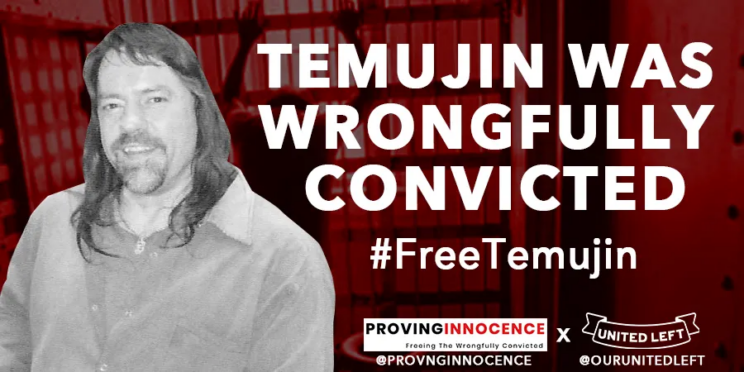
It’s been nearly four years since Nessel’s Conviction Integrity Unit “betrayed its mission” (Proving Innocence) in Kensu’s case, while Whitmer has neglected to even rule on Kensu’s long-pending clemency request.
As of this writing, Kensu says, “we hold little to no hope that she might do the right thing.”
About the author: Phil Mandelbaum is an award-winning journalist, a co-creator of the content services division of The Associated Press, a nonprofit and political strategist, and an organizer and artist, also known as awkword.
Cover image contributed by Phil Mandelbaum.
Follow us on X (aka Twitter), Facebook, YouTube, Vimeo, Instagram, Mastodon, Threads, BlueSky and Patreon.
Please consider a tax-deductible donation to help sustain our horizontally-organized, non-profit media organization:

Recent Unicorn Riot Prison Coverage:
Slavery is Legal in Minnesota. These Groups are Working to Change That. [Jan. 2026]
Prisoners in Minnesota are earning less than a dollar an hour making products for Disney. Organizers and former inmates gathered at a press conference to share what they’ve learned — or experienced firsthand — about the exploitative prison labor system in Minnesota.
White Supremacist Mass Shooter of Protesters To Be Released From Prison in First Week of 2026 [Jan. 2026]
A decade after shooting five unarmed Black protesters in Minneapolis, white supremacist Allen “Lance” Scarsella is set to be released from his prison sentence on January 5, 2026.
Bryan Hooper Sr. Freed From Wrongful Conviction After ‘Sordid’ 27 Years in Prison [Sept. 2025]
Bryan Hooper Sr. walked out of a Minnesota prison on Sept. 4 after 9,999 days of captivity for a murder he was wrongfully convicted of.
Mail Censorship, Book Bans, and Misconduct – A Letter From Federal Prison [Aug. 2025]
Anson Chi says he’s a political prisoner dealing with mail censorship, book bans, and misconduct by federal corrections officers.
After 27 Years in Prison, Prosecutors Call For Bryan Hooper’s Murder Conviction to be Vacated [Aug. 2025]
Bryan Hooper, another wrongfully convicted Black man in Minnesota, is hoping to be freed from his life sentence after the state’s key trial witness recently admitted to the murder Hooper was convicted for.
New Conviction Integrity Unit Agrees to Review Mahdi Ali’s Case [June 2025]
After fifteen and a half years in prison for a crime he says he didn’t commit, a fresh burst of hope has worked its way into the cell of Mahdi Ali. His legal team has filed an application with Hennepin County’s new Conviction Integrity Unit and recently received assurance from the unit’s director, Andrew Markquart, that the office would give Ali’s case its “full attention.”
Coverage of Philip Vance’s ‘Wrongful Conviction’ [Numerous Article and Videos]
Serving a life sentence for a deadly robbery in South St. Paul in 2002, Philip Vance has always insisted he is innocent. Officers from the corrupt and disbanded Metro Gang Strike Force were the investigators of Vance’s case and his 2004 conviction was prosecuted based on testimonies which have since been recanted. Unicorn Riot has published several reports and videos bringing further context to Vance’s case, including a slew of documents and an analysis.
Living Life on His Own Terms: Reflections from Former Political Prisoner Eric King on His Release [Dec. 2024]
Former political prisoner Eric King was released from prison on December 12, 2023, after spending nearly 10 years behind bars. Seven and a half of the ten were in solitary confinement, with five and a half being consecutive. As he walked off the Florence Federal Correctional Complex property toward a small crowd of friends and supporters, his wife and child ran up to him, embracing him tightly. King spoke with Unicorn Riot in December 2024, reflecting on his release day a year earlier and how life in the halfway house was.
Recanted Jailhouse Testimonies Lead to Renewed Calls to Release Bobo and Ferguson [July 2024]
Family members and advocates of two men serving life sentences in Minnesota — Deaunteze Bobo and Jermaine Ferguson — renewed their demands for their loved ones to be released from prison, saying they were wrongfully convicted.
Target, ‘Junk Science’ and Unreliable Testimonies: The Contentious Conviction of 15-Year-Old Mahdi Ali [June 2024]
Overlooked details have emerged casting serious doubt on Mahdi Hassan Ali’s conviction for a 2010 triple murder, as well as the integrity of the investigation by the Minneapolis Police Department (MPD) and the Hennepin County Attorney’s Office. “I was the perfect scapegoat.” – Mahdi Hassan Ali
Marvin Haynes Exonerated and Released From Prison After 19 Years [Jan. 2024]
In a historic ruling, Hennepin County Judge William Koch vacated Marvin Haynes’ murder conviction, dismissed his charges with prejudice, and ordered his release from prison where he was sentenced to serve life. Haynes walked out of MCF-Stillwater as an exonerated man into the loving arms of his family and supporters on Dec. 11, 2023.
The Case of Marvin Haynes – An Investigative Series & Film [2023]
Despite no evidence tying Marvin Haynes to a 2004 murder and Marvin’s consistent claims of innocence, Haynes has remained in prison for nearly two decades based off of coerced testimony of jailed teenagers. We examine his case in our investigative series.
‘Let Me Pay My Taxes’ Says Incarcerated Industry Worker [Nov. 2023]
From inside a Minnesota prison cell, an incarcerated worker in the state’s Prison Industries Enhancement Certification Program (PIECP) is demanding the Department of Corrections (DOC) allow him to pay his taxes. Kashaun Pierce Sr. said for the last seven years he’s been trying to pay his taxes but the DOC has been listing him as an independent contractor.
Family Seeks Answers Months After Cristian Rivera-Coba’s Death in Anoka County Jail [Sept. 2023]
Cristian Rivera-Coba died in the Anoka County Jail in July. Months later, his family and advocates are still left seeking information about the circumstances surrounding his death and demanding an investigation into the jail where, only weeks before Cristian died, 24-year-old Miles Jackson was also found dead in a cell.
Prisoners Face Retaliation for Protest at MCF-Stillwater [Sept. 2023]
An email sent to the media on the morning of Sept. 12 from a person housed in B East details some of the retaliatory actions by corrections officers and the “aggravated” charges that those demanding humane treatment inside Stillwater now face for their actions.
‘I Can’t Take This Shit No More’: Alabama Prisoner Takes a Stand [Aug. 2023]
Derrol Shaw’s attempted escape from Donaldson Correctional Facility in Alabama speaks to a wider human rights crisis in the state’s corrupt, neglectful and deadly prison system.
Limited Funds Stunt Minnesota’s Conviction Review Unit — Families Want Expediency [July 2023]
Created to prevent, identify, and remedy wrongful convictions, Minnesota’s first-ever Conviction Review Unit had completed only one official investigation in nearly two years.
Minnesota Inmate Calls on DOC to ‘Value Us as Human’ [June 2023]
Unicorn Riot received a statement from Kashaun Damon Pierce Sr., a man housed at MCF-Faribault. Pierce provides a short glimpse into the state prison system and calls out what he calls the dehumanization of prisoners as a fundamental issue.