Inside Greece’s Refugee Camps, Gender-Based Violence Is Built Into the System
Ritsona, Greece — Since 2022, the German collective Rosa Rolling Safespace has been providing a mobile safe space for women living in refugee camps around Athens. Their work shows that gender-based violence in these settings is not incidental but structural, a direct product of European and Greek migration policies.
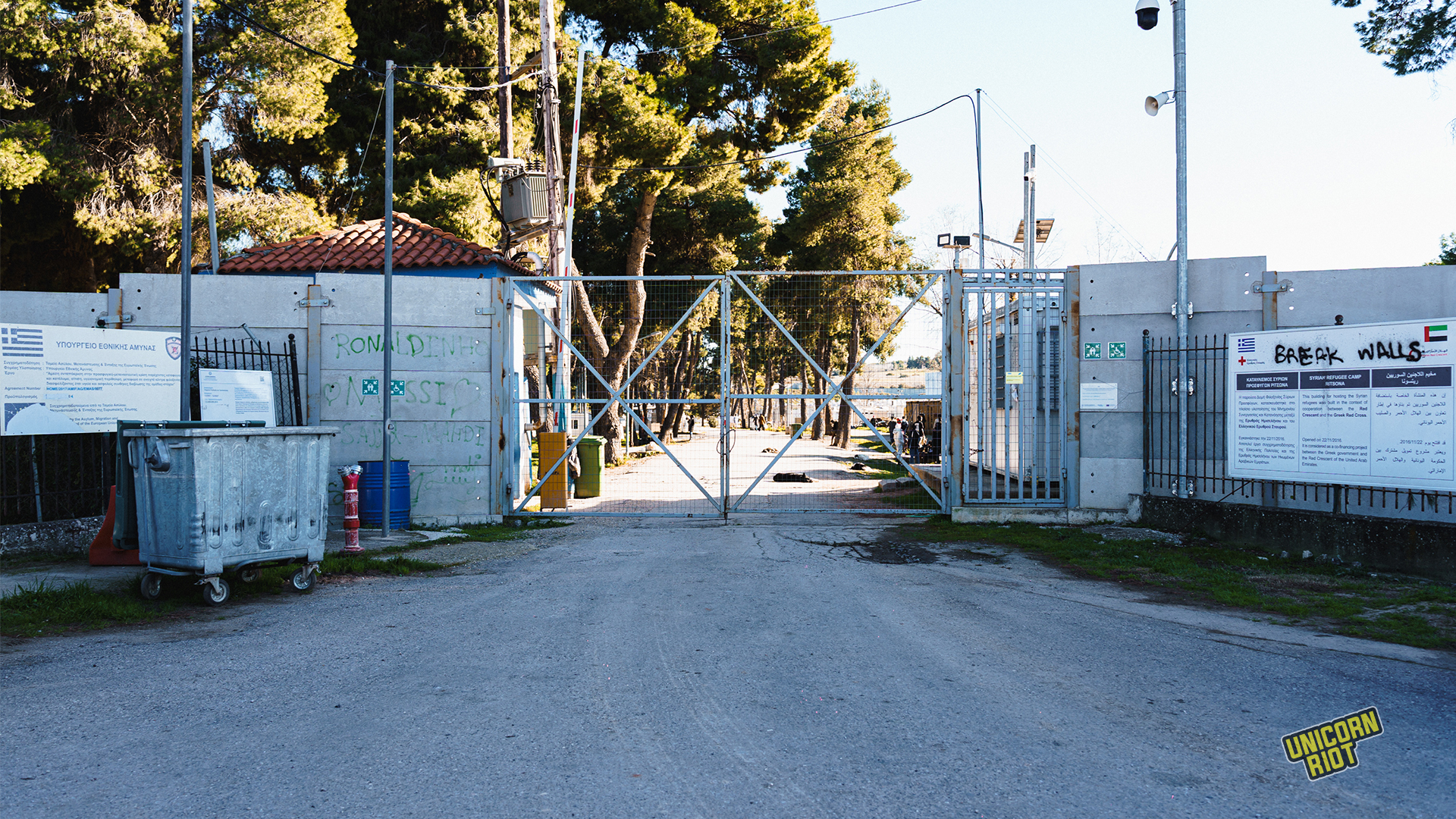
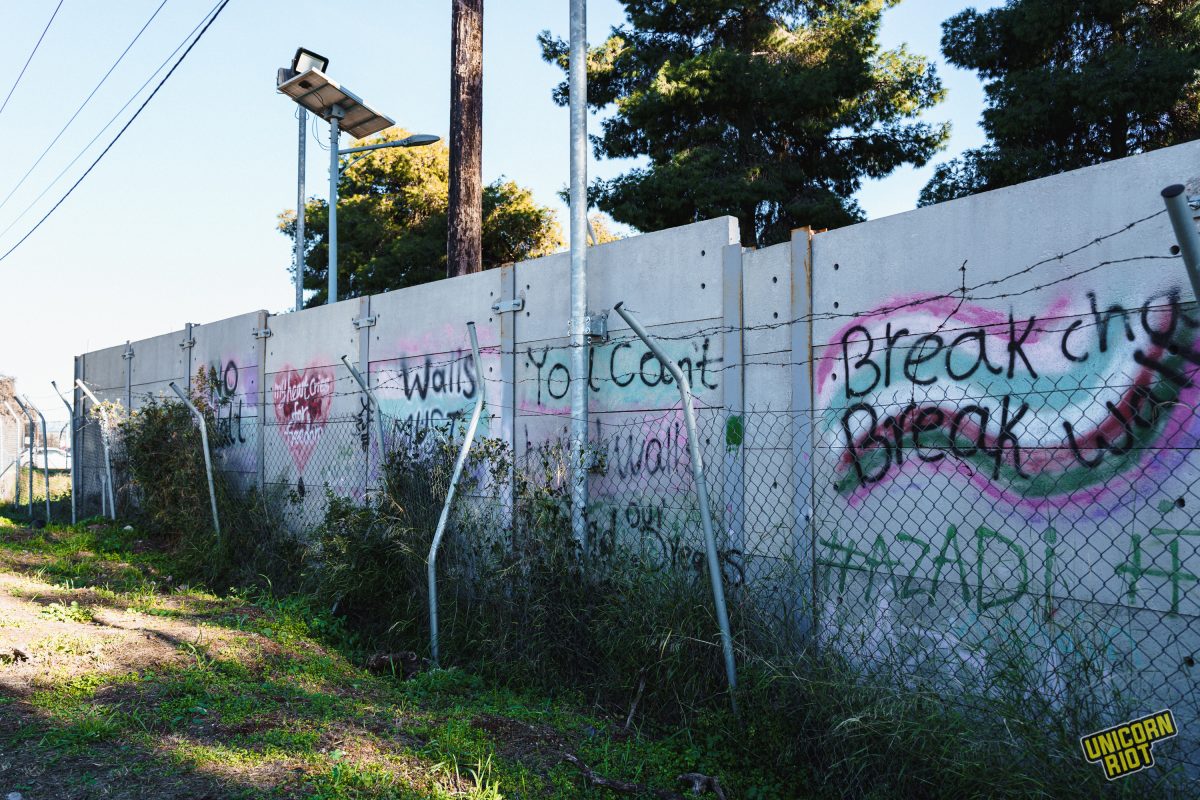
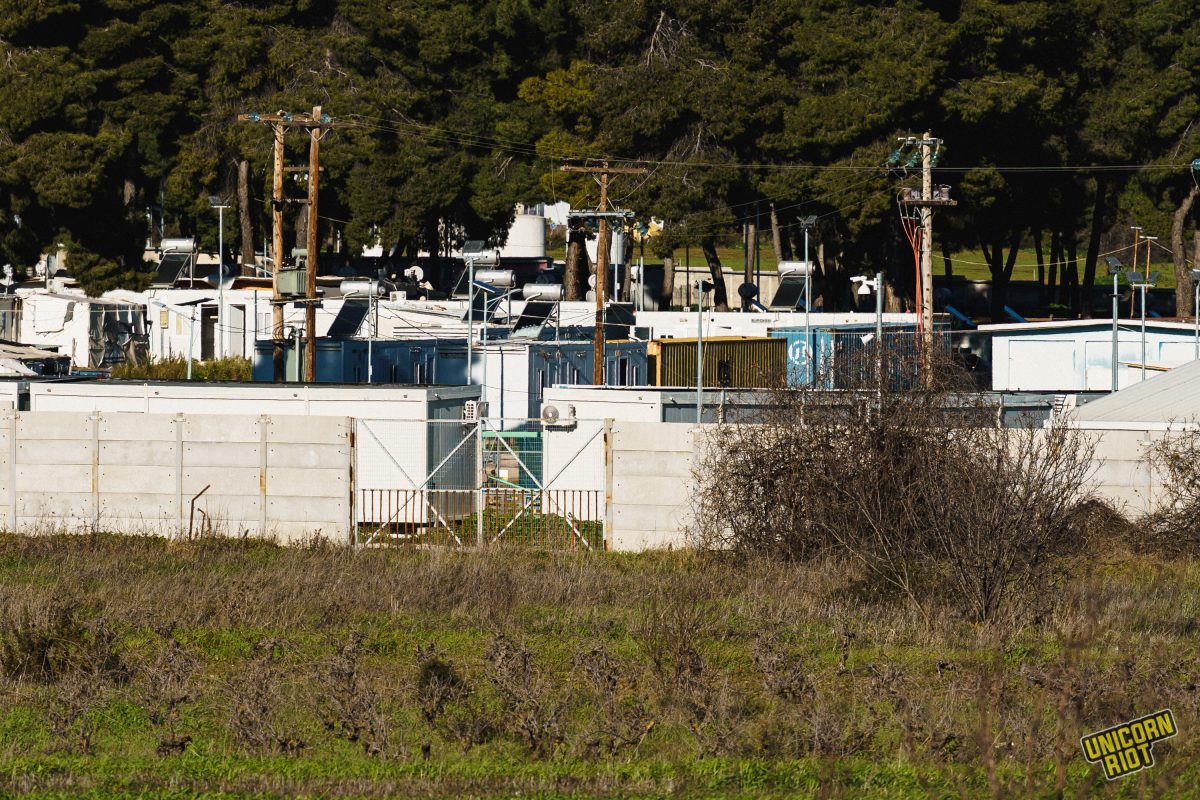
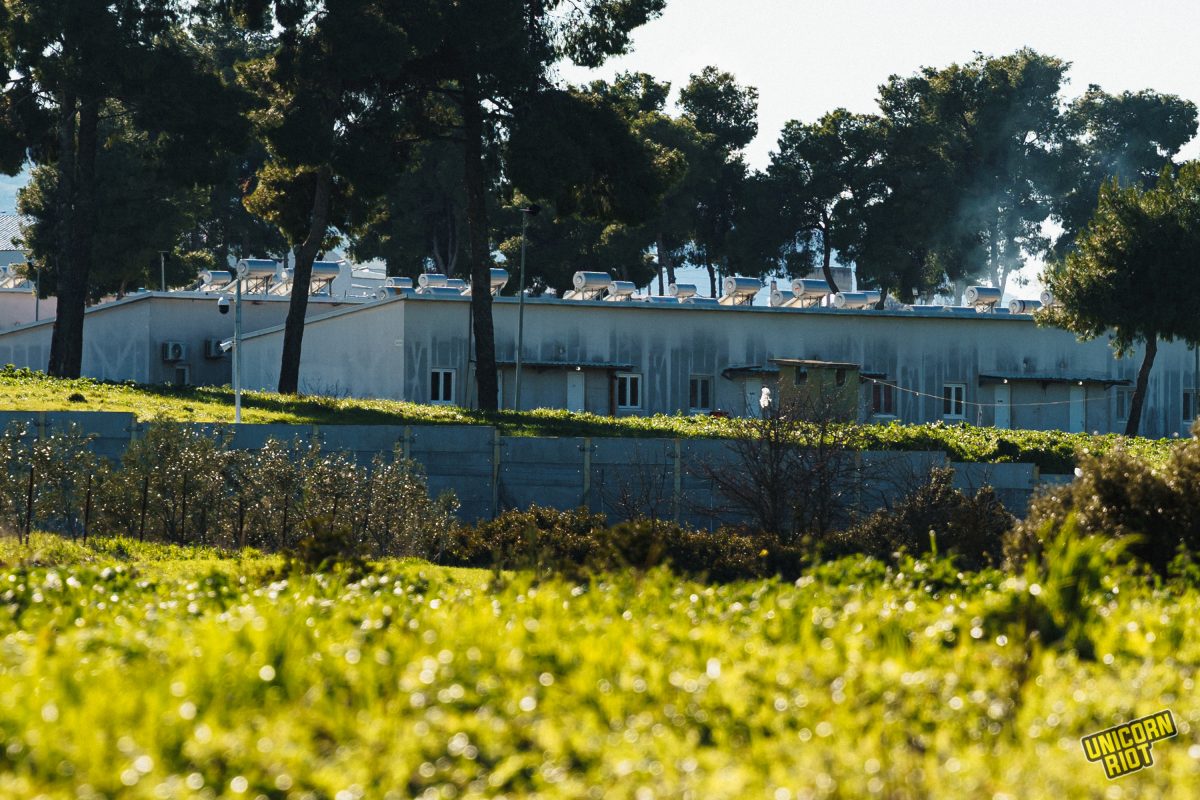
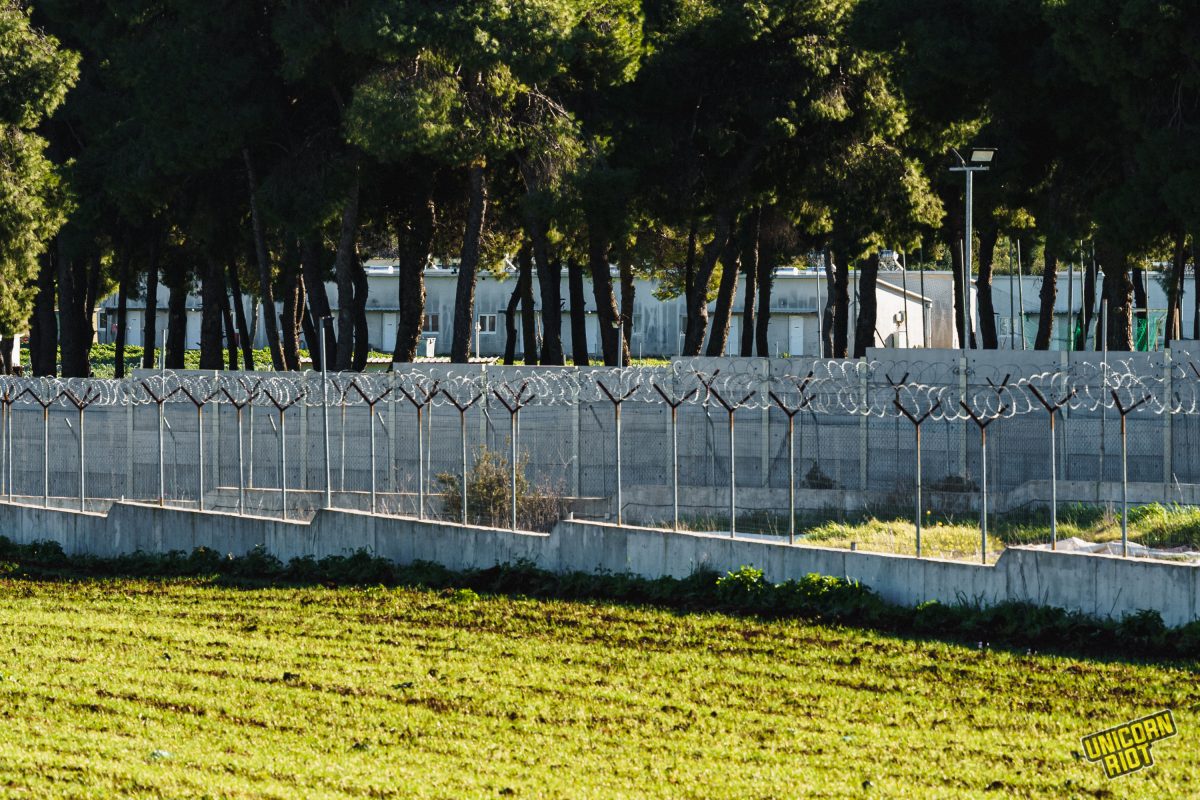
Ritsona is a small town about 47 miles north of Athens. Driving through the surrounding countryside, it is hard to miss a sprawling cluster of gray containers encircled by barbed wire, surveillance cameras, and heavy metal gates monitored by police. It is one of the largest refugee camps in mainland Greece — according to the latest data released by the Greek Ministry of Migration and Asylum, it has a nominal capacity of nearly 3,000 people.
Around the camp, hills and wind turbines stretch as far as the eye can see, occasionally interrupted by some industrial facilities breaking the monotony of the empty countryside. Once a week, however, a small dusty lot a few hundred meters from the camp’s main entrance comes to life.
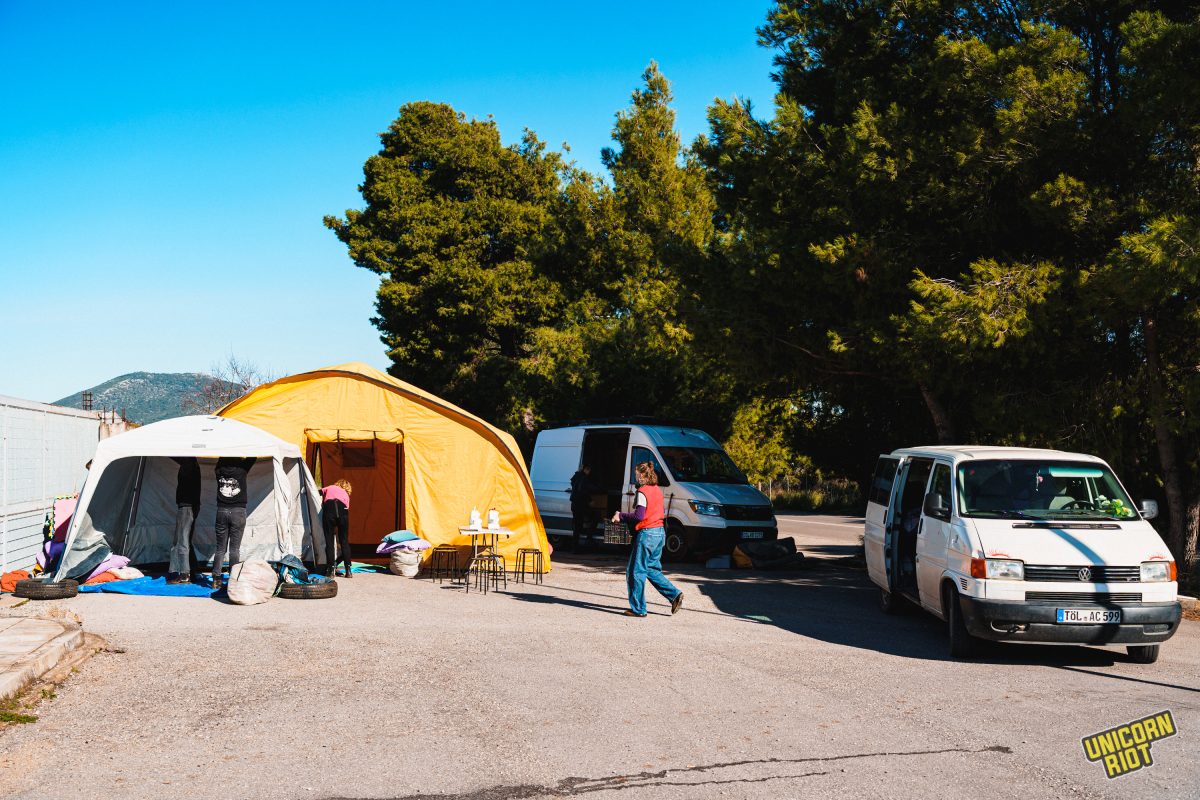
It is a Wednesday, and around midday two white vans appear at the far end of the long road running alongside the Ritsona camp. They park in the lot, and a group of about ten volunteers immediately get to work setting up a safe space for the women living inside.
Within half an hour, tables with hot and cold drinks, sewing machines, books, and children’s toys appear under a gazebo and a large yellow tent. The back of the larger van swings open, revealing a mobile medical clinic stocked with pads, tampons, and other essential supplies.
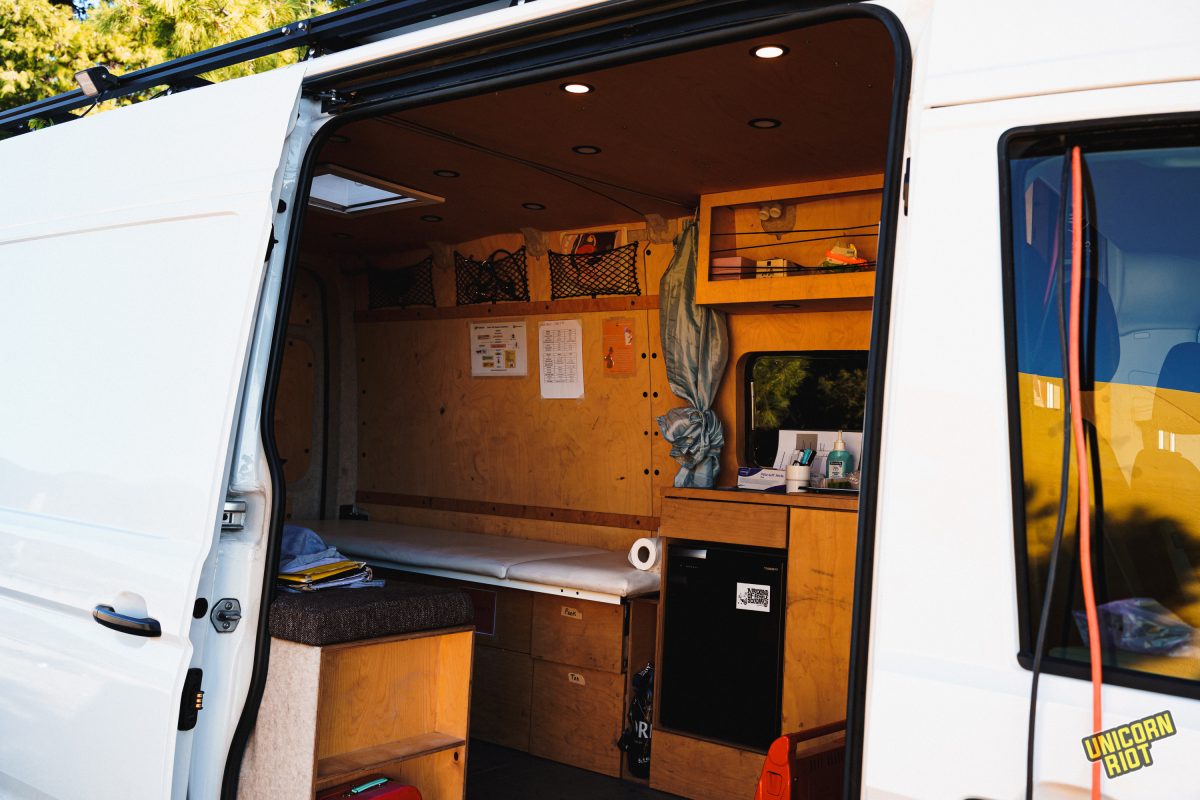
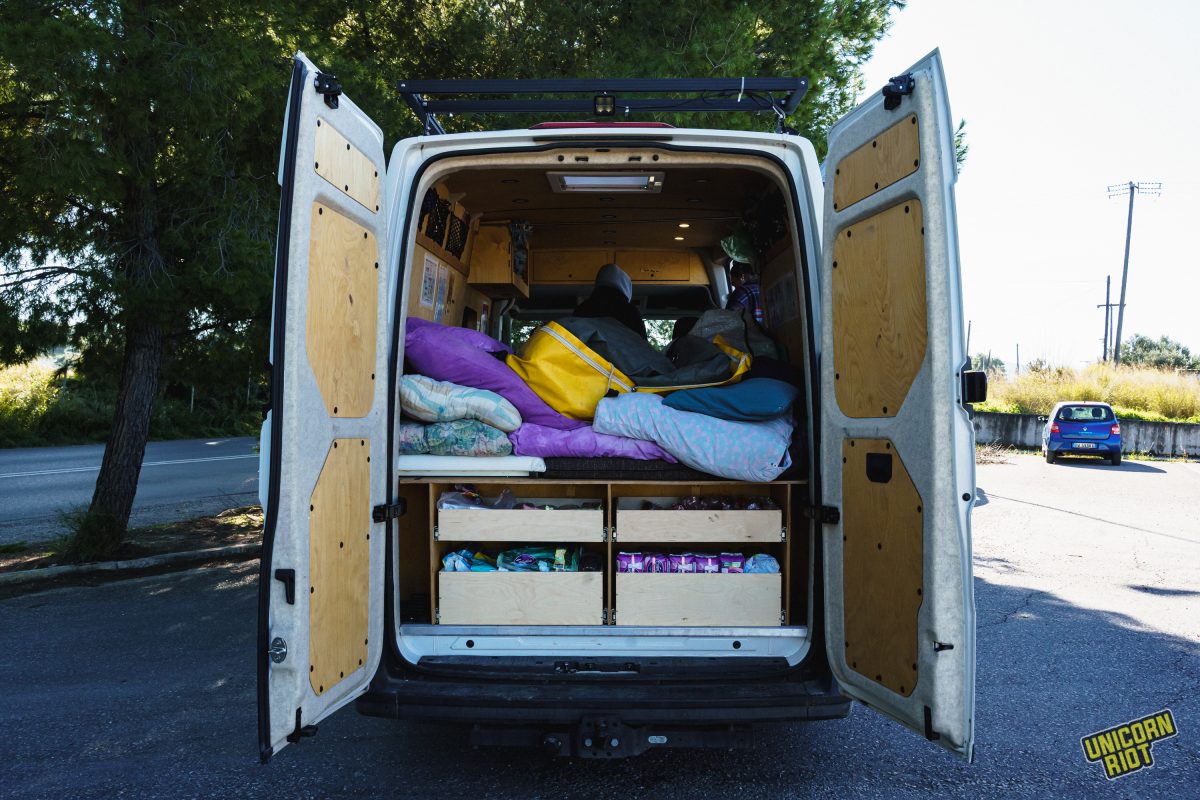
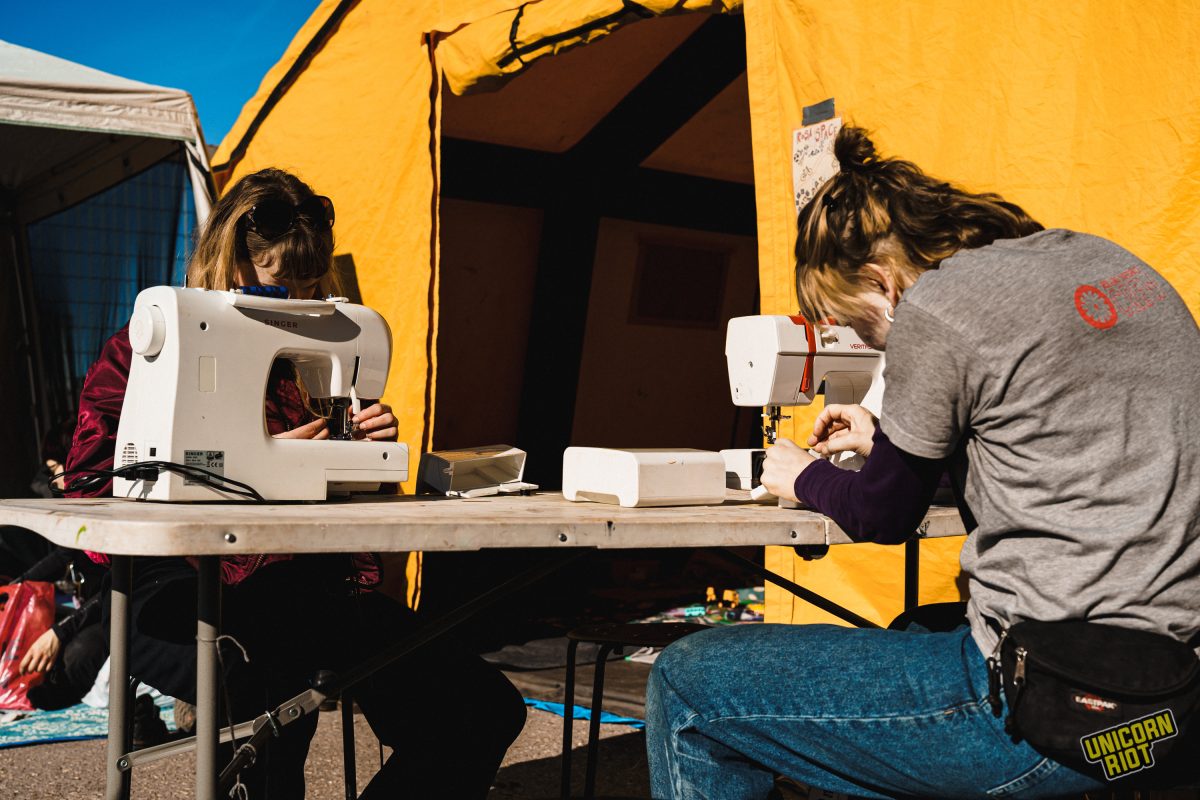
The volunteers are part of Rosa Rolling Safespace, a self-funded German collective that has been operating in mainland Greece since 2022.
“The project started from the understanding that women experience different forms of violence,” said Ari, one of the volunteers. “Everyone who migrates is subjected to structural violence, but being a woman in this context adds specific layers.”
Every week, the vans travel between the camps of Ritsona, Malakasa, Oinofyta, and Thiva, all located in the greater Athens area. The collective provides mobile medical care, a community space, and a dedicated children’s area.
Ari explains that many women in the camps have no points of reference and often lack the time and energy to seek help when they need it. “The medical truck and the community space work together precisely for this reason,” she said. “Women come every week, sit down, talk with us. Our goal is to build trust, so they know there is a safe space they can always come back to if they need help.”
Rosa Rolling Safespace operates from a parking lot outside the camp partly as a deliberate political choice. “We don’t want to support this oppressive system,” said Ari. “We reject the way the European asylum system is designed and the effects it has on people. We don’t want to be complicit in it.”
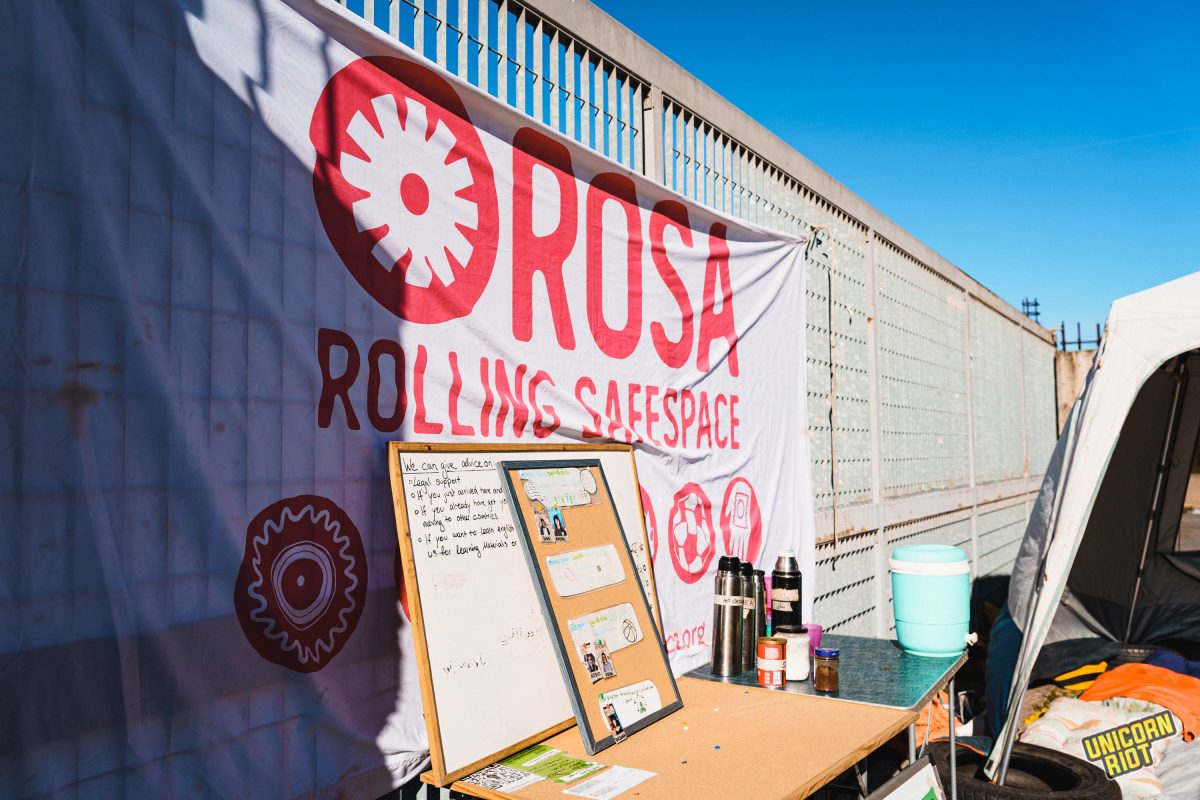
But it is also a bureaucratic necessity. In 2020, the Greek government introduced mandatory registration for organizations seeking to operate inside the camps. The process — costly and discretionary — effectively pushed out most independent groups, forcing them to work on the margins of the system. The result has been a double vacuum: fewer services for camp residents, and less independent monitoring of what happens inside.
This is not an accident. The current structure of refugee camps in Greece took shape with the EU’s hotspot approach, introduced in 2015 in response to arrivals by sea from Turkey. Originally designed as spaces for rapid identification and processing on the Aegean islands, hotspots gradually became containment facilities.
In 2016, the closure of borders by Macedonia, Croatia, and Slovenia left tens of thousands of people stranded in Greece, giving authorities a pretext to set up what were framed as emergency structures but have since become permanent.
The EU-Turkey deal of March 2016 cemented this logic, establishing the automatic return to Turkey of asylum seekers deemed “inadmissible” and locking Greece into its role as a permanent containment zone.
Ritsona is a case in point: built in an isolated area, designed as a closed, surveilled space, cut off from the surrounding community. A setup that, from the outside, projects an image of control — and from the inside, produces devastating consequences.
Gender-Based Violence as a Structural Problem
“Many of the women arriving in Greece already carry deep trauma, accumulated over a lifetime and along the journey to Europe,” said Leo, one of Rosa Rolling Safespace’s founders. “The European Union prides itself on its human rights standards. But the truth is that the camps, as they are designed, produce new trauma every single day, exposing women to sexual abuse and other forms of gender-based violence.”
As early as 2018, Amnesty International documented the specific risks faced by women in Greek camps, including the danger of simply taking a shower or using the bathroom, due to the absence of locks and adequate lighting. Out of 622 cases of gender-based violence reported to the UN Refugee Agency (UNHCR) in 2017, at least 30% had occurred after women arrived in Greece.
Years later, nothing has improved. Despite Greece receiving over €400 million in EU funds earmarked for asylum and integration, the money has gone into control infrastructure rather than improving living conditions.
Data collected between 2024 and 2025 by Refugee Support Aegean and Mobile Info Team paint a grim picture: across both the 27 mainland camps and the five island hotspots, conditions remain unchanged — overcrowded and deteriorating housing, forced cohabitation, shared bathrooms without locks, and a chronic shortage of essential goods and medical, psychological, and social support.
Access to medical and psychological care is one of the most critical gaps, as it is often the first point of contact through which cases of gender-based violence come to light.
Alice, a volunteer working in the medical truck, explained that at Ritsona a doctor is present only once a week, sometimes once a month — a figure that reflects the national average. According to Refugee Support Aegean, by the end of 2025 there was one doctor for every 390 camp residents. “Because it’s such a scarce resource, whenever the doctor is there, they get swarmed,” she said. “A lot of women don’t want to go because it means being in a very crowded space, waiting for hours, surrounded by people who are angry and frustrated.”
According to data collected by Mobile Info Team, 72% of people surveyed cannot access basic healthcare inside the camps. “On top of that,” Alice added, “many people have told us they are not taken seriously by the camp doctors. Sometimes they are denied necessary care on the grounds that their conditions are made up to gain an advantage in their asylum procedure.”
As the volunteers point out, abuse and violence sometimes come from the very professionals who are supposed to provide support. This is confirmed by the experience of Intersos Hellas, an NGO that carried out medical and psychosocial support interventions on the island of Lesvos between 2020 and 2023. “We had difficult situations where women decided to report what had happened to them, and were then mistreated or harassed by the very doctors who were supposed to help them,” said Apostolos Veizis, the organization’s director.
Reports published in 2019 and 2021 by the Diotima Center, which specializes in supporting survivors of gender-based violence, documented cases in which law enforcement refused to take reports. And even when a report does go through, protection is nonexistent. “The woman is taken to the hospital, and a few days later she is back in the camp, in the same conditions as before, next to the person who abused her,” Apostolos Veizis explained.
The camps also lack adequate, safe spaces. Volunteers report that women live in small shared containers — sometimes with their own family, sometimes with a second household — which are often dirty and infested with rats and cockroaches. “They don’t even have a door they can lock, a space that is truly theirs,” said Anni, another collective member. “One woman told us she sometimes locks herself in the bathroom to cry, because it’s the only moment she can have to herself, without her five children.”
In this context, gender-based violence becomes a predictable outcome. “The scarcity of space, services, and basic necessities inside the camps is intentional,” said Ari. “When you are constantly living on the edge, with the feeling that everything around you is a potential threat, mistrust and conflict become the only possible response. I firmly believe the camps are designed to produce exactly this effect, to create hostile conditions that serve a political agenda.”
Ari draws a parallel with the COVID-19 pandemic, when domestic violence cases spiked as a result of forced cohabitation and the inability to access support networks. “Living in a camp is a bit like a permanent lockdown,” she said. “You are cramped in a tight space, often with people you didn’t choose, under constant pressure. These are exactly the conditions that exacerbate violence, and gender-based violence in particular.”
Building Support Networks in an Increasingly Hostile Landscape
On June 12, 2026, the new EU Pact on Migration and Asylum entered into force. The package of rules governing the management of incoming migration flows has, as the European Council on Refugees and Exiles has noted, narrowed access to asylum and significantly lowered human rights standards.
Each European country has implemented the Pact through its own national legislation. In Greece, the approved legislative package tightens border control and expands the use of administrative detention, reinforcing the punitive approach that already produces violence and vulnerability in the camps.
It is too early to fully assess the Pact’s concrete effects, but monitoring suggests that the absence of clear directives from Greek authorities is already resulting in indefinite detention for asylum seekers, often confined to isolated areas of the camps, with potentially devastating consequences for their already precarious mental health.
“We are facing intergenerational trauma,” said Ari. “Until there is safety, dignity, and belonging, it will continue to be passed on. The conditions inside the camps are themselves a form of violence, and the more violence women experience today, the longer that violence will continue to be transmitted to the next generations.”
That is why, according to the volunteers, creating self-organized safe spaces matters. “The more we build support networks and mutual aid projects, the more we can help people out of isolation and give them back some degree of agency,” Ari concluded. “We can’t rely on the state to do this. Because the state doesn’t want to do it — and it was never designed to.”
Check out all Unicorn Riot coverage from Greece by clicking on image below:
Follow us on X (aka Twitter), Facebook, YouTube, Vimeo, Instagram, Mastodon, Threads, BlueSky and Patreon.
Please consider a tax-deductible donation to help sustain our horizontally-organized, non-profit media organization: