Inside the Anti-AfD Blockades
Tens of thousands protest against far-right party convention in Germany.
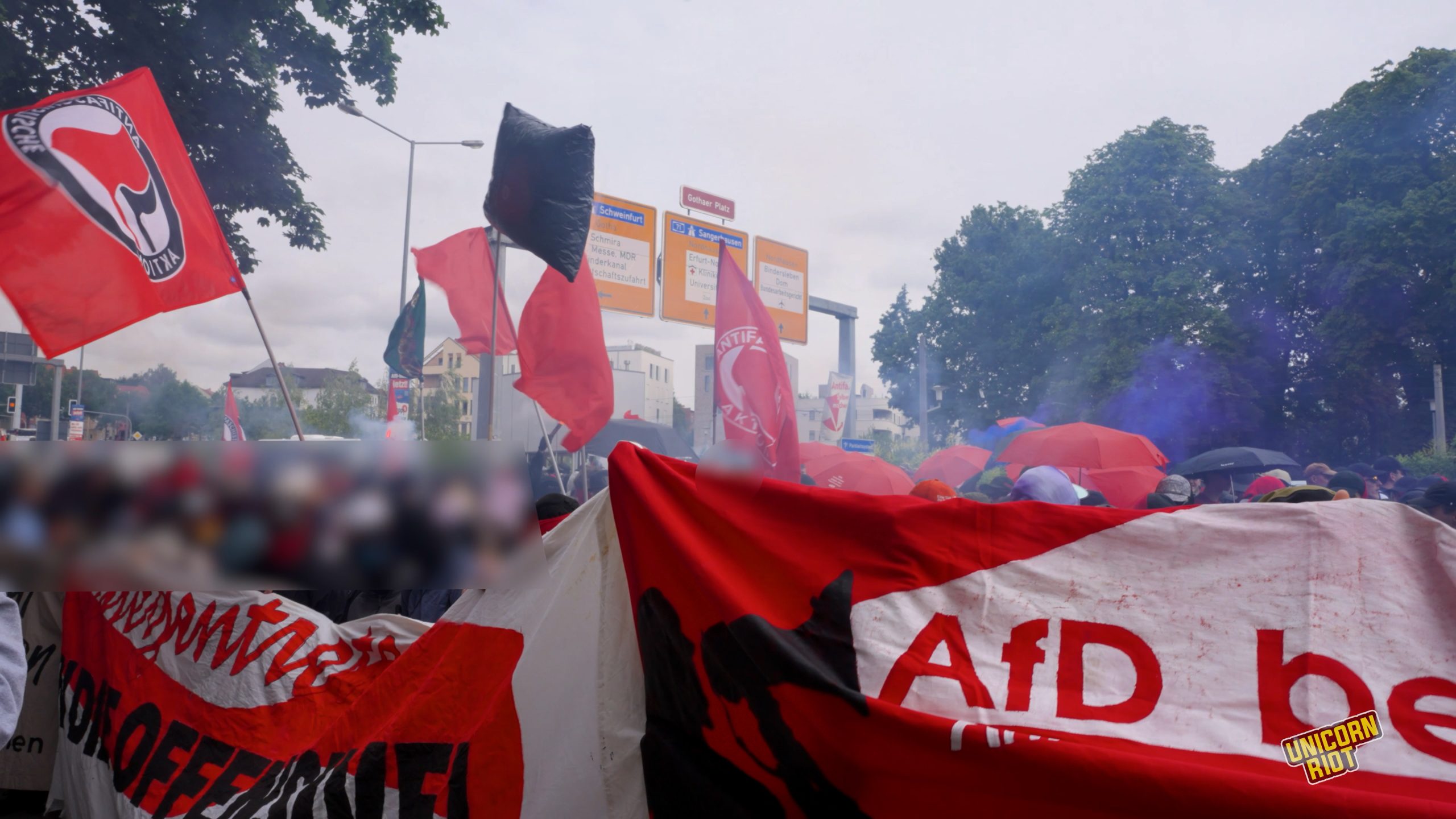
Erfurt, Germany — On July 3 and 4, the far-right Alternative for Germany (AfD) held its annual federal party convention in Erfurt, the capital of the eastern German state of Thuringia. The AfD has become Germany’s second-largest political party and is seeking to take power in several state governments. Tens of thousands of people traveled from across Germany to protest the party congress. The civil disobedience alliance Widersetzen (Defy) organized hundreds of buses carrying protesters intending to take part in mass blockades.
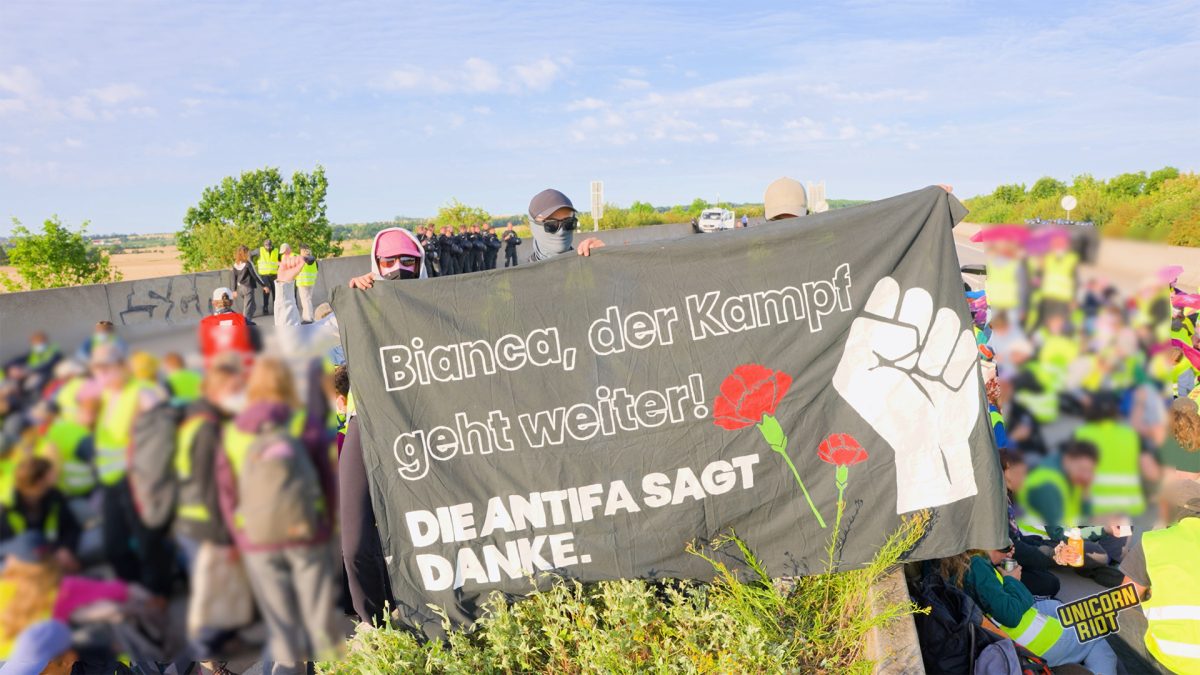
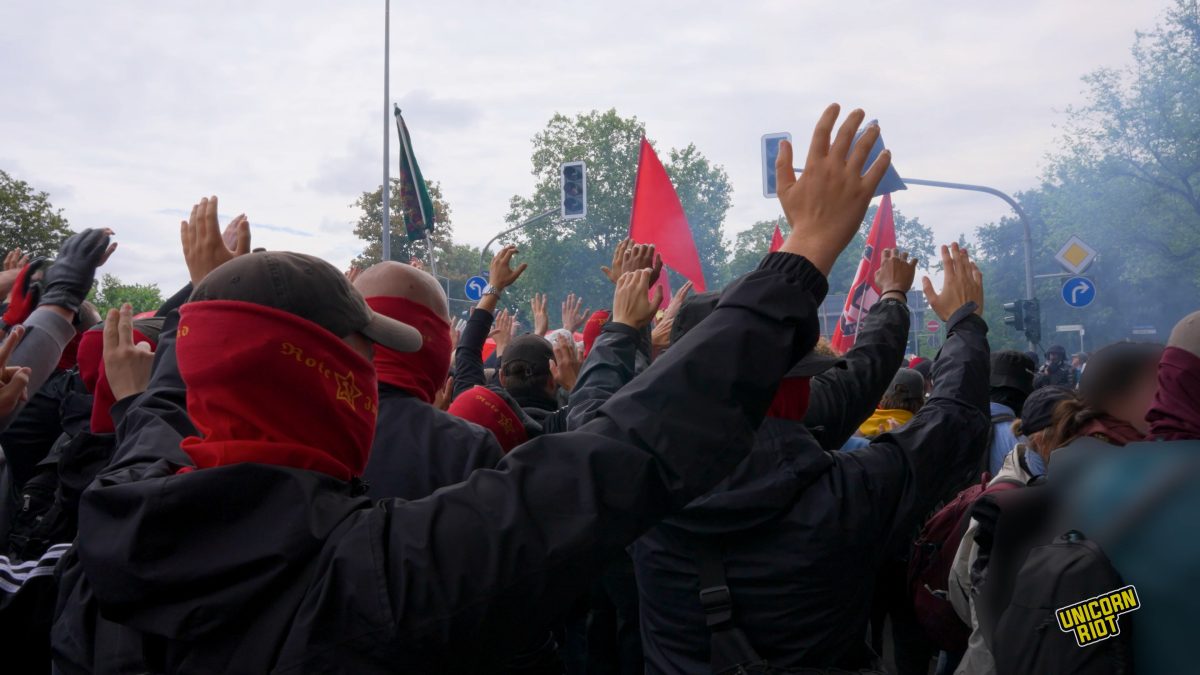
By around 5 a.m. on July 3, the first buses had reached Erfurt, with protesters attempting to establish blockades at multiple locations throughout the city. Unicorn Riot accompanied one of the buses traveling from Berlin. After disembarking near an interstate highway outside Erfurt, activists managed to push through a police line, gathered on the highway, and staged a sit-in to strategically block one of the main access routes to the AfD congress.
Emma from Widersetzen, who was present at the blockade, described how activists reached one of the main access roads before sunrise. “They got off the bus just before five in the morning and were almost immediately at the blockade point,” she said. “The sun was just coming up, and they sat down to block one of the main roads leading to the AfD congress.”
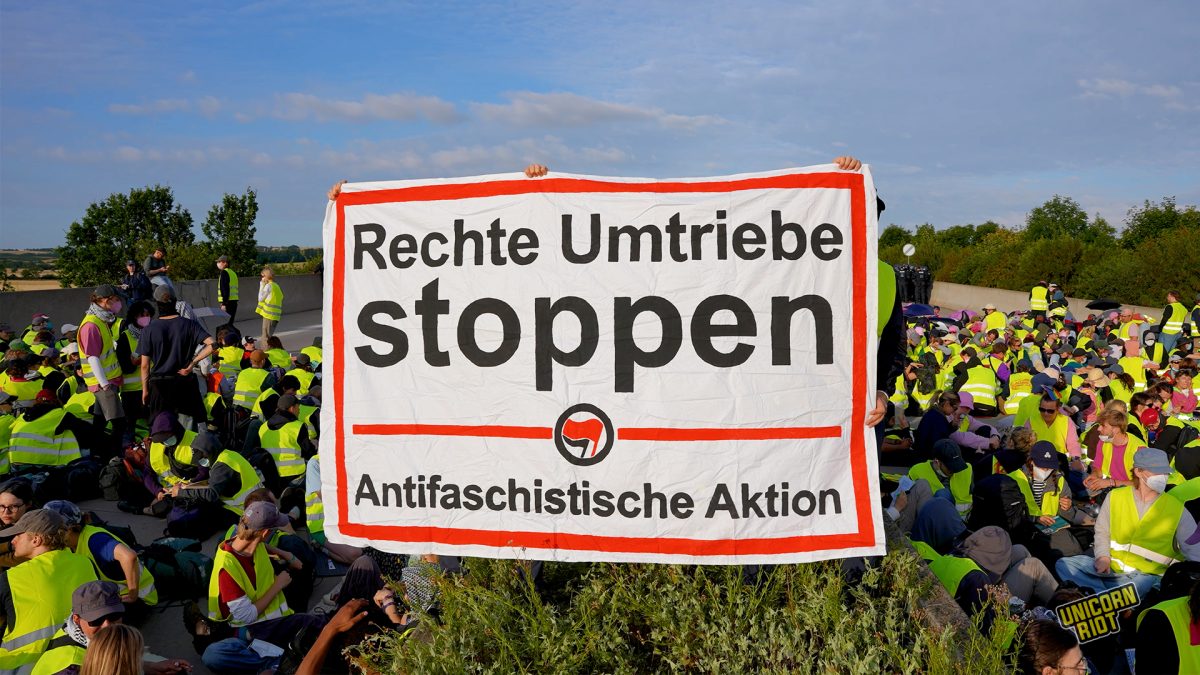
Roughly 3,000 protesters succeeded in occupying the highway, establishing at least three separate blockade points. By 7 a.m., Widersetzen reported that thousands of demonstrators had gathered at more than 14 blockade sites on roads leading into the city as well as within Erfurt itself. According to the alliance, approximately 17,000 people participated in the blockades.
At the same time, additional demonstrations took place across the city, including marches organized by the German Trade Union Confederation (DGB) and the civil society coalition Zusammenstehen (Standing Together).
Although the blockades were strategically coordinated across Erfurt and its surrounding access roads, it quickly became apparent that the AfD would be able to hold its congress largely uninterrupted. Unlike previous party congresses, many delegates had arrived much earlier than expected. Some were escorted by police to the Erfurt exhibition center, the venue for the congress as early as 3 a.m., while others had stayed overnight in hotels near the convention grounds.
As a result, the blockades proved less effective than organizers had hoped. Only a relatively small number of delegates encountered difficulties reaching the venue.
One of the spokespersons of Widersetzen, Noa Sander, noted during the day that, “the AfD had to arrive during the night and desperately barricade itself inside the convention center hotel just to be able to meet at all. That is their defeat: they are crawling into a half-empty hall like the criminals they are. We are standing tall: today, Erfurt is the antifascist capital!”
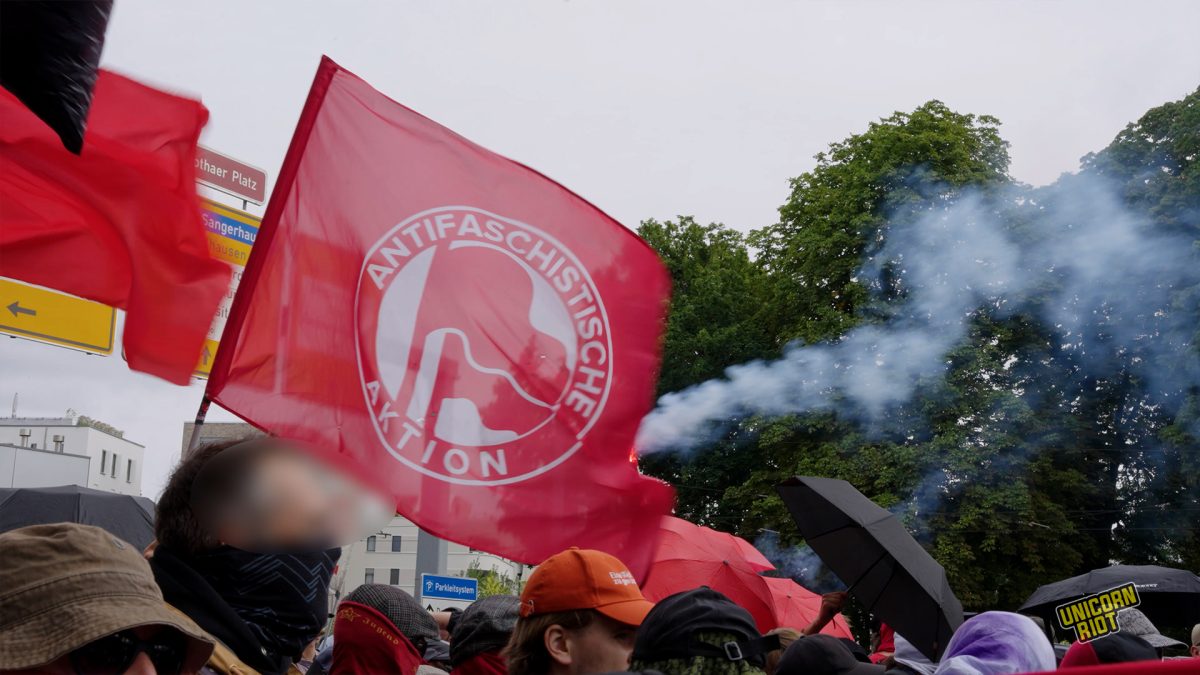
Emma also described the mobilization itself as a success. “Thousands of people traveled across Germany and reached most of the planned blockade points,” she said. “But this isn’t only about today. It’s about building the relationships activists will need tomorrow — when a neighbor faces deportation, when a co-worker loses their job, or when someone is targeted by the far-right.”
According to organizers, more than 50,000 people participated in protests throughout Erfurt over the weekend. The demonstrations and blockades formed part of a broader wave of mass mobilizations against the AfD, following major protests against the party’s congress in Riesa and similar actions at previous AfD conventions.
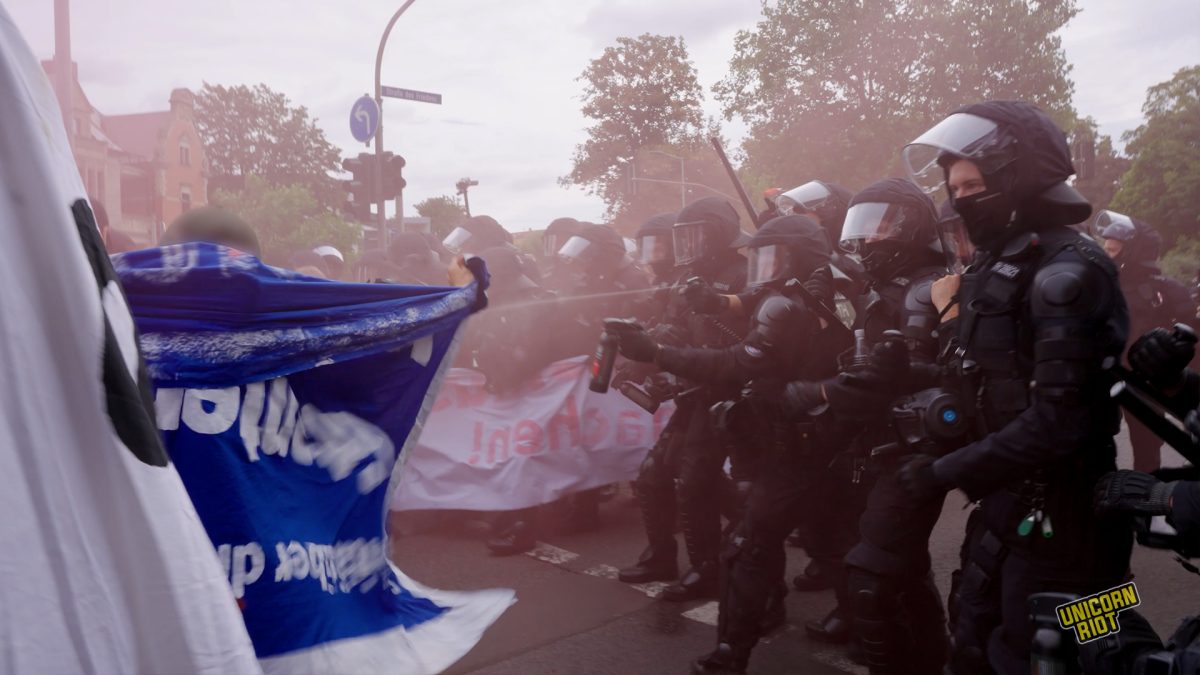
Direct actions, like a local AfD-office having paint thrown on its walls or an attack on a far-right clothing shop, also occurred during the protests. People reporting for right-wing publications Apollo News and the newspaper Junge Freiheit (Young Freedom) were also directly targeted, drawing criticism by mainstream media as an attack on journalism itself, leading to a general debate on violence against journalists.
This comes as the number of far-right streamers appearing on the sidelines of anti-fascist protests has increased. Apollo News is among the outlets who have a history of negatively portraying anti-fascist activists and promoting homophobic and other defamatory attacks on them.
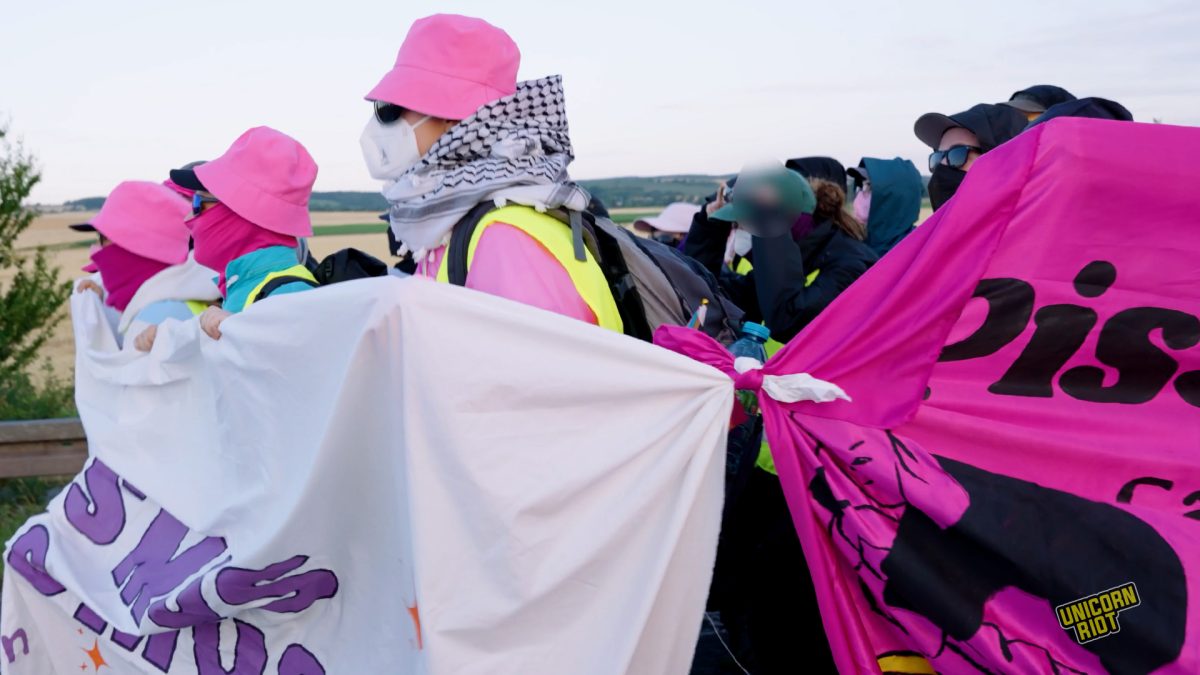
Over the past several years, Widersetzen has evolved into a nationwide network advocating civil disobedience, with mass blockades serving as its primary tactic. The alliance brings together a broad coalition of anti-fascist organizations, student groups, civil society initiatives, trade unions, and left-wing political parties.
Today, Widersetzen has local chapters in numerous German cities and works closely with student anti-fascist initiatives. Through an extensive social media presence — particularly on Instagram — the alliance has built a nationwide mobilization network while drawing inspiration from earlier civil disobedience campaigns in Germany.
Widersetzen sees itself as part of a long tradition of anti-fascist civil disobedience in Germany. Its political lineage includes the mass blockades that successfully challenged annual neo-Nazi marches in Dresden as well as decades of protests against nuclear waste transports to Gorleben in the Wendland region, where civil disobedience in form of mass-blockades became a defining aspect of political resistance. Widersetzen’s main organizing focus is the rapid rise of the AfD.
For Elena, a spokesperson for the anti-fascist coalition Zeit zu Handeln (Time to Act), the demonstrations in Erfurt were about more than disrupting a single party congress.
“We believe anti-fascism has to come from below,” she said. “It’s something we organize ourselves because nobody is going to hand it to us, and we can’t rely on the state. The experiences we gain here are ones we’ll need back home in the fight against local far-right structures.” Elena described the AfD as “the spearhead of Germany’s shift to the right” and argued that broad grassroots organizing is necessary to counter its growing influence.
The Rise of AfD
Founded in 2013 as a Eurosceptic party during the end of the European sovereign debt crisis in the aftermath of the global financial crisis, the AfD increasingly shifted its focus toward immigration and national identity following the arrival of large numbers of refugees in 2015.
Then German Chancellor Angela Merkel’s decision to allow many asylum seekers, particularly those fleeing the war in Syria, to enter Germany, accompanied by her famous phrase, “We can do this,” became a defining political issue for the AfD.“Remigration” is an explicit part of AfD’s federal program of 2025. The program calls for; deporting people legally required to leave, withdrawing temporary protection when the original grounds no longer apply, encouraging “voluntary return,” and making it easier to expel foreign offenders.
The investigative outlet Correctiv uncovered a secret meeting in November 2023 in Potsdam where AfD-politicians met with leading far-right activists, including Martin Sellner, the most prominent figure of the far-right Identitarian Movement, to discuss remigration. Widersetzen emerged from the protests against this scandal.
The party has become especially strong in eastern Germany. In Thuringia, its local state organization is led by Björn Höcke, one of the party’s most prominent figures associated with its far-right wing. Höcke, a former teacher, has repeatedly been convicted for using Nazi-associated slogans, and Germany’s domestic intelligence service has identified him as one of the central figures of the party’s far-right faction.
At the same time, the AfD has also begun consistently winning double-digit vote shares across much of western Germany. Now AfD is projected in polls to be by far the strongest party in Germany.
AfD has been legally monitored since 2021 as a suspected extremist organization by Germany’s domestic intelligence service. This classification was challenged by the AfD and its appeal was dismissed on all court levels – in 2025, Germany’s Federal Administrative Court made the final rejection. The domestic intelligence service subsequently upgraded the AfD to “confirmed right-wing extremist,” but a court decision temporarily blocked that higher designation in February 2026 pending the main proceedings. The ruling did not overturn the suspected-case classification.
AfD’s youth organization was classified in 2024 as extremist and was dissolved by the AfD itself in order to found a new organization at the end of 2025 under the name “Generation Germany.” Against its founding congress in Gießen tens of thousand people protested and many thousands participated at the blockades of Widersetzen.
Critics contend that the party has shifted Germany’s political debate significantly to the right, with governing and mainstream parties — mainly the conservative Christian Democratic Union (CDU) and the Social Democratic Party (SPD) — adopting increasingly restrictive positions on immigration. These include tighter asylum laws, expanded deportation powers, and funding cuts affecting culture and civil society organizations.
From the perspective of the anti-fascist movement, Germany’s political center has increasingly embraced policies that were once associated primarily with the AfD. In a press release, Widersetzen’s Noa Sander strongly criticized the governing parties at both state and federal level:
“They say our blockades failed. The truth is that the governing parties are failing in the fight against the far-right. Instead, they are adopting the AfD’s demands and dismantling the welfare state while far-right violence reaches record levels. Anyone who does that should simply keep their mouth shut about the right strategy for fighting fascism.”
At the same time, the so-called “firewall” — the commitment by Germany’s democratic parties not to cooperate with the AfD — is coming under increasing pressure. In several eastern German states, opinion polls now place the AfD in first place. If the party continues to gain support, it could eventually become capable of governing without coalition partners in some states and even win the federal elections in 2029.
Particular attention is therefore focused on the state elections scheduled for September in Saxony-Anhalt and Mecklenburg-Western Pomerania. In Saxony-Anhalt especially, many political observers believe the AfD could achieve a historic result, potentially placing it in a position to lead a state government or play a decisive role in forming one for the first time. Widersetzen is already mobilizing for a conference in Magdeburg, the capital of Saxony-Anhalt, on July 25 to plan actions around the state elections together with its alliance partners.
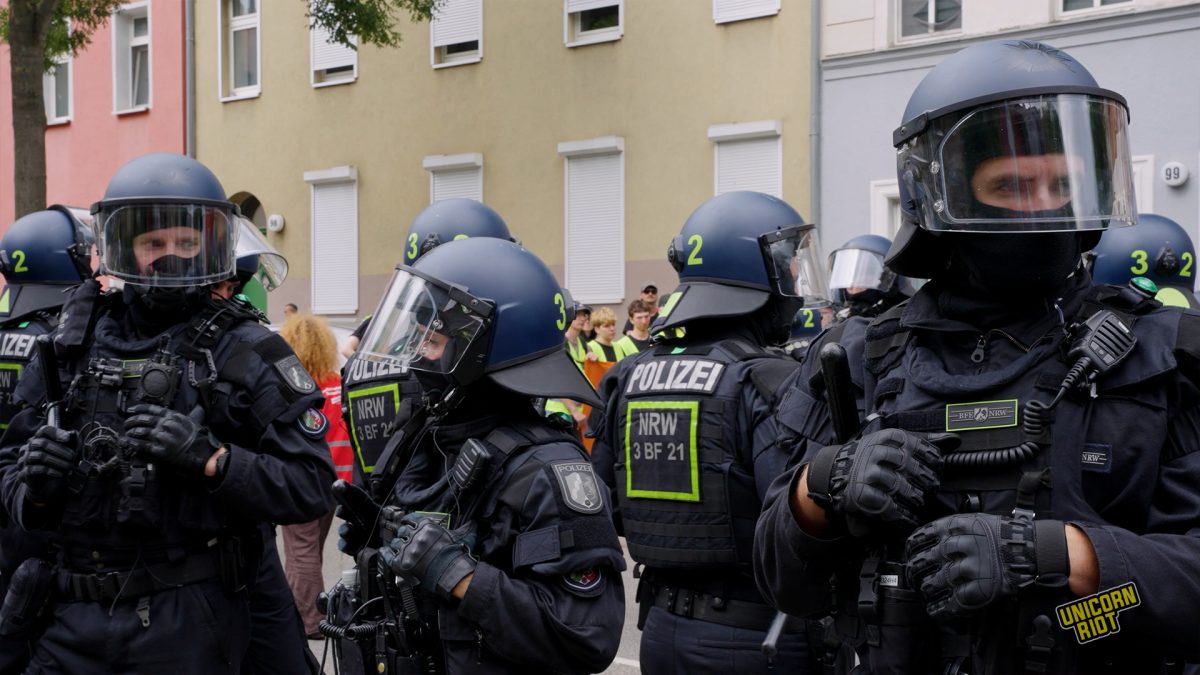
Cover image (and embedded images) are from screengrabs of video contributed by John Malamatinas.
More Unicorn Riot coverage from Germany in our archives.
More UR coverage of far-right investigations:
Follow us on X (aka Twitter), Facebook, YouTube, Vimeo, Instagram, Mastodon, Threads, BlueSky and Patreon.
Please consider a tax-deductible donation to help sustain our horizontally-organized, non-profit media organization: