Anger Grows in Exarcheia After Court Ruling on Metro Construction Site
Athens, Greece — Gentrification and policing campaigns have altered the face of the historically radical Exarcheia neighborhood in Greece’s largest city over the recent years. As the state plans to build a metro line stop at Exarcheia Square, protest movements to preserve the area have continued.
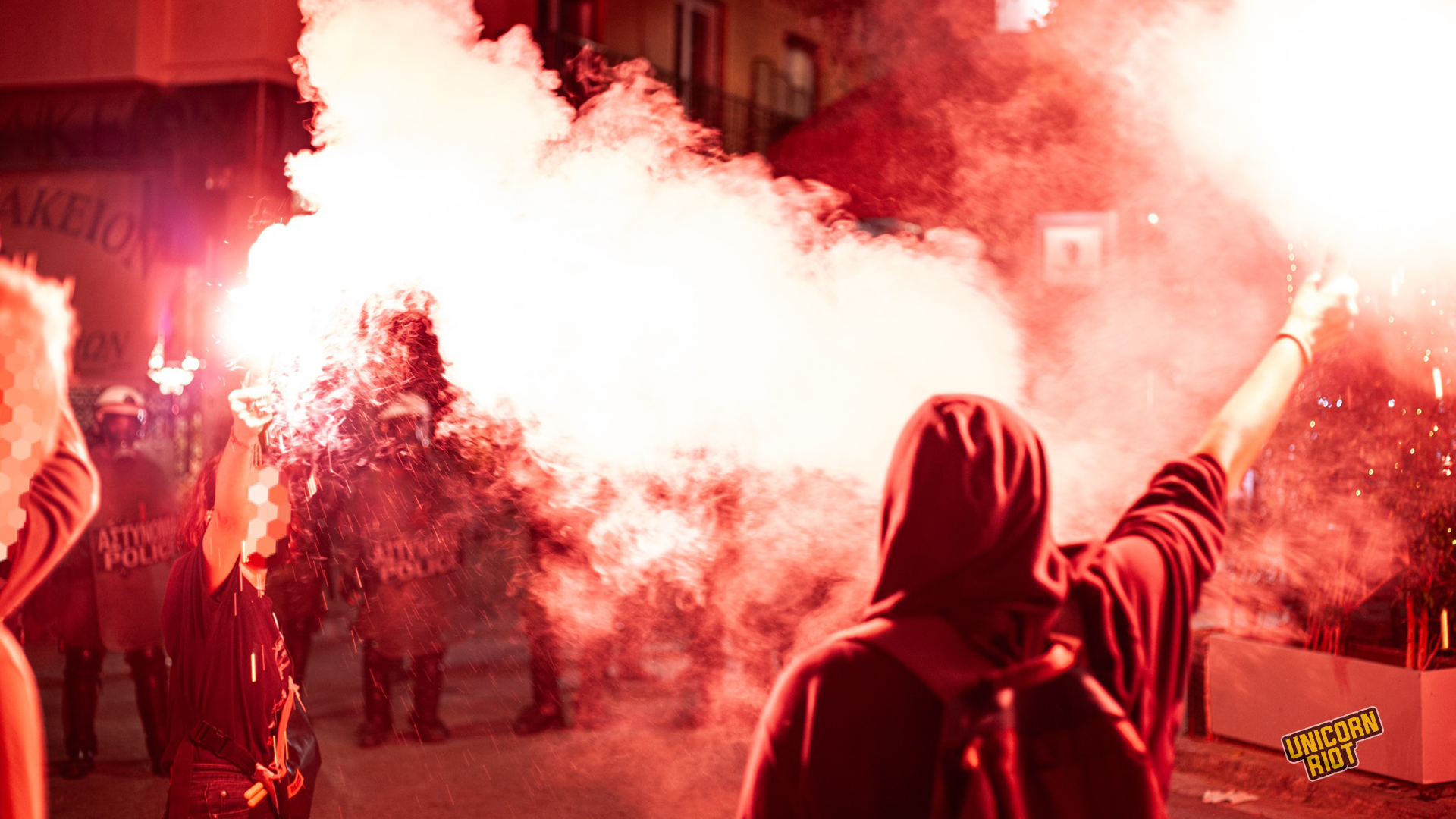
On May 22, organizers of the anti-metro initiative, Oxi Metro Plateia Exarcheion, garnered a significant crowd in Exarcheia. Hundreds of demonstrators rallied in opposition to the redevelopment initiatives of the touristification, gentrification, and the construction of a metro station in Exarcheia Square.
The march was largely non-violent, though tensions erupted frequently throughout the evening. Hundreds of people marched through the neighborhood chanting slogans in support of reclaiming Exarcheia Square, defending Strefi Hill, protecting refugee housing squats, and expressing solidarity with Palestine.
Previously published: Gentrification in Greece – A three-part special focusing on Exarcheia
“Redevelopment means displacement of the poor… ten, a hundred are not enough, we will occupy all the neighborhoods… the passion for freedom is stronger than all prison cells… Exarcheia Square, Strefi Hill, the Polytechnic, Exarcheia is not a museum… if we don’t resist in all our neighborhoods, our cities will become modern prisons,” the crowd chanted during the march.
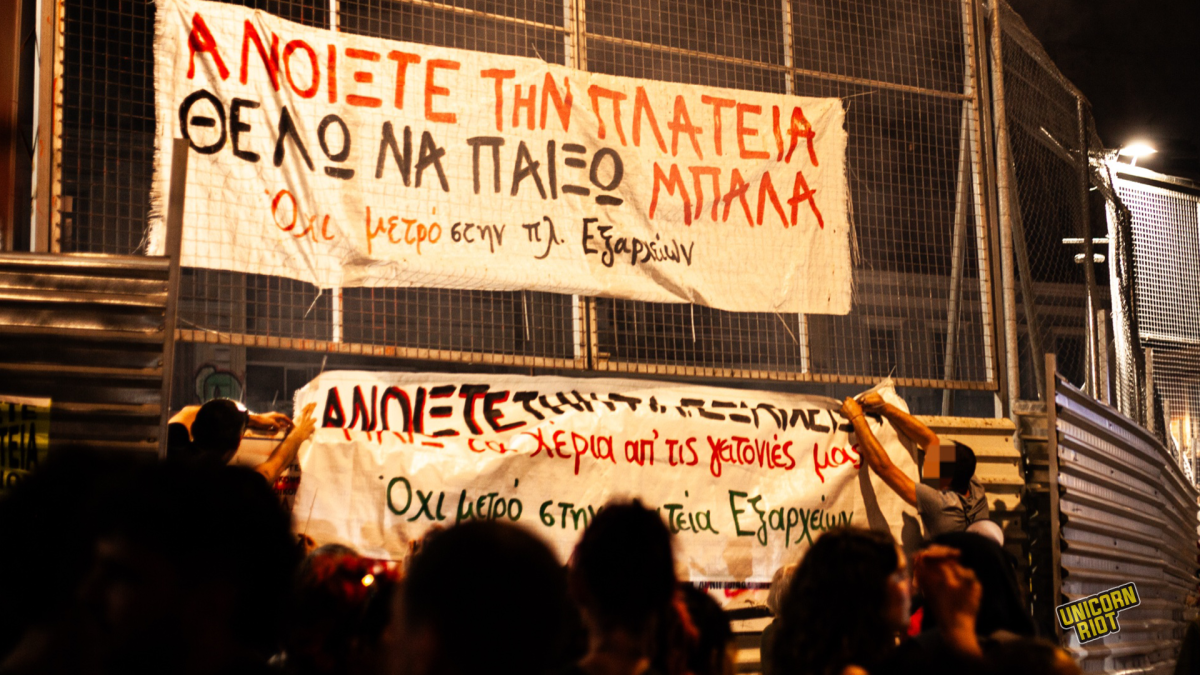
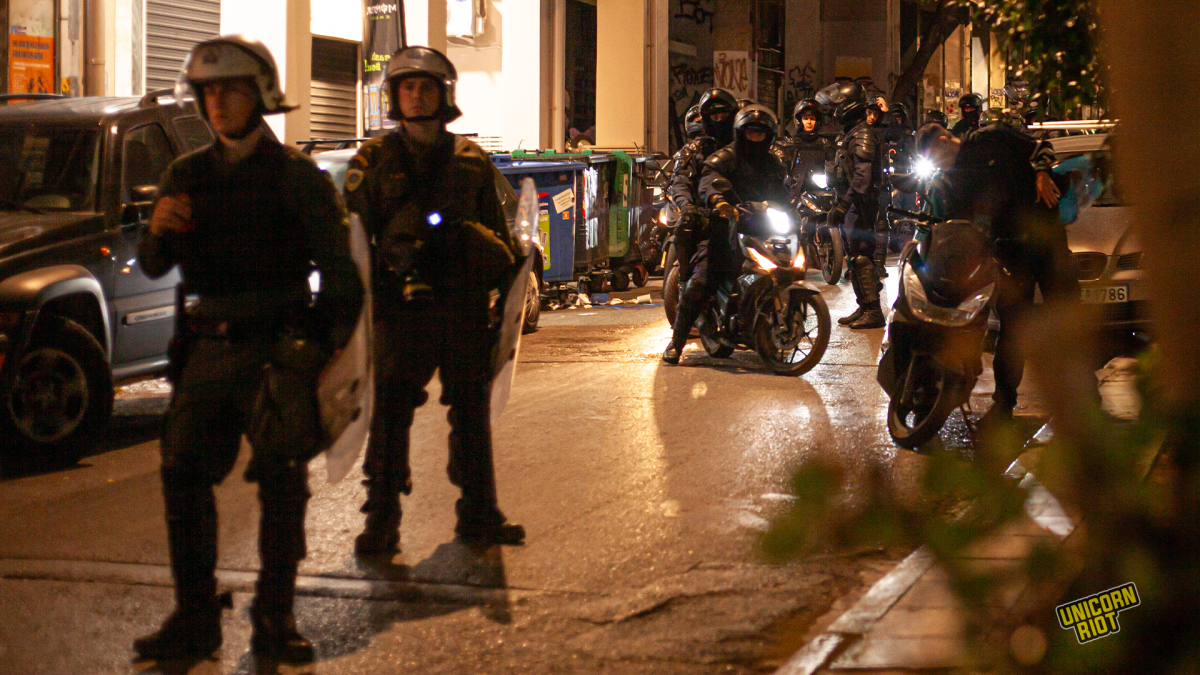
During the nighttime protest, demonstrators accused riot police (MAT) of escalating tensions and intimidation. Participants claimed police units blocked access routes and increased pressure around the march. Despite their attempts to stop the gathering, the crowd continued, and eventually managed to reach Exarcheia Square and the entrance of the construction site, where banners were hung across the barriers.
Demonstrators then lit flares and struck metal barricades surrounding the construction site in a symbolic show of resistance.
Previously published: Exarcheia: Political Life Suffocated by State Surveillance
Unicorn Riot heard from a local in the neighborhood who said, “As for the metro, I don’t see the need for it here. There are already public transport connections that reach this area easily. It feels unnecessary,” she said. “To me, it’s part of a process that makes the area less accessible and gradually pushes locals out. Renting is already difficult for Greeks, especially in Exarcheia, where rising prices and investors are changing who can live here.”
She added, “I’m turning 28, and I’ve been in Exarcheia since I was 19. I remember it before the construction, when the square was open. Now the center of the neighborhood is fenced off and increasingly cut away from the people who live here. It feels less livable, replaced by hipster cafes and a curated version of the area.”
“Exarcheia is not just a place on a map for us. It’s tied to modern Greek political and cultural history, uprisings, the Polytechnic, artists, and struggles. And when I ask people who come to Greece whether they have a neighborhood where riot police are permanently stationed, they always say no. That alone says something about what Exarcheia is, and why it matters.”
The protest followed a court ruling that awarded compensation to seven residents in Exarcheia regarding the ongoing metro construction in the square. The court found that the construction site had failed to maintain minimum safe pedestrian access.
As reported by Kathimerini, the court rejected most of the claims filed by 104 out of 111 plaintiffs, while upholding partial compensation for the other seven and allowing a minor expansion to the worksite. The ruling also stressed that a minimum pedestrian passage of 3.5 meters must be maintained around the construction area.
Residents opposed the metro project and stressed the repeated legal disputes and required adjustments to the construction site as evidence that the project must come to an end altogether. Although the company responsible for the construction, Elliniko Metro, insisted that the required changes are limited and will not alter their overall project, they are also adding that excavation works are underway.
For years, activists and local assemblies have framed Exarcheia as a political and social space sustained through self-organization rather than state institutions. The neighborhood hosts political assemblies, solidarity networks, collective kitchens, refugee squats, autonomous social centers, and medical clinics that supporters say have long defined the area’s identity.
Supporters of the metro project argue that the station will provide accessibility and useful public transportation infrastructure. Opponents continue to argue that the metro construction in the square, which is a historically symbolic gathering spot for anarchists, anti-authoritarians, and students, was a deliberate political move by the state.
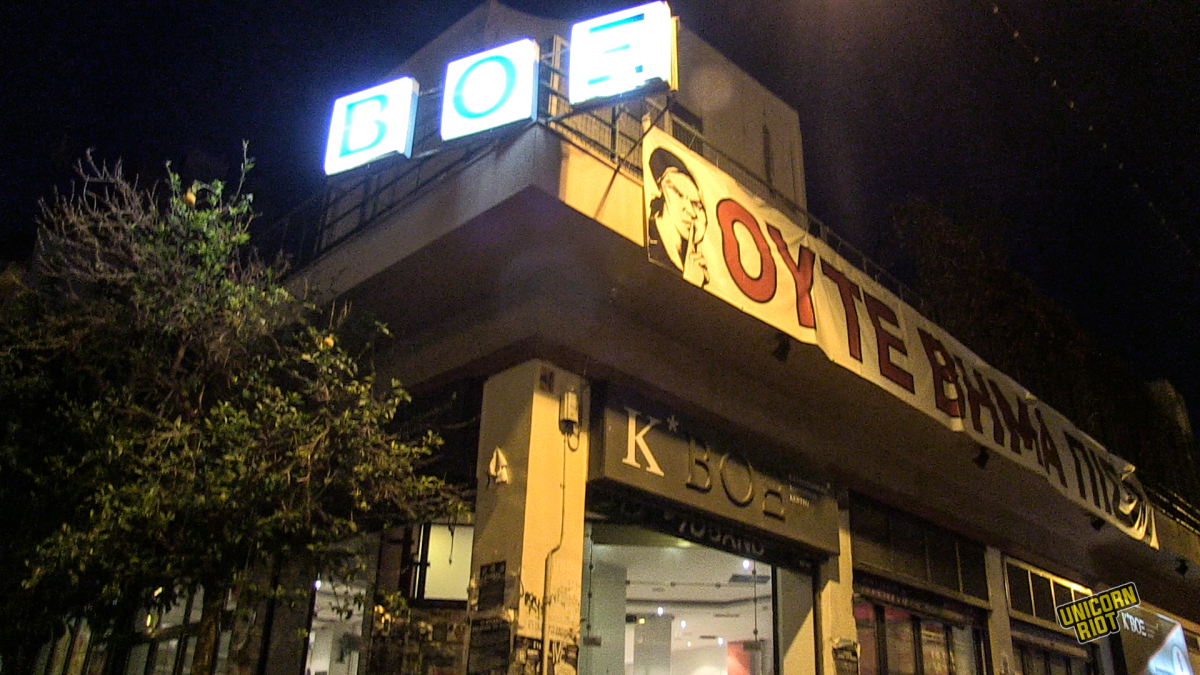
The construction site also sits directly outside K-Vox, a self-managed political and social space housed in a former state-owned building occupied by the anarchist collective Rouvikonas in 2012.
Previously published: Passing the Point of No Return: Interview with Rouvikonas Anarchist Collective & Greek Anarchist Collective Targeted by the State & Shots Fired at Squatted Social Center in Exarcheia, Athens
Activists fear the expansion of state infrastructure and policing around the metro project could place mounting pressure on autonomous spaces and political organizing within the area.
For many involved in the struggle, the ultimate aim is the preservation of Exarcheia. They want to retain the symbolism of a neighborhood that is built around mutual aid and collective resistance, rather than a market-driven capitalist redevelopment. Activists fear that the area will be replaced by commodified urban development aimed at prioritizing tourists and investments, and not locals.
In a statement released by the initiative, organizers insisted that “the square belongs to its people,” adding that resistance will continue until the barriers surrounding Exarcheia Square are removed and the space is reopened to the public.
See our video special published in 2024, The Battle Over Exarcheia Square in Athens.
View all Unicorn Riot coverage from Greece by clicking on image below:
Cover image taken in Exarcheia, Athens, Greece on May 22, 2026, contributed by Anastasia Xydi.
Follow us on X (aka Twitter), Facebook, YouTube, Vimeo, Instagram, Mastodon, Threads, BlueSky and Patreon.
Please consider a tax-deductible donation to help sustain our horizontally-organized, non-profit media organization: