Deadly Aegean Sea Collision Raises Questions About Greek Coast Guard Operations
Another fatal incident involving refugees and migrants occurred on February 3 in the Aegean Sea, off the coast of Chios. Fifteen refugees and migrants lost their lives after the boat they were traveling on allegedly collided with a Coast Guard vessel, while another 25 people were injured, including women, children, and two Coast Guard officers. The incident is considered one of the deadliest in recent years and raises a number of questions about how the Greek authorities handle such incidents at sea as state-of-the-art cameras on the Coast Guard vessel were not working, as was the case in the deadly shipwreck off Pylos three years ago.
Rather than drowning, forensic evidence indicates that the refugees and migrants died from injuries and wounds – mainly severe blows to the head, accompanied in some cases by blows to the chest, neck, arms, and legs.
According to the Coast Guard’s press release, it all began on Feb. 3, when a Coast Guard vessel on a scheduled patrol spotted an inflatable boat heading towards the island of Chios. The Coast Guard vessel proceeded with light and sound signals, but the inflatable boat did not comply. Then, according to the Coast Guard’s version of events, the driver of the inflatable boat changed course, colliding with the Coast Guard vessel, which resulted in all the refugees and migrants on board ending up in the water.
However, the survivors’ version seems to differ greatly. According to their testimonies, which were reported by Greek media, the Coast Guard vessel passed over them. “We were traveling very slowly in the boat. It was overloaded. We were very close to the coast. Suddenly, a huge spotlight lit up in front of us. There was no sound signal or anything else. The Coast Guard vessel immediately picked up speed and ran over us,” said some survivors from the hospital, while others clarified that their boat did not collide with the Coast Guard vessel and that they did not hear any audible or other warning.
“The captain was sailing smoothly and quietly, and when we were almost in Greece, we saw a light on the left and there was a crash. As soon as I saw the light, the collision happened. When I came to, I saw a lot of blood and the water had reached below my chest. It wasn’t a collision, it was deliberate. We were going straight and it hit us very hard,” they said.
In any case, the exact circumstances of the accident cannot be determined, as the cameras on the Coast Guard vessel were not working at the time of the incident. Many do not consider this a coincidence, but rather a standard tactic of the Greek authorities in such operations, as a means of covering up pushbacks or other illegal practices. Something similar happened in the deadly shipwreck off Pylos.
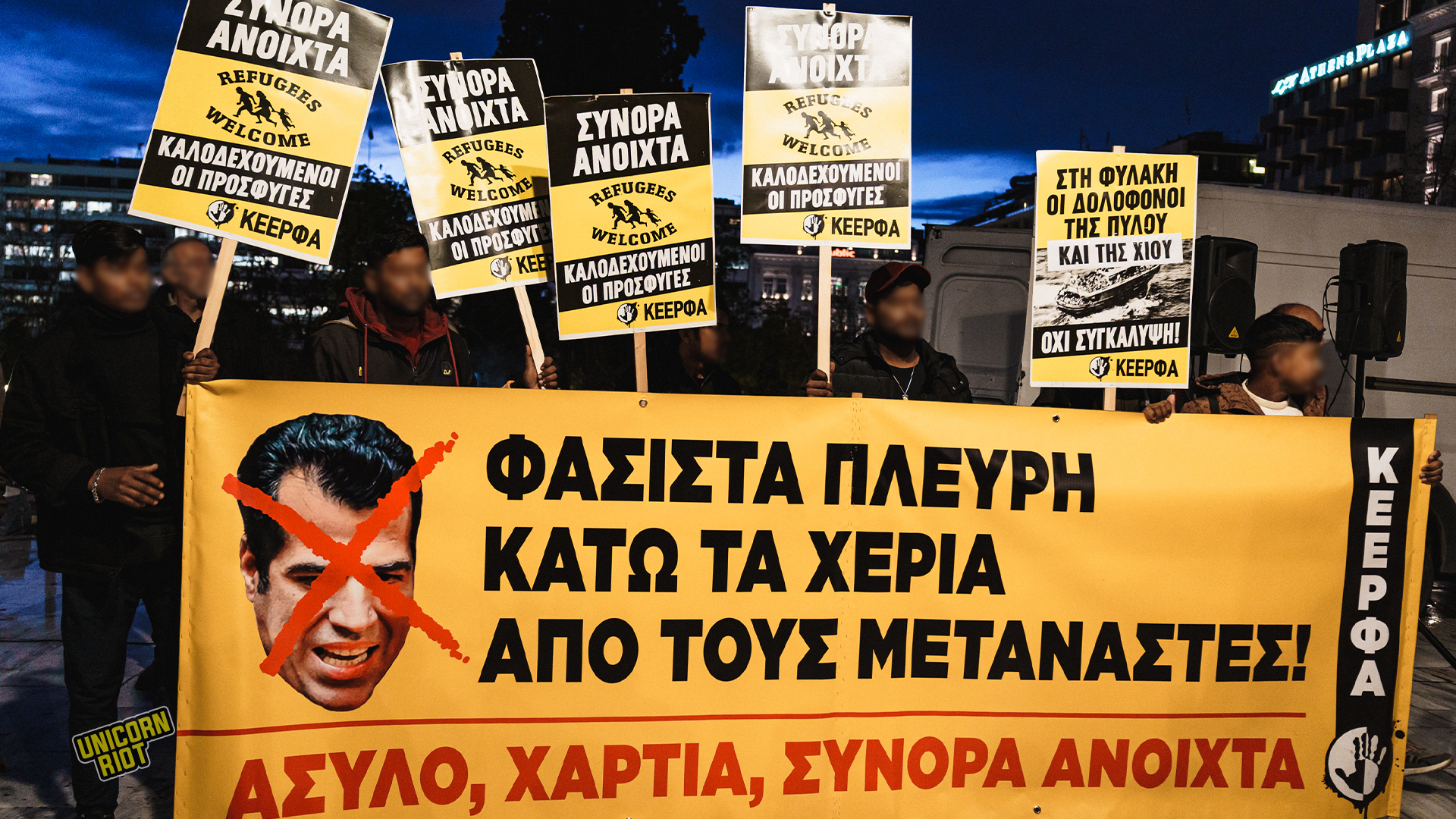
Anti-racist groups make it clear that the Greek authorities’ only obligation at sea is to rescue these people. The Minister of Migration and Asylum, Thanos Plevris, stated that there is no relevant regulation for 24-hour recording and that “They are operational, used at night to locate targets at a distance.”
The Minister of Shipping, to whom the Coast Guard reports, noted that “the investigation into the causes of the tragic accident will be conducted with transparency and professionalism” and that “modern smugglers and traffickers are enemies of the country.”
In the Chios case, a 31-year-old Moroccan man who was also on board the boat was arrested as a trafficker and remanded in custody. He faces charges including migrant smuggling and causing the deadly crash. He denies the accusations.
Initial reports suggested that he had been identified as the smuggler by the passengers, but this was disputed by subsequent statements from the survivors. It is common in such cases for the boat driver to be arrested as the alleged smuggler, who in most cases is either a low-ranking member of the smuggling ring operating from the Turkish coast to the Greek islands of the Eastern Aegean, or a migrant himself, who paid less or no money for the trip. The amount usually demanded by smuggling rings ranges from €3,000 to €8,000. Refugees and migrants are crammed together without the necessary safety measures, such as life jackets, with numbers ranging from 10 to 40.
It should be noted that Greece has been condemned by the European Court of Human Rights for the case in Farmakonisi – another tragic shipwreck in 2014, which resulted in 11 dead migrants. Then, the European Court mentioned that there were omissions and negligence in the way the Greek authorities handled the case, as they did not conduct an effective investigation that could shed light on the circumstances of the incident, and they did not comply with their obligation to protect human life.
Additionally, members of the Coast Guard, including high ranking officers, have been prosecuted for the deadly shipwreck off Pylos in 2023, which claimed the lives of hundreds of refugees and migrants. A naval court is still investigating the case.
The incident in early February has once again brought to the fore the issue of how Greek authorities are handling the refugee and migrant issue, with opposition parties and anti-racist groups calling the Chios incident a “crime.”
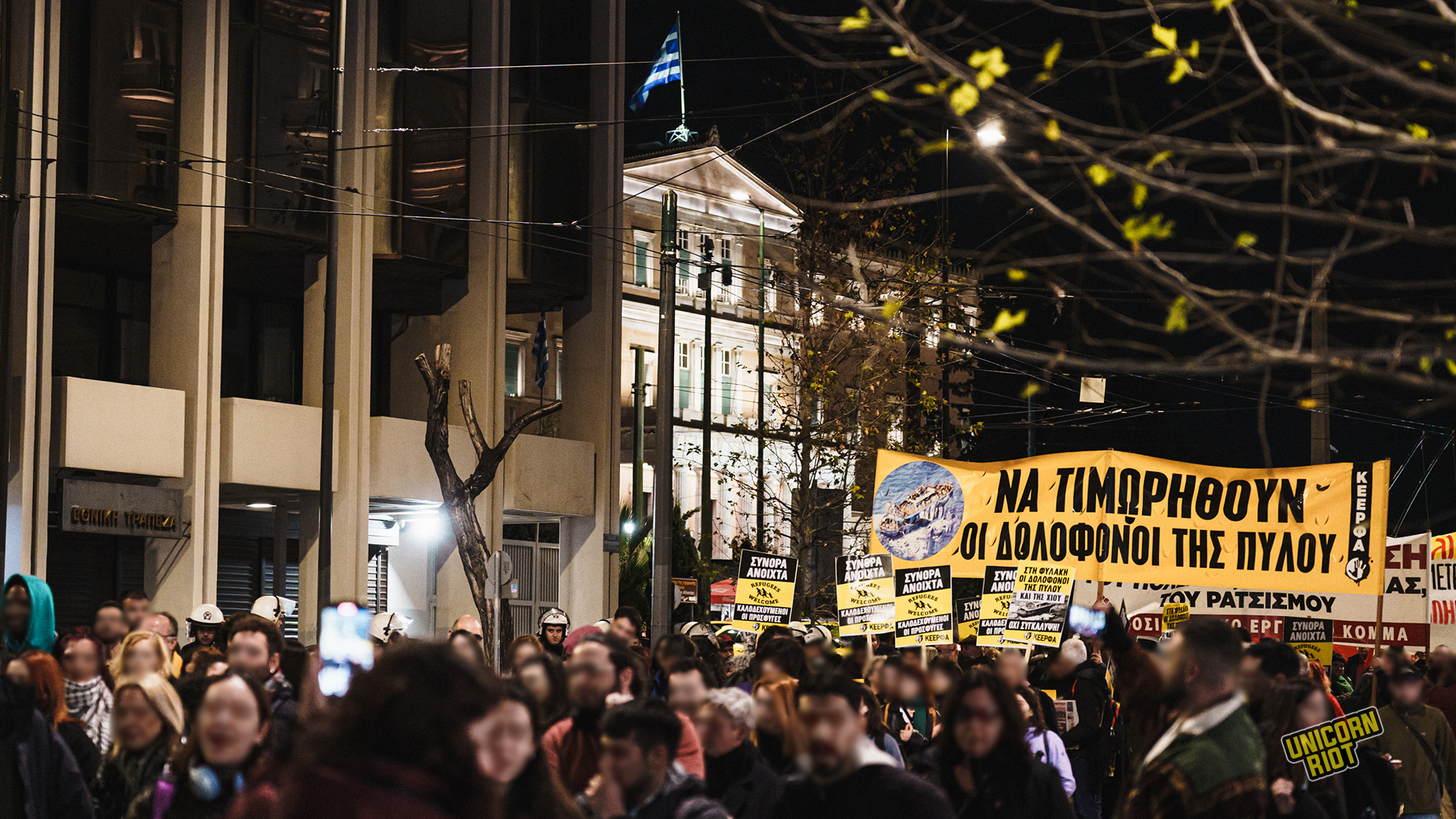
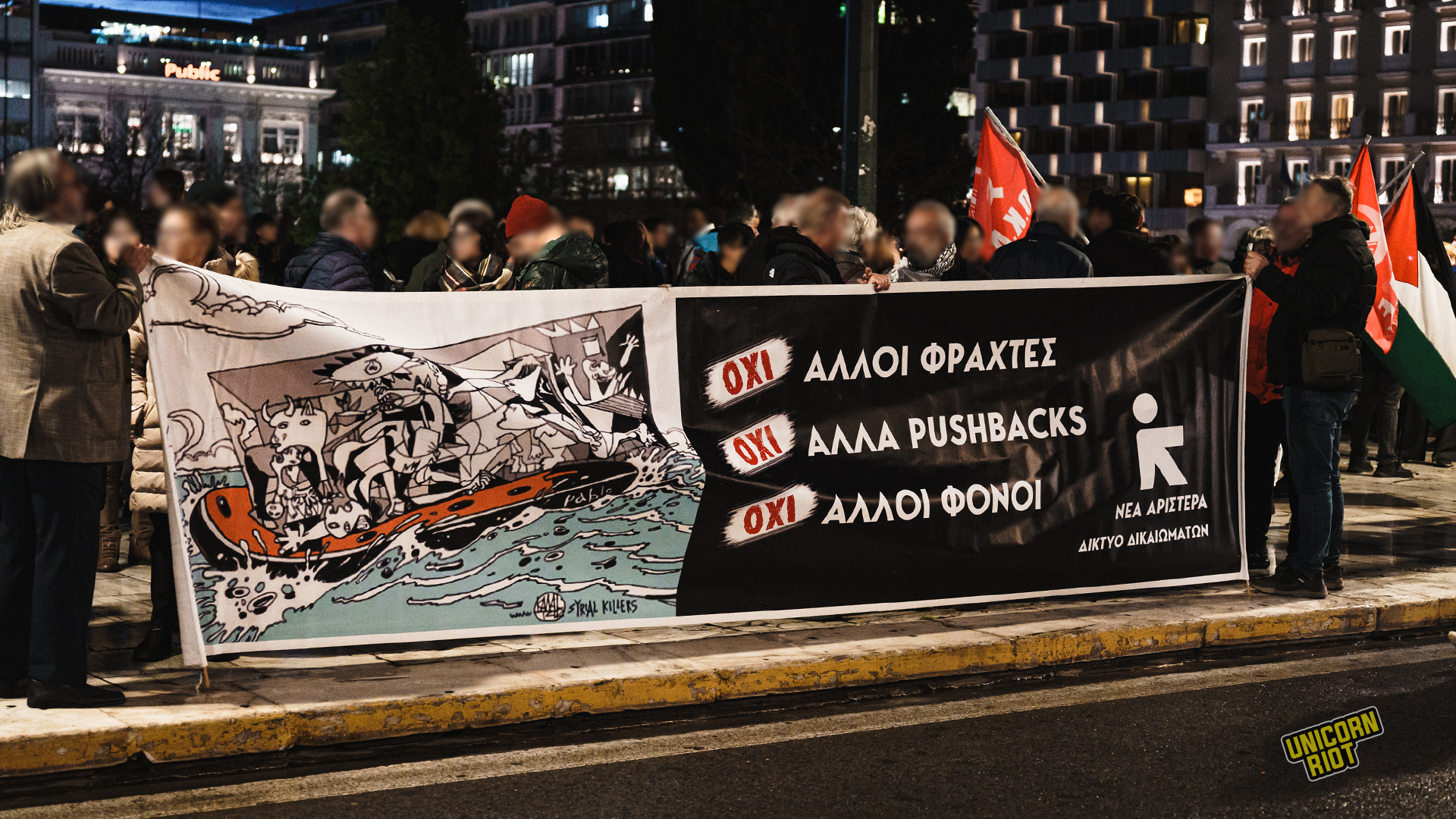
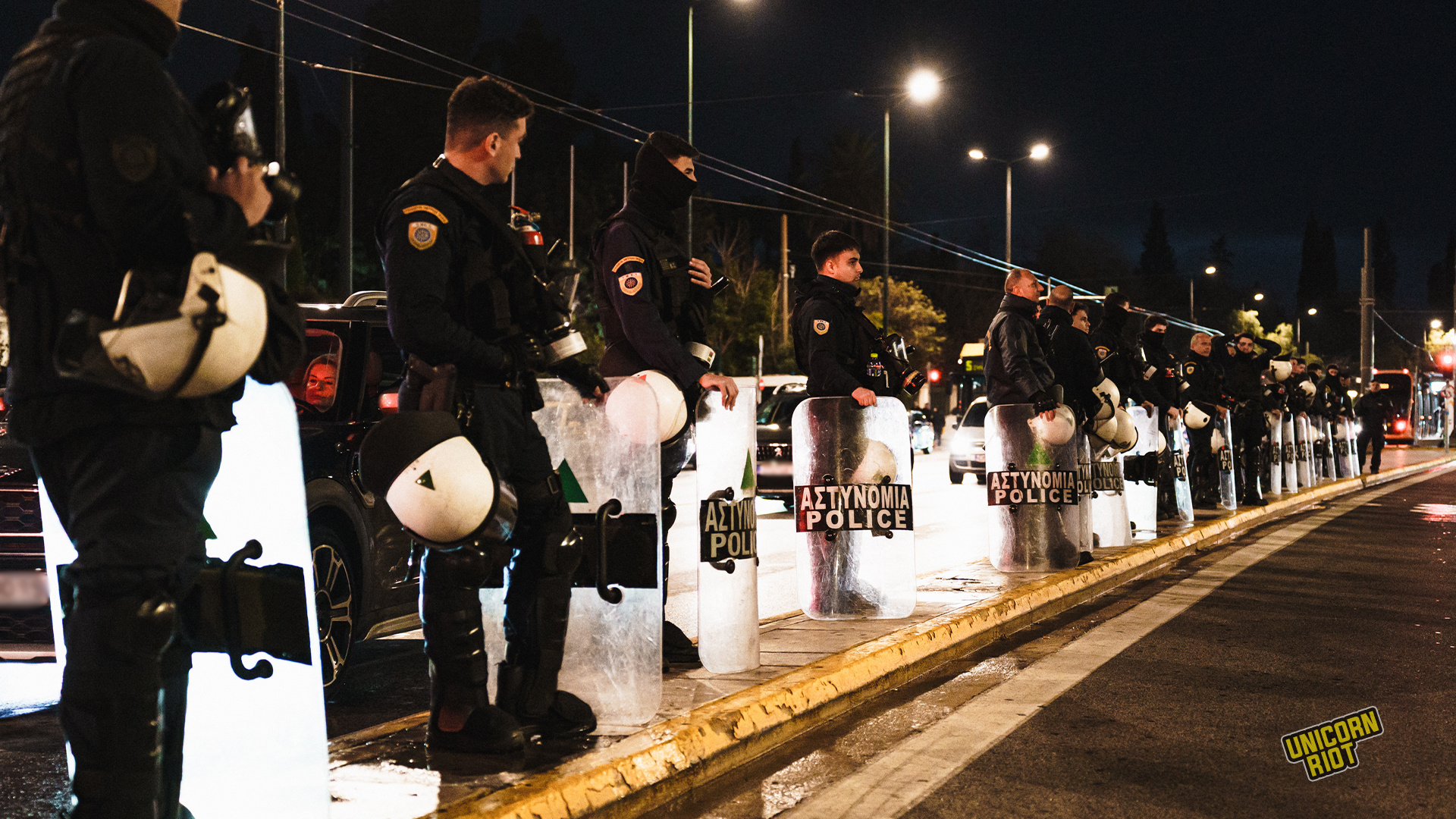
On the evening of Thursday, February 5, approximately 1,000 people demonstrated in central Athens, chanting slogans such as “Open borders for refugees,” “Athens – Minnesota we fight together, against the system that murders us,” “we live together, we work together with the migrants, fight the nazis,” and “government henchman of the imperialists, drowning in the blood of refugees and workers.”
Related stories:
[2023] Greek Seas: Europe’s Largest Migrant Cemetery
[2023] Distress Hotline Volunteer Speaks on 500+ Dead from Pylos Shipwreck
[2024] ‘We Want Justice’: One Year Since the Pylos Shipwreck
For more from Greece, see our archives.
All photos contributed by Romanos Lioutas.
Follow us on X (aka Twitter), Facebook, YouTube, Vimeo, Instagram, Mastodon, Threads, BlueSky and Patreon.
Please consider a tax-deductible donation to help sustain our horizontally-organized, non-profit media organization: