Our Common Language Is Resistance: Life Inside Prosfygika
Athens, Greece — In 2010, a group of residents at the Prosfygika squatted housing complex launched a collectivization process to autonomously respond to mounting social and economic pressure. Inspired by different revolutionary models ranging from Rojava to the Zapatistas, the community has spent the last 16 years developing 22 self-organized structures designed to meet the needs of both its residents and the surrounding neighborhoods.
From the outside, Prosfygika’s eight rows of low-rise buildings look like an anomaly. They stretch along Alexandras Avenue — a broad, six-lane road cutting through the heart of Athens, flanked by towering apartment blocks, offices, and shops.
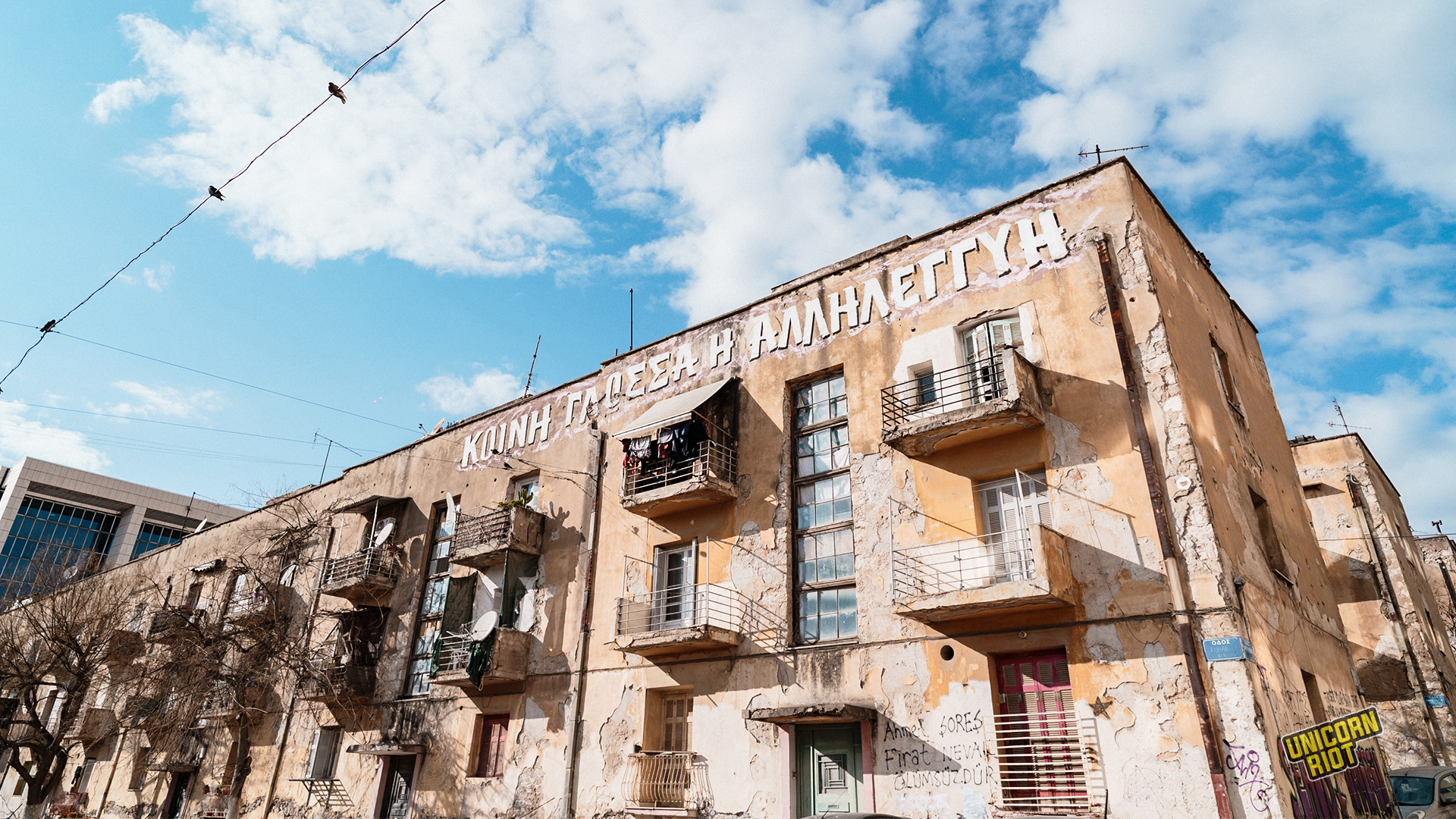
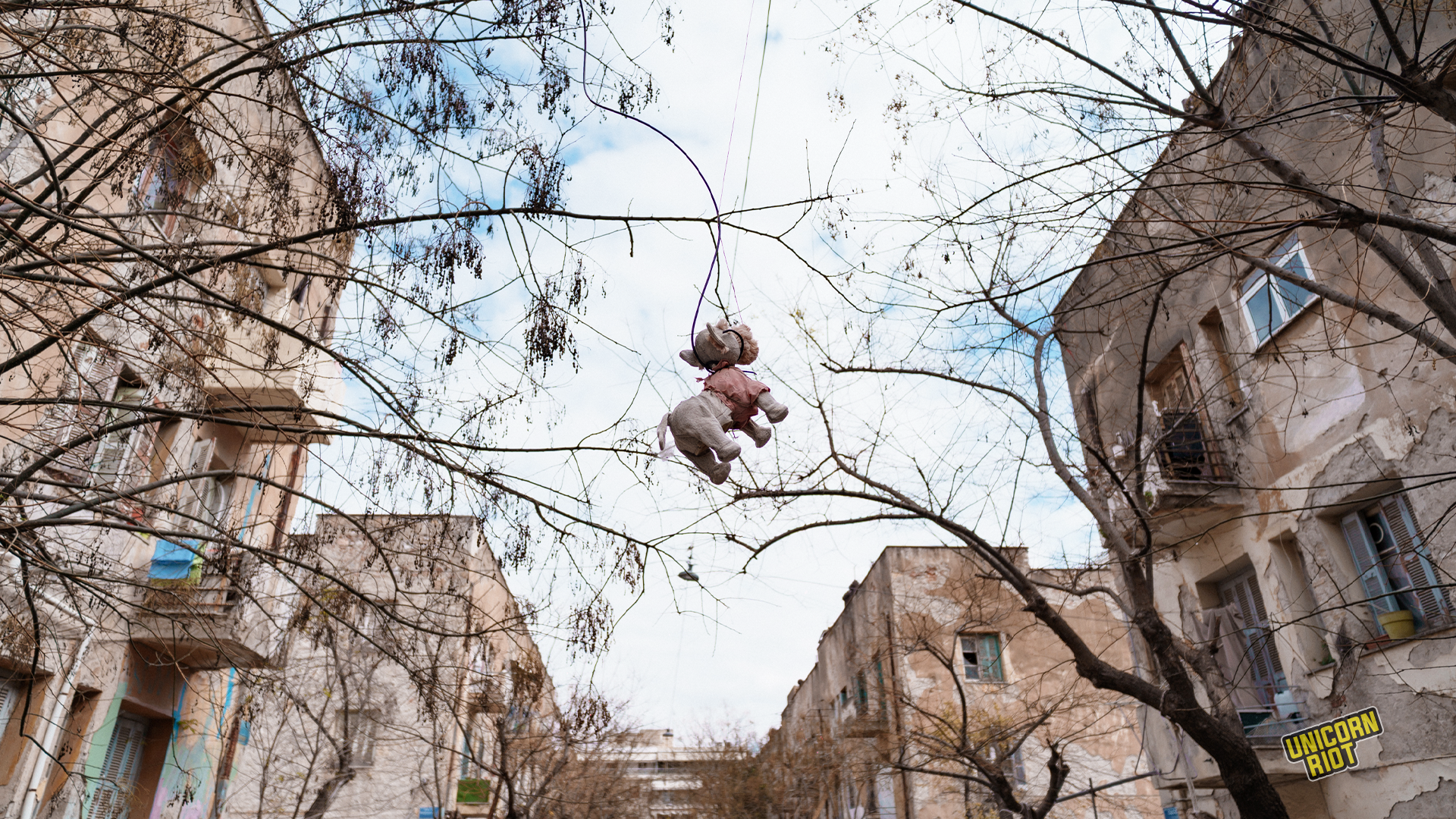
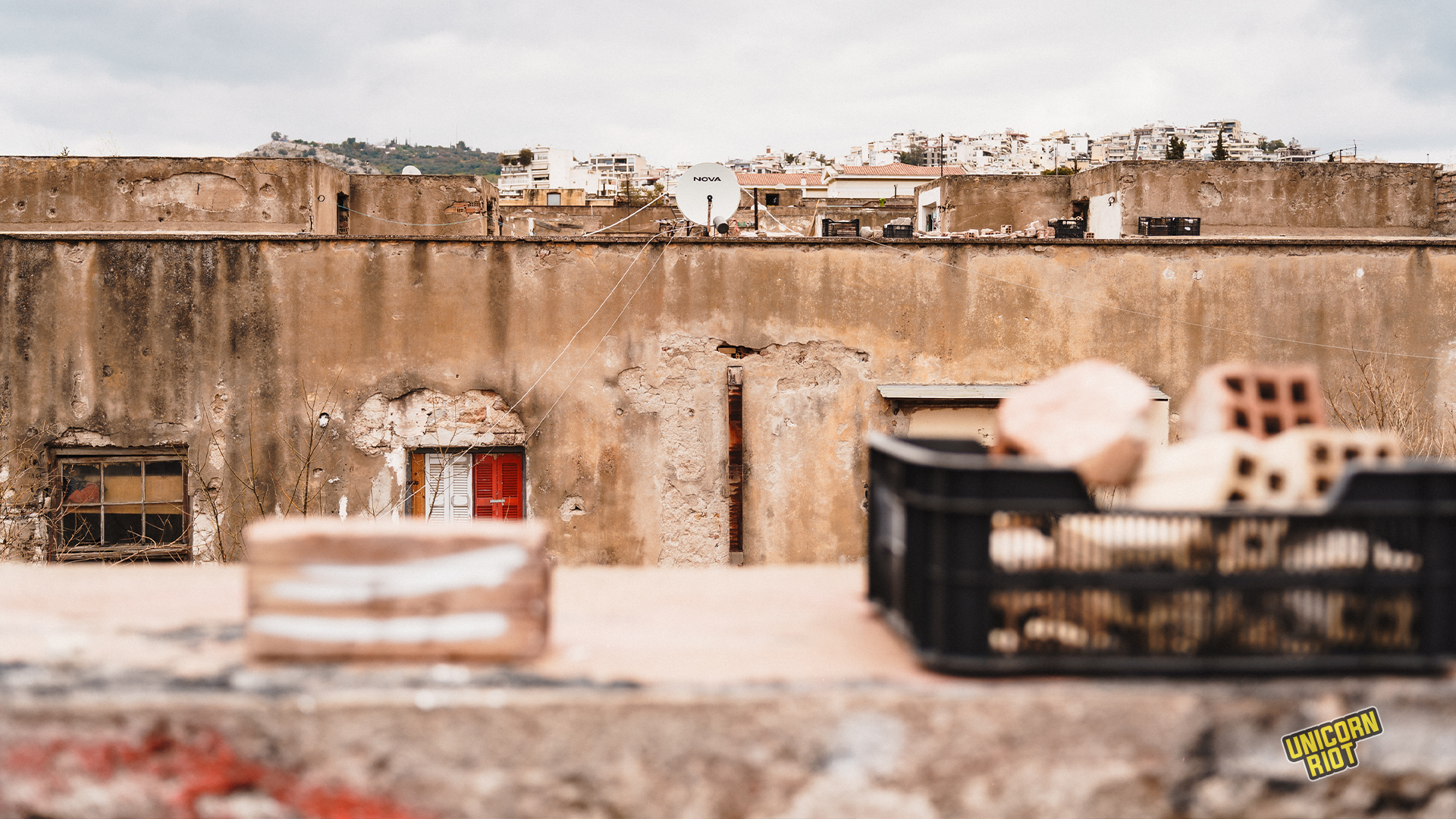
With their squat, rectangular form, narrow balconies, and flaking ochre walls bearing political slogans and the faces of fallen revolutionaries, the buildings seem to have slipped in from a different time and place. They appear as a stubborn entity that consciously refuses to conform to its surroundings.
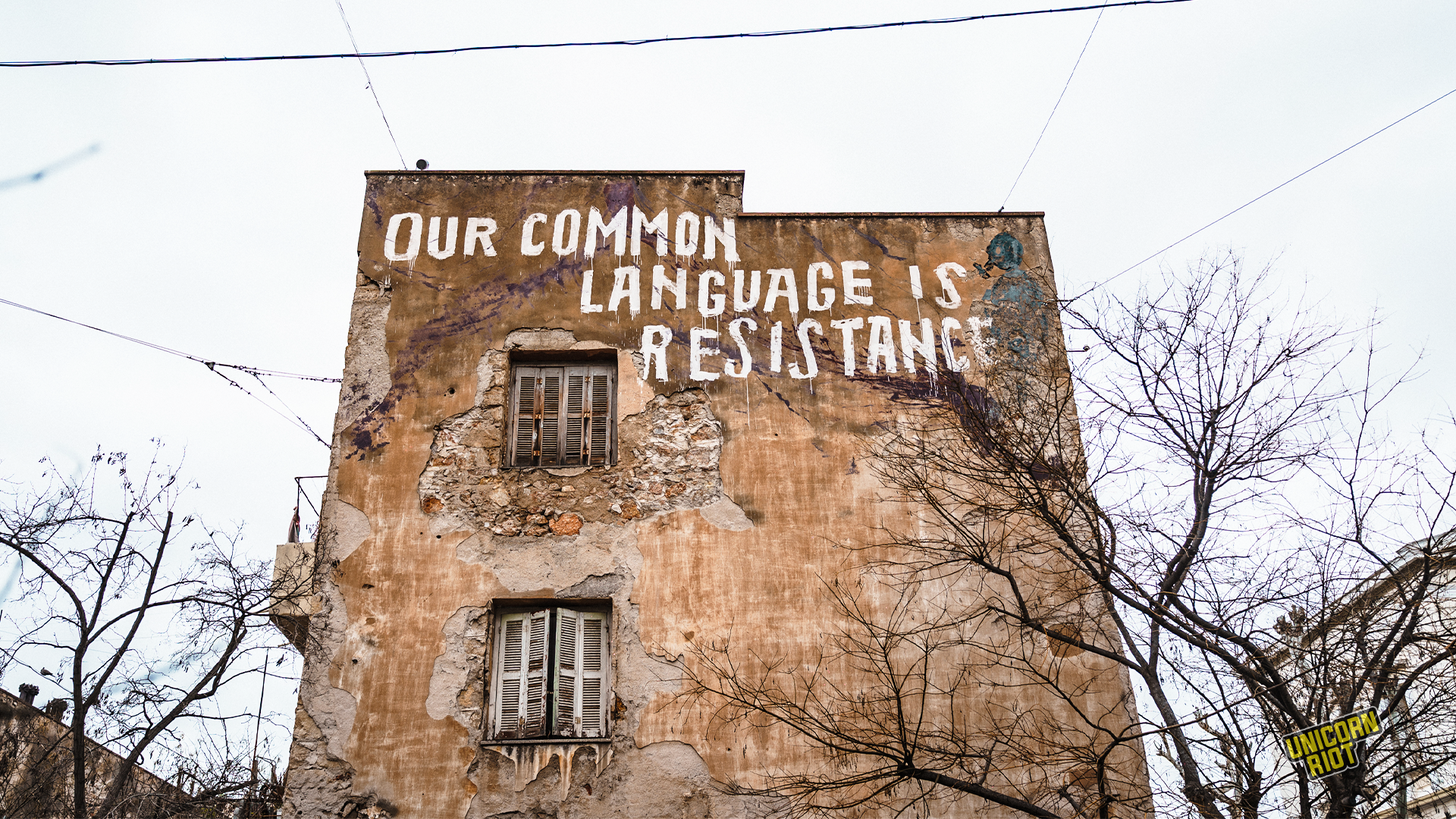
Walking through the lanes and courtyards that thread between the blocks, you eventually come across five words painted in large block letters on a side wall: “Our common language is resistance.” The phrase runs along the top of the wall, positioned to be clearly visible from the imposing government buildings that loom on either side of Prosfygika: the Greek Court of Appeals and the Attica General Police Directorate.
This site indeed has a long history of resistance. Built in the 1930s to house Greek refugees fleeing violence and mass expulsions in Asia Minor, Prosfygika became a stronghold for left-wing militias during the Greek Civil War in 1944. After decades of progressive neglect and predominantly individual squatting, in 2010 the complex became the foundation of a radical experiment in communal living — one that today faces its most serious threat yet.
Between late 2025 and early 2026, reports began circulating about a regional “regeneration and development” plan targeting the complex. According to emerging information, the €15 million project is set to be handed to a private contractor, and would convert the buildings into social housing units and a hostel for relatives of patients at the adjacent oncology hospital.
For Prosfygika’s residents, this means an eviction that would leave hundreds of people homeless — people with a wide range of vulnerabilities, for whom the private rental market is effectively out of reach.
To understand what is at stake here, it helps to grasp what has been built. Beyond Prosfygika’s walls lies something far more ambitious than a mere housing project: a living demonstration that an alternative way of organizing daily life is not only possible but already underway. This is precisely what the eviction plan is willing to erase.
Choosing to Become a Community
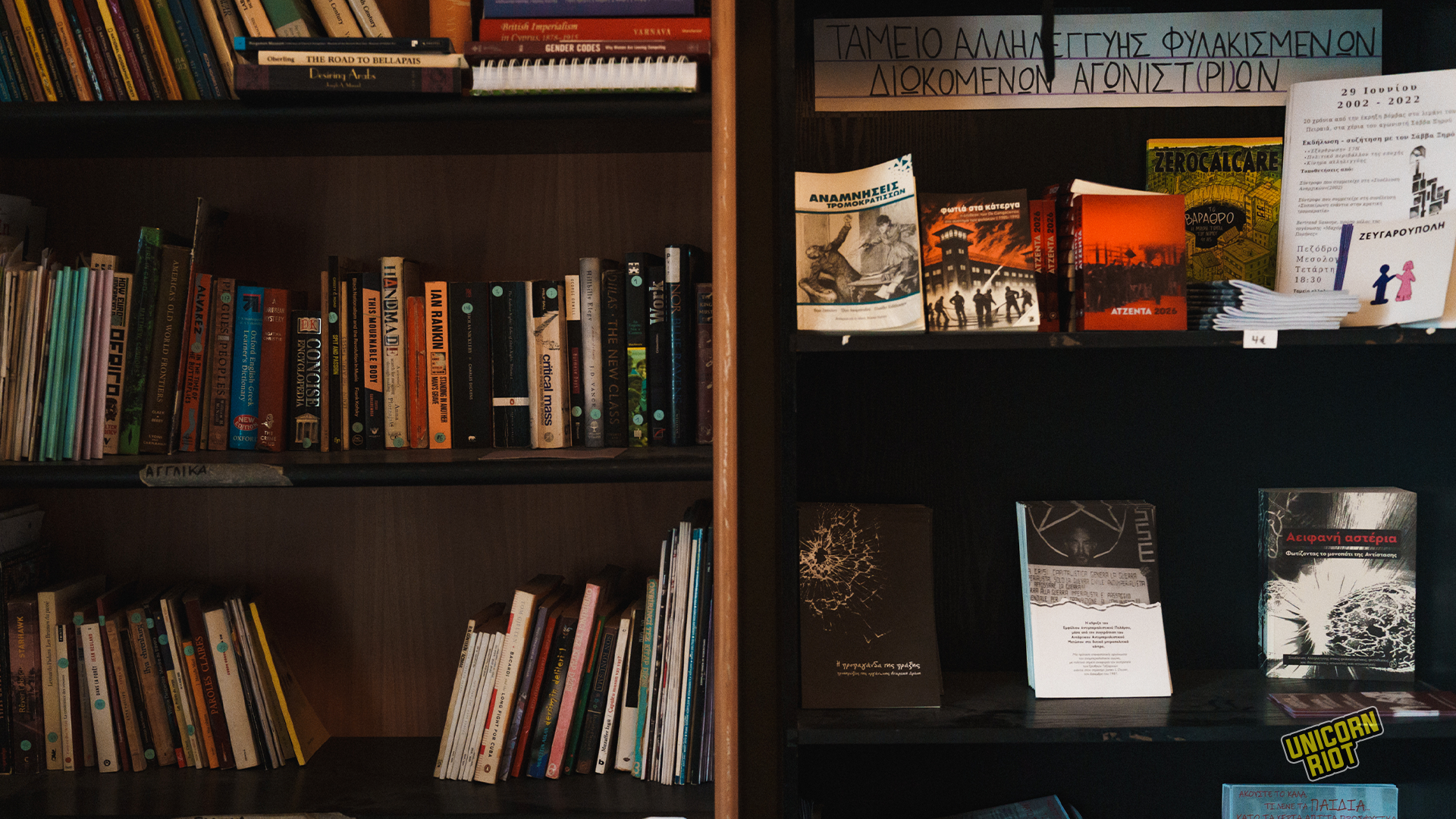
The social center, one of Prosfygika’s beating hearts, sits on the second floor of one of the buildings in the first block. Its walls are painted in pastel shades, its window frames in vivid red. One of the side rooms has been set up as a library and space for self-education, with shelves lined with books in multiple languages and outreach materials produced by other collectives and political groups.
Suzon and Venetia, who have been members of the community for five and three years respectively, are seated at a large table in the main room. It is here, around this same table, that residents gather every week for the general assembly.
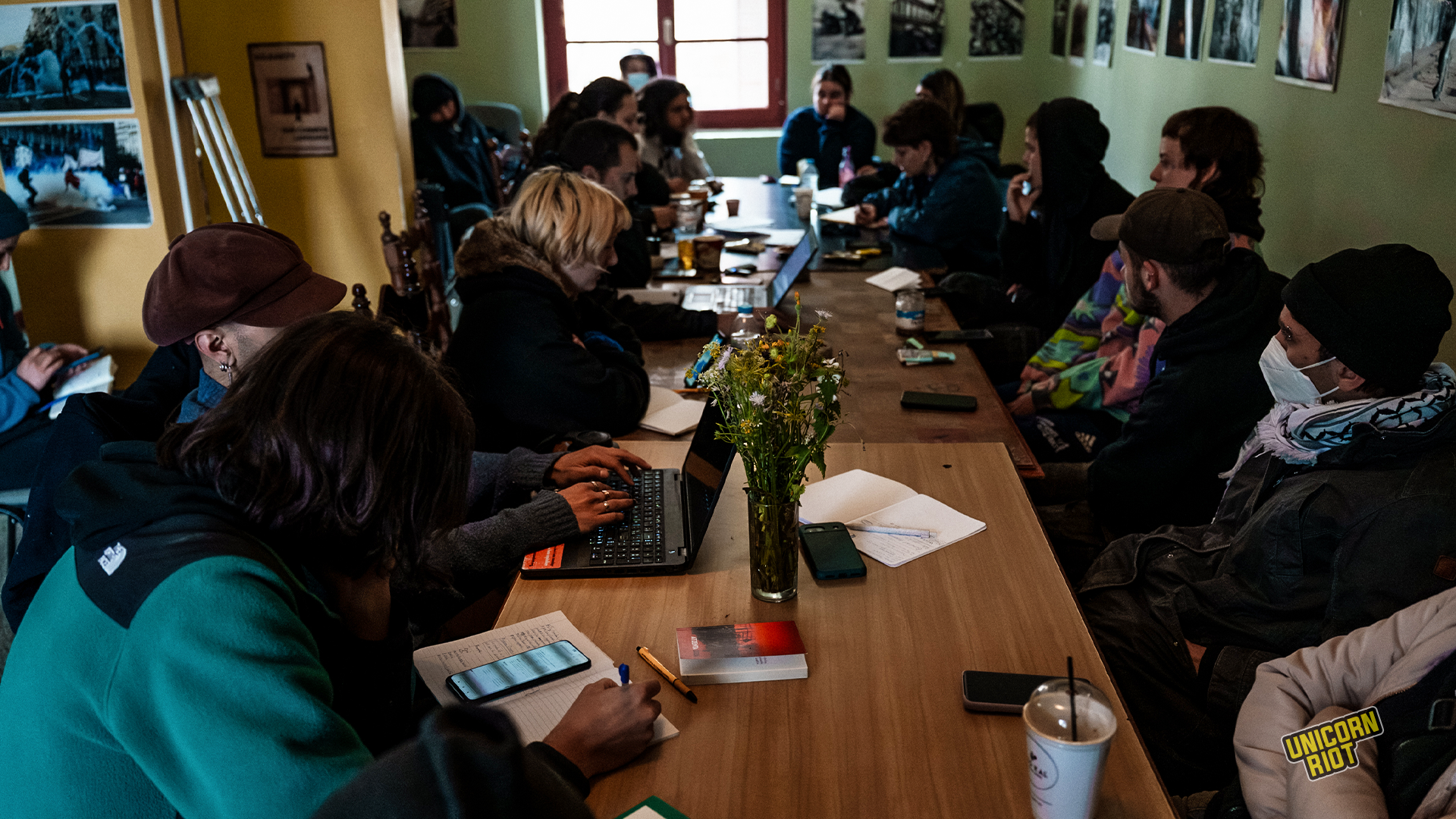
Venetia explains that the Community of Squatted Prosfygika (SY.KA.PRO) was formally established in 2012 on the basis of a three-point collective agreement.
“First, we agreed that everything in this neighborhood, including the houses, would become common property. Then, there was the question of the drug mafias, which were everywhere at the time. In 2012, a significant part of our struggle was kicking them out of the neighborhood. The third agreement addressed violence between community members, which was strictly forbidden.”
Out of those three pillars emerged what the community calls its “statute framework.”
“Since then, our model of functioning has been based on the self-organized structures, built around the needs expressed by the community,” Venetia continues. These structures form a system of essential services that are collectively and autonomously managed, without delegating to institutions or the market, and adapt over time as the community evolves.
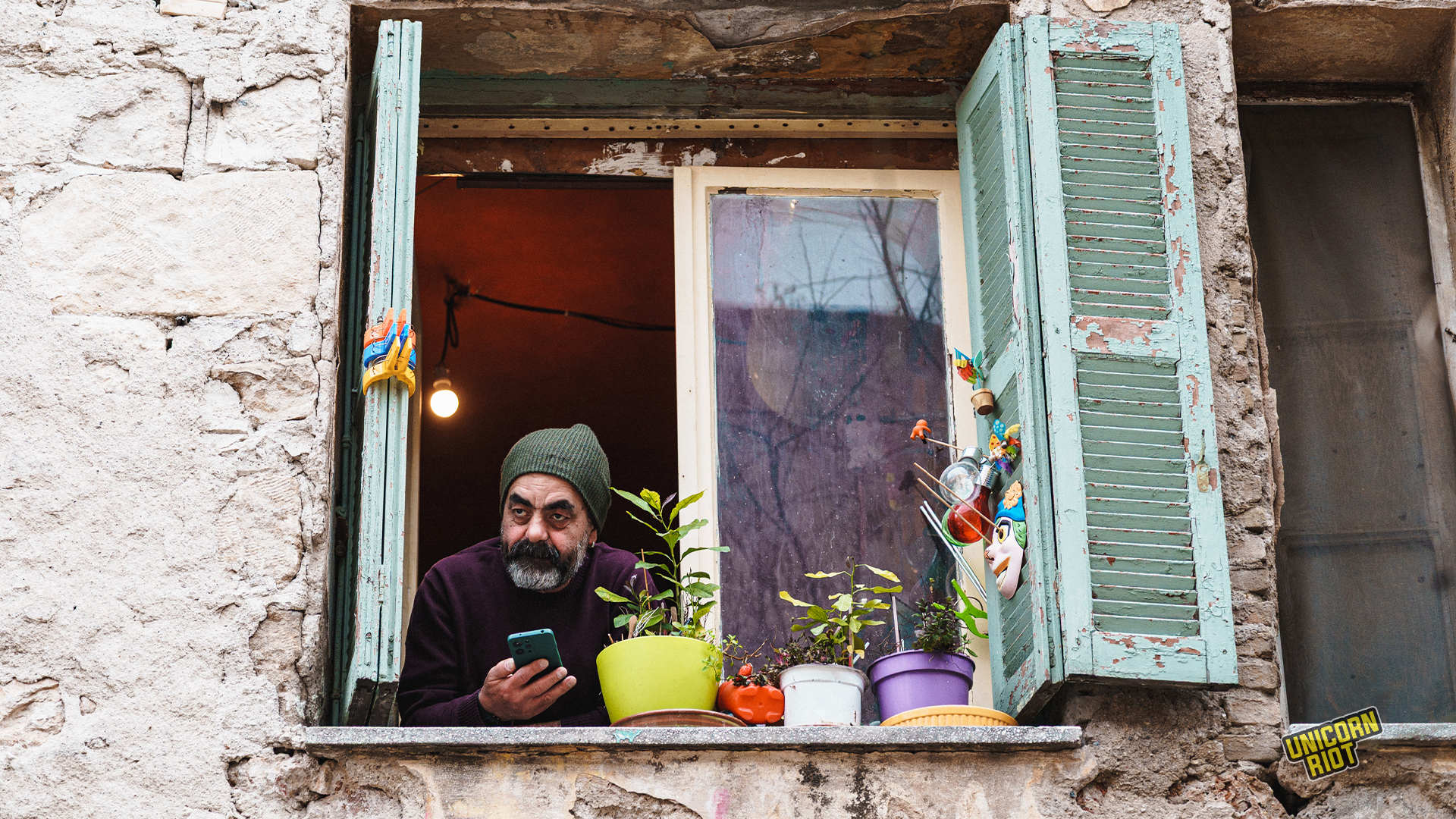
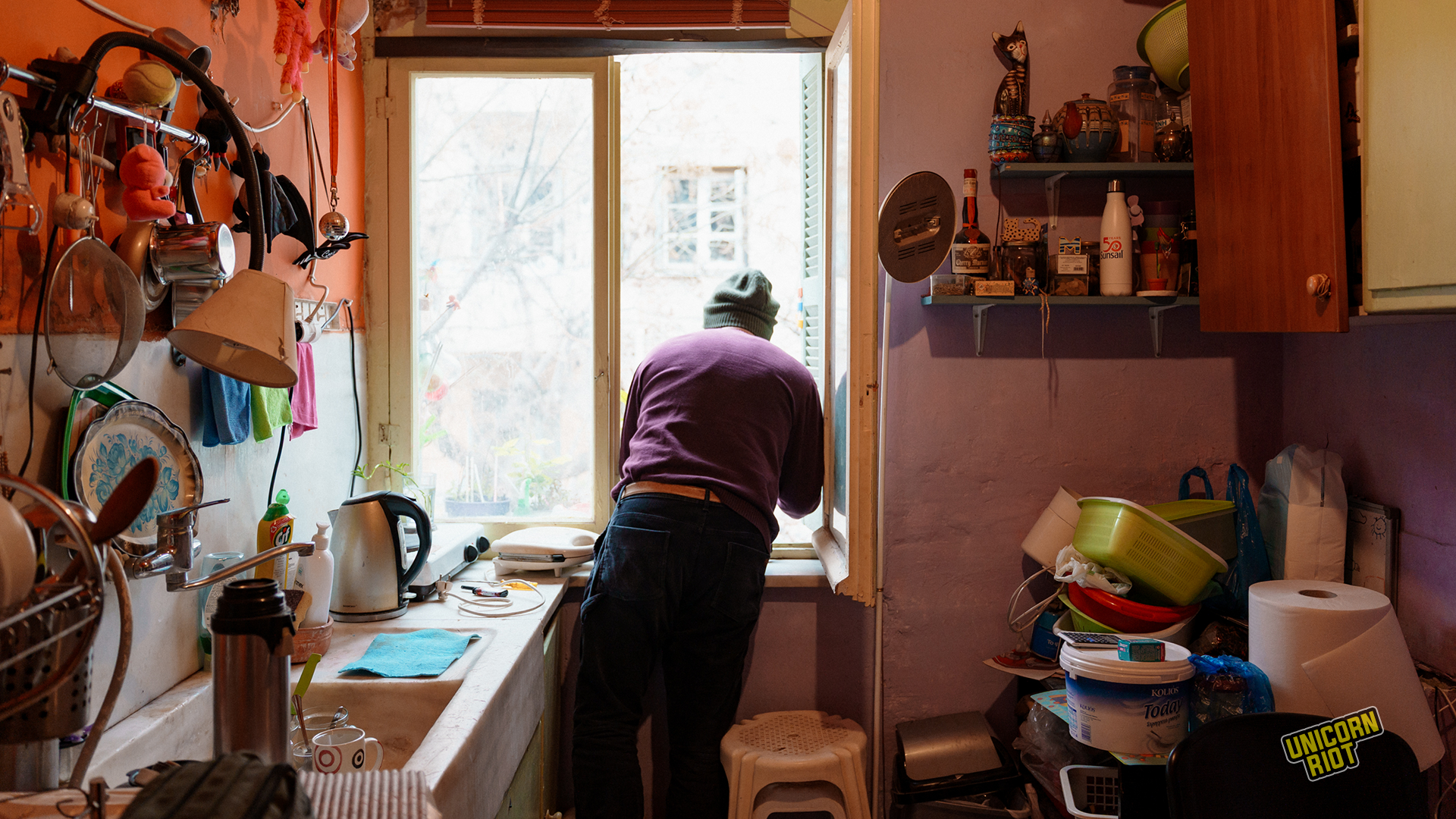
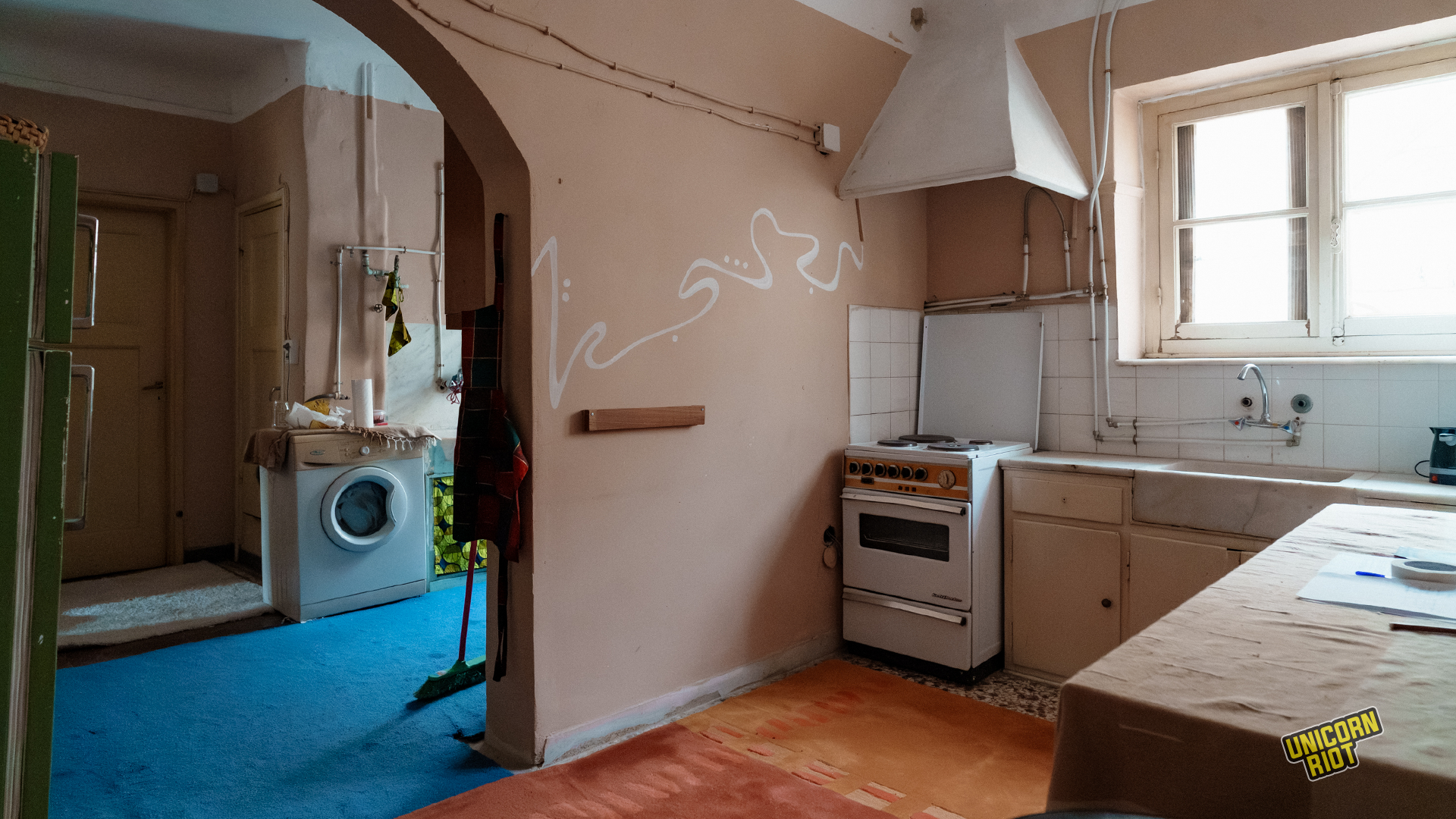
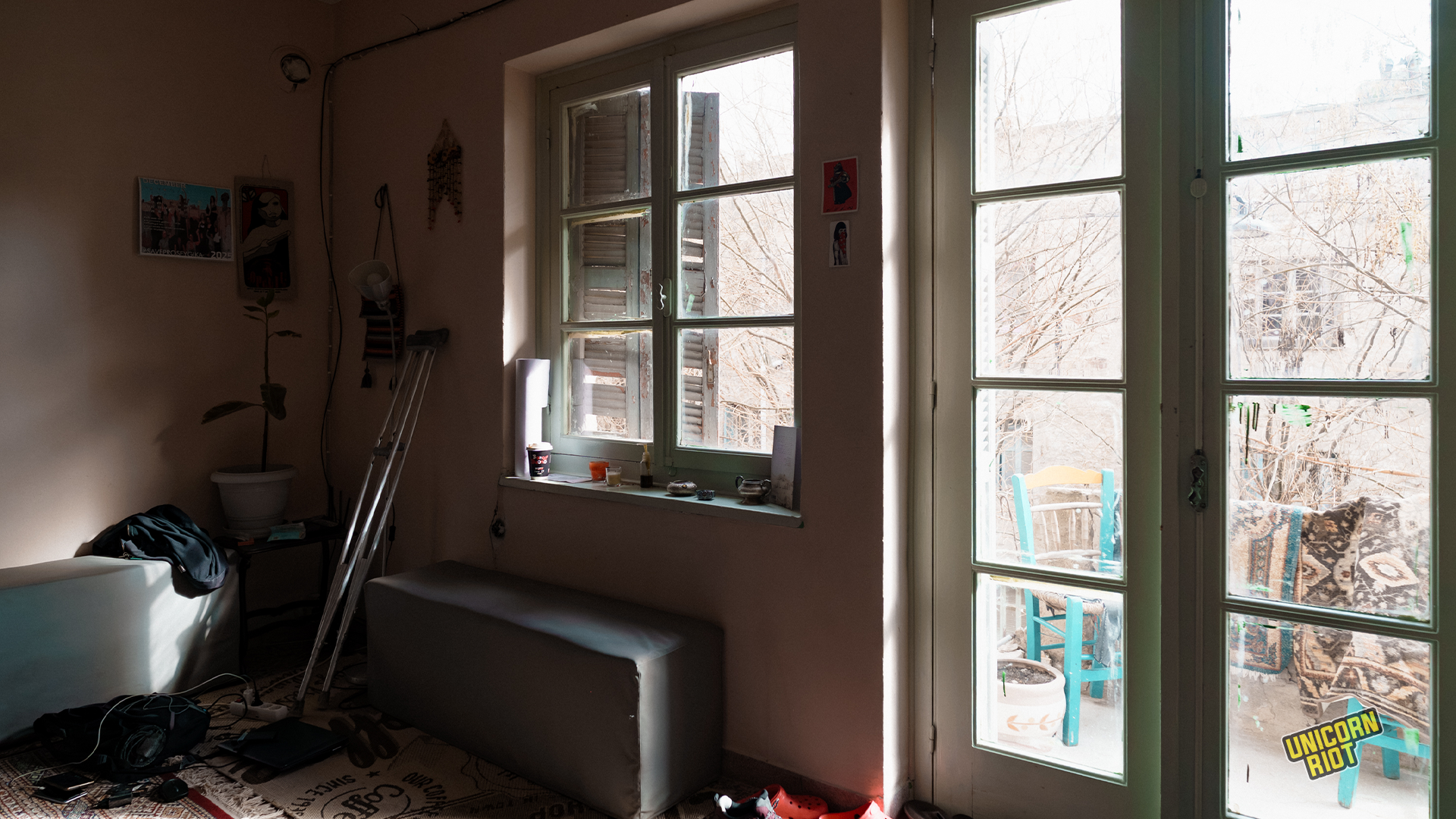
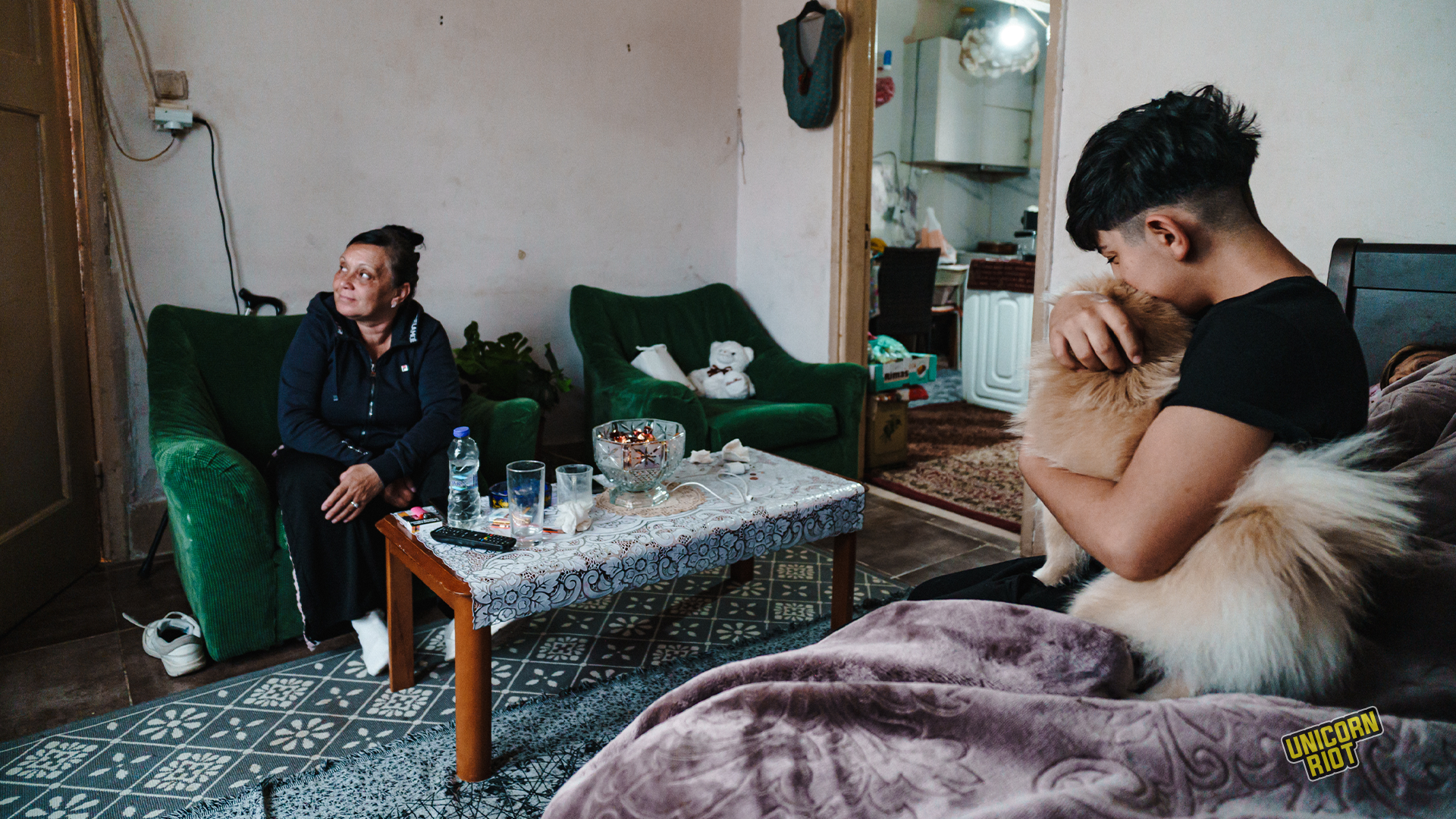
Today, Prosfygika is home to around 400 people from 27 countries, spanning a wide range of backgrounds, ages, and life circumstances: families, single residents, single-parent households, full-time workers, elderly people, and those living with disabilities or chronic health conditions.
“It’s a continuous process of coming together despite our differences in culture, religion, and language,” Suzon adds. “It was a conscious decision from the beginning. It didn’t just magically happen. We chose to be a community and built it over time. It’s been a process involving everyone passing by, even temporarily, each with their own needs and skills. And this is our political and social proposal: a new, adaptable and self-organized model of coexistence.”
From Rojava to Prosfygika
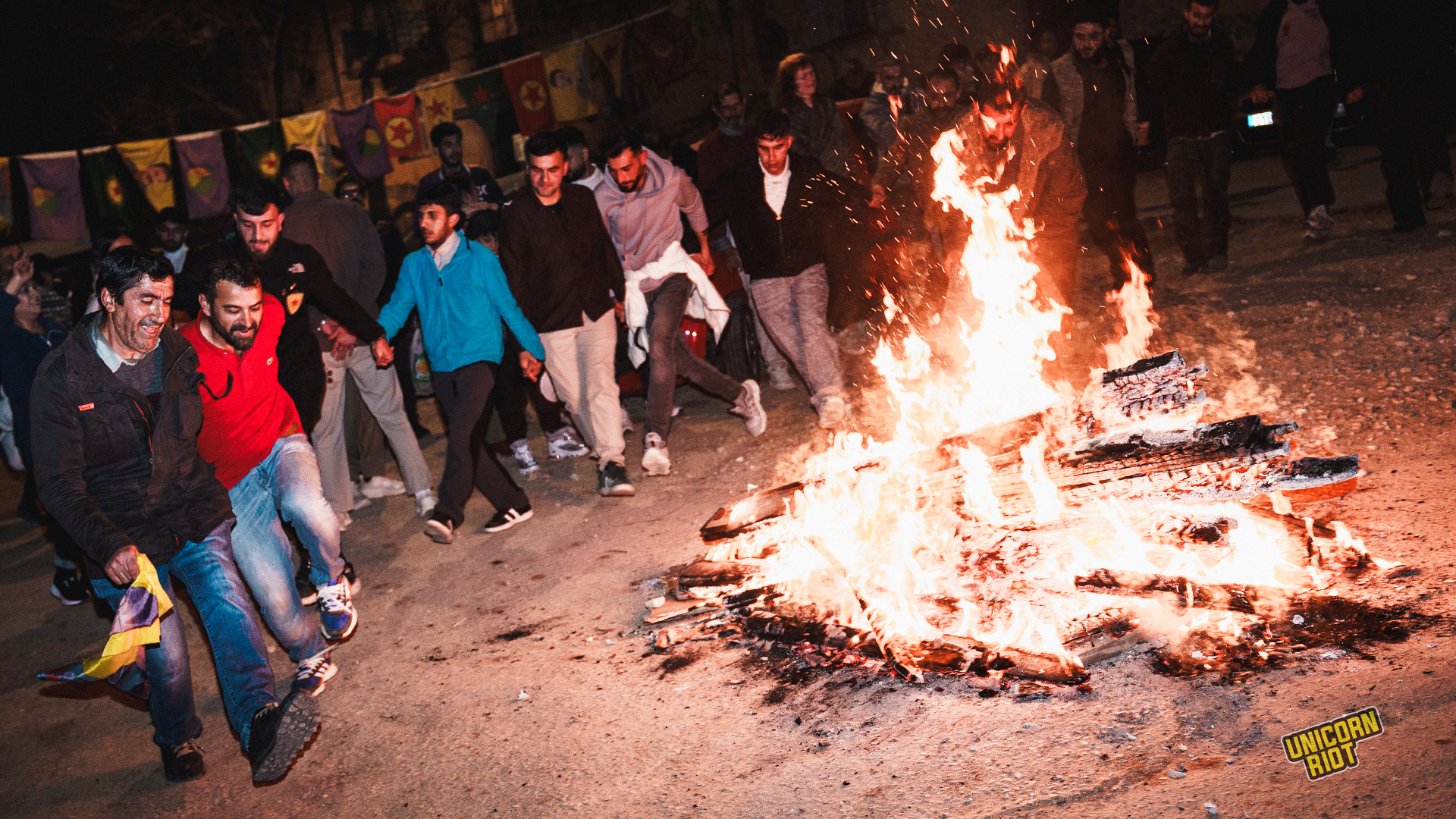
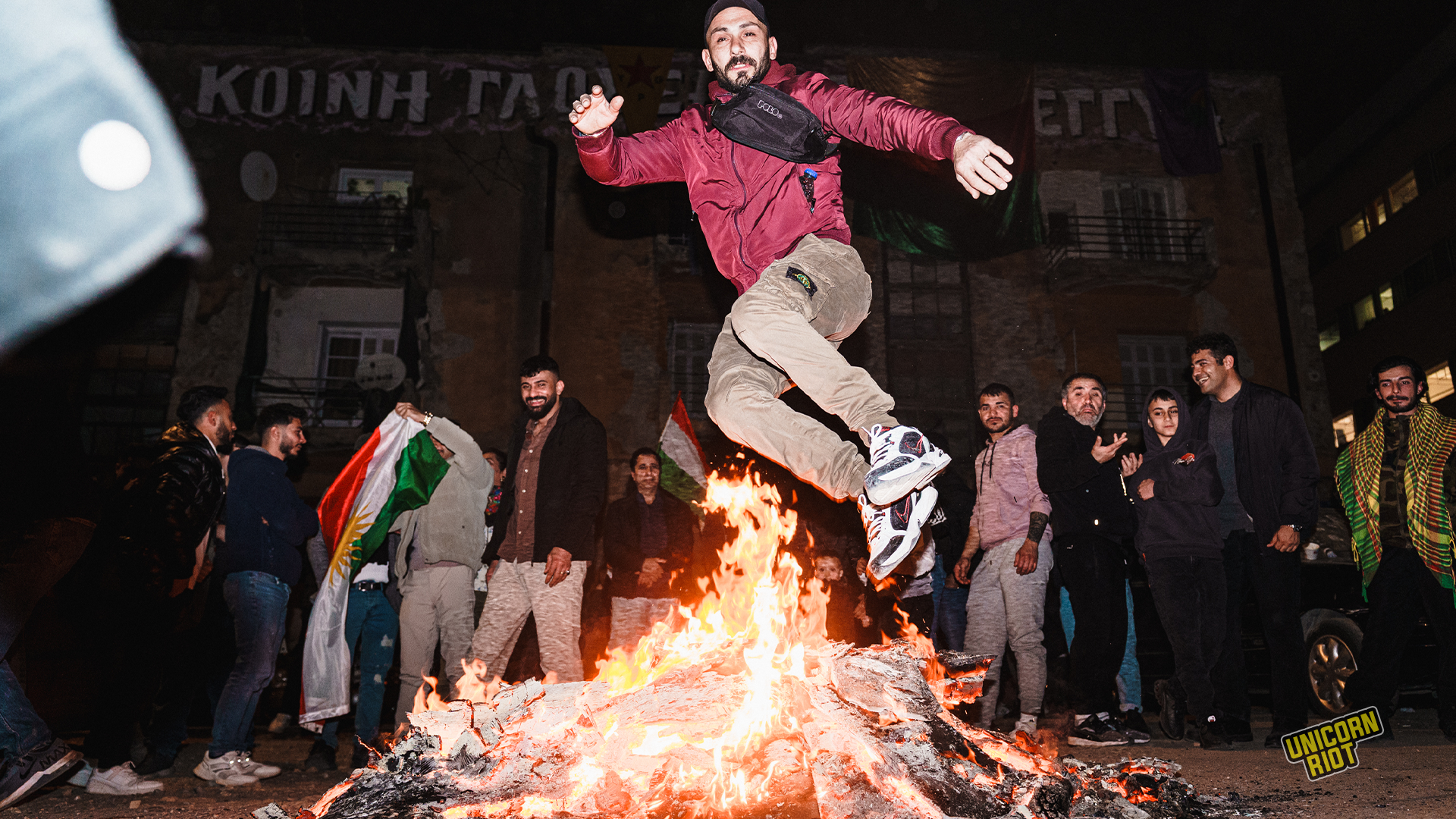
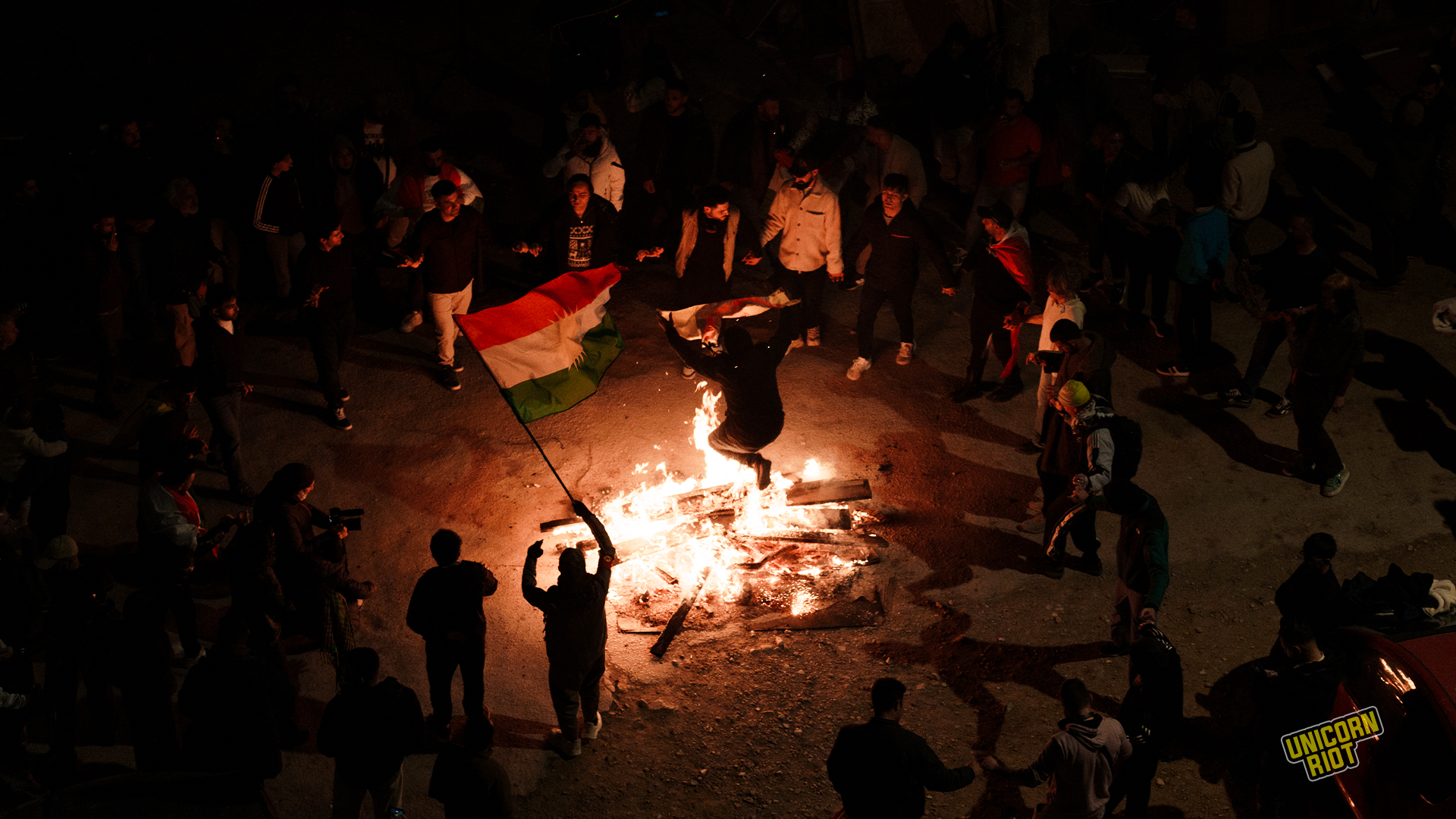
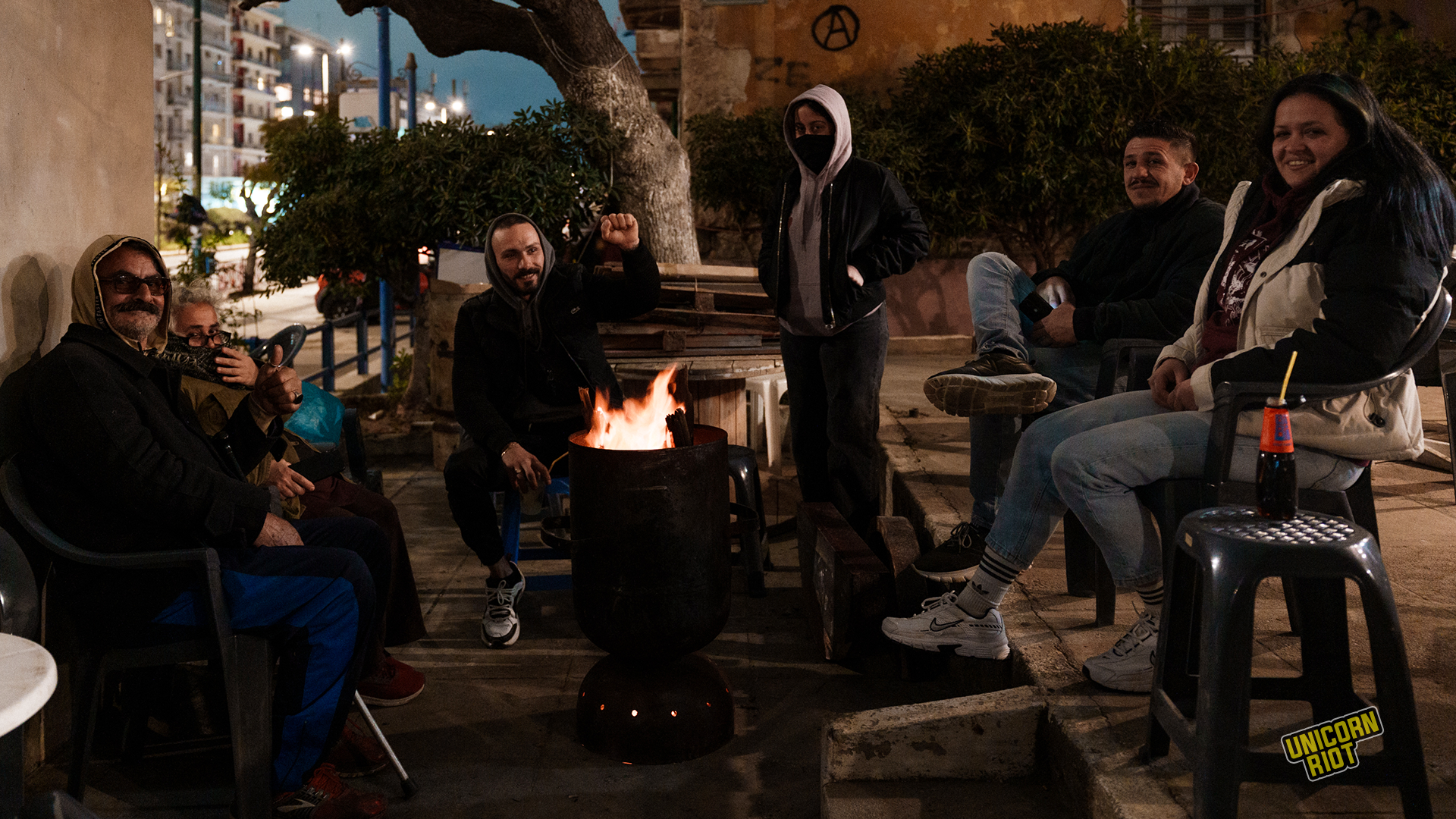
In late March, the entire community gathered around a large fire lit in the courtyard between the first and second blocks to celebrate Newroz, the spring equinox that marks the Kurdish New Year. The songs, the dancing, the Kurdish flags waving in the evening air all speak to a deep and living connection between Prosfygika and Kurdistan.
“In 2015, one of the first members of the community started to travel to Rojava to defend its revolution by joining the RUIS brigade,” Suzon recounts, referring to the Revolutionary Union for Internationalist Solidarity.
“It was a step forward for the community because the comrade who went there could observe and learn,” she continues. “There were many similarities between the organizational model we were implementing in Prosfygika and the Rojava model. Since the comrade returned, we have acknowledged that we are using the confederalist model. But we didn’t simply apply it here as it was. We observed and adapted the elements that could work in our own reality.”
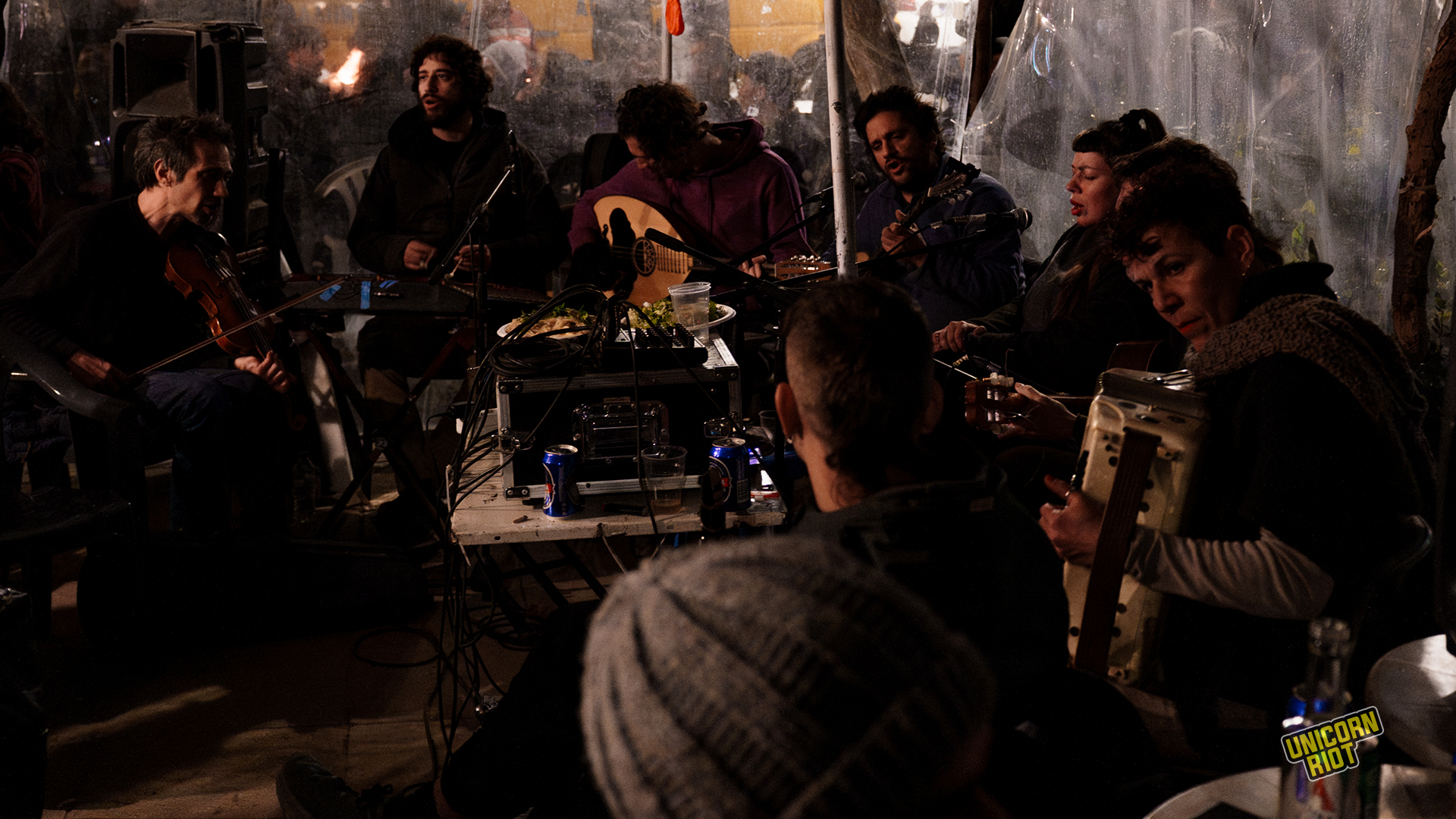
Apo, who has been part of the community for around 11 years and has decades of experience with political organizing in Turkey, takes the argument further. “It’s important to look at the origins of confederalism. That’s why Prosfygika combines different elements, taken from the Zapatistas’ experience too, and tailors them to our specific context and needs.”
In practice, this translates into an interlocking weekly rhythm of activities. The general assembly meets every Monday to discuss all matters related to community life. Every Friday, a working group convenes to implement those decisions. Additional task-specific working groups are formed as needed, such as to organize an event or coordinate a particular project.
Every two years, a review assembly is held.“We could say it’s our congress,” Suzon says.“It’s a review process of the past years, involving criticism and self-criticism, as well as decisions about the community’s future direction.”
Woven into this system are the 22 self-organized structures that form the community’s backbone. Each addresses a distinct area of need — food, education, clothing, healthcare, animal welfare, and more — while operating with its own assembly, agenda, and budget. All decisions, however, remain anchored to the community’s overarching statutory and collective guidelines.
Politicizing Bread
“As food is the most basic necessity for survival, one of the first structures to be set up was the bakery,” Venetia says.
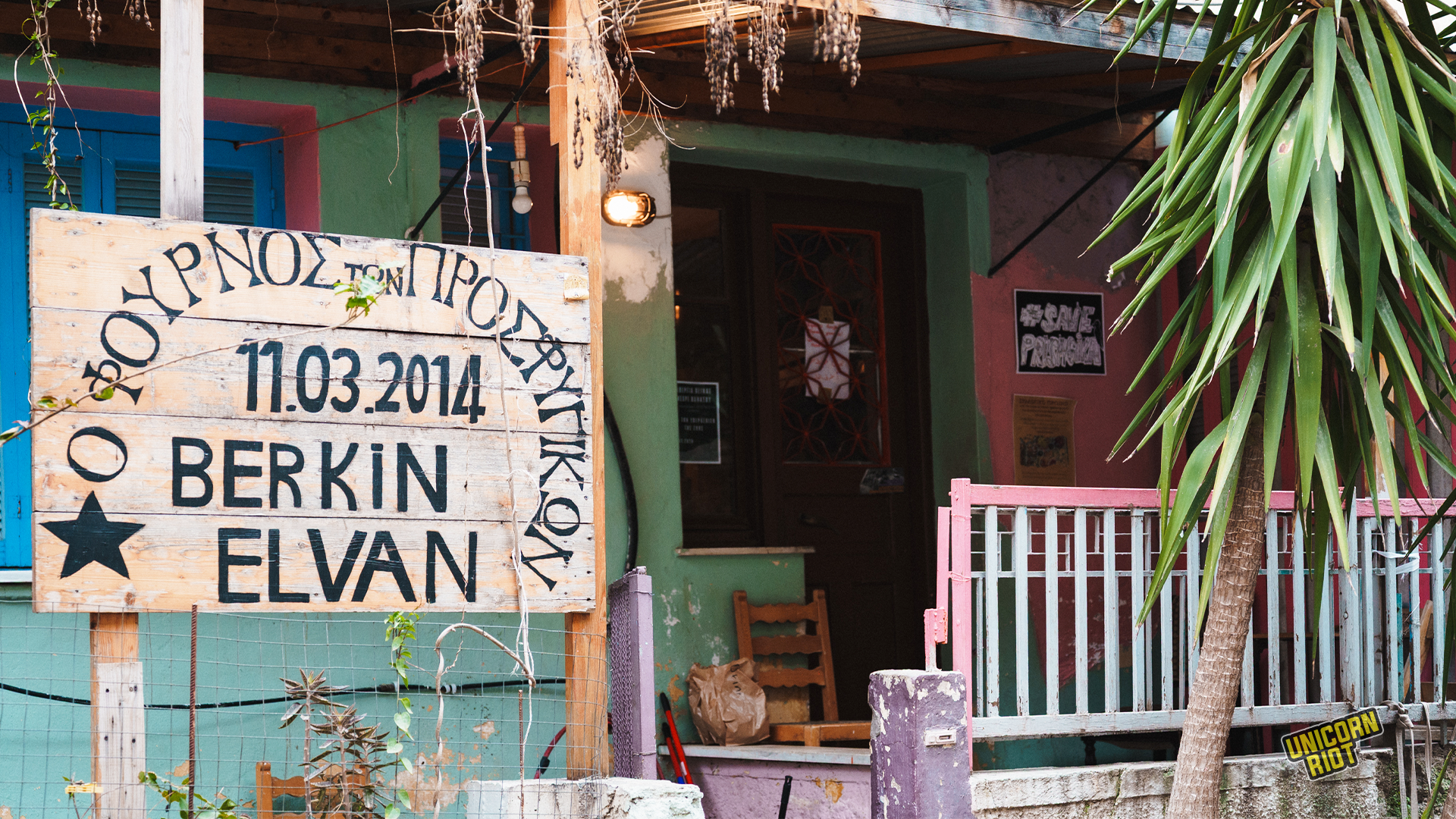
The Bakery Structure is located in the last row of buildings and is named after Berkin Elvan, a 15-year-old Turkish boy killed by police during the 2014 Gezi Park protests.
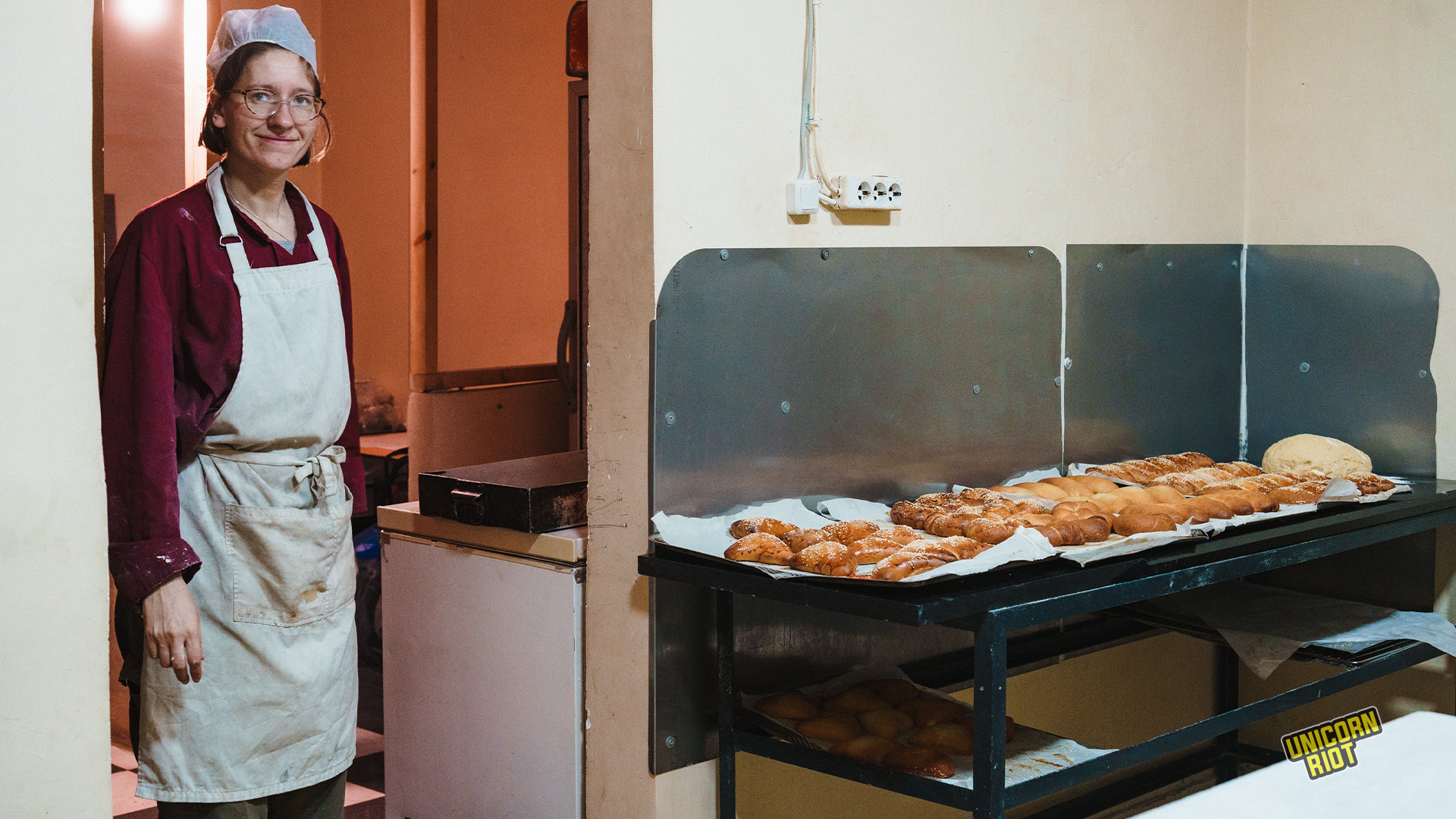
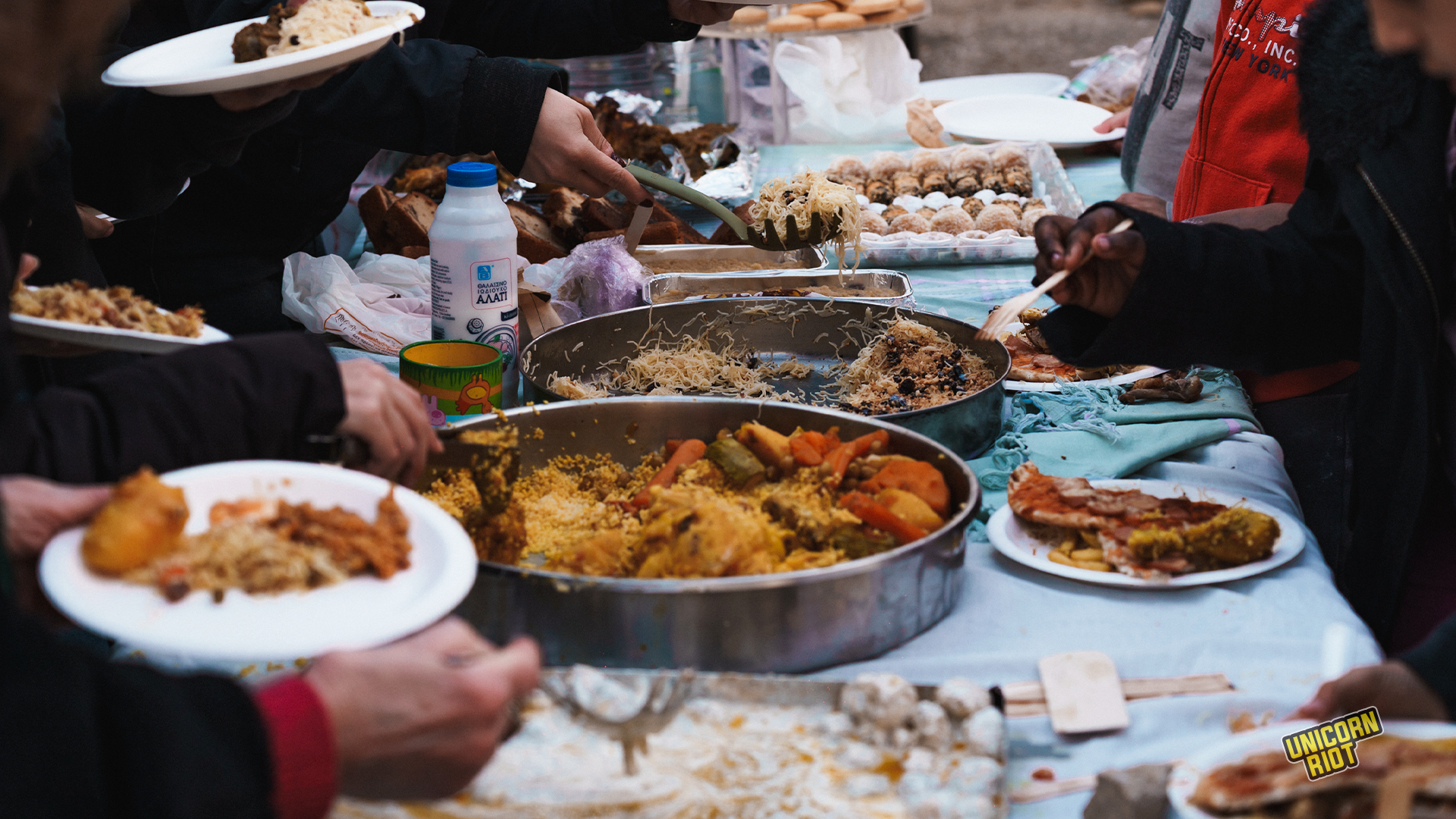
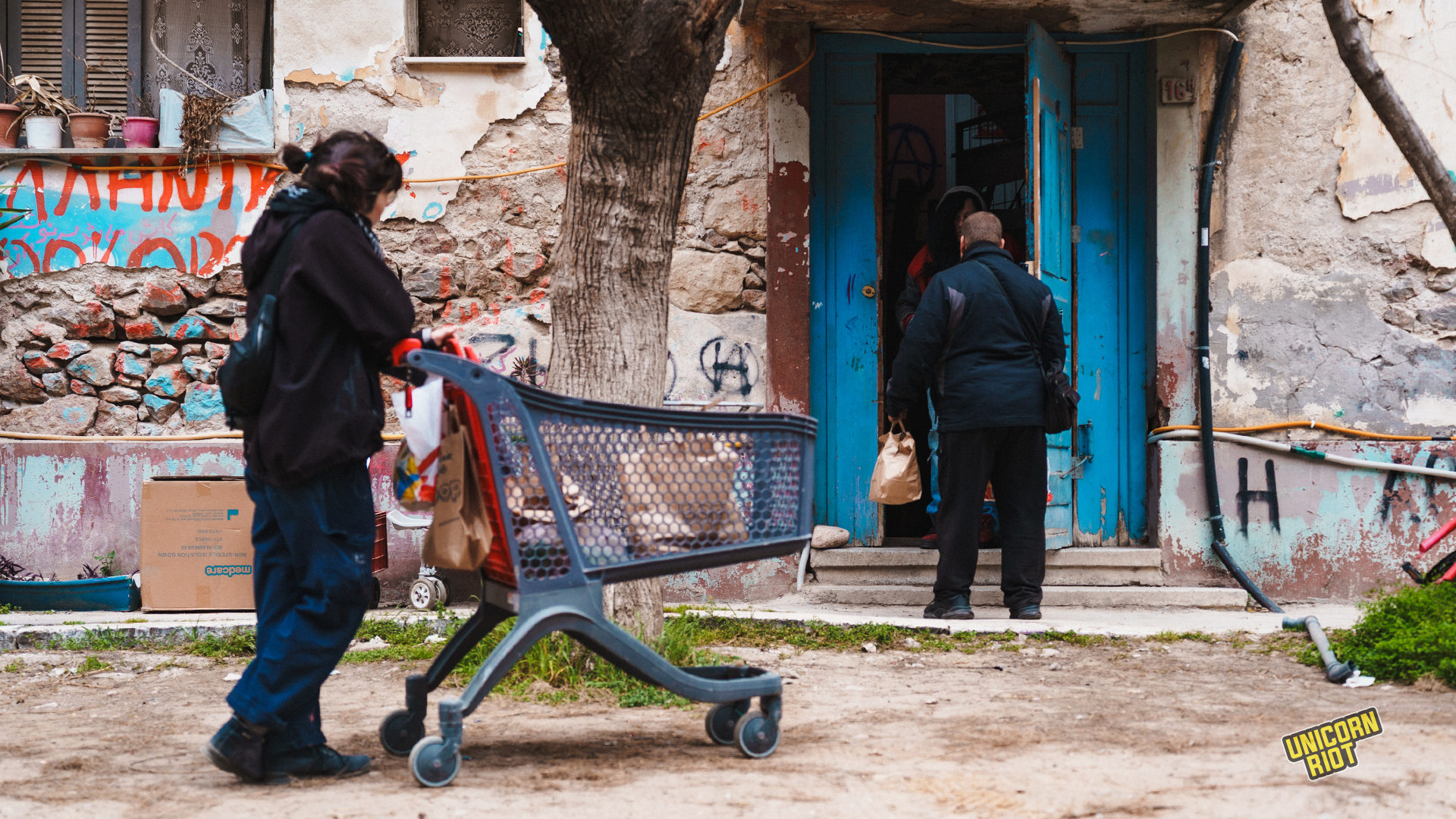
Ali is one of the founding members of the structure. He is sitting under the small wooden porch outside the space where bread and baked goods are prepared each morning. He recalls that the bakery emerged from an immediate need: in the early years of the occupation, many residents were out of work and couldn’t afford food. A group of visiting French comrades funded the launch, purchasing ten household ovens. From that point on, the structure steadily expanded.
But alongside the practical concern, a political matter quickly surfaced. “We had a long discussion about the price of bread,” Ali explains. “We decided to sell it cheaper than outside, just to cover the production costs and support the community. But the bigger question was: what if somebody needs bread and doesn’t have money? And the community decided to give bread for free, if needed.”
That decision turned the bakery into something far beyond a mere service. “As a community, we are politicizing bread,” Ali continues. “If we didn’t do that, we’d just be a closed circle. We are trying to collaborate with external shops, build relationships, and engage in criticism and self-criticism, so that we can establish political ties and spread our ideas.”
Elo steps out of the kitchen carrying a small plate of cheese and vegetable pastries, freshly baked in the morning, which she sets down on the table under the porch. She is part of a German collective that has maintained a continuous presence at Prosfygika since 2020, with members visiting and staying on a rotating basis. For her, the bakery activities are inseparable from a daily practice of mutual familiarity.
“The people who come here know the rule: if you have money, you pay, and support the community financially. If you don’t, you ask, and you get bread for free. This system works because we try to get to know each other, not only within the community. We speak with everyone who enters the bakery, to understand who they are, what they need, what they’re going through.”
The baked goods themselves are also a way of making intercultural coexistence tangible. Alongside traditional Greek recipes, the bakery has gradually incorporated Syrian, Kurdish, and other preparations, reflecting the community’s ever-shifting composition.
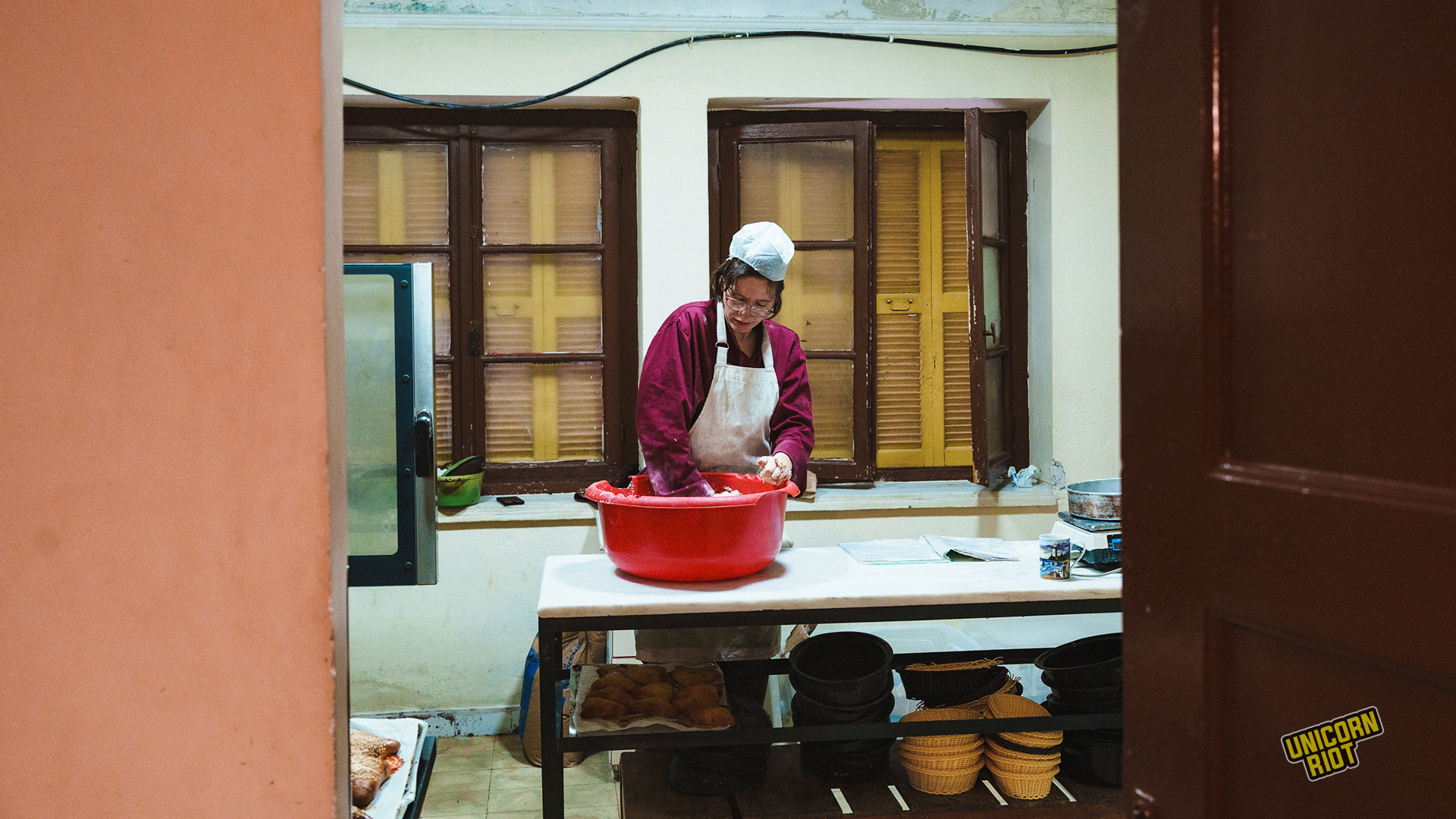
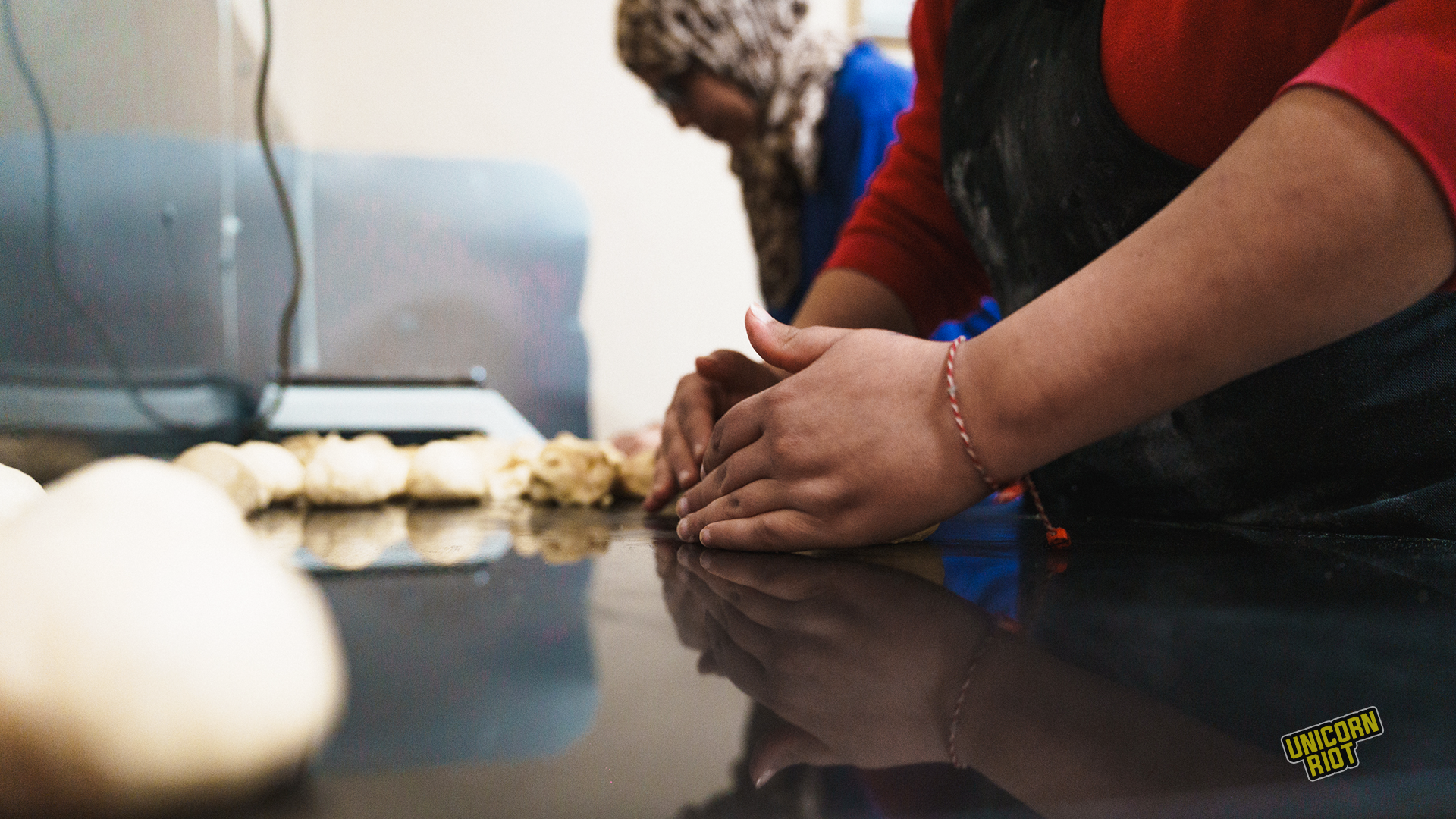
Elo recalls an image from the time before the bakery had its current equipment, remembering “six or seven people kneading one big dough with their hands, all together.”
“I think this structure mirrors what communal growth really is,” she reflects.
That collective physicality still shapes the space and carries a subtle political charge. “Working together in the bakery helps us learn how to give each other constructive criticism on very simple things,” Elo continues. “And it helps us learn how to communicate, although we have different backgrounds and sometimes don’t even speak the same language.”
Building Autonomy
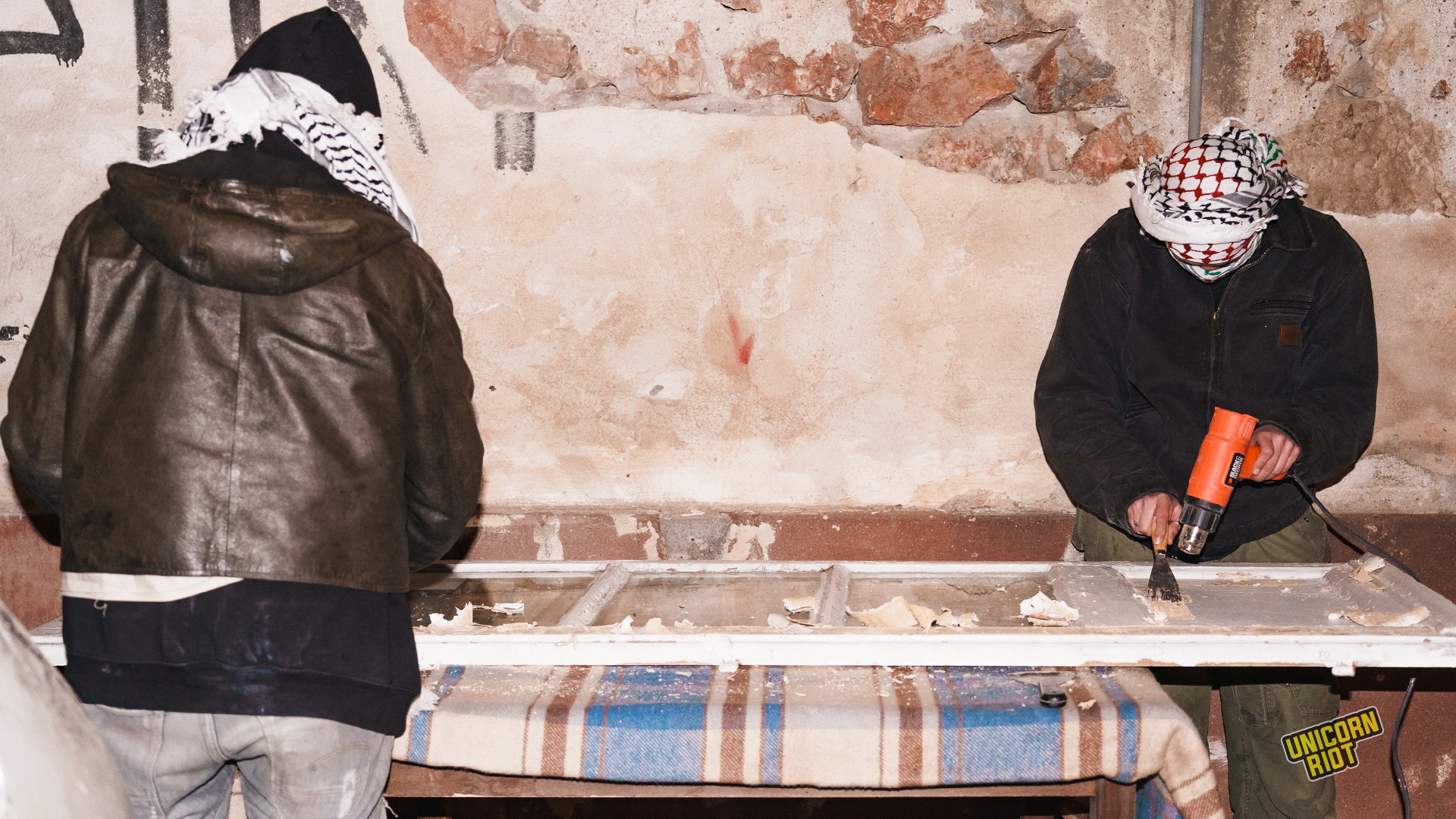
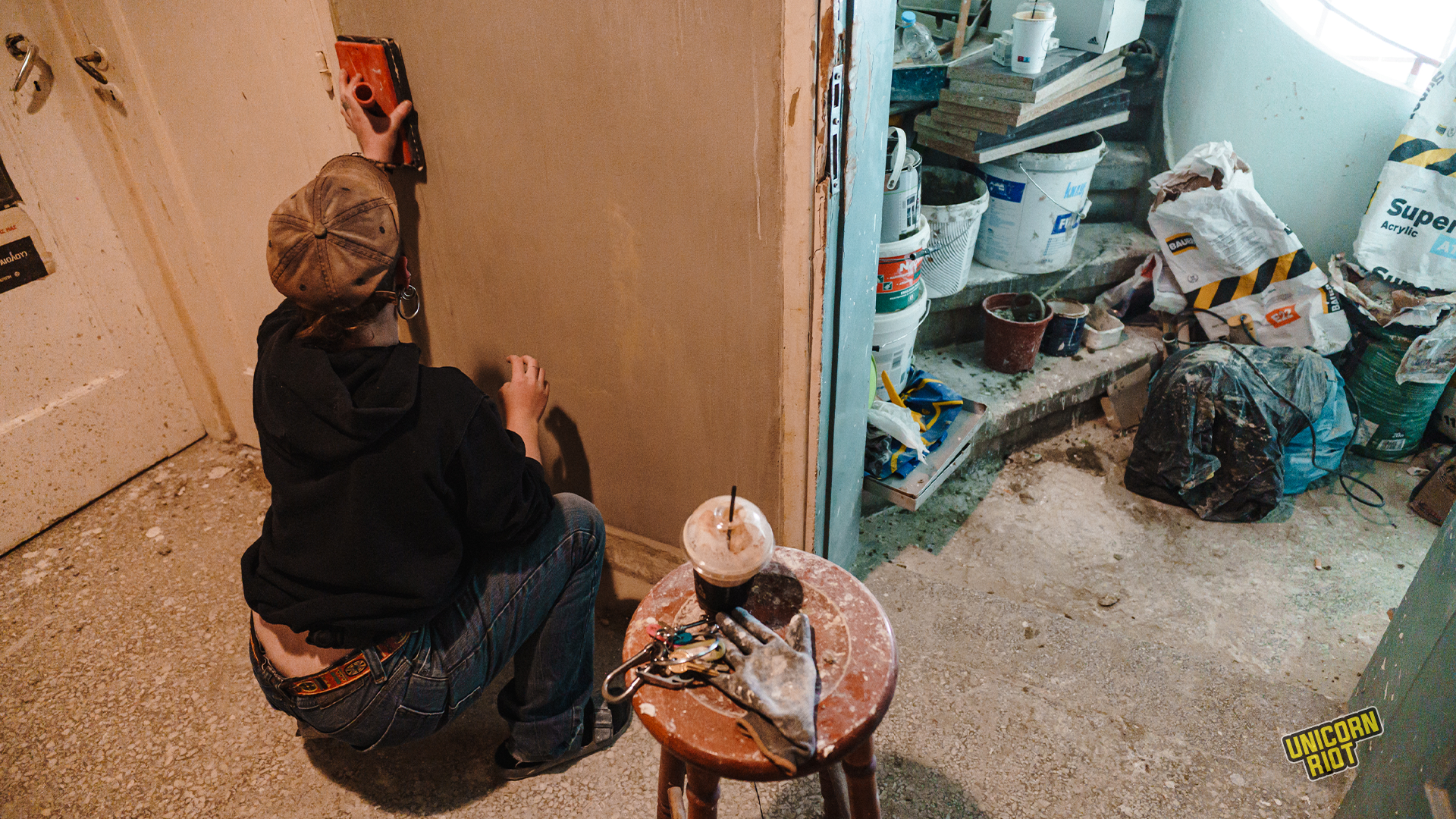
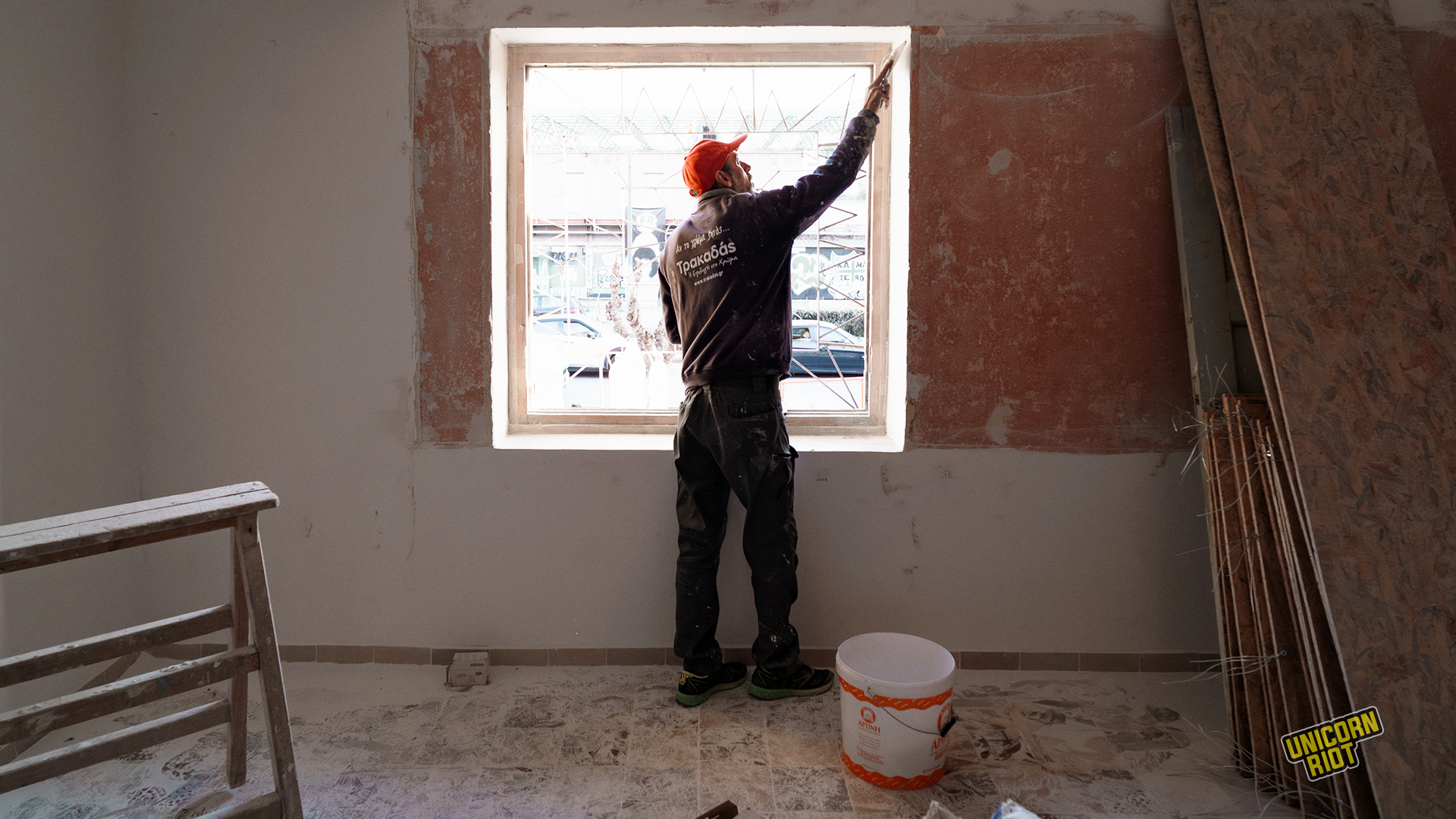
When the community took over the buildings, the conditions were dire, with structures abandoned for decades, crumbling walls, and plumbing and electrical systems that needed rebuilding from scratch. The Construction Structure was born to confront that reality.
Over the years, through the contributions of internationalists and a growing call for involvement, the structure developed specialized teams. For the past two years, it has operated as a mixed-gender group, with women and femme-presenting people holding positions of technical responsibility.
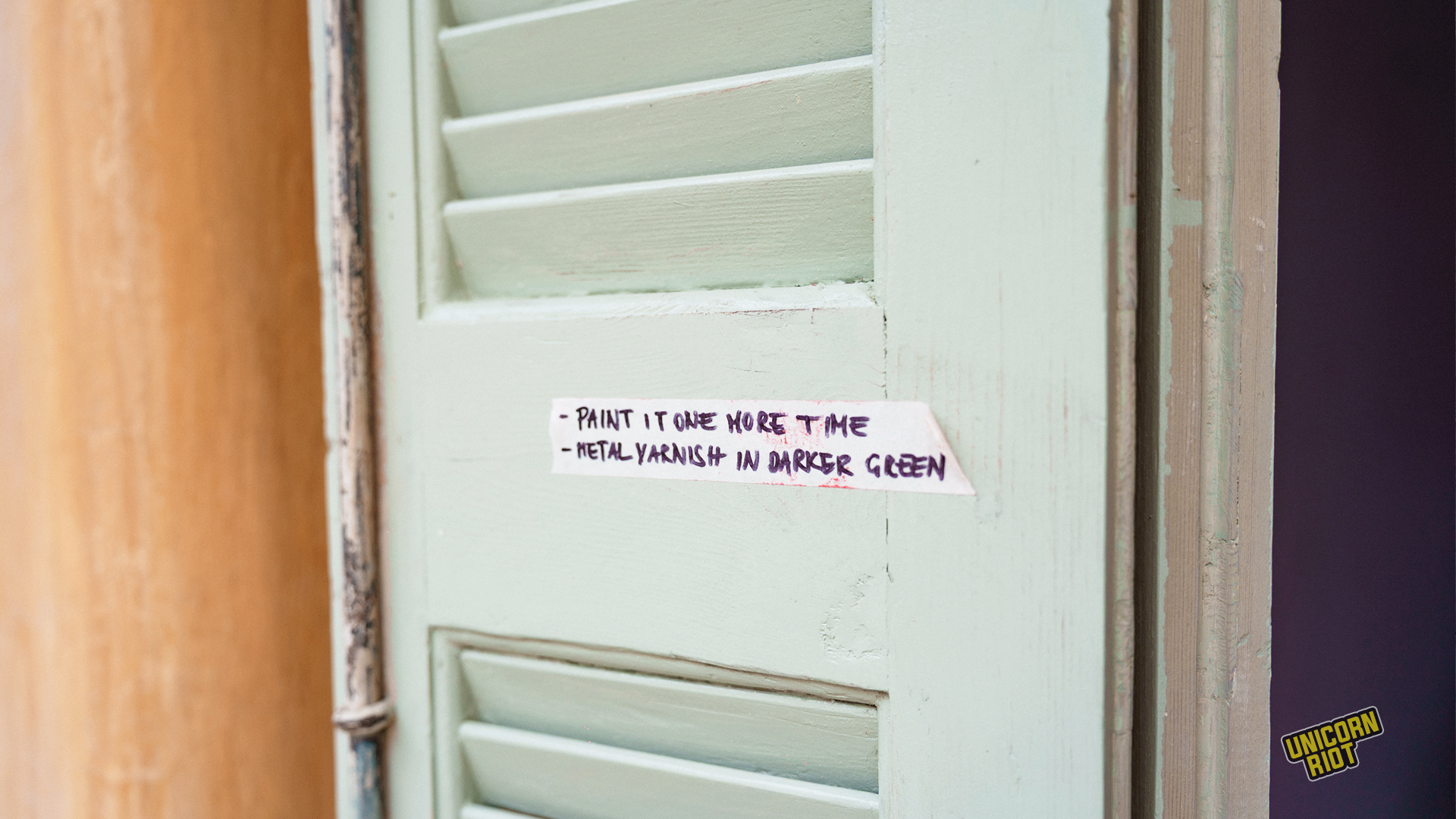
For Mol, a member of the structure, collective maintenance carries a meaning that extends well beyond the work site. “You paint windows for three days in a row, and somehow you are still able to find meaning behind it. Seeing how this can defend and develop the autonomy of this neighborhood gives a lot of meaning to what we do.”
Fellow member Nori sees the technical work as a vehicle for building relationships too. “It’s about how we take responsibility for the space we are living in, how we make it livable for everyone. If there’s a plumbing problem, it’s normally a problem of the whole building, so we have to communicate and build the solution collectively. All of this brings the community together.”
One of the projects currently underway is the construction of a museum inside the complex, envisioned as a space for oral history and collective memory.
“It will have an interactive character,” Nori explains. “People passing by maybe don’t know much about the community, about what work has been done here for all these years. We can show them that there are people working right in front of them. They’re fixing everything. You can even go inside and take a look. We are not just talking about making things better. It’s happening in the here and now.”
Care as Political Practice
The Women Structure and the Children Structure also grew out of immediate material needs. In both cases, those needs became the starting point for something far more radical.
The Women Structure has existed since 2019. Suzon traces its origins: “We needed to come together. Many women were isolated, not visible in the assemblies. We started with a women’s café, the easiest way to sit together and build trust. We went to each house, slowly. And through those conversations, common experiences began to emerge.”
Among those shared experiences was domestic violence. “Some women started to share, as trust grew. And we had to respond. Violence has never been allowed in the neighborhood, but for some reason it’s not understood inside the house. So, we made it clear: if you touch one woman or femme, you will find twenty or thirty behind them who will intervene.”
From there, the structure developed its own methods of transformative justice, ranging from specific working groups to mediation processes involving the entire family. In 2021, the review assembly formally recognized the Women Structure as a driving force behind a significant internal shift.
Today it runs a safe house open to anyone in need, with a weekly assembly holding decision-making authority equal to the general assembly.
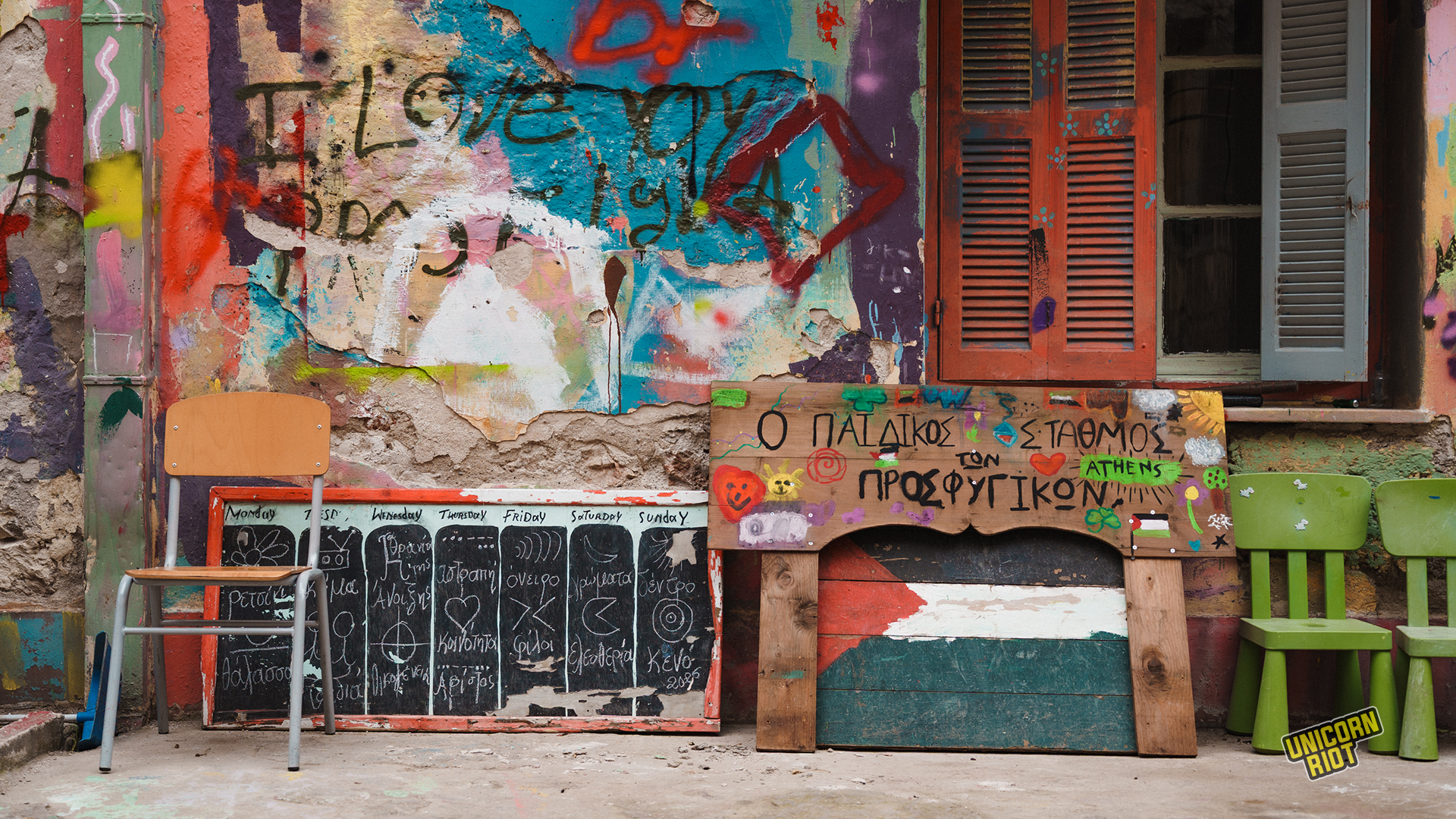
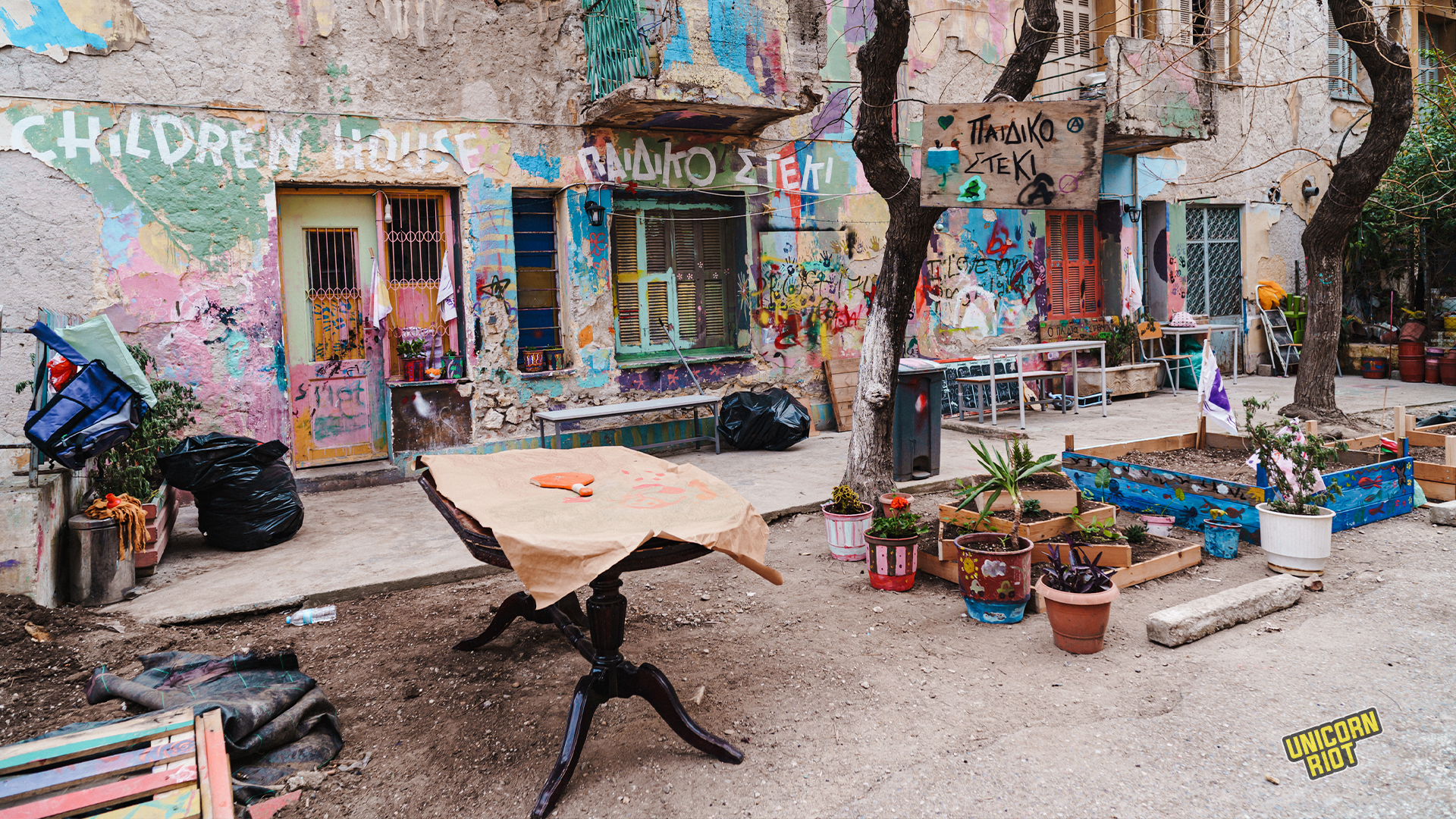
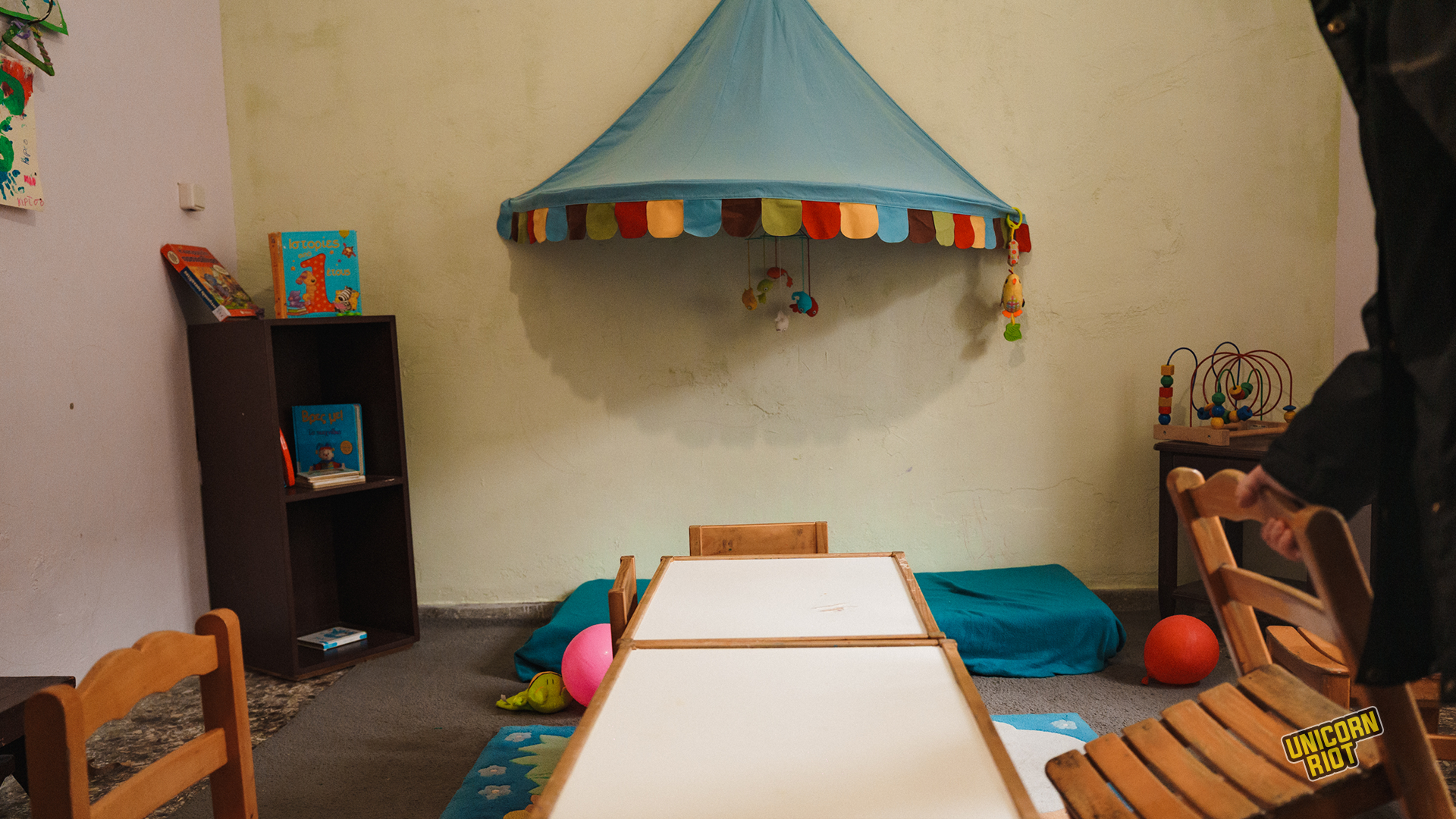
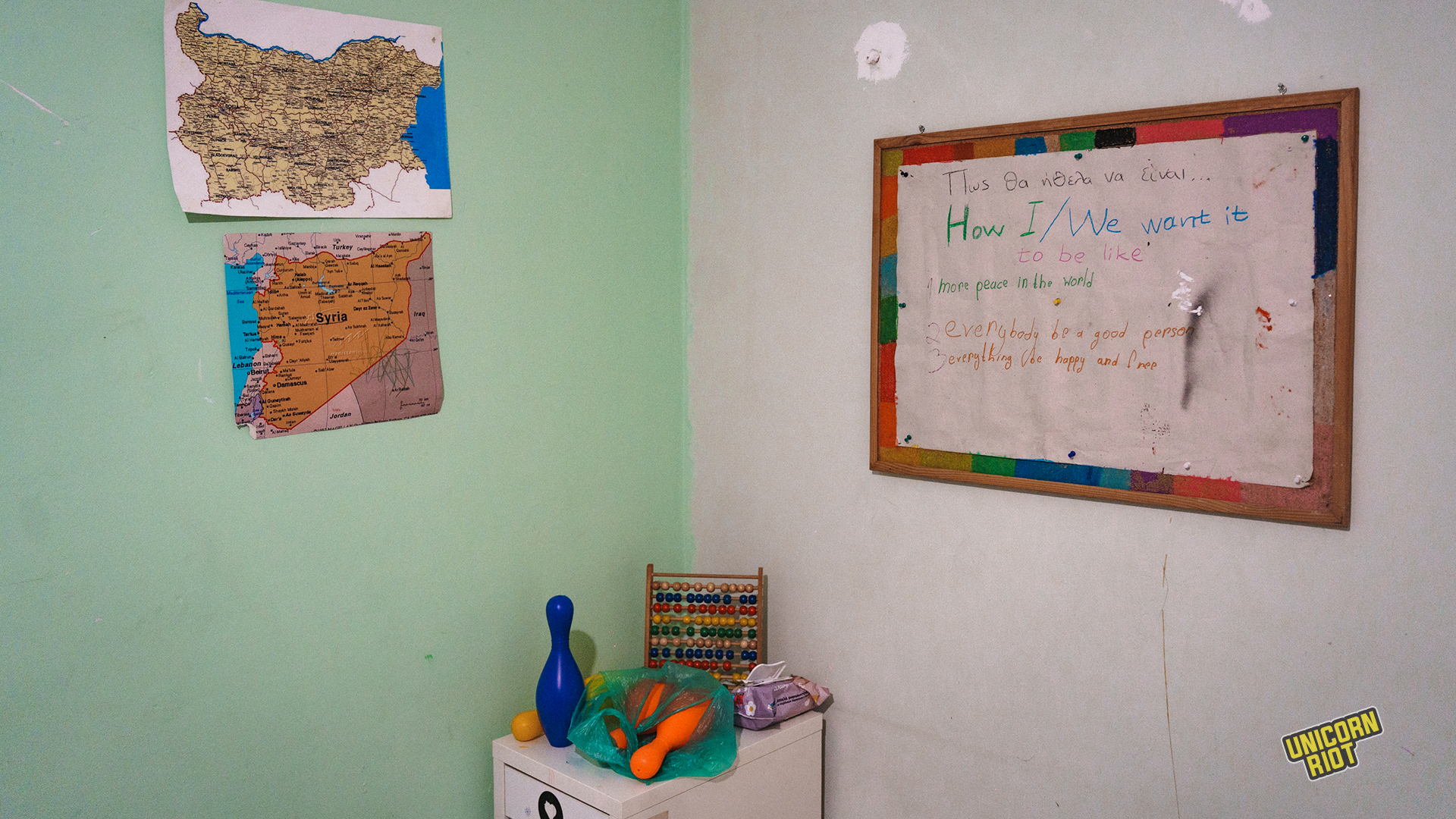
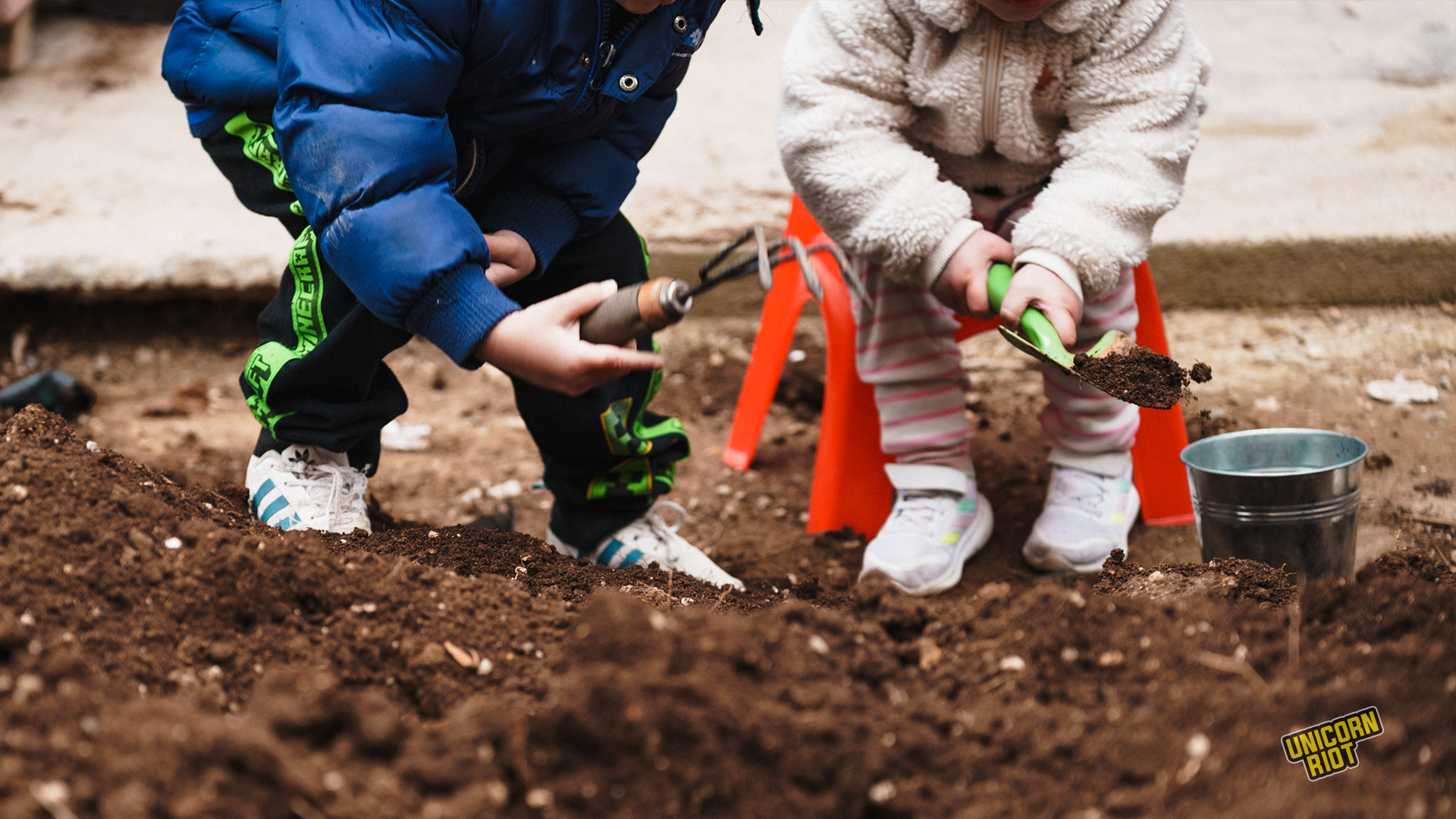
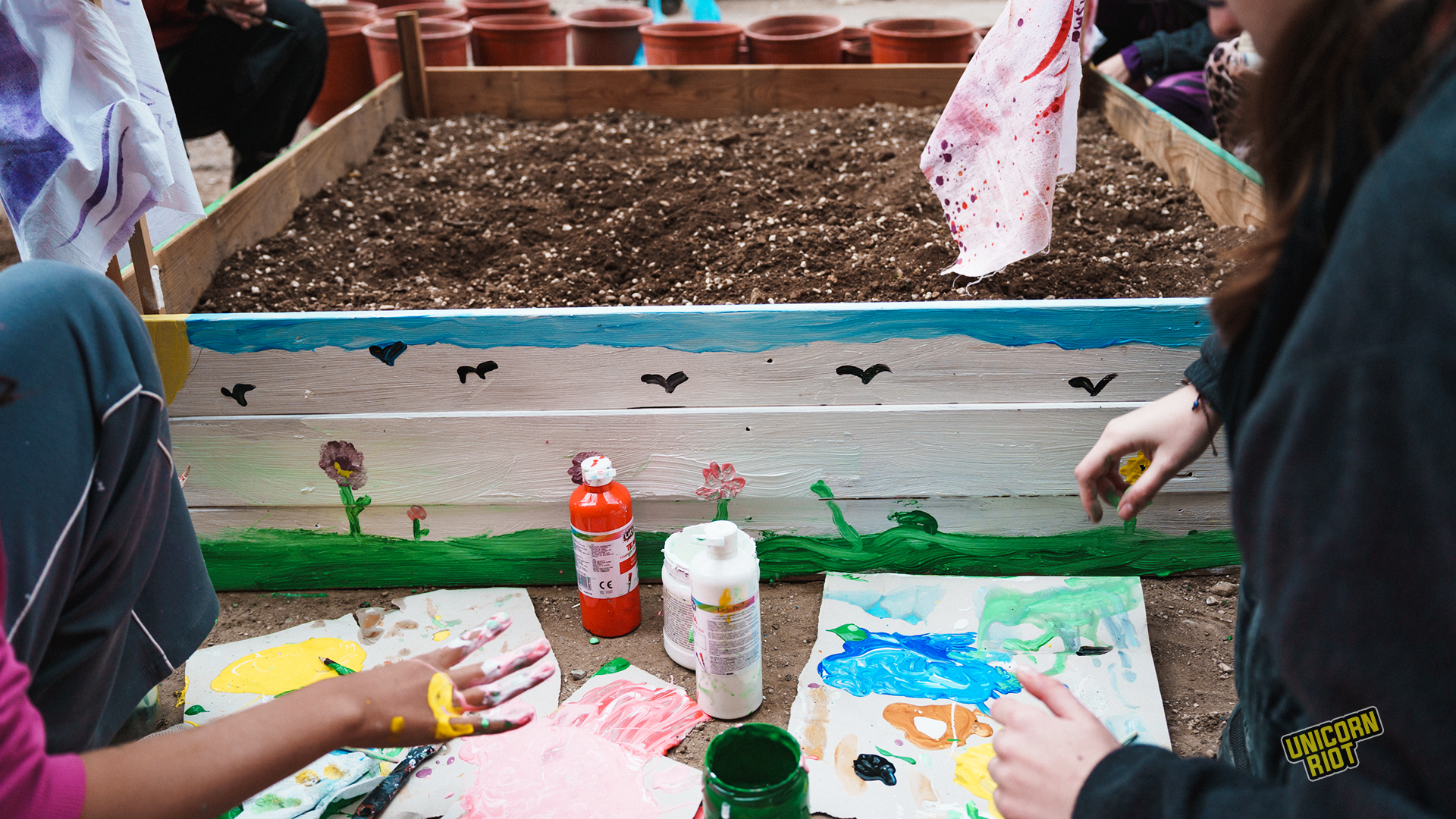
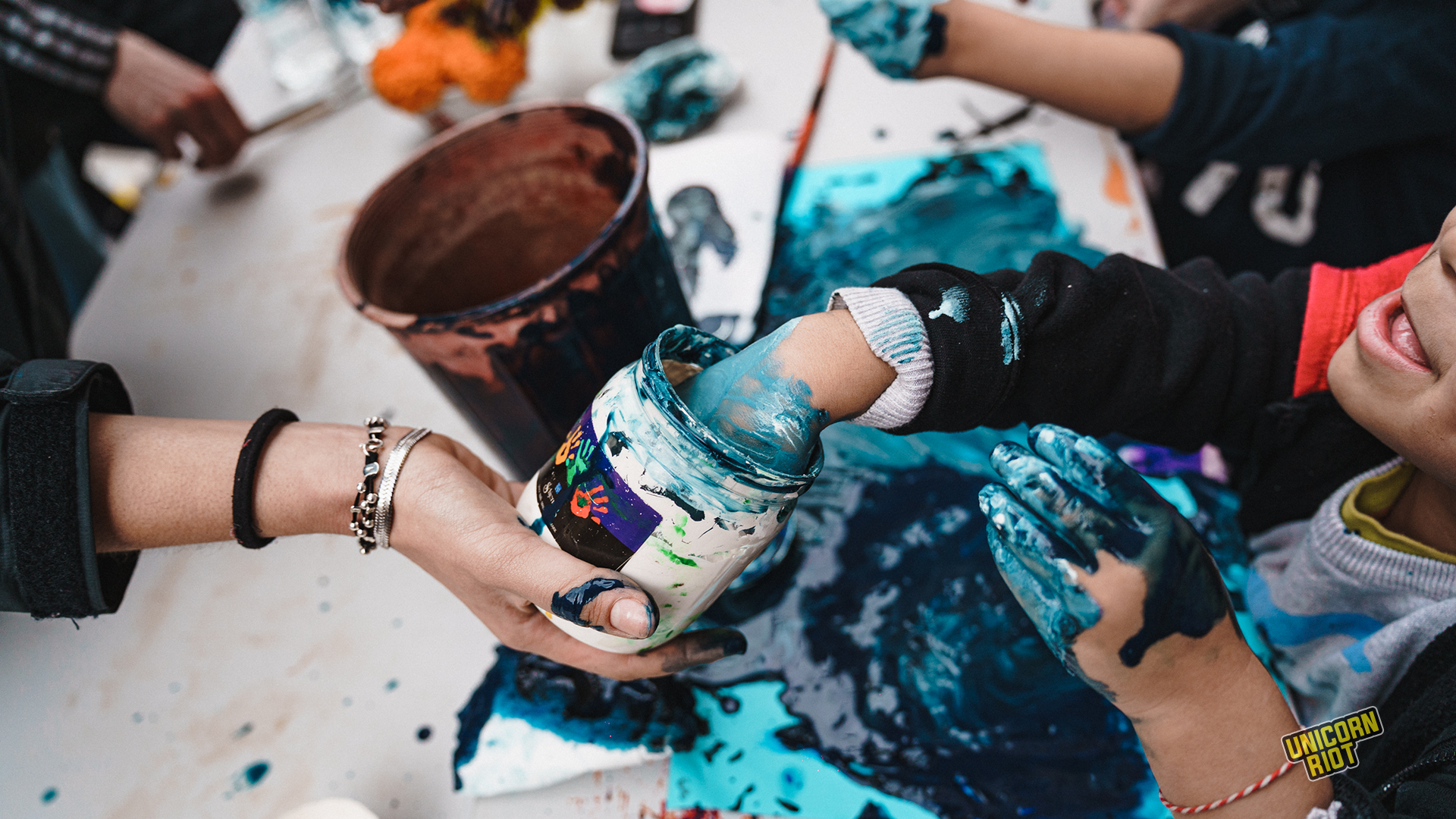
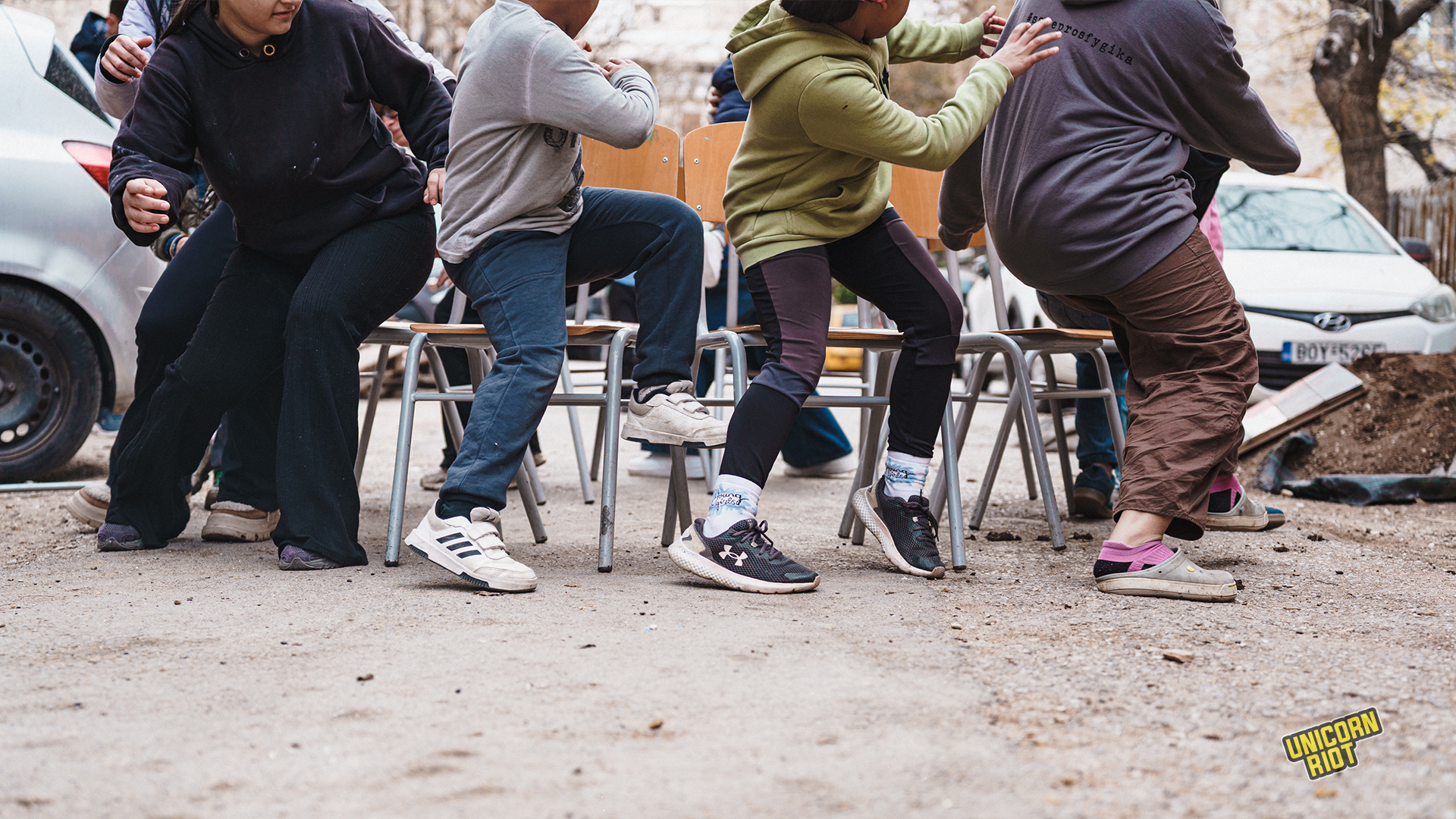
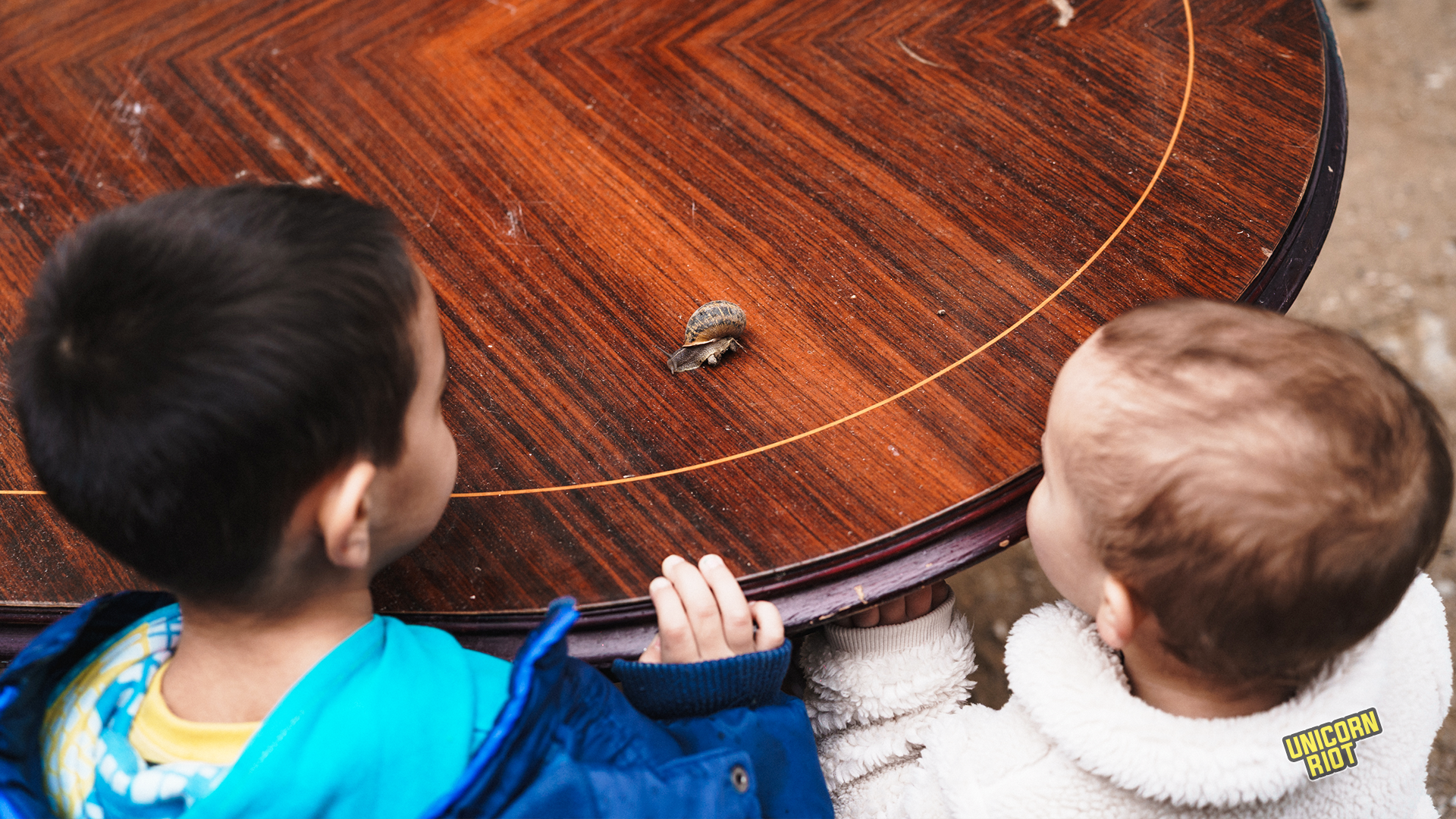
The Children Structure was founded six years ago, with a nursery that has been running for three. On the ground floor of the fifth block, the walls are painted in soft pastels, shelves overflow with books and toys, and the surfaces bear traces of children’s creations: finger paint, glitter, hand-drawn flags of Palestine and Kurdistan.
One of the structure’s fixed activity days is scheduled to coincide with the Women Structure’s weekly assembly, allowing women to attend without arranging childcare separately — a deliberate redistribution of domestic labor.
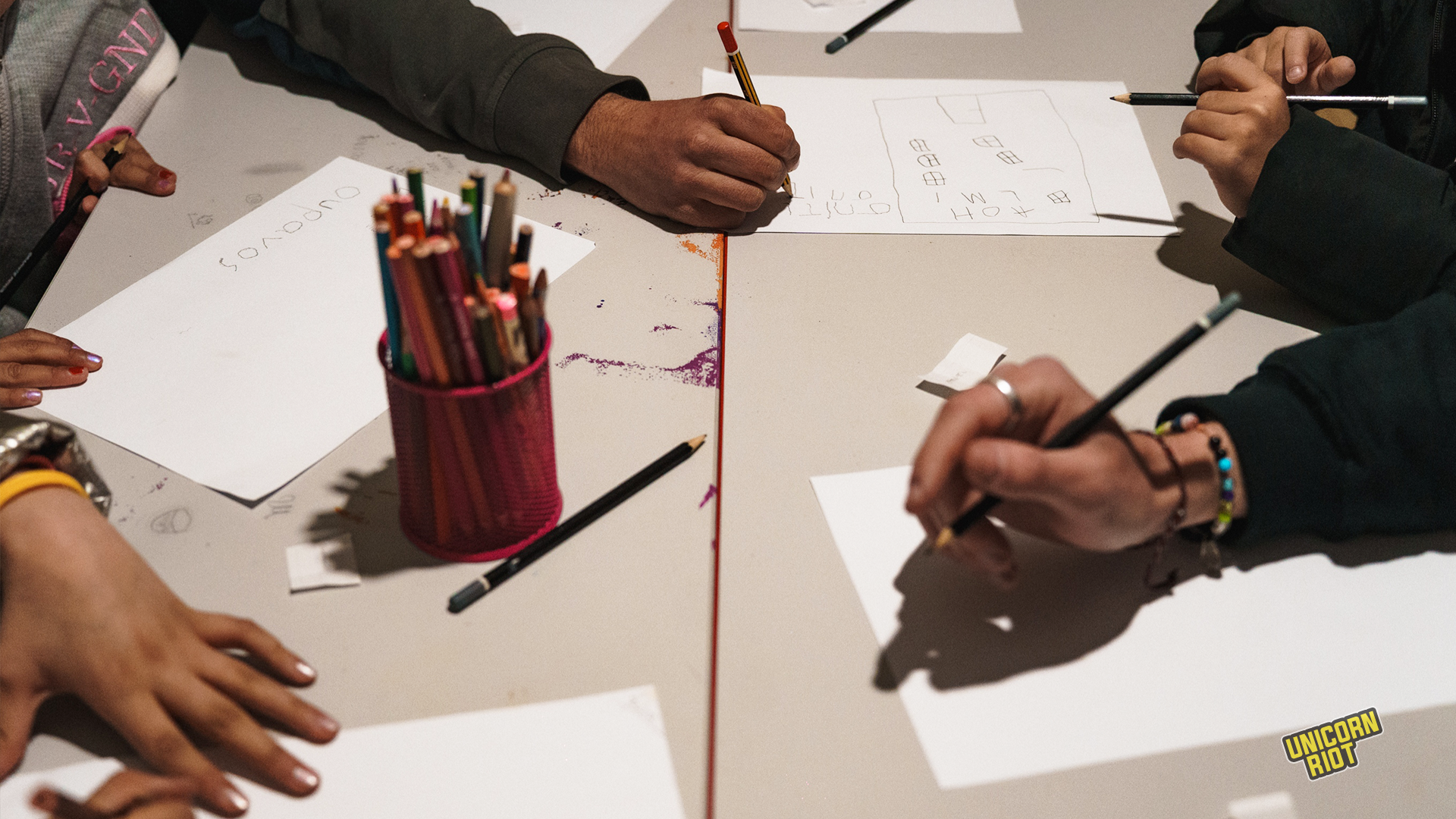
Iasonas is seated beside a group of children absorbed in drawing. He explains that the structure supports around 50 children and operates through three distinct assemblies: the core group, the core group with parents, and a children’s assembly with facilitators.
The educational model deliberately challenges the hierarchy between adults and children. It is not a one-way transmission of knowledge, but rather a horizontal process in which adults learn too. “The collective dimension is central,” Iasonas adds. “The whole community is aware of what’s happening here, participates, knows the children, and takes care of their needs.”
Over the years, the structure has worked to ensure that all children in the community, especially refugees facing documentation barriers, could access public schooling. Schools in the surrounding neighborhoods now recognize it as a point of contact for any issues involving community children.
“Now, when there is a problem with a child at school, they call the Children Structure,” Suzon explains. “This is also one of our goals: demonstrating how a self-organized, autonomous structure can be recognized and intervene in state institutions. This is one way transformation can occur in broader society.”
The Struggle Can’t Be Stopped
The regional plan that would displace Prosfygika’s 400 residents has not been withdrawn. Authorities have yet to respond to the community’s demands — the immediate cancellation of the project, guarantees that all current residents will be allowed to stay, and formal recognition of the renovation proposal developed by the community itself.
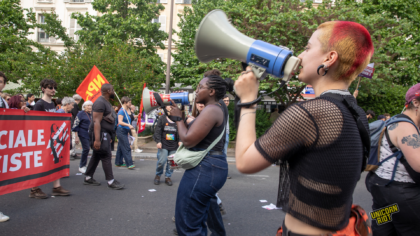
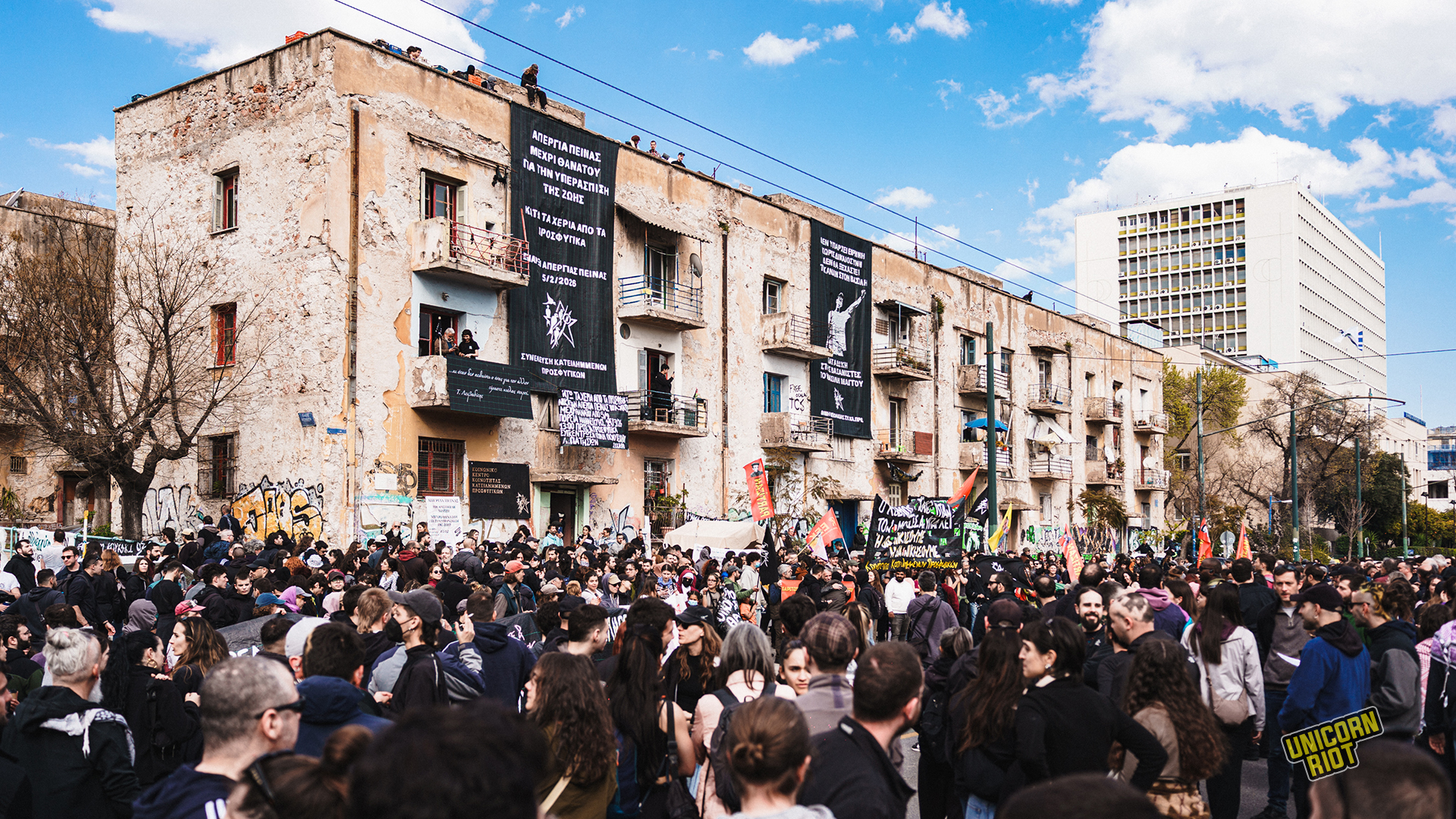
In response, residents have been mobilizing for months. They have organized marches, protests, and public events to pressure the authorities into taking a clear stance. One of the most radical forms this pressure has taken is the hunger strike. On February 5, following a collective decision, community member Aristotelis Chantzis began an open-ended hunger strike — now approaching 100 days, with no sign of halting. Faced with the authorities’ continued silence, on May 1 another resident, Suzon Doppagne, announced she would join him.
Against this backdrop, every gesture that keeps Prosfygika alive has become an act of resistance, more so than ever before.
“This is the first squat where I’ve seen so much effort put into taking care of it,” Nori reflects. “You aren’t holding back with the mentality of ‘it could end tomorrow anyway.’ Maybe we won’t be here tomorrow, but at least we left the place better than we found it. We poured our love and dedication into it and built a perspective.”
It is that perspective — assembled brick by brick over sixteen years — that the community is defending today. One that, according to Apo, will outlast any attempt to erase it. “The Greek government can take control of this place. But the community, the project, and the vision will live on. We are just a small part of the fire, and once our vision reaches broader society, it could become something much bigger. That will be our greatest victory.”
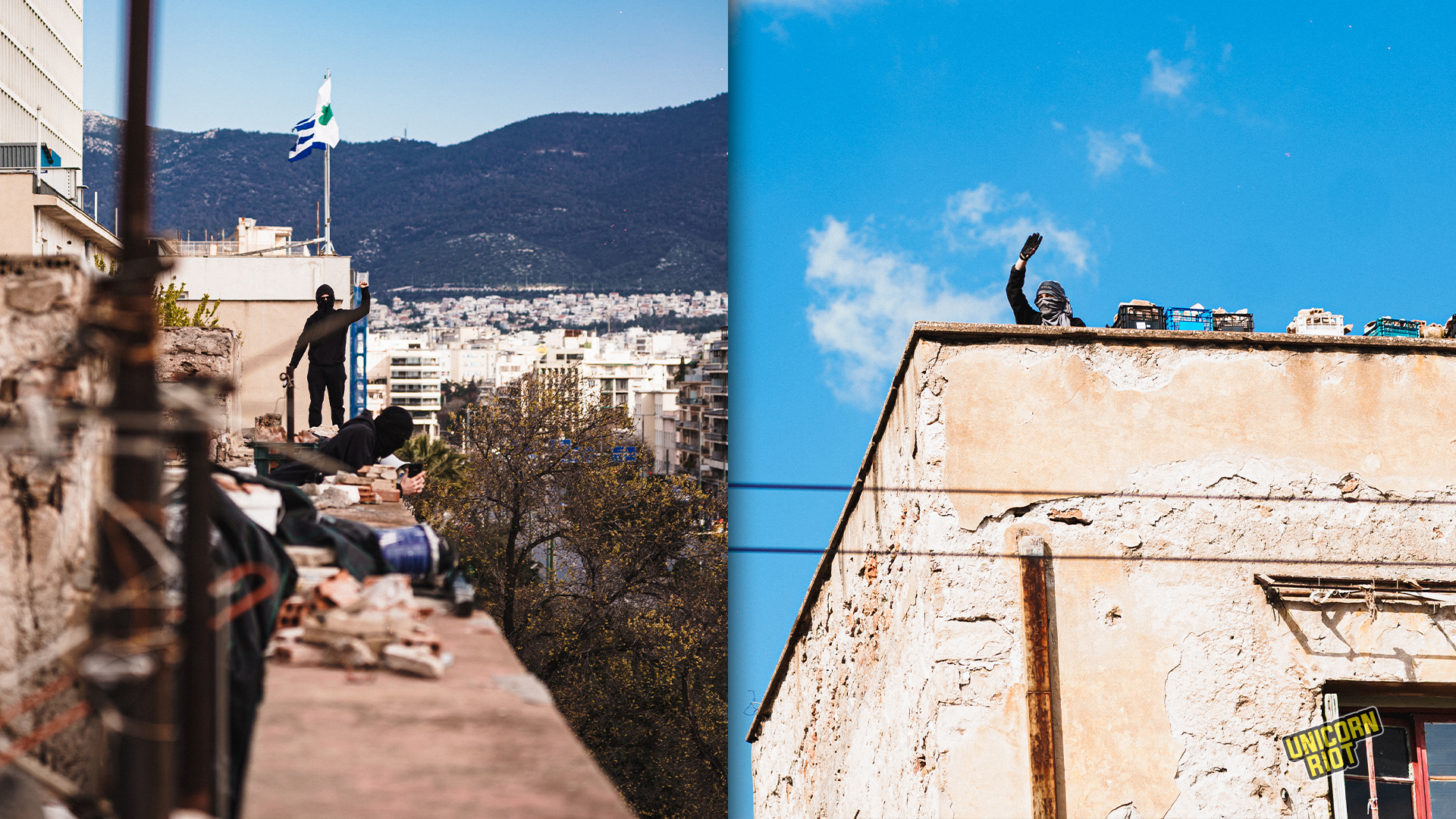
All photos, including cover image, contributed by Romanos Lioutas.
Past coverage:
Hands Off Prosfygika: Eviction Threat Sparks Hunger Strike and Mass Mobilization [April 2026]
For more media from Greece, see our Greece archive page.
Follow us on X (aka Twitter), Facebook, YouTube, Vimeo, Instagram, Mastodon, Threads, BlueSky and Patreon.
Please consider a tax-deductible donation to help sustain our horizontally-organized, non-profit media organization: