Enbridge’s Line 5 Reroute Blasts Through Bedrock Without Permits, Threatening the Great Lakes
Washburn, WI — Copper Falls State Park sits on some of Wisconsin’s most ancient bedrock. Enbridge wants to blast through it — and admits it isn’t sure exactly where to. The Line 5 reroute is blasting into the unknown through the Penokee-Gogebic Range, one of six iron ranges in the Lake Superior region, putting native trout streams, two major aquifers, and northern Wisconsin’s most sensitive geology at risk.
On April 16, 2026, Skylar Harris, an environmental petitioner with Midwest Environmental Advocates (MEA), walked out of a Wisconsin courtroom with a clear message: the evidence of irreparable harm is already on the table. Enbridge blasting through ancient bedrock and wetlands without prior knowledge of exactly where and threatening treaty-protected wild rice beds, cannot credibly claim otherwise. Unicorn Riot heard from Harris about the blasting and potential dangers.
“Blasting, of course,” Harris says, “is a destructive activity and will permanently disrupt the hydrogeology of that area.”
Enbridge’s Line 5 pipeline, originally routed across Bad River Band tribal land under easements dating to 1953, is now being rerouted along a new 41.1-mile corridor through 1854 Treaty Territory in Ashland County, Wis., crossing 186 waterways, 612 acres of wetlands, and hard bedrock across the Penokee-Gogebic Range, the zone of greatest geological uncertainty along the route.
Line 5 alone has had roughly 30 on-land releases, totaling around one million gallons of oil. Enbridge is also responsible for the two largest inland oil spills in U.S. history: 1.68 million gallons near Grand Rapids, Minnesota, in 1991, and more than 1.2 million gallons into Michigan’s Kalamazoo River in 2010.
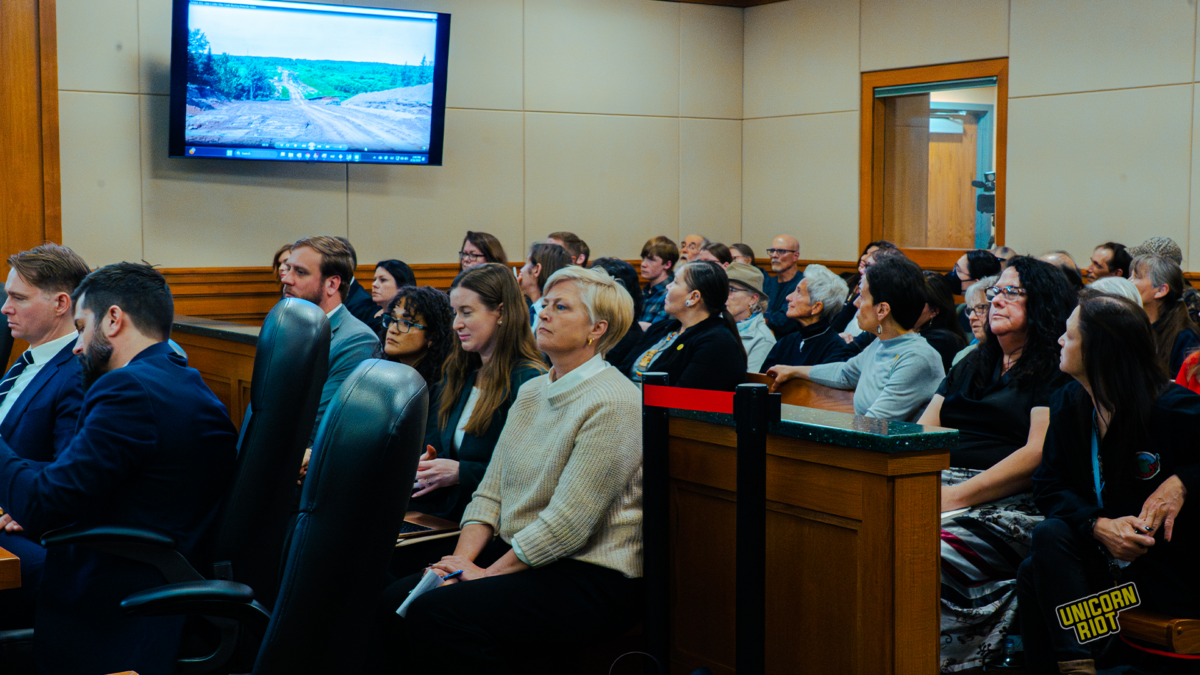
The reroute poses a direct threat to Copper Falls State Park, a 3,000-acre park near the west end of the Penokee-Gogebic Range where the Bad River and Tyler Forks River converge to form dramatic waterfalls through ancient volcanic gorges. The park draws visitors from across Wisconsin and beyond and is considered one of the state’s premier natural destinations.
Blasting through the bedrock formations that define this landscape risks permanent, irreversible damage, not just to the park itself, but to the broader geological region that surrounds it. Expert testimony by Dr. Jesse Hampton, from a previous hearing in Madison, Wis., detailed the fractures bedrock blasting causes and the lasting damage to surrounding geology and water systems.
Wetlands regulate water flow, filter contaminants, and sustain the cold spring seeps that native trout depend on. Destroying them doesn’t only impact the wetland, but also threatens numerous sensitive habitats, including two Department of Natural Resources Class 1 trout streams – Billy Creek and Krause Creek – which are in the proposed blasting zone. Further, everything connected to the impacted waterways is destabilized. Once that rock is fractured and those wetlands disturbed, there is no restoring them.
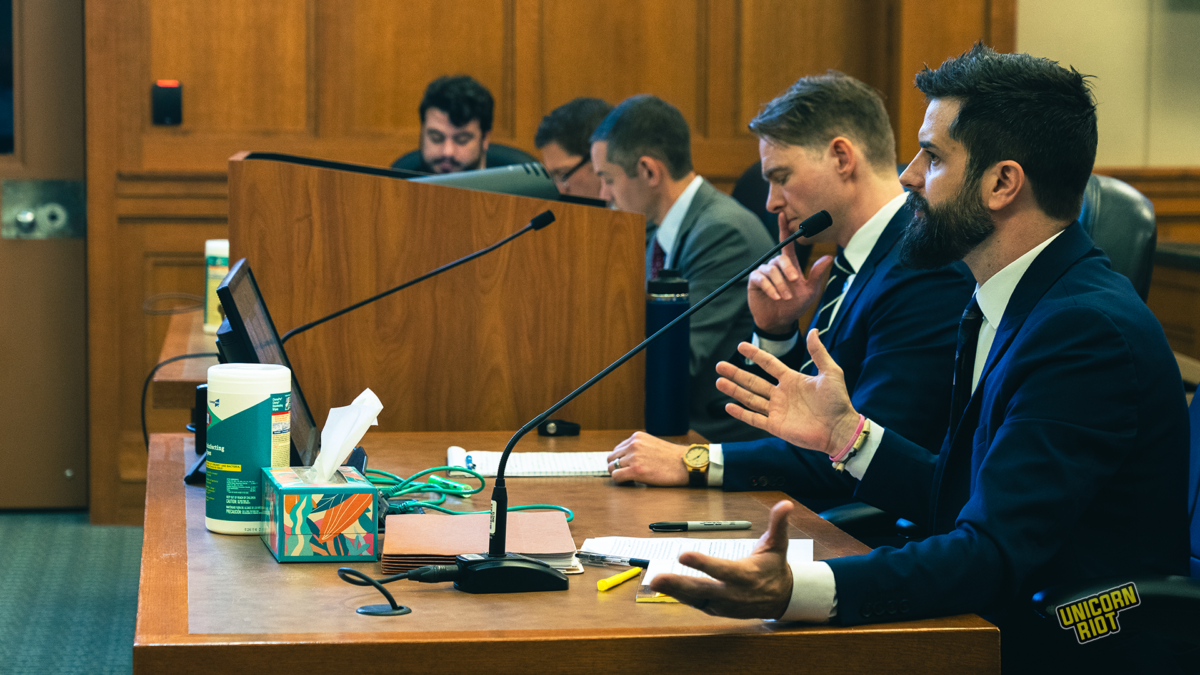
MEA attorney Rob Lee put it simply, “You cannot put that rock back together again.” By any legal or scientific definition, that is irreparable harm. Where exactly blasting will occur won’t be determined in advance. It will be decided as the project unfolds.
The damage would not stay limited to the blast site. The reroute crosses recharge zones for two major aquifers, the Copper Falls and Lake Superior Sandstone aquifers, feeding a watershed that drains toward Lake Superior.
Contamination from a spill, blasting debris, or disrupted groundwater flow could migrate downstream through the Bad River watershed, spreading through the region’s interconnected wetlands, tributaries, and water systems all the way to Lake Superior.
The scale of what that means globally is difficult to overstate. Lake Superior is the world’s largest freshwater lake by surface area, and the Great Lakes as a whole contain roughly 20 percent of the world’s surface fresh water, supplying over 40 million people.
Contamination entering this system from northern Wisconsin watersheds is not specifically a local problem. It carries international consequences for one of the planet’s more critical freshwater reserves.
The Bad River watershed also contains one of the largest manoomin (wild rice) beds in the United States, explicitly protected under the 1854 Treaty and central to the Bad River Band’s way of life. Contamination moving downstream into treaty-protected rice beds would be irreversible and irreparable.
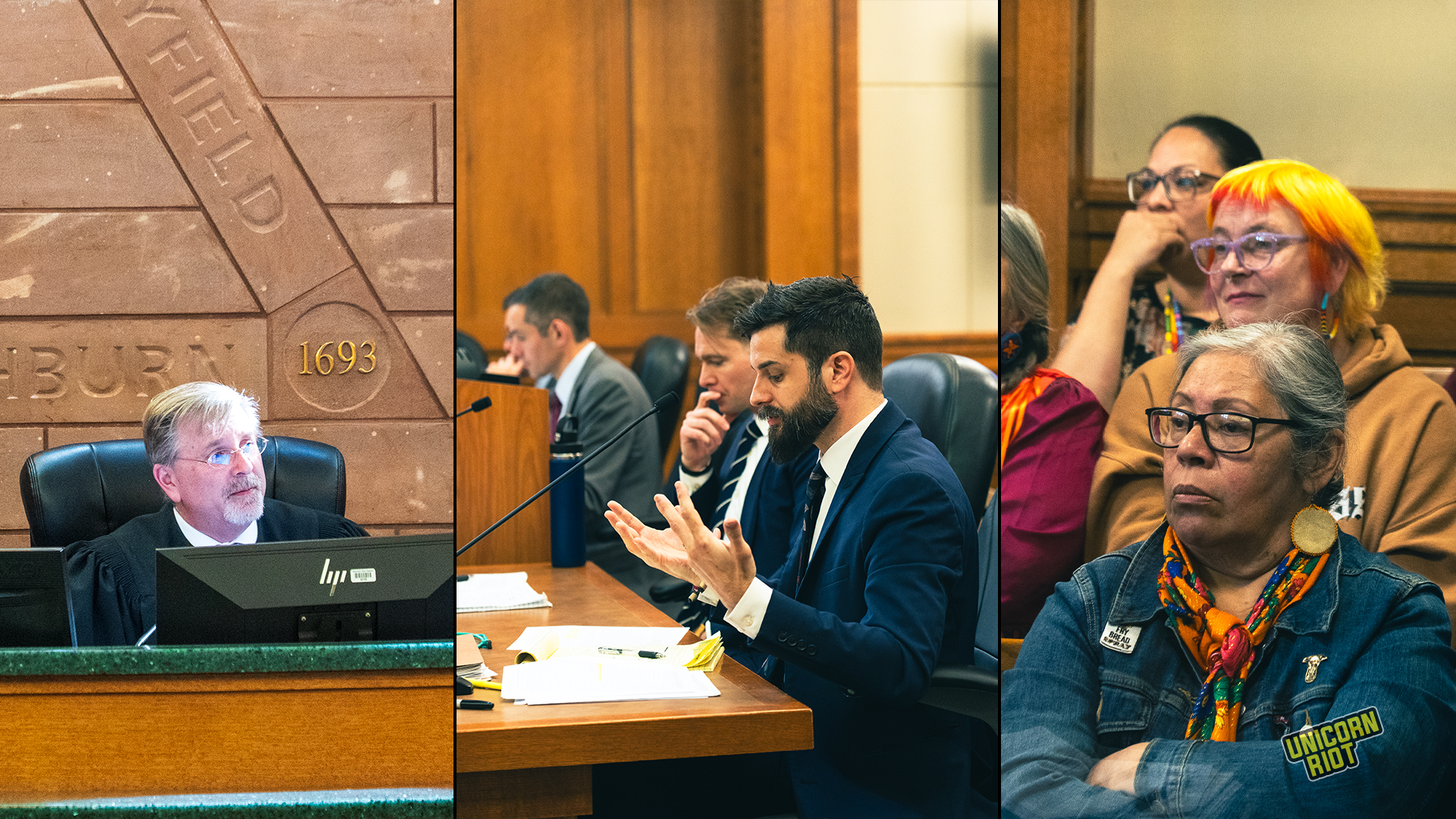
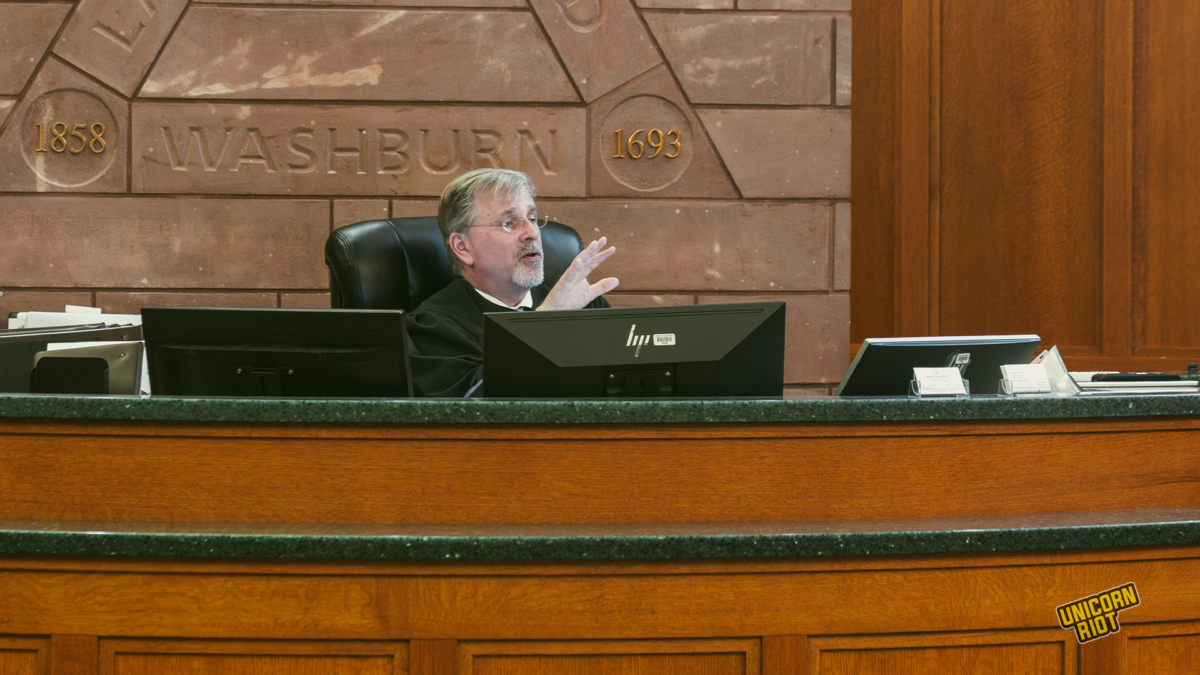
Enbridge stated, “The Band wanted us off their reservation.” Judge Anderson replied, “They [the Band] said, ‘You know what, we don’t want you here, go away, goodbye.’ That’s their right to do that.” To which Enbridge responded, “Well, maybe it is, and maybe it isn’t.”
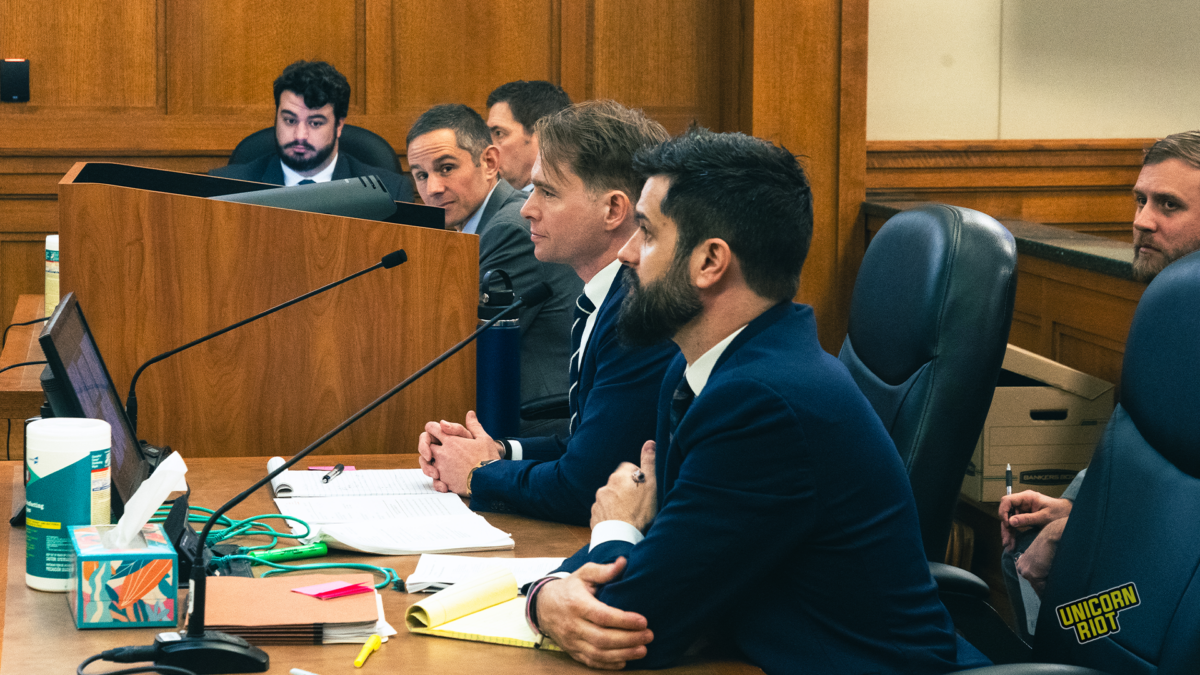
A federal judge had previously ruled Enbridge has been trespassing on Bad River since 2013, calling Enbridge’s arguments “tone-deaf and meritless.”
The company’s willingness to question the Band’s sovereign authority over their land, while routing a pipeline with incomplete geological data through treaty territory and blasting into geology it has not yet fully surveyed, has drawn criticism from Tribal members and Wisconsinites.
According to Harris, Enbridge’s Environmental Impact Statement, submitted to the Wisconsin DNR, fell short of multiple statutory and regulatory standards needed to protect the region.
At the time of the hearing, the company had not identified every location where blasting would be required. Additionally, four key permits are still pending that would allow Enbridge to build permanent stream bank stabilization structures on an unnamed tributary to Brunsweiler River, Beartrap Creek, Little Beartrap Creek, and Bay City Creek. The DNR argued that environmental statutes are not mandates to protect the environment at all costs. Judge Anderson seemed skeptical:
“There’s only one way to cross a crick, river or stream. You either go over it, under or through it. I mean, unless you are in the 4th dimension and understand quantum physics better than I do. That’s the only way to get around it. Or you just don’t do it at all. So why are we here?”
The DNR acknowledged that remaining permits were expected to wrap up in early May but offered no explanation for why construction could not wait. The answer, critics say, is straightforward: stopping costs Enbridge money.
That a company’s financial interests appear to carry more weight than the ecological and treaty rights of the people whose land and water are at risk raises a question the DNR has yet to answer satisfactorily. The same one Judge Anderson put to the court directly, “It’s like a Lincoln log. You gotta connect them somewhere along the line. You can’t put in and do the pipeline, until it’s all connected. So, what’s the point?”
The DNR responded, “The permitting does have to be done, certainly.” While arguing that there is a lot that can be done beforehand.
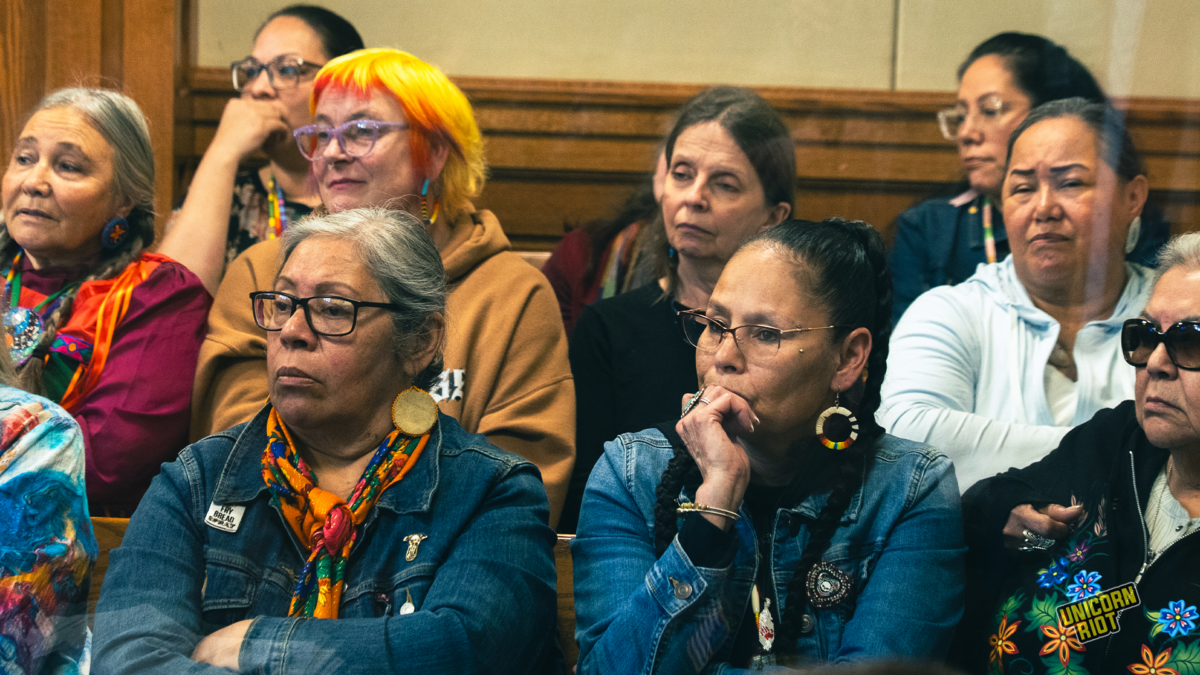
A decision on whether to grant a stay on construction is pending. Tribal members, Wisconsinites and environmental petitioners alike, say the core problem runs deeper than any single permit.
A company that cannot identify all of the places it must blast through as it traverses some of the region’s oldest and most sensitive geology, and is pressing forward without a complete picture of the consequences, threatens not just a beloved state park or a local watershed, but a chain of irreplaceable ecosystems reaching all the way to one of Earth’s more vital freshwater systems.
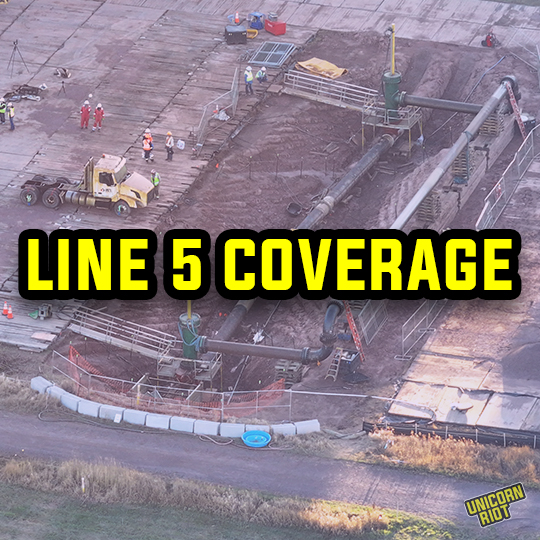
See all of Unicorn Riot’s coverage on Enbridge’s Line 5 re-route by clicking the image below.
Follow us on X (aka Twitter), Facebook, YouTube, Vimeo, Instagram, Mastodon, Threads, BlueSky and Patreon.
Please consider a tax-deductible donation to help sustain our horizontally-organized, non-profit media organization: