The Teotihuacan Pyramid Shooting; Mexico’s Post-Racial Nazis
Content Advisory: This article is a political analysis of the 2026 Teotihuacan Pyramid Shooting and contains descriptions of extreme violence.
Just before noon on April 20, 2026, a gunman opened fire on the steps of the Pyramid of the Moon, a 2,000-year-old Mesoamerican Pyramid and popular tourism site located in Teotihuacan, roughly one hour outside of Mexico City.
Dozens of international tourists were trapped on the pyramid’s first landing, forced to lie on the structure’s cobblestone platform as the gunman paced back and forth with a Smith & Wesson Model 10 snub nose revolver and a black plastic bag loaded with dozens of extra rounds of .38 special ammunition.
“You who have come from Europe will not return,” the gunman, later identified as 27-year-old Julio César Jasso Ramírez of Mexico City, shouted at his hostages in a dialect of Spanish not typically spoken in Latin America. “If you move, I will sacrifice you.”

The plaza below, facing the long stretch of road known as the Avenue of the Dead, watched in confusion as Jasso executed a 32-year-old female tourist from Canada. One witness reported hearing more than 20 shots and seven other tourists suffered non-lethal gunshot wounds.
The dramatic altercation ended when Mexico’s National Guard shot Jasso in the leg, after which he shot himself in the head. The tourists Jasso trapped on the landing quickly broke free and frantically fled the scene; six suffered injuries in their panicked escape down the pyramid’s steps.
Along with a framed, AI-generated image of himself alongside the Columbine school shooters, Eric Harris and Dylan Klebold, Jasso allegedly carried photos of himself performing Roman salutes in the style of Nazi Germany, an act he had been fond of performing for the last ten years, Telediario reported.
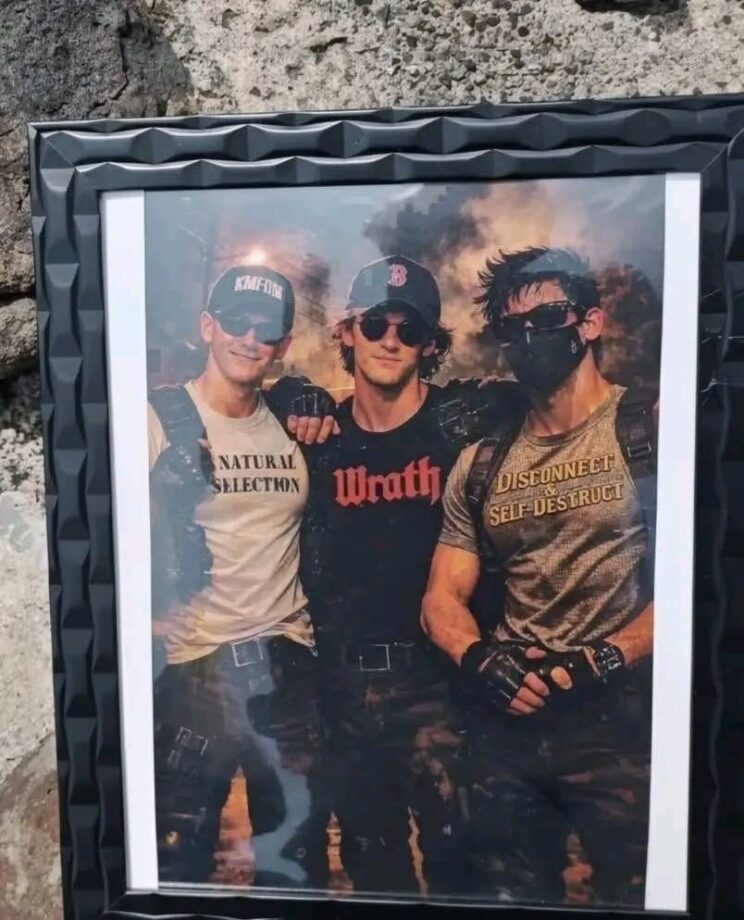
The Columbine detail is eccentric but indicative of the influences that potentially led to his decisions that day, including his choice of the Colorado high school massacre’s 27-year anniversary. But the day, April 20, is also remembered as the birthday of Adolf Hitler.
In an old X account from 2016, roughly lining up with when he warmed up to throwing out Nazi salutes, Jasso lists his location as Sevilla, Spain, which could explain his Castilian Spanish in the footage from April 20. It could also be an occurrence of “malinchismo,” a social phenomenon unique to Mexico, where native-born Mexicans internalize a perceived inferiority of their own culture and develop an excessive admiration for a foreign country’s culture.
More pressing, however, are the fascist and authoritarian symbols used across the page, including a profile picture of himself, arm fully extended in a Nazi salute.

In the two days worth of posts made by Jasso on this account, he posted several images celebrating Italian fascist leader Benito Mussolini and reposted images related to falangism, the far-right political ideology that originated in Spain.
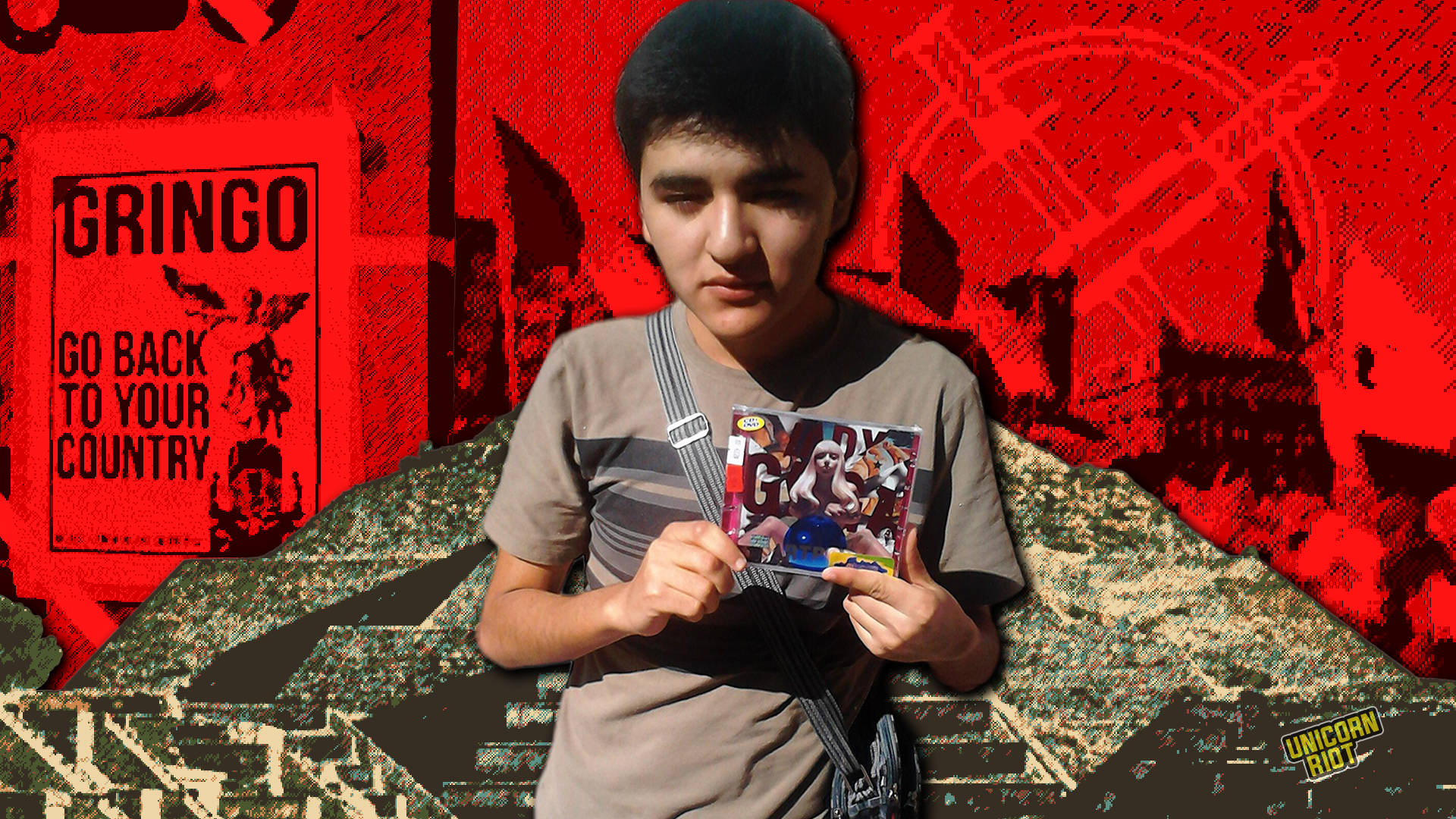
Another X account potentially tied to Jasso under the alias Edmund McCrowder from 2013, besides indicating an obsession with Lady Gaga, lists Mexico as his location, indicating at some point he may have moved to Spain only to later return to Mexico.

The Teotihuacan shooting and the fascist orientation of its perpetrator, while having no substantive ties to any official groups, is indicative of a rising tide of xenophobic nationalism within Mexico, which has seen an influx in inequality and affordability since the beginning of the 21st Century that has been exacerbated by the COVID-19 pandemic.
This form of far-right reactionary thought, which borrows heavily from European fascism and white supremacy, is unlike other far-right movements in both its anti-imperialism and pride in indigeneity.
Related: 2023 UR Report: Nazis of Color
‘Gringo Go Home’
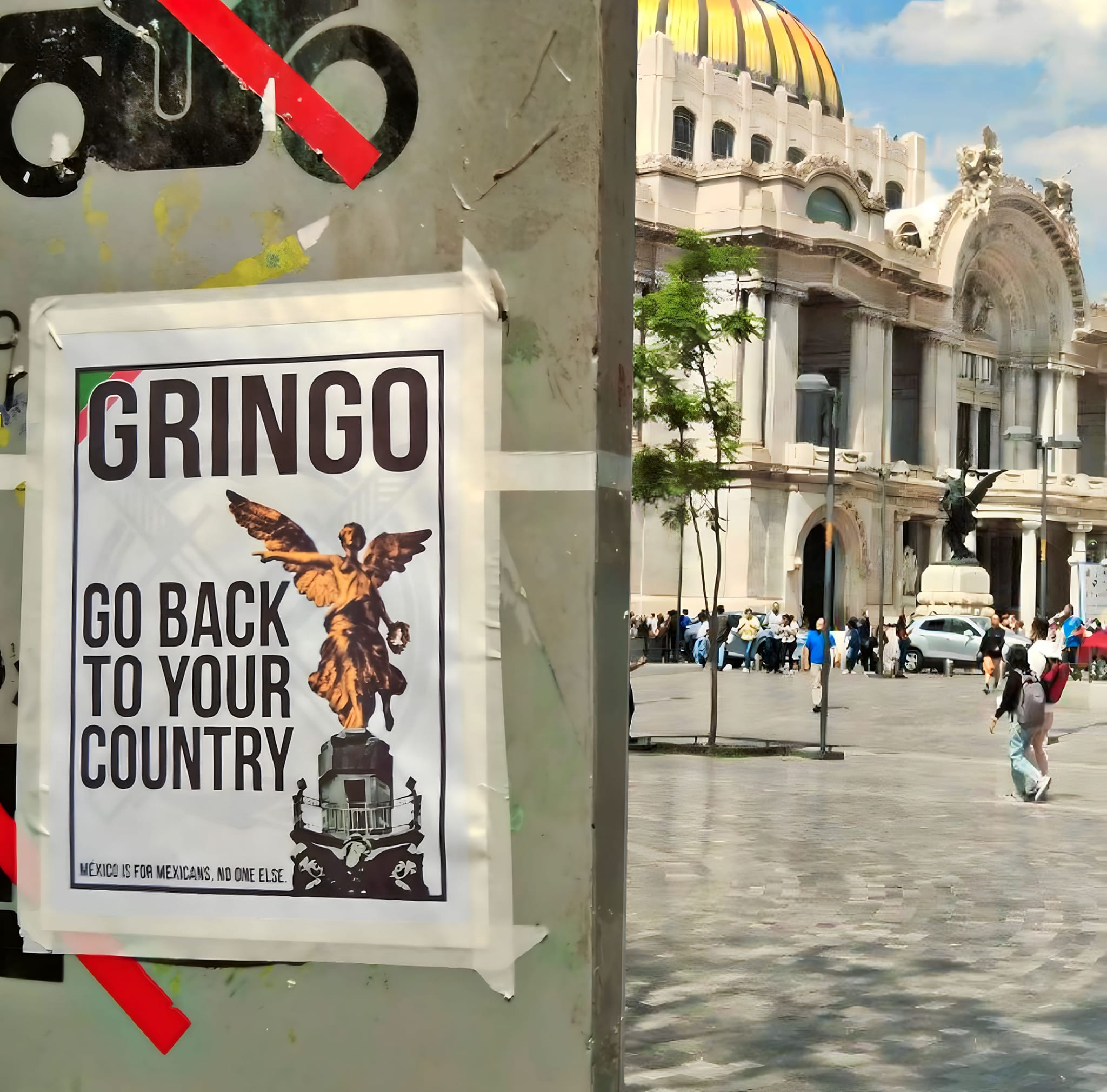
“Gringo,” reads a poster taped to a wall somewhere in Mexico City. “Go back to your country. Mexico is for Mexicans. No one else.”
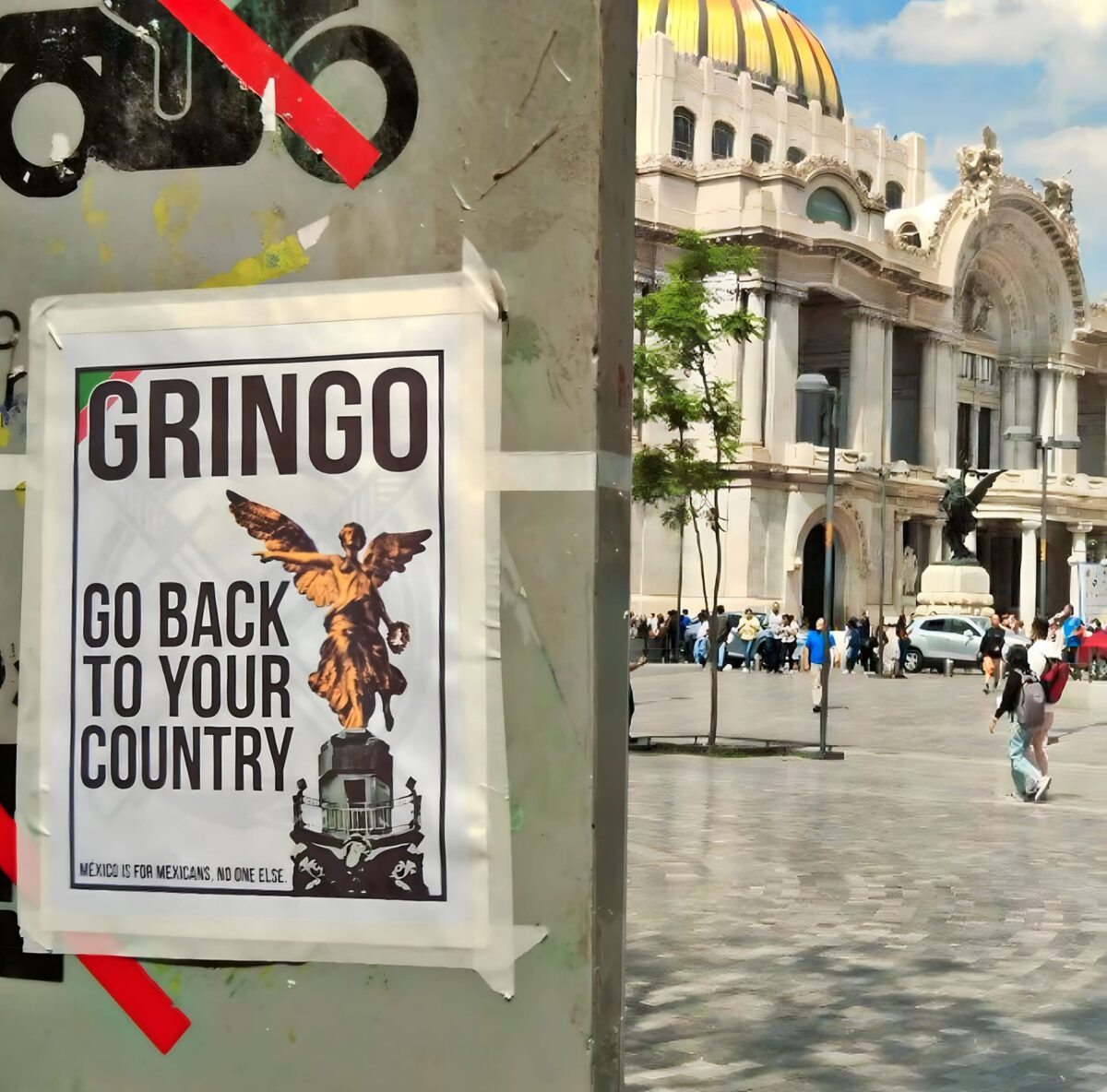
Next to the text is a photo of the 24-karat gold-coated Angel of Independence, a 22-foot-tall depiction of the Greek goddess of victory, Nike. Unlike the famous statue punctuating the Paseo de la Reforma Avenue in downtown Mexico City, the laurel crown is held aside while her right hand is pointing off into the distance, as if turning the reader away.
Such posters and slogans were a common sight during the tumultuous protests in July 2025, opposing the increasing gentrification of the city, which saw native residents forced to leave due to dramatically increasing unaffordability. The cause identified by these protesters, not incorrectly, was the influx of “digital nomads” from the United States: gringos.
A study published by the National Academy of Sciences in 2024 revealed that, from 2000 to 2022, the average price for housing in the capital city quadrupled while per capita income decreased relative to inflation. This unaffordability crisis, heightened in neighborhoods experiencing significant gentrification, has created a scenario some call colonization, creating expensive pockets full of American businesses where Spanish is hardly spoken.
In Mexico City, according to the study, “citizens have relatively low economic incomes, making displaced individuals more vulnerable to insecurity and limited access to essential services such as healthcare and education. Mexico City requires immediate implementation of social housing initiatives that have been neglected since the 1990s […] Without such changes, only the affluent high-income class will be able to afford housing.”
On July 4, 2025, in the Roma and Condesa neighborhoods, where the gentrification has been the most extreme, protesters marched through the streets demanding change. Elsewhere, however, a smaller contingent of protesters attacked American-owned businesses, breaking windows, taking merchandise and spray-painting messages wherever they could fit.
While the far-right was not explicitly present at this event, it’s indicative of the grievances that go unaddressed by Mexico’s government which give far-right groups leverage.
The grievances carried over to the Generation Z March later that year on Nov. 15, where roughly 17,000 people marched through Mexico City along the Paseo de la Reforma, starting at the Angel of Independence, demanding broad government reform.
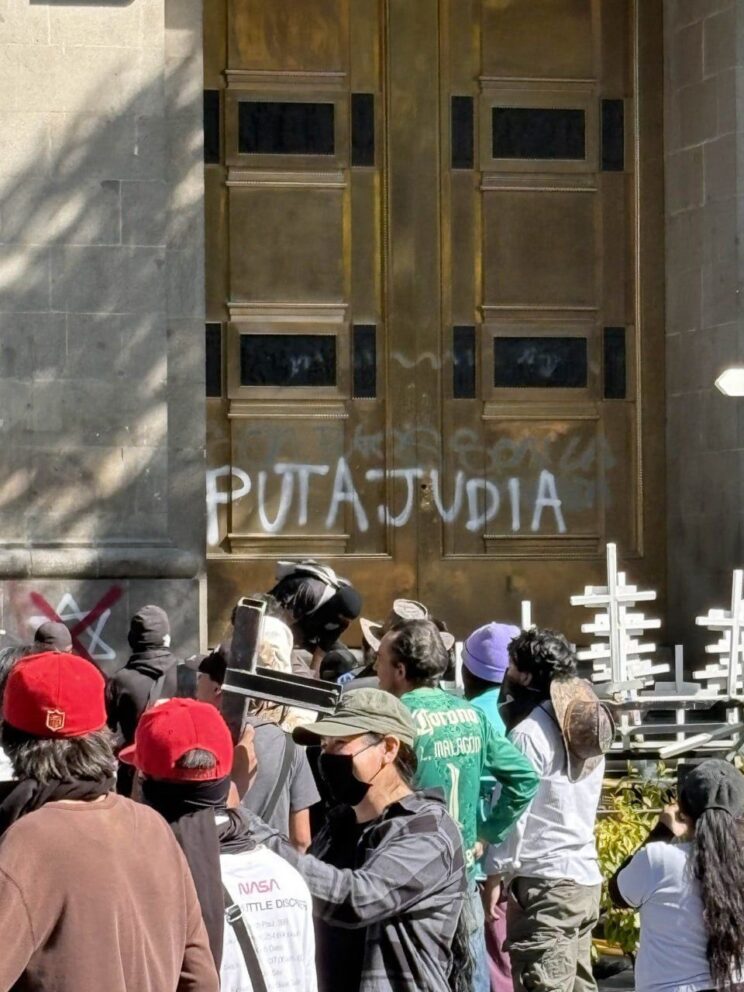
While the vast majority of protesters voiced genuine concerns, a small contingent openly displayed fascist symbols while defacing the presidential palace with antisemitic slurs, a reaction to recently-elected President Claudia Sheinbaum’s Jewish heritage.
“Puta Judia,” or “Jewish Whore,” was spray painted on the door of the presidential palace next to a crossed-out Star of David.
Izhanih National Movement
Izhanih National Movement (MNI), one of at least four fascist groups present at the march, took credit for the graffiti. MNI espouses “Third Positionism,” which is a branch of neo-fascism that advocates for leaderless resistance while trying to co-opt some ideas from the left.
According to the group’s website, the MNI envisions a state full of nationalist citizens who guarantee the privileges of race, social class, surname and other elements, differentiating one person from the next. Additionally, the group believes voting rights should be severely restricted and thus abstain from voting themselves.

In a meme posted to their social media, MNI placed the blame for gentrification in Mexico City on the shoulders of Sheinbaum, who was the city’s head of government from 2018 until her election to the presidency in June 2024. The criticism is partly true: during her tenure leading the city’s government, Sheinbaum signed a deal with Airbnb to attract “digital nomads” as a way to boost the economy, claiming short term rentals like Airbnb had no effect on local rental prices.

Widespread dissatisfaction, expressed by last year’s mass protest movements, provide ample opportunity for these groups to leverage grievances against an ostensibly “left-wing” government led by Morena.
Morena is the current leading political party in Mexico, founded in 2011 by Andres Lopez Manuel Obrador, who rode it into the presidency in Dec. 2018. Sheinbaum belongs to Morena and campaigned on continuing Lopez Obrador’s policy agenda.
On a live broadcast on X the day after the Nov. 15 protest, one of MNI’s leaders outlined this tactic as the purpose of the group’s presence at the march in the first place.
“What we went to do was radicalize the group and make ourselves known. I think everybody who went to the march essentially has strong anti-government sentiment,” he said. “Maybe they won’t accept your message, maybe they won’t want to raise their arms in the ‘Heil Hitler’ salute, because you have to be way down the rabbit hole to understand the Third Position message, but what is true is: one, many left with the understanding that that old woman is Jewish; two, they left with the understanding that Jews are screwing up the country; and three, the best part, there’s a mental structure created by propaganda in the minds of many people.”
He continued, saying that, “It’s 1945… Sixty-eight damn years of Talmudic propaganda: Schindler’s List, World War II films, Hitler documentaries, articles… and in which, essentially, everything is dedicated to covering up the misdeeds that these individuals have done to free nations. It’s precisely part of what makes a Third Positionist awaken.”
According to the Mexican writer Mauricio Prado Jaimes in his newsletter Nuesta América, the group’s purpose for attending the march was one of propaganda: to raise its notoriety and to radicalize as many protesters as possible.
“They attempt to create a rift in this social consensus by falsely claiming that the president is Jewish and is essentially governing to favor foreign interests,” Prado wrote. “Classic antisemitism.”
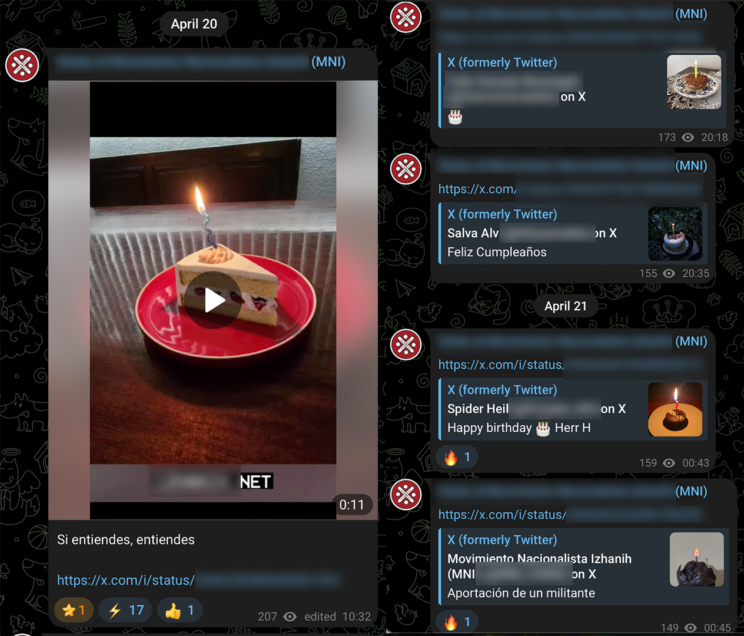
After the shooting, MNI moved to address the Teotihuacan shooting shortly after midnight, immediately muddying the waters by comparing factual reporting from El País with the accounting of the far-right website La Derecha Diario México, which claimed Jasso was in reality a communist, who had on his person “material with references to the Soviet Union.”
The day it occurred, the group’s Telegram was busy posting pictures of birthday cakes and texts such as “If you know, you know,” and “Happy Birthday, Herr H.”
Mexicans in Defense of the Nation
The poster featuring the Angel of Independence steering gringos from Mexico was produced by a newer group that has been much more militant in its marketing, placing signs and stickers all around Mexico City: Mexicans in Defense of the Nation (MDN).
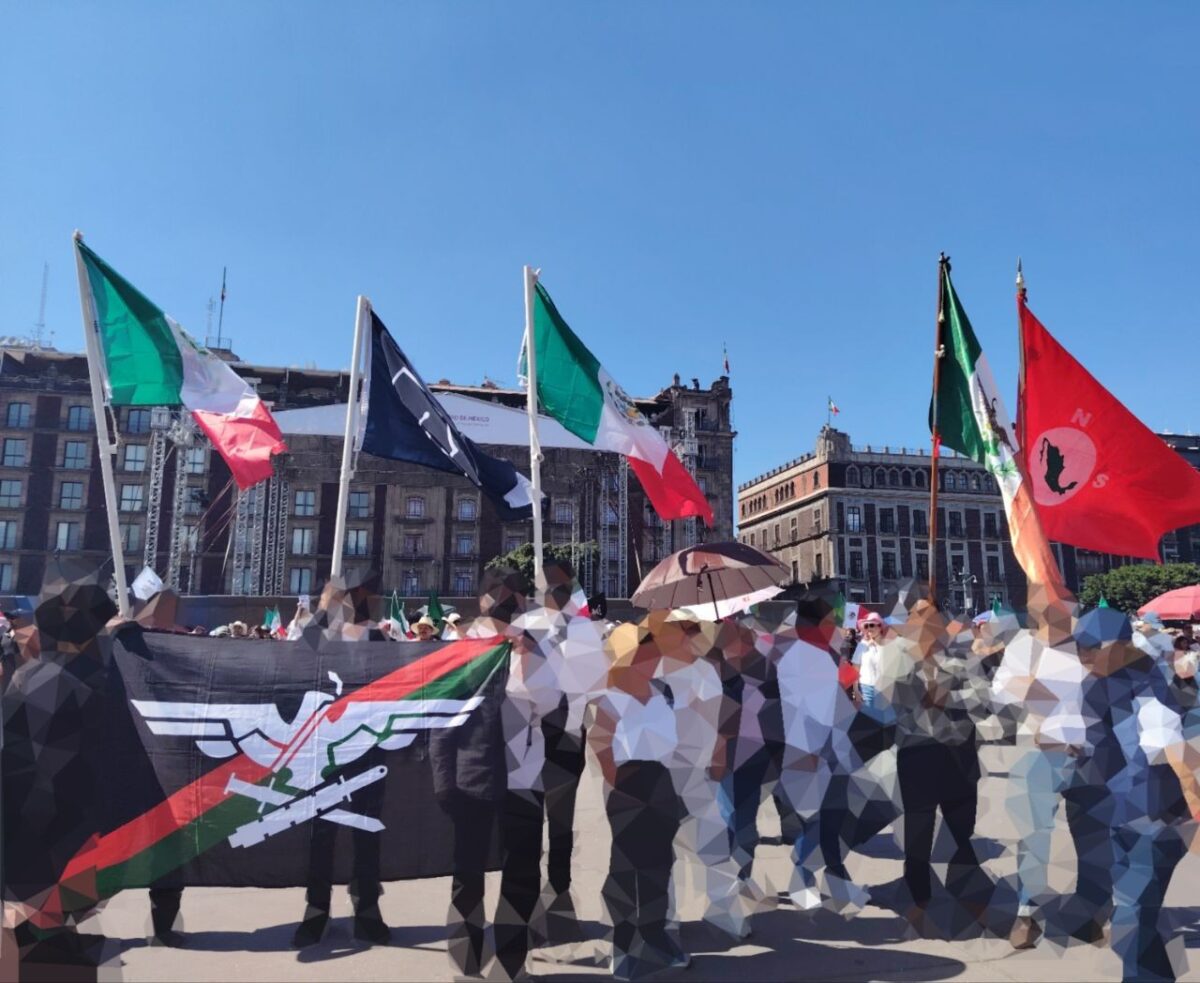
Similar to MNI, MDN has been mobilizing on grievances that are broadly felt but unaddressed by the party in power, such as those fueling the anti-gentrification rally and the Generation Z March. Its presence was visible on Nov. 15, bringing to the rally a large flag with the group’s symbol, two crossed swords: one of a traditional European variety and the other a macuahuitl, a wooden handle embedded with obsidian blades used by the Mexica, or Aztec, people.
The symbolism of these crossed swords speaks to what sets apart MDN from other prominent fascist groups in Mexico: its embrace of the colonizing culture as well as the colonized.
“Two worlds, one people,” another MDN poster reads, paired with the illustration of an Aztec warrior alongside a Spanish conquistador. “Embrace your origin.”
In its 15-page manifesto outlining the group’s principles, it makes clear its purpose for this: focusing on one heritage or the other only further divides Mexicans and distracts them from more important problems. However, appealing to a noble past over a degraded present is just another aspect of fascism, only in this case it is post-racial. That manifesto also touts Third Positionism.
A similar post-racial appeal can be seen in the ideology of MNI, though not as overt as with MDN. This aspect ties the groups neatly to the concept of “Morenazis,” a portmanteau of the Spanish word for having dark skin and the word Nazi, which emerged after the Second World War. Although originating in Latin America, the term is difficult to apply neatly to these groups because Morenazis embrace the European ideal of white supremacy while these groups openly embrace non-white indigeneity.
Another article of propaganda from MDN features a conquistador in front of a pyramid with the text “defend your roots.” A photo posted to the group’s Facebook on March 31, 2023, shows a hand holding up this poster in front of the Pyramid of the Sun, located a short walk from the Pyramid of the Moon in Teotihuacan.
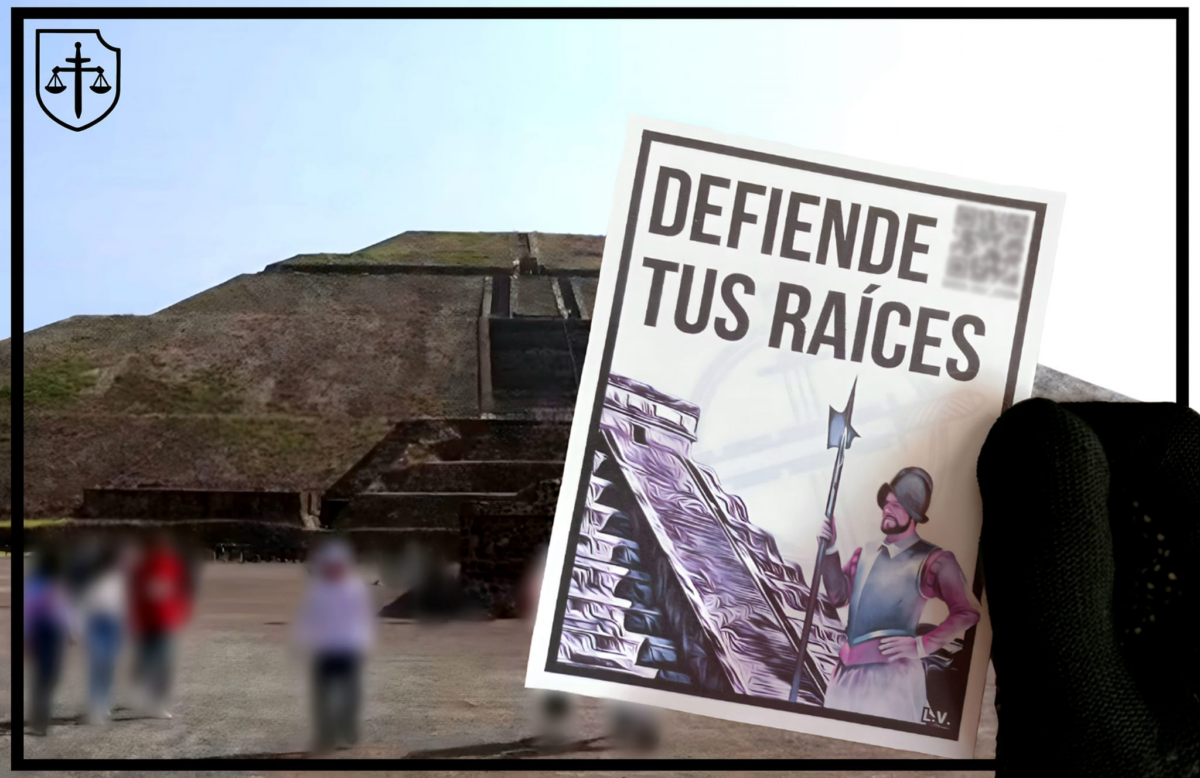
This mixed ideology brings Jasso into focus. Although not affiliated with MDN, he carried out an act that seems to draw much from its world view. Jasso spoke continental Spanish as though he himself were a conquistador and “sacrificed” foreigners on an ancient Mesoamerican pyramid, saddling them with the blame for degradation both real and perceived.
One thing MDN publishes that MNI doesn’t is a library of ideological texts in the form of PDFs. The recurrence of one name sticks out: Salvador Borrego Escalante, who has eight books in the library, including such works as War Economy, a defense of the Nazi war economy, and Worldwide Defeat, a conspiratorial version of the Second World War as the defeat of the entire world in a victory of the international Jewish evil.

Borrego, a Mexican journalist and fascist sympathizer, was a well-known Nazi apologist in the latter 20th Century and, like a majority of Mexicans, a devout Catholic.
In his essay “Youth,” which MDN republished, Borrego tells the reader that the youth of today – whether that’s the first edition readers of 1977 or the seventh edition readers from 2016 – are inheriting a decadent world on the brink of disaster that can only be saved by conversion to Catholicism and strong families.
Borrego and other writers provide a framework for Mexico’s fascist movements to function without such an explicit biological hierarchy as skin pigment or ethnicity. Instead, the thread that binds the fasces together is Hispanic identity and Catholicism.
National Synarchist Union and the Falange
In February of this year, the MDN Facebook account posted a series of pictures of three men in fatigues carrying flags in front of the Monument to the Boy Heroes in Chapultepec Park in Mexico City.
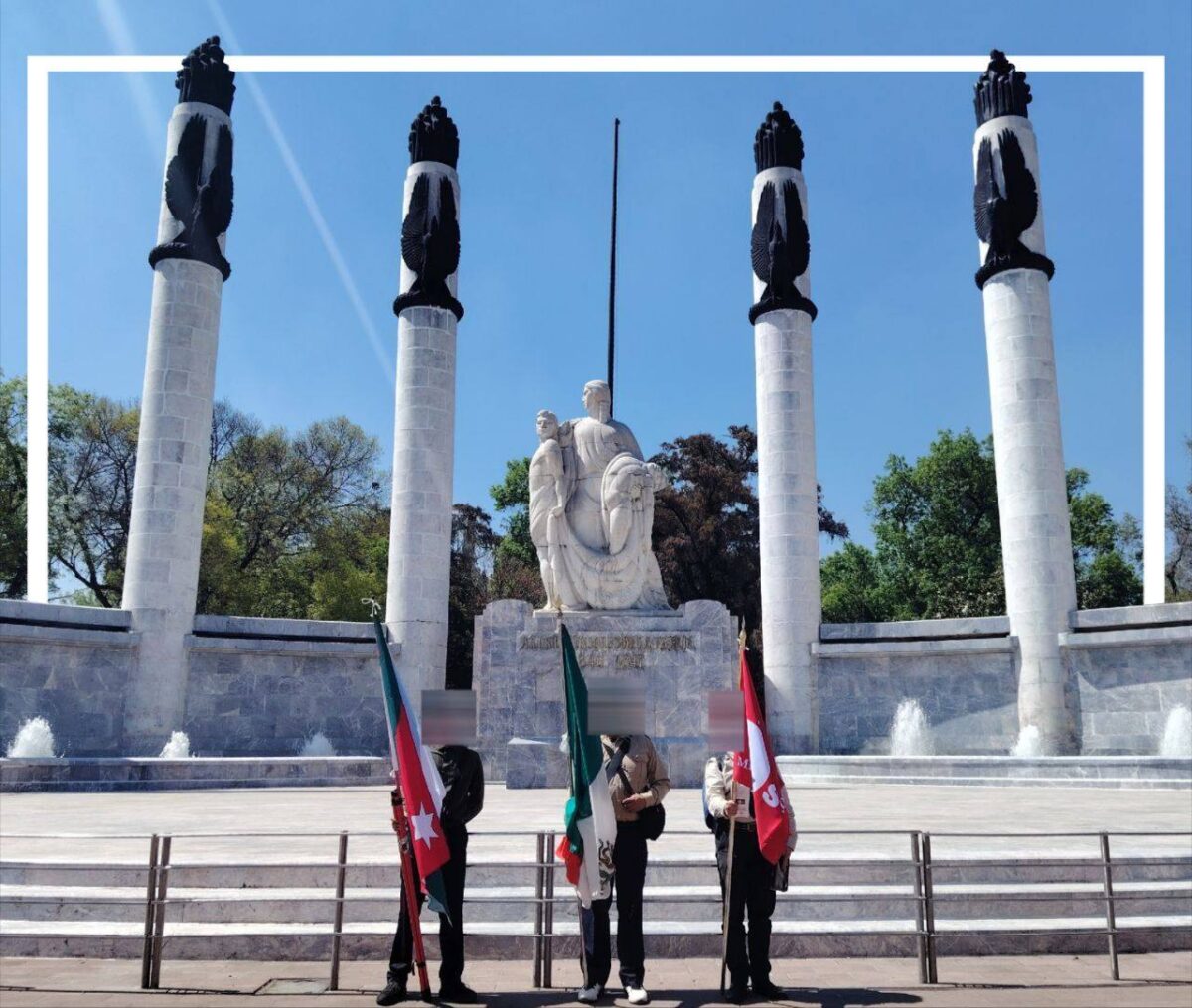
The monument was erected in the middle of the 20th Century to commemorate six young cadets who were killed by U.S. soldiers while defending Mexico City in the Battle of Chapultepec during the Mexican-American War in 1847.
One of the three men was carrying a sling bag with the MDN logo plastered on the front. The flag he carried was a niche piece of Mexican history: a flag from the first Mexican Empire of Agustín de Iturbide in the early 1820s.
The flag represented the Army of the Three Guarantees, alluding to the army’s mission to defend three guarantees, the first being the supremacy of Roman Catholicism in the newly independent Mexico.
The man in the middle carried a flag that could have been the national standard of Mexico, but the man on the left was flying the bright red flag of the National Synarchist Union (NSU), the same logo appearing on a red arm band around his left arm.
The NSU is an old far-right organization in Mexico, founded in 1937 but with roots going back to the Cristero War, an uprising of Catholics in Mexico in reaction to the anti-clerical and secular elements of the 1917 Constitution that left an estimated quarter of a million people dead from 1926 to 1929.
The organization itself has long since disbanded, but that has done little to prevent some people from digging into history to adopt its symbols and aesthetics for their own purposes.
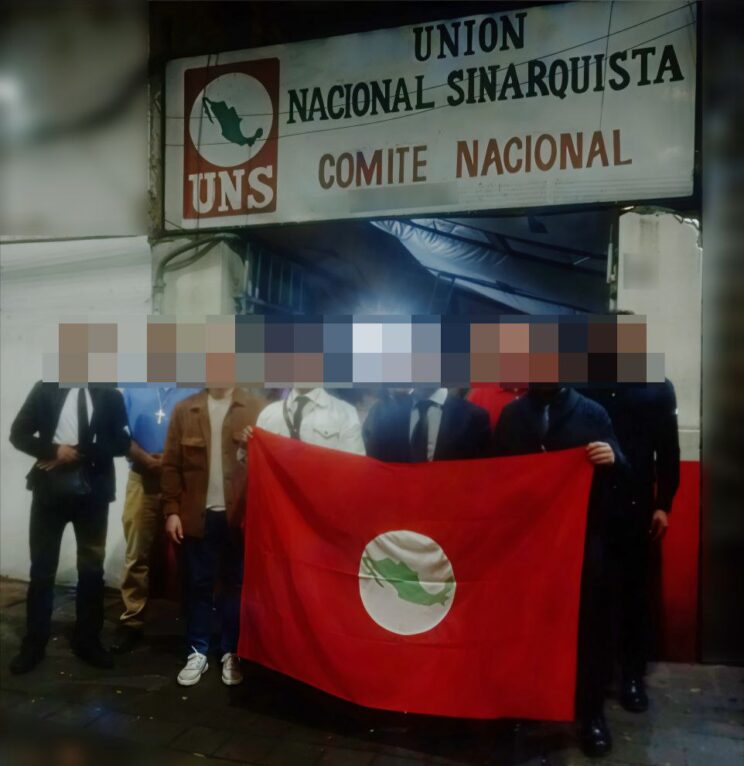
When it was around, the NSU had a history of supporting fascist parties around the world, particularly during the 1930s and 1940s. More than fawning over Nazi Germany’s Adolf Hitler and fascist Italy’s Benito Mussolini, it was Francisco Franco’s Catholic brand of fascism that was most appealing for the synarchists.
One of Jasso’s old X accounts clearly indicates the long standing appeal of the Francoist brand of fascism to this day, as seen in the Falangist flag visible in his header image, alongside the flags of modern Spain and the former Spanish Empire.
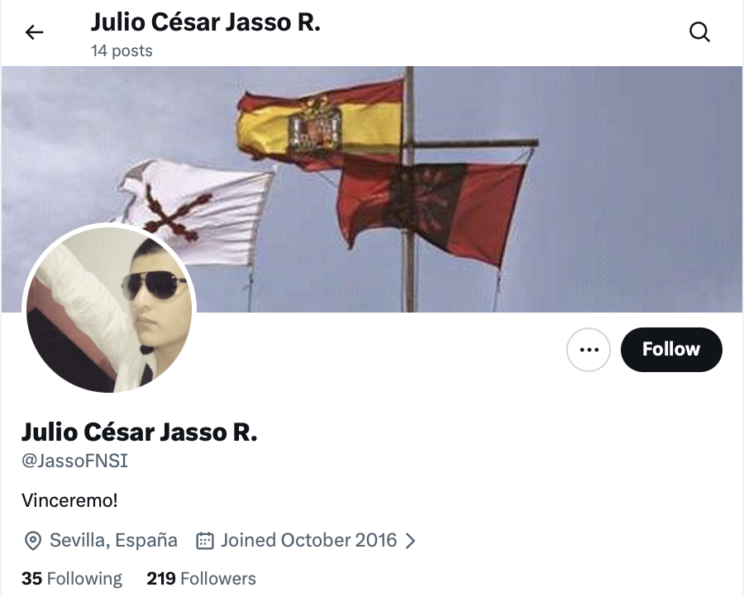
The mixture of flags speaks to one of the motives behind falagism: the union of all Spanish-speaking peoples, referred to as “hispanidad.” One of the more notable motives, however, is the permanence of Roman Catholicism in society.
The falange is also present with the MNI: in the elements provided with a monthly membership fee, the group states that members can voice their opinions and vote on the decisions of “the falange.” MNI also produces stickers with an illustration of a hand holding together five arrows forming a falange, with the text “Together we are invincible.”
Teotihuacan
Within days of Jasso’s attack on the Pyramid of the Moon, it was revealed he had planned everything in advance, having visited the site several times and staying in a nearby room he had been renting for months.
Former classmates of his from the Simón Bolivar School in Acapulco came forward to denounce him, one saying Jasso wore a Nazi necklace and, when questioned about the accessory, said he empathized with the ideas of Adolf Hitler, Imagen Noticias reported. Others confirmed the Nazi sympathies.
The independent Mexican media company Animal Político spoke with Jasso’s teachers from when he attended the Zacatenco Unit Foreign Language Center, who told the journalists he would openly endorse fascism and make racist comments, in addition to his peculiar penchant for speaking Spanish with a peninsular accent.
One teacher recalled how in 2018 Jasso kept interrupting one class by repeating fascist slogans, which resulted in the teacher removing him from class. Jasso began harassing the teacher afterwards, sending him threatening messages.
“All rats are the same,” Jasso wrote. “If you see the director, tell that Jew to go to hell for me.”
But the Nazism displayed by Jasso can be described more in line with edgy incel culture online that seeks to redefine their otherness through shock value. This is supported by the obsession over the Columbine massacre, which broaches into the hollowed-out Nazi aesthetic used by internet groups like the Order of Nine Angles and 764.
Be that as it may, these fascist sympathies and their manifestation both in Jasso’s own persona and his treatment of others originated from somewhere, making it worthwhile to explore Mexico’s rising far-right cultural milieu.
Follow us on X (aka Twitter), Facebook, YouTube, Vimeo, Instagram, Mastodon, Threads, BlueSky and Patreon.
Please consider a tax-deductible donation to help sustain our horizontally-organized, non-profit media organization:

Check out more UR coverage of far-right investigations: