Terror Charges and the Criminalization of Pro-Palestine Activism in the Czech Republic
Pardubice, Czech Republic – A warehouse facility owned by defense and military drone manufacturer LPP Holding was set on fire by the underground anti-Israel network called Earthquake Faction on March 20.
After the incident, which took place roughly 60 miles away from Czechia’s capital Prague, the group published an online communiqué stating, “For as long as the land continues to bleed under Israeli bombs in Occupied Palestine and across West Asia, ground must continue to shake under the feet of the sponsors of Occupation.”
The group claimed it had “struck the epicenter of the Israeli weapons industry in Europe,” and further alleged that the facility, which it described as an “’Elbit Systems Centre of Excellence’ built in collaboration with LPP,” was linked to the global operations of an Israeli defense manufacturer.
Authorities reported no injuries from the March fire, and investigations are ongoing. However, in the aftermath, Czech media and official responses intensified scrutiny of pro-Palestinian groups.
Initially, ten people were detained in connection with the Pardubice incident. During the writing of this piece, however, according to supporters, another individual was detained, one of the interviewees featured, bringing the “Czech Elbit 10” case to what supporters are now calling the “Czech Elbit 11.”
Gaza and the Politics of Dissent
Meanwhile, the situation in Gaza has not gotten better. With a sharp decline in mass protests internationally, compared to last year’s momentum, a severe humanitarian crisis persists in the enclave. Israeli airstrikes continue to cause widespread destruction and loss of Palestinian lives.
Nearly two million people – around ninety percent of the population – remain displaced, are facing extreme hardships. There have also been reports of the spread of disease and escalating risk of famine. Israel pledged a few weeks back to seize 70 percent of Gaza, according to Prime Minister Benjamin Netanyahu’s orders to the Israeli Defense Forces, breaching the previous ceasefire agreements.
As international attention to Gaza slowly wanes, activists around the globe continue to demand accountability and justice within what they describe as a weakened system of international law in addressing alleged crimes committed by Israel. At the same time, many pro-Palestinian activists report facing significant political repression across various Western societies.
The Czech Elbit 11 Story
After the fire at Pardubice, authorities launched what activists describe as a “political witchhunt,” targeting pro-Palestinian activists and organizations across Czechia. In the weeks that followed, five individuals in Czechia, along with one from Slovakia, one from Bulgaria, and three from Poland, were reportedly detained in connection with suspected links to the fire, based on state allegations of involvement. Another individual, an Ukrainian refugee based in the Czech Republic, was also allegedly brought into detention.
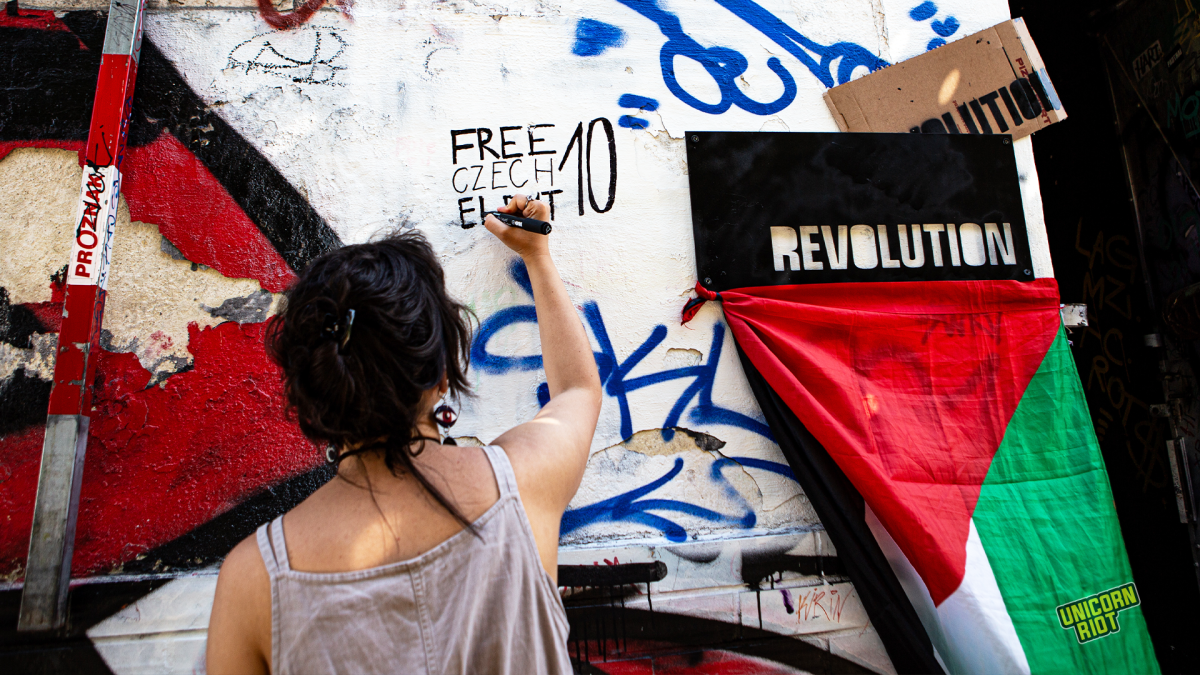
Activists rejected the accusations, argued that they were attempts by the state to suppress political dissent, and organized a coordinated campaign demanding attention to the case and calling for the immediate release of the detainees.
The individuals are collectively referred to by supporters as the “Czech Elbit 11,” a designation used to garner awareness of the situation by advocating for their legal defense.
Unicorn Riot spoke to one of the supporters of the Czech Elbit 11, who stated, “Following the fire at the facility that belongs to LPP Holding, the state began a witch-hunt against pro-Palestinian communities in Prague. Ten people are currently detained under suspicion of their connection to the fire that happened. Yet there has not been any evidence sufficient for the police to hold these people in prison.”
Activists spoke about increased surveillance of their networks, including cases where police seized personal devices. According to activists, the intensifying state pressure also led to incidents of home raids, interrogations, and prolonged detentions without a clear timeline for release provided for those held.

They also emphasized how these state crackdowns are becoming a common pattern in multiple Western countries, where terrorism-related charges are being used to suppress political dissent and criminalize activism. “They are in prison for their views,” one activist said.
Pavel Čížinský, an advocate and lawyer representing one of the detained individuals, described the incident in Pardubice as having a significant impact on Czech society and the pro-Palestinian movement. He argued that the state’s response raises both legal and political questions.
“It’s a question to the state why the state is so tough. On the other hand, such fires, such attacks are not very usual in the Czech Republic. So this is something which gained a lot of media attention and so on. Some reaction of the police is foreseeable and understandable. On the other hand, to qualify it as terrorism is surely something which, from the legal point of view, must be questioned.”
The Relationship Between LPP and Elbit Systems
The Czech Elbit 11 claim that LPP Holding has publicly distanced itself from any relationships with Elbit Systems, an Israeli defense and military technology company. However, activists and independent researchers point out that the two companies have documented operational links.
Activists interpret this distancing as an attempt to depoliticize the incident and argue that the attack was politically motivated and carried out in opposition to what they claim are Israel’s genocidal acts in Gaza.
Although corporate statements and official briefings differ in tone and framing, activists and researchers point to publicly available material suggesting a more nuanced relationship between the companies.
Unicorn Riot spoke to a Ukrainian refugee based in Czechia who has been analyzing the media coverage of the incident. They argue that their findings support the view that the relationship between the LPP and Elbit has been sustained over time. They also noted discrepancies in the way the media reported the issue, saying:
“From our research, it makes sense that the people who stand against Elbit’s activity worldwide, who target Elbit’s weaponry sites around the world, would also target this site because, again, LPP and Elbit’s connection was proved by themselves, as said by representatives from these companies themselves.”
They also criticized Czech media coverage, claiming that many reports framed the incident in non-neutral language. What they found were wordings used to describe it as a “terrorist attack” or “arson attack,” rather than a fire with activist motivations to denounce LPP’s involvement in having relationships with a country committing a genocide in the Gaza Strip.
A prominent Czech business outlet, e15, reported a few years back that Elbit Systems and LPP were planning a strategic partnership to develop a drone technology center in the Czech Republic, involving joint UAV production.
A 2024 interview with LPP co-owner Radim Petráš stated that the company is cooperating with Elbit on projects linked to the Israeli military, and that production in LPP’s Pardubice facilities was scheduled to begin in the same year.
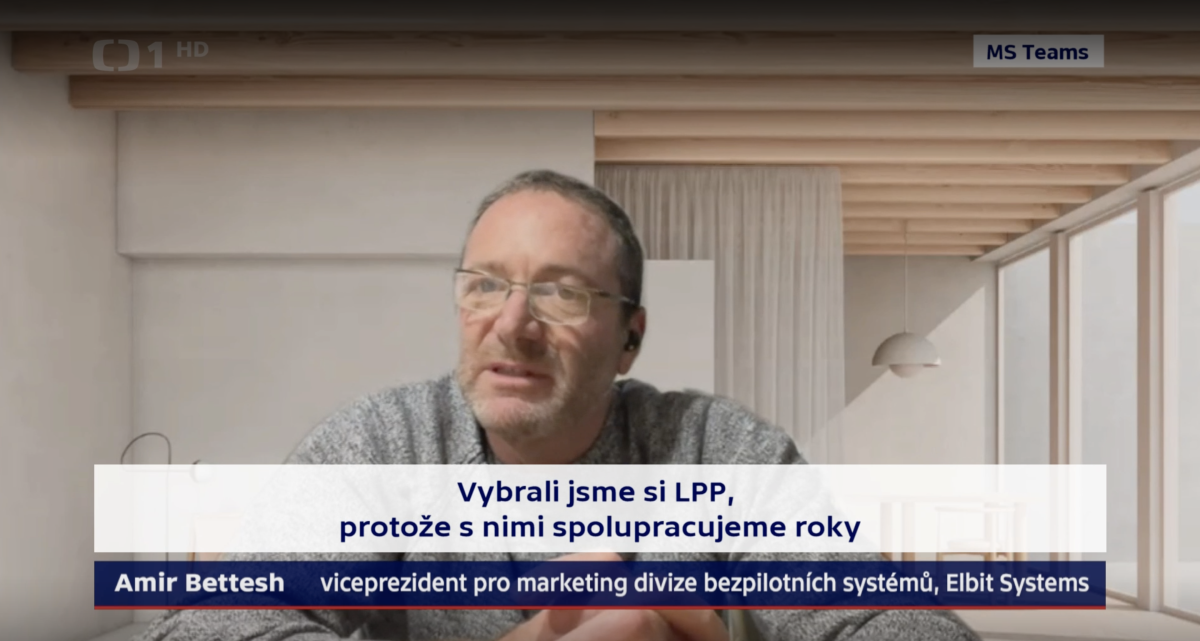
Additionally, Radim Petráš was reportedly acknowledged by Elbit leadership as a valued partner. The marketing executive for Elbit, Amir Bettesh, was also cited in interviews discussing long-term cooperation and expansion within NATO-aligned markets. Activists researching this case stated:
“…there is an interview where Radim Petráš, the co-founder of LPP, is saying that this site is going to be not just a manufacturing site, but also a development and research center for drone production. Then later in the same interview, the VP of the marketing department for unmanned aerial vehicles from Elbit, Amir Betesh, mentions that they chose LPP to cooperate because they’ve been cooperating with them for years, and that their strategy right now is to expand in NATO-controlled territories, being affiliated with NATO governments, and LPP is absolutely perfect for that.”
Supporters and activists present these accounts as evidence of an ongoing technological and business-oriented partnership between LPP and Elbit. They claim that this goes against how the media portrayed the relationship between the two companies, alleging disinformation.
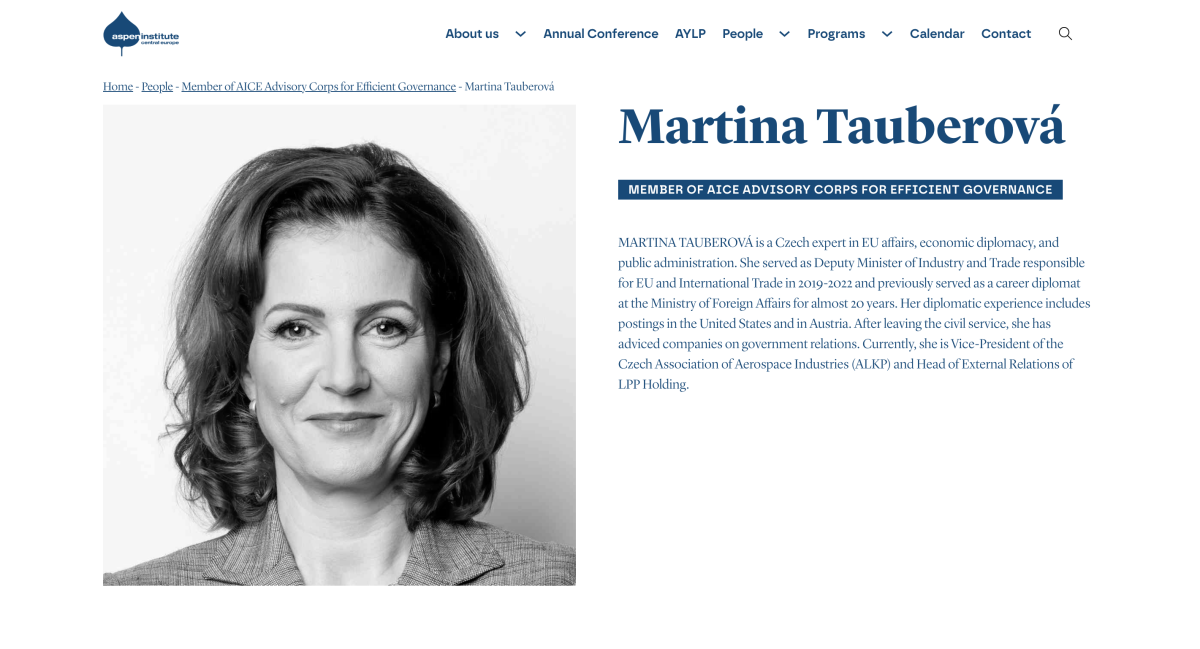
“Like, the thing is that Martina Tauberová, who is the spokesperson for LPP Holding, is also a vice president of the Czech Aerospace Industry Association, which is a body very closely affiliated with the Czech government in general. Martina is a crucial agent in this whole network. She is also a co-founder, together with other partners from LPP, of MTG Export, a company that specifically specializes in export activities,” an activist researcher told us.
Publicly available records also show Tauberová as Vice President of the Czech Association of Aerospace Industries (ALKP), an industry that works closely with government institutions on aerospace and defence policy issues. Together with her positions at MTG Export and LPP Holding, these roles place her with organizations that are tied to both the Czech defense industry and state policy. In this context, she operates not only within civil aerospace industry structures, but within associations explicitly oriented toward Czech military modernization and state defense priorities.
Following the Pardubice incident, many mainstream outlets mentioned LPP Holding’s claim that its planned cooperation with Elbit Systems had never fully been implemented in Pardubice.
However, critics and activists continue to claim that LPP and Elbit had publicly announced partnerships back in 2023 to develop drone-related capabilities. Solidarity groups urge journalists and investigators to thoroughly investigate the links between LPP and Elbit Systems.
Lives Under Pressure
Prior to their detention, one of the interviewees expressed concern for those already imprisoned. They argued that even their partner and several close friends remained in custody. They emphasized the authorities’ role in undermining the presumption of innocence of the detainees.
“These people’s presumption of innocence is being ignored by the state, which is a violation of their human rights,” they said.
They added that their fellow detainees had taken part in numerous pro-Palestinian demonstrations in Prague over the past two and a half years, including a 24-hour hunger strike outside the Czech Foreign Ministry.
“We stayed outside and slept in the cold beside the ministry building in solidarity with members of Palestine Action who were being prosecuted for their views and actions against Israel’s war machine, embodied by companies such as Elbit Systems,” they said.
Activists in the Czech Republic fear constant surveillance by the authorities. Pavel, the lawyer representing one of the detainees, also expressed that handling this case has been quite a new experience for him. He describes pressure by authorities by stating,
“I faced some pressure from the police and from the state prosecutors, not to take this case,” he said.
“It was the first time in my career that I experienced that the police told me, `You cannot go to your client`, because you are in some conflict of interest, which was not true at all. So I got to my client, let’s say, sixteen hours later than I first tried.”
Unicorn Riot asked if such power, enforced by authorities, was allowed. Pavel mentioned that he does not think so.
“The police cannot even admit it. At first, they [the authorities] told me that my client did not want to see me, which was simply not true,” he said.
The detained activist from this interview also shared their deep-seated anxiety:
“We don’t feel safe in our own homes anymore. We don’t feel safe even in the streets. We are being watched. We notice being followed by undercover cops.”
They describe the Czech police utilizing special units that are experts in anti-extremism and anti-terror initiatives. According to the activist, special police units may enter dwellings without a warrant in certain legally defined circumstances.
Even though the pro-Palestinian activists face mounting pressure from the state, they continue to raise crowd funds to help deal with the case.
This story is not an isolated case, as concerns over the criminalization of pro-Palestine activism have dramatically intensified in recent months.
On June 15, the UK’s Court of Appeal upheld the government’s decision to proscribe members of Palestine Action as a designated terrorist organization, making support for or being a member of the group a criminal offense punishable by up to 14 years behind bars.
The ruling followed months of arrests at protests and has been criticized by activists, fearing the erasure of freedom of expression and the right to protest. Critics argue that governments are utilizing the rationale of national security as a way to crack down on political dissent.
As Palestine — both in the West Bank and in the Gaza Strip — faces an almost constant state of hardship each day, many activists around the world are taking direct action to oppose Israel’s aggression. Debates regarding freedom of expression and the right to speak up against violations of human rights are integral to citizen political participation. The question of whether activism should be turned into crime or terrorism is a serious debate that continues to pervade contemporary political discourse.
The detention of an additional activist during the reporting of this story highlights how rapidly the case continues to evolve. While Czech authorities frame the investigations as a matter of national security, supporters of the Palestine solidarity network say otherwise. They view the situation as a wider trend toward authoritarian practices, as they criminalize pro-Palestine activism. As legal proceedings persist, the Czech Elbit 11 has become an integral part of a crucial debate over dissent and solidarity with Palestine in the Western world.
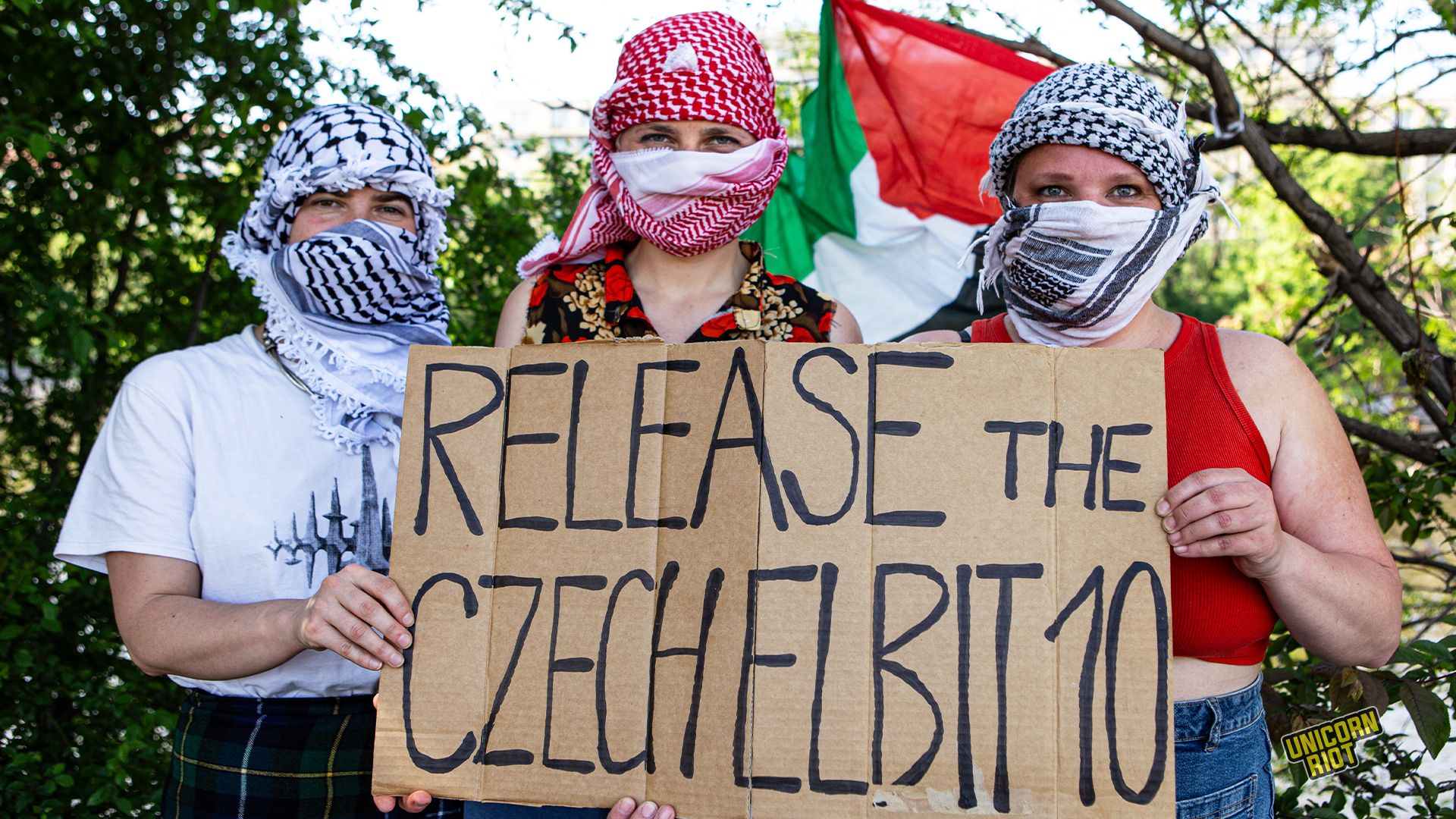
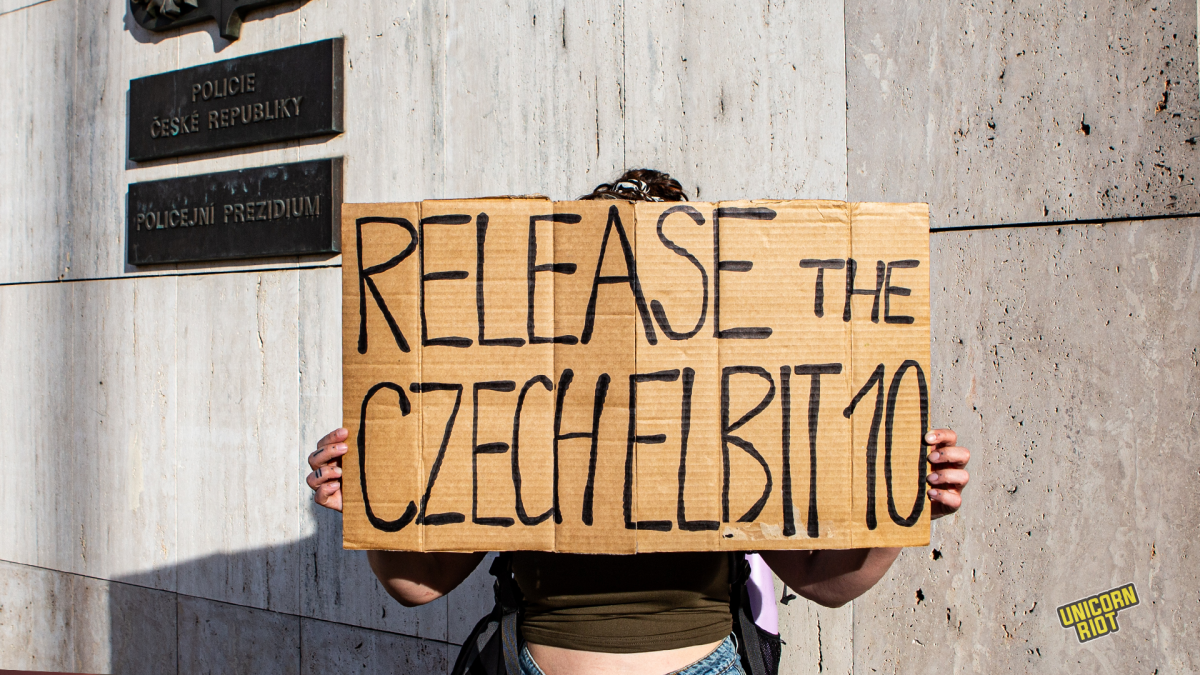
Cover image of activists in the Czech Republic hold a “Release the Czech Elbit 10” sign in solidarity with those detained in the state crackdown, contributed by Elvis Takahashi Mantello.
For more media from pro-Palestine protests and from the frontlines in Palestine, click the image below.

Follow us on X (aka Twitter), Facebook, YouTube, Vimeo, Instagram, Mastodon, Threads, BlueSky and Patreon.
Please consider a tax-deductible donation to help sustain our horizontally-organized, non-profit media organization: