Exarcheia: Political Life Suffocated by State Surveillance
Carnival in a Contested Space
On February 15, residents and community associations organized an event in Exarcheia Square, aiming to reclaim the space amid the controversial metro construction. The initiative was not only directed against the project itself but also against the broader pressures of gentrification, with Exarcheia increasingly seen as one of Athens’ key attractions for tourists. This transformation has been accompanied by the rebranding of the neighborhood’s countercultural identity, now marketed through boutique-style cafés and a surge in Airbnb rentals.
The gathering was festive, with crowds of people enjoying their time. Orchestras played, and people socialized around solidarity markets, with children participating in games and activities.
Beyond the celebration, organizers sought to underline the square as a living political space, one historically tied to anti-fascist struggle and grassroots activism.
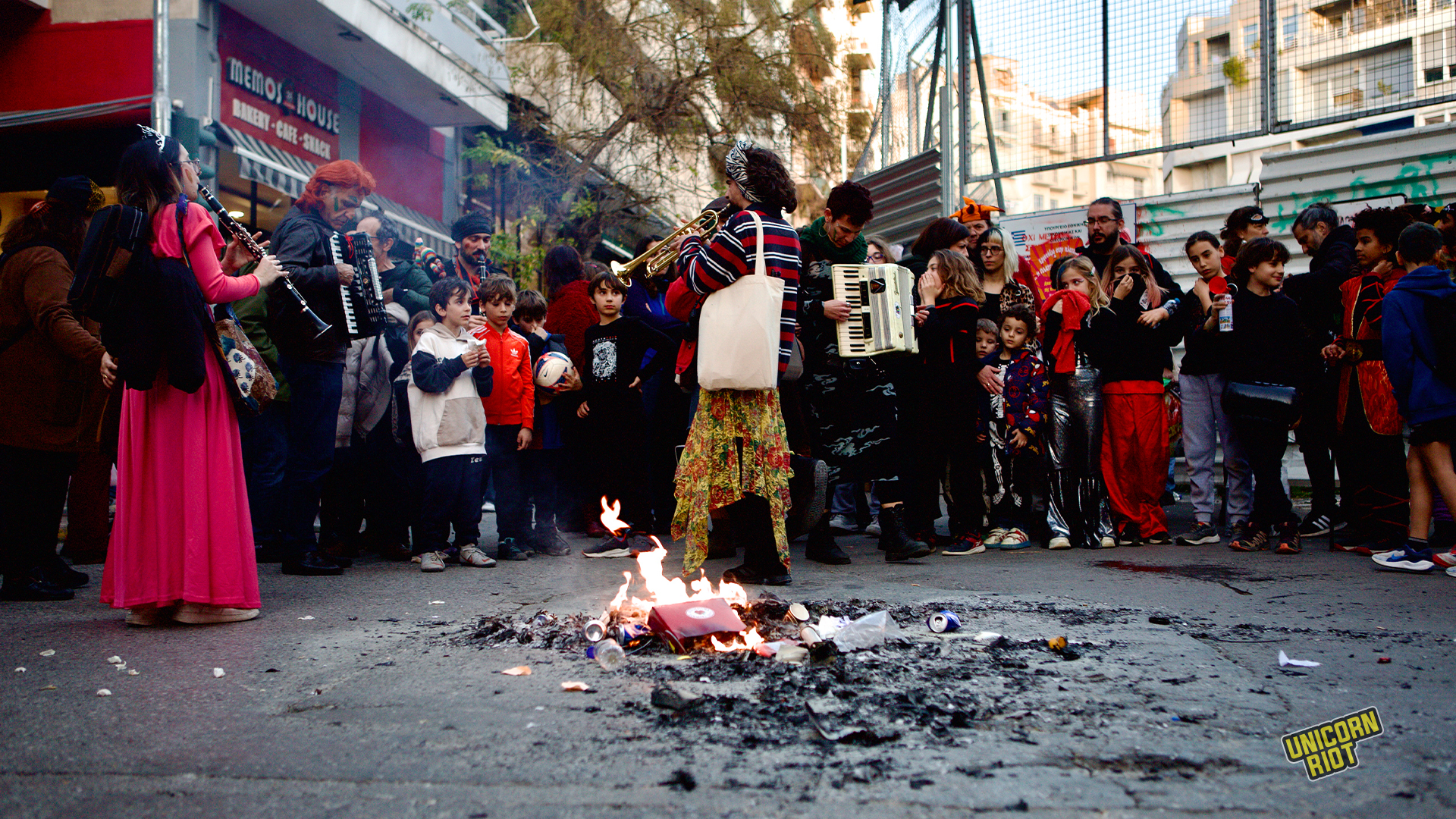
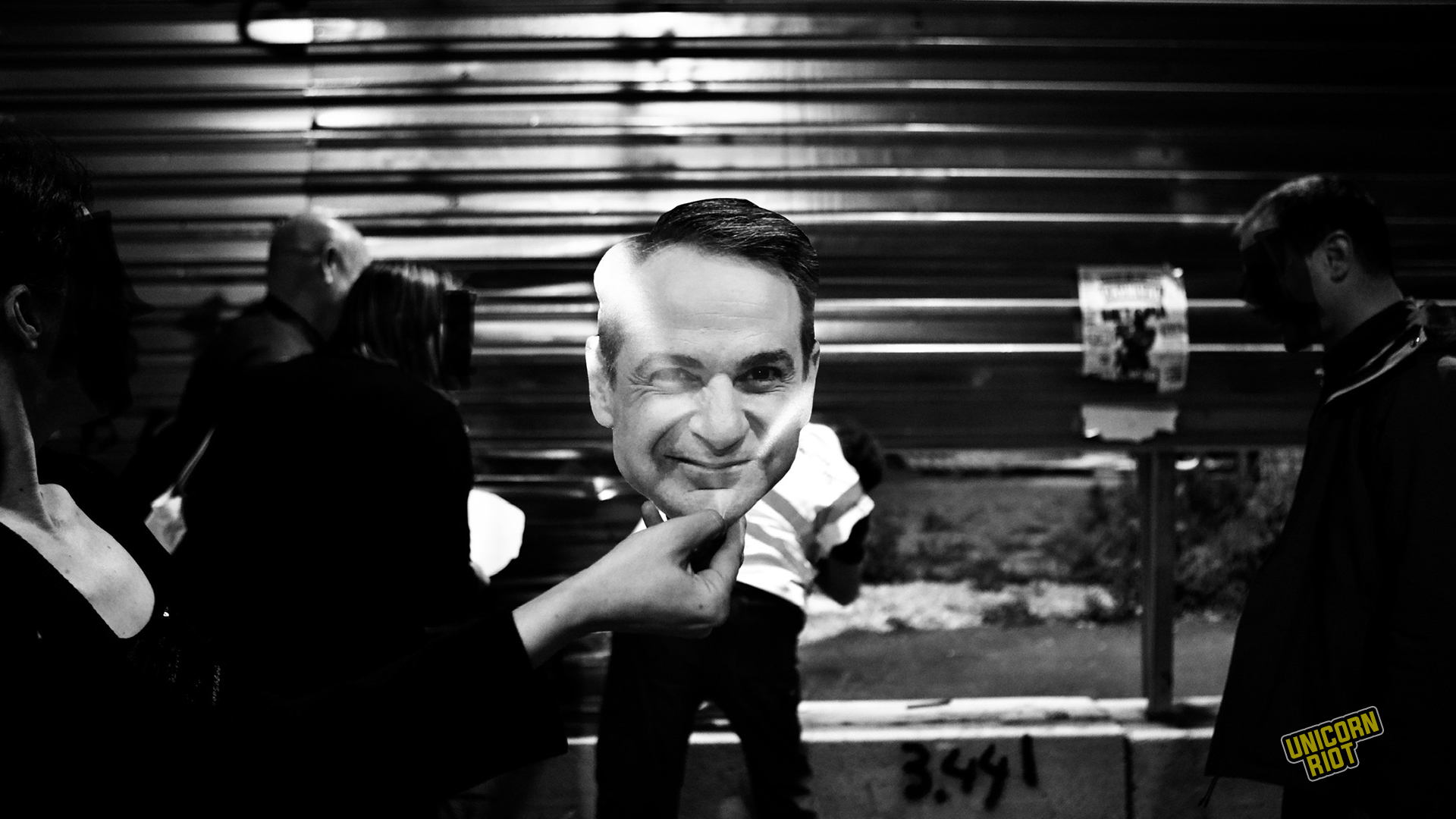
At the end of the carnival, participants staged a symbolic act of mockery toward political power, wearing paper masks printed with the faces of politicians. As Rage Against the Machine’s “Killing in the Name” blasted through speakers, some in the crowd suddenly began pulling apart the metal barricades surrounding the metro construction site.
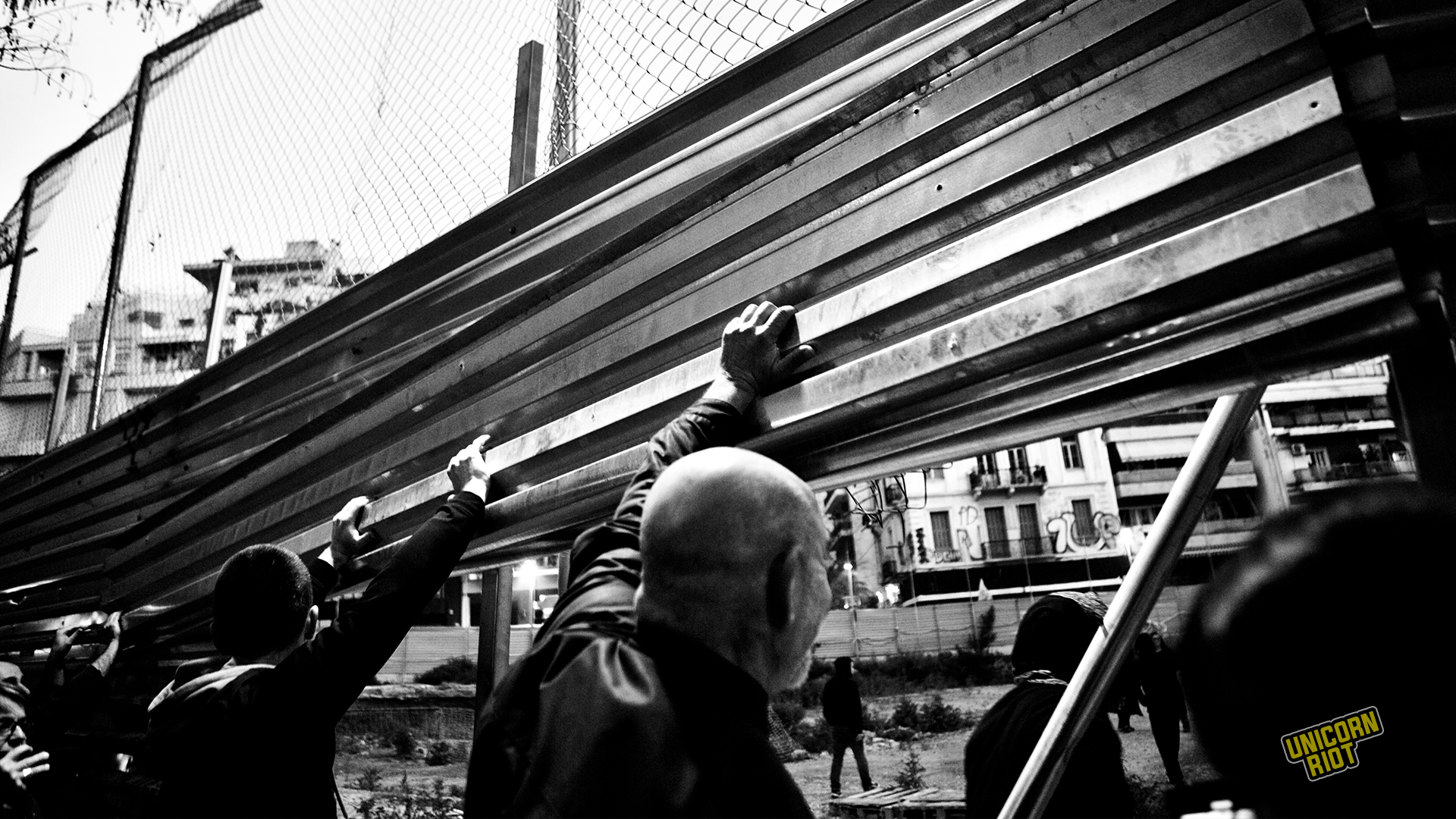
The moment came completely unexpectedly. As the barriers gave way, the crowd erupted in cheers, caught between disbelief and excitement. For a brief moment, the square seemed reclaimed, echoing its history as a shared space of political life.
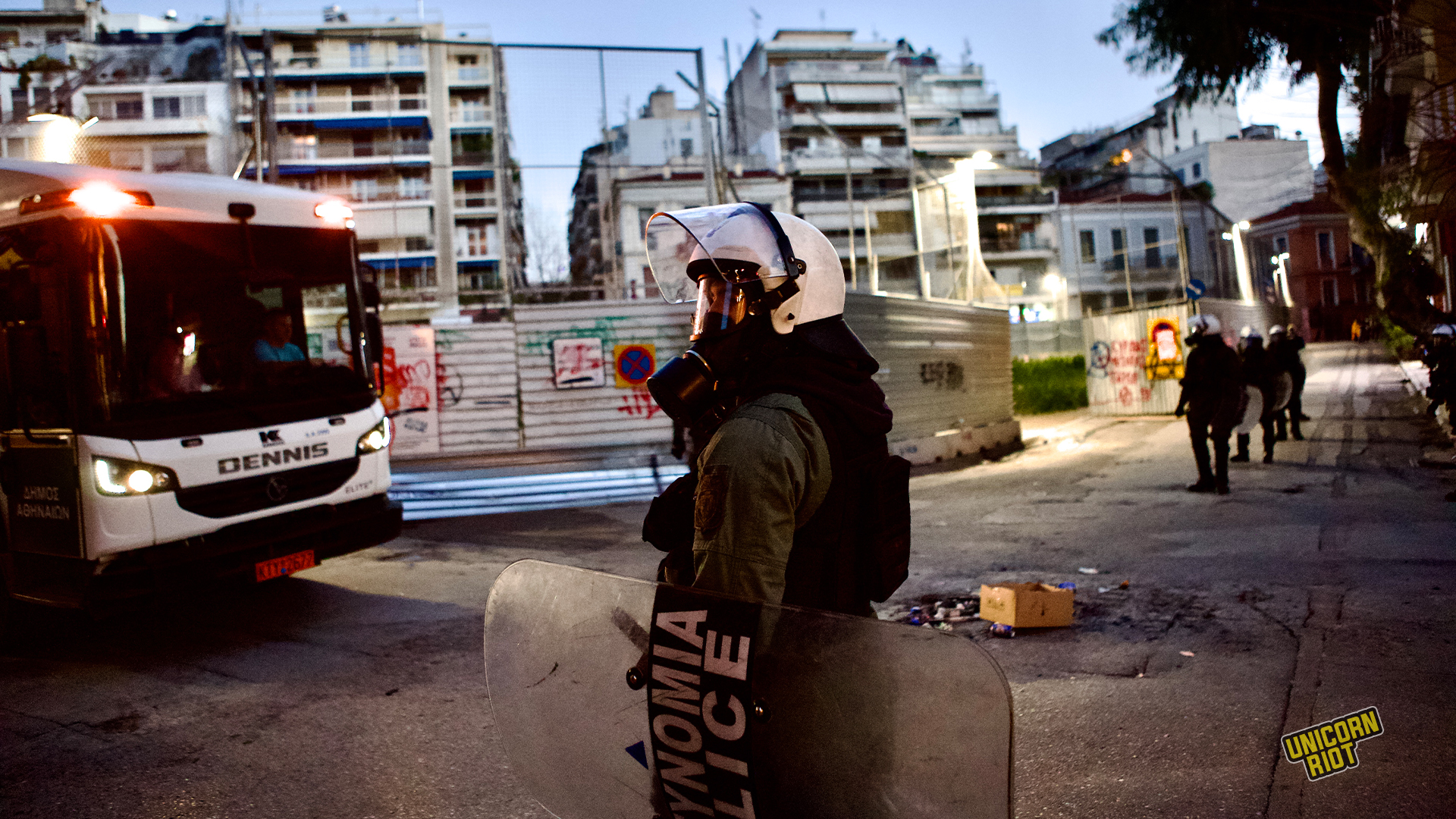
The mood shifted drastically when someone in the neighborhood called the police. Riot police soon marched into the square. There was no tear gas or flash grenades this time, but their presence was unmistakably threatening as they stood watching the crowd. Gradually, the energy cooled as people became more cautious under the officers’ gaze.
Metro Construction and the Politics of Space
Exarcheia has long been home to anti-fascist, anti-authoritarian groups. It is both a political space and also a hub that reveres intellectual atmosphere and authenticity. It has often been coined as the anarchist neighborhood in Athens, with popular discourse reflecting the rebellious character of the area.
Ranging from political organizations to direct action, the neighborhood also finds itself in occasional clashes with authorities. Critics argue that Exarcheia is unstable due to the marginalization of political expression and gentrification.
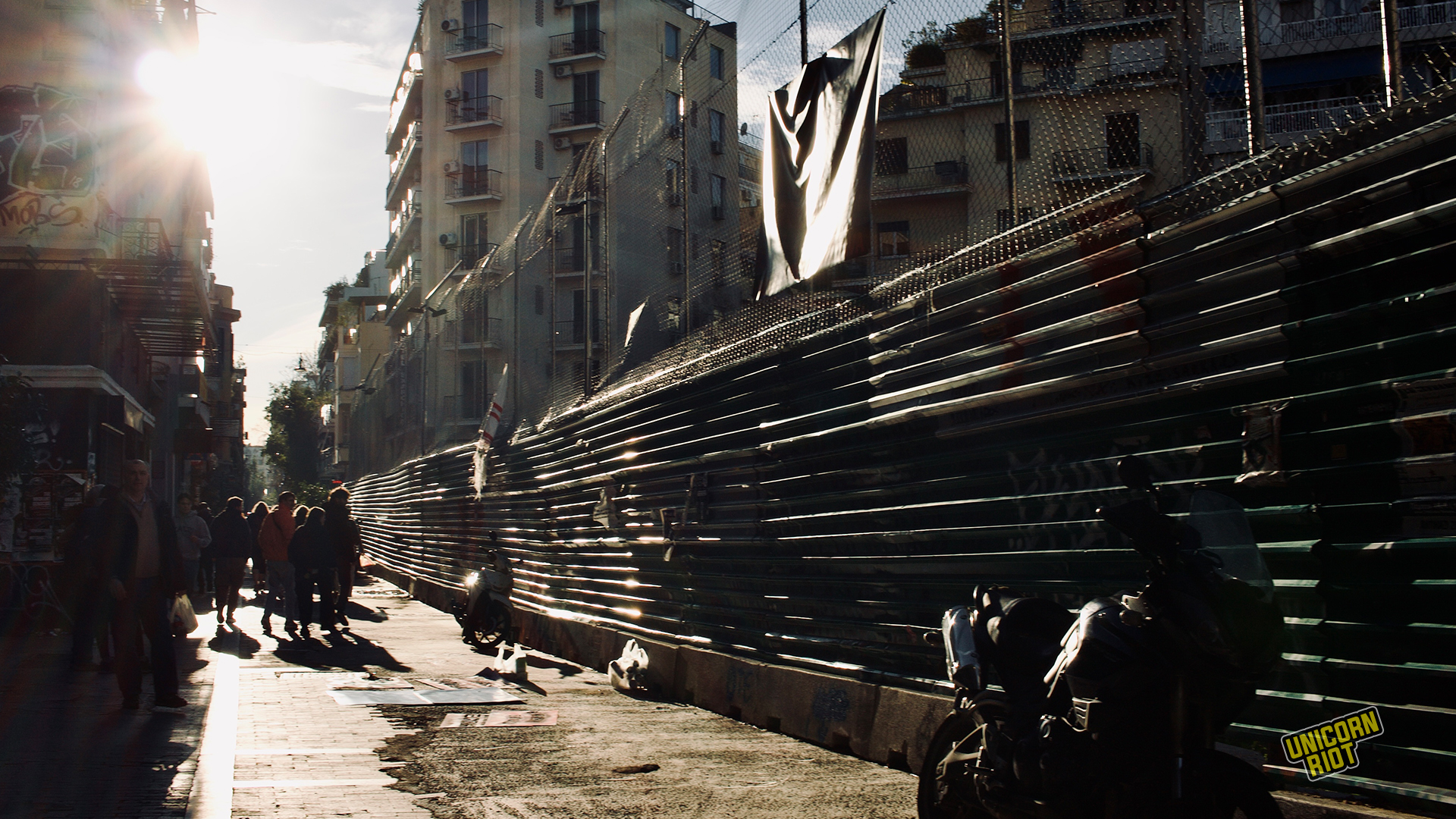
The metro under construction began with the government initiative for the Athens Metro Line 4, despite opposition from residents and alternative proposed sites. The state closed Exarcheia Square, a well-known hub for anti-authoritarian activity, in August 2022.
The decision to target Exarcheia Square, many believe, is politically motivated to accelerate gentrification and bring new people to the neighborhood, from a politicized area to an alternative tourist-friendly space.
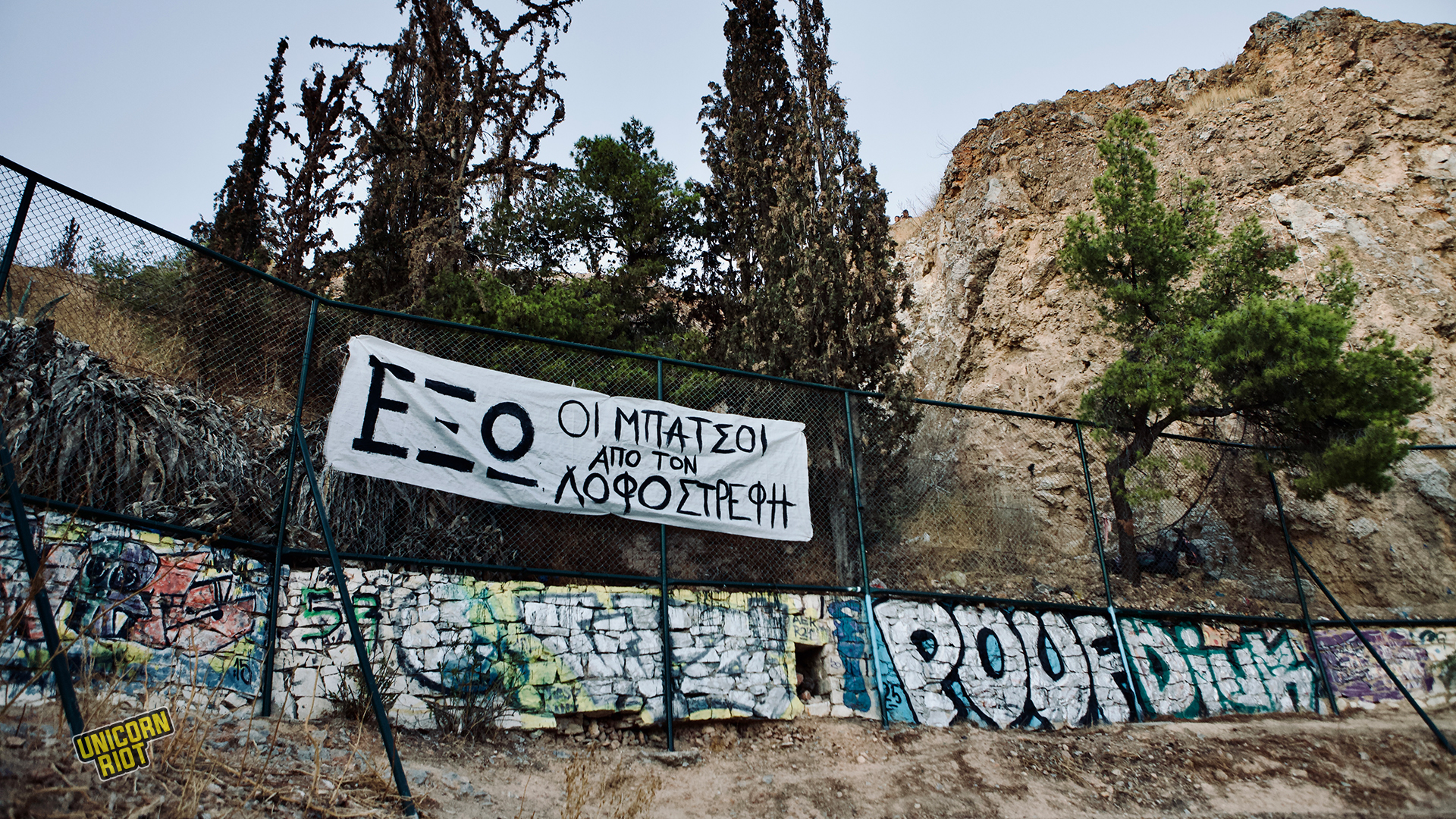
With the metro construction, heavy policing became the new norm in Exarcheia. The Strefi Hill project, managed by Prodea Investments, faced numerous police crackdowns, including interventions by Greek riot police in April of last year.
Like the metro construction site in Exarcheia, Prodea’s redevelopment plans, opposed by local activists, are regularly accompanied by a heavy police presence, both in the shared public spaces and during organized community events.
Police Territorialization and Expansion
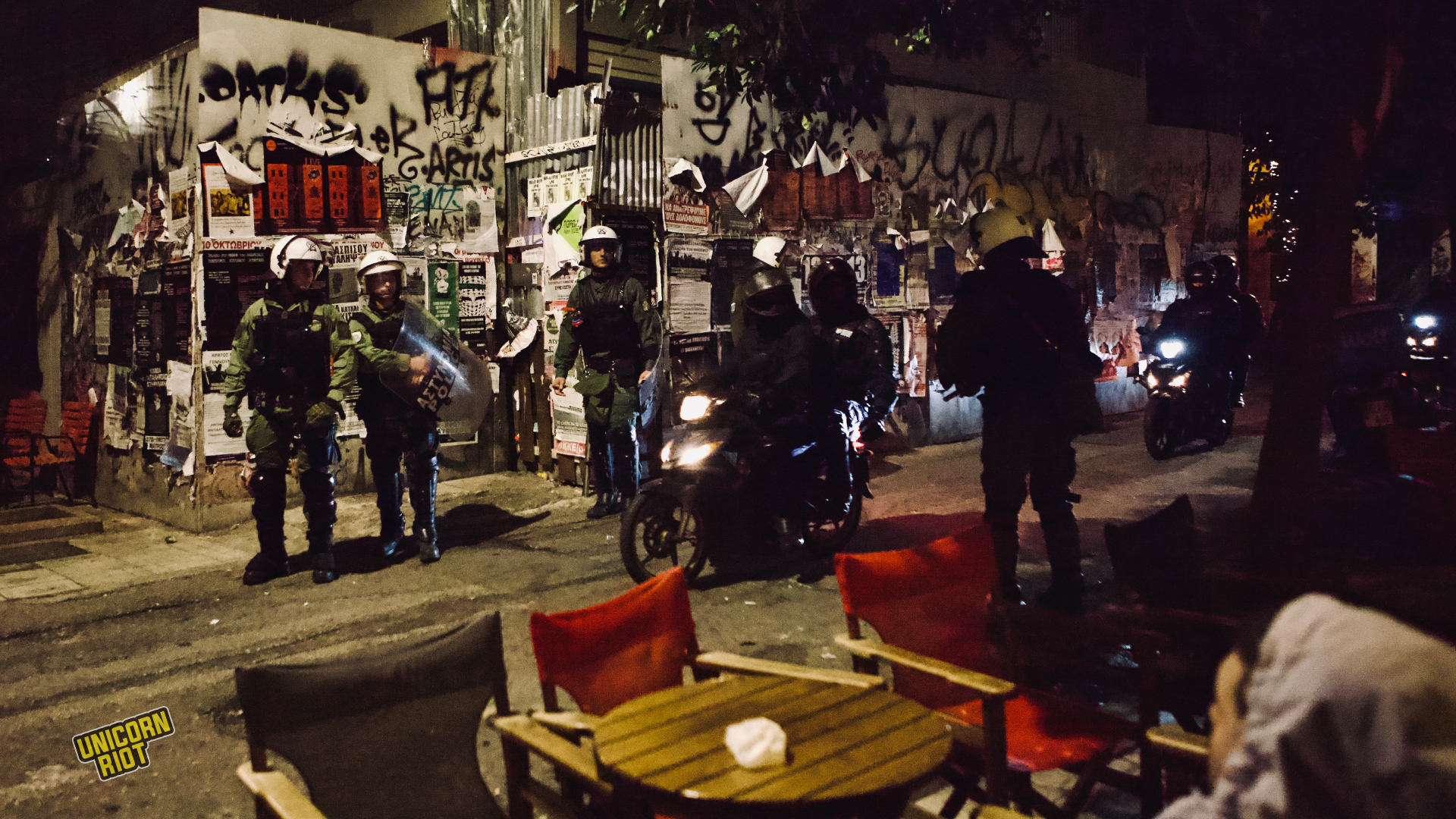
In recent years, police presence has accelerated in Exarcheia. The neighborhood formerly had minimal police presence because it was the hub of anarchist movements. Police would occasionally enter the neighborhood when they needed to conduct special operations.
However, with the New Democracy government coming into power in 2019, Exarcheia has become under tight control with increasing police surveillance.
The state attack on Exarcheia is a planned systemic attack to “clean up” Exarcheia, forcing evictions, and placing police patrols, including MAT (riot police), and DRASI (fast response police unit), notorious for their often unprovoked violence, to scout the area.
The New Democracy government has significantly expanded its police units, framing it as necessary for law and order. Although critics have pointed out that expanding the police unit stems from the intent to suppress political opposition and dissent.
The Greek universities have also added new special units within campuses, the OPPI (University Protection Teams), back in 2022. The policy, often referred to as the “university asylum,” which forbade police from entering campuses without the permission of academic authorities, came to an end due to a shift in state policy.
However, this is a controversial move because the roots of the university asylum trace back as far as the 70s. It was designed as a legacy policy for the Athens Polytechnic uprising, resisting the military dictatorship. The policy aimed to reconcile the traumatic events of the brutal repression of the junta, yet the ruling party has shifted away from its values to orient a discourse on “security” and combat “lawlessness” within the universities and political neighborhoods such as Exarcheia.
The New Democracy government has also reinstated the previously disbanded motorcycle police unit DRASI. Officially, DRASI is tasked with rapid response and maintaining public safety. However, eyewitness accounts paint a very different picture. Their tactics are frequently described as brutal, including intimidating behavior, riding motorcycles into crowds, and conducting aggressive searches, with repeated allegations of abuse.
Last year, the police budget and funding grew to ~2.29 billion euros. This is quite significant, considering the country still faces a strained economy.
For example, recent clashes in Thessaloniki between anti-authoritarians and the Greek state triggered potential initiatives for the police force to adopt paintball guns and rubber bullets, framed as necessary tools to improve crowd control. These examples reflect just a few aspects of the Greek government’s push to expand and strengthen police units.
Life Under Surveillance
Oppositions have continued to condemn the government’s handling of Exarcheia, with systemic repression coming into contact with both political activists and residents. There have been numerous reports of forced strip searches, physical abuse and verbal harassment that pervade everyday life.
Nick, a local resident, shared his perspective on living in Exarcheia:
“My place is on the borders of Exarcheia, near Panepistimio — about a three-to-four-minute walk from Exarcheia Square. Every day, almost all day, there are MAT officers right outside my building and all along the street. Not just on days of protest — on regular days. At any given moment, in specific areas, there’s at least one cop for every two or three people walking by.
And they’re not just standing around. Random stops are a daily occurrence — asking for IDs or, more rarely, searching bags. I get nervous even wearing certain clothes sometimes, because there’s a high chance that if they see something on me they deem ‘suspicious,’ they’ll stop me.
It’s worse in Exarcheia Square. Cops are everywhere, and besides stopping people, they sometimes catcall women or insult people passing by.
The fact that being detained after a run-in with a cop is something that happens so often — and that people are genuinely afraid of it — is insane.
You can literally just go out to grab a beer with a friend, or run to a nearby store, and there’s a good chance you’ll get stopped. It’s happened to me, and to many people I know.”
Nick’s account reveals the atmosphere of fear that has taken root, an everyday reality morphed by constant surveillance and the threat of arbitrary police intervention.
While tourists enjoy the neighborhood’s countercultural image, their experience comes at a cost.
The people who grew up in Exarcheia and shaped its authentic character are now heavily policed, monitored, and marginalized. They live in a state of uncertainty, unsure of when or why they might next be stopped, searched, evicted or detained.
The Normalization of State Violence
In Exarcheia, inhaling tear gas fumes is also not uncommon. Clashes erupt with riot police and anarchists frequently, as the anti-authoritarians attempt to retain their political lives. Yet, the state response is often excessive and puts innocent bystanders in harm’s way.
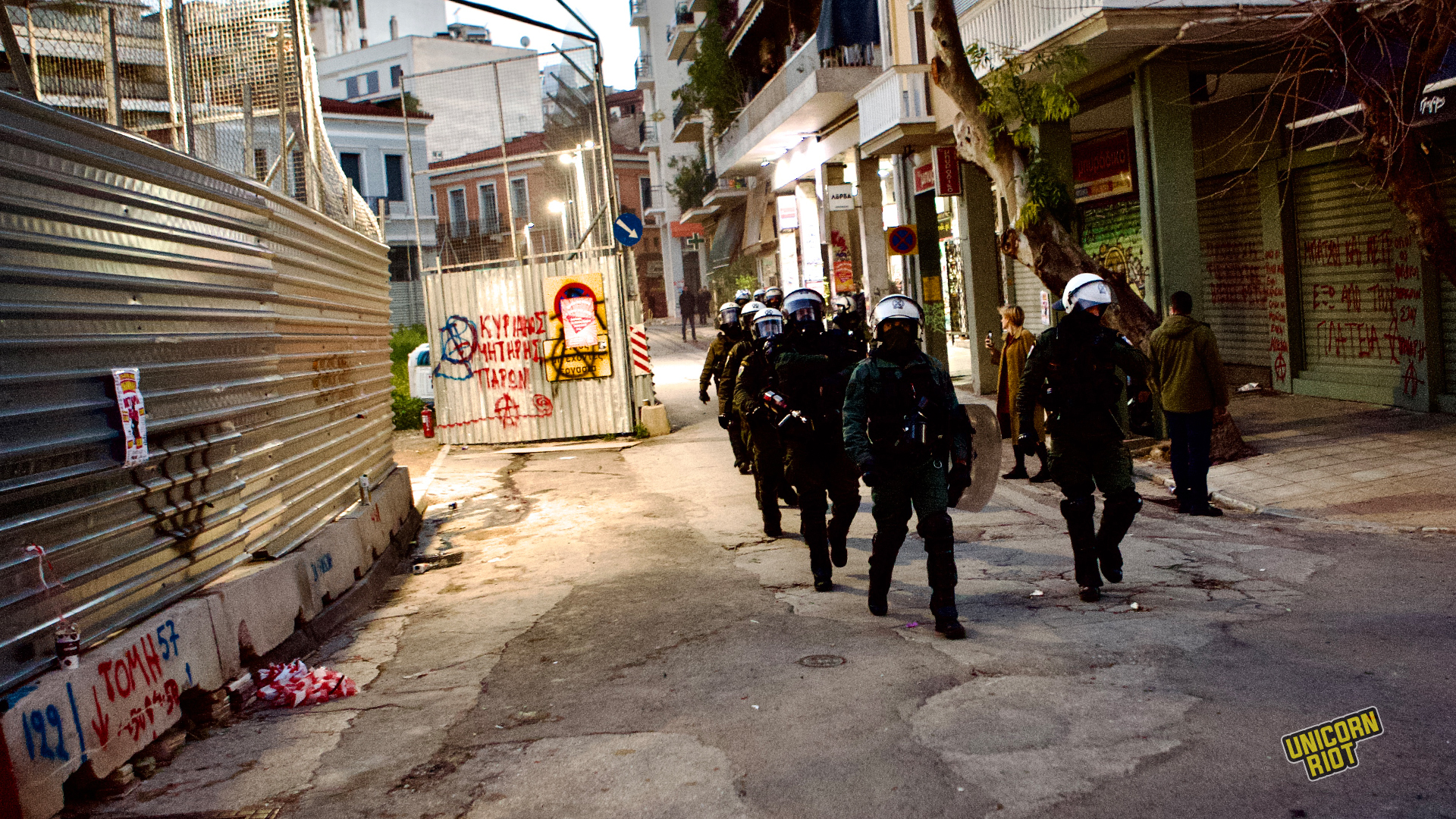
Public concern is growing not only over the expansion of police units but also over the methods and tactics they employ. In recent events, on April 12, 2025, Exarcheia burned. Clashes between anarchists and police erupted in response to heavy policing, opposition to gentrification, the evictions of squats and the commercialization of the neighborhood.
As cars were set ablaze and tear gas and flash grenades were deployed, the anti-authoritarians aimed not only to defend the area but also to counter state repression and the transformation of Exarcheia into a sanitized tourist zone.
Following these events, the Minister of Citizens’ Protection, Michalis Chrysochoidis, announced two controversial measures.
The first was the creation of a special police unit aimed at the Roma community. The second was a ban on cultural activities, including political events and concerts within Exarcheia, enforced through potential police raids, detainments, and arrests.
The Ministry justified targeting the Roma community by citing high crime rates, which is a claim that reflects a broader European trend of marginalizing and repressing Roma populations, reinforcing serious, harmful stereotypes.
Shortly after the ban, on April 27, the state cracked down on a gathering at Strefi Hill supporting the Exostrefis Occupation, which featured a football tournament, music, and children’s games.
The violent enforcement included detainments and the exposure of children to tear gas and flash grenades, with one child losing sight of their parents for several hours. Chrysochoidis later narrowed the Exarcheia ban to only certain special events due to public backlash.
Additionally, on May 17, 2025, Exarcheia became the scene of extreme police violence, as Greek forces raided bars and private shops, attacking residents and innocent bystanders with tear gas and flash grenades.
Police carried out mass detainments, which witnesses described as part of a broader pattern of state repression, while residents and bystanders resisted the violent assault.
Similarly, during the commemoration protest for Kyriakos Xymitiris, a renowned martyred Greek anarchist, on October 31 last year, the demonstration escalated into violence as riot police violently dispersed participants.
Later, they targeted the pedestrian road Messologiou and surrounding bars, putting innocent bystanders at risk. Using tear gas and flash grenades, police injured a man with a prosthetic leg and continued to terrorize residents and visitors alike.
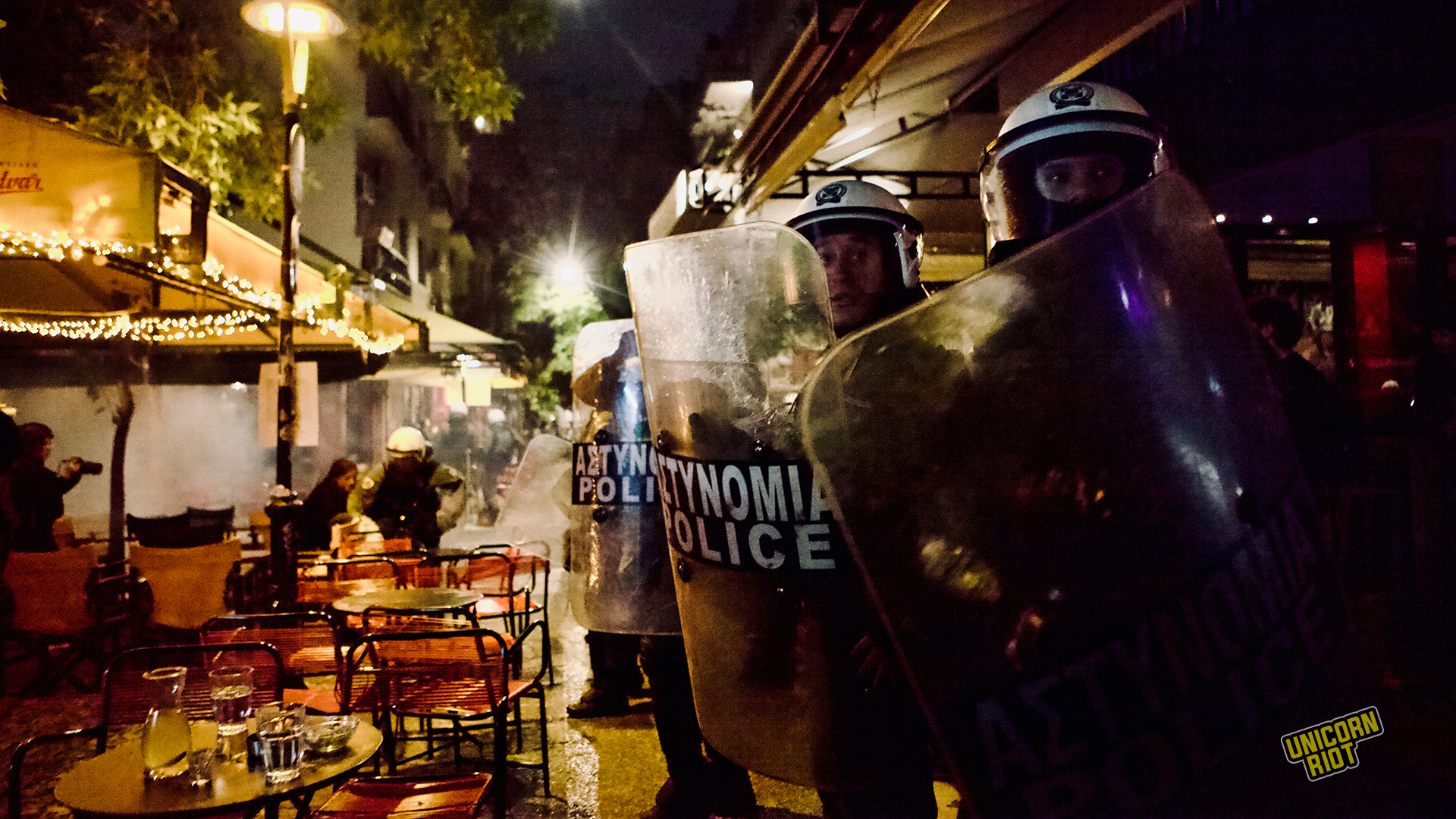
In recent events, during the early hours of Sunday, March 29 in Exarcheia, police forces launched an aggressive operation that resulted in 114 people being trapped inside a bar for two hours before being detained and taken to the Attica General Police Directorate (GADA).
The incident began after a trash bin was set on fire, prompting police to sweep forcefully through the area and attempt to break into the bar. Patrons and staff lowered the shutters to protect themselves, leading to a standoff during which police struck the shutters and later tried to enter using an electric cutter.
Despite police claims that they were pursuing unknown individuals who had allegedly attacked riot units, witnesses dispute this account. Of the 114 people detained, only two were ultimately arrested, both employees, and not for involvement in any attack. Instead, they face charges of disobedience, disturbing the peace due to the bar’s music, and refusing fingerprinting. No suspects matching the police’s allegations were identified, including among several detained minors.
The operation is widely viewed by the public as an act of intimidation directed at local businesses that protect residents from recurring police violence.
Later that night, people gathered in Exarcheia at the site of the morning’s events. They came together in solidarity with those targeted by the state and in protest against the brutal police crackdown. The gathering reflected growing community anger and deepening concern over the escalating nature of police aggression in the area.
This has become almost an everyday reality in Exarcheia: excessive state pressure and repression, ranging from surveillance to physical harm, targeting not only political groups but also ordinary residents.
The neighborhood, once a vibrant space of political expression, is now increasingly suffocated under the control of specialized government police units, making it a contested and occupied territory.
The Continuation of the Struggle
The events of February 15 and the metro break-in are not merely the result of a fanatical festival that spiraled into senseless vandalism. Rather, they are a reaction to deep-seated discontent with the government’s handling not only of the economy but also of the neighborhood, a place cherished by locals for its significance and history.
The effort to push back against state repression continues, but it comes at a cost. The normalization of detainments and arrests of political opponents, alongside the constant presence and scrutiny of the state in everyday life, is troubling not only for anti-authoritarians but for any country that claims to uphold human rights.
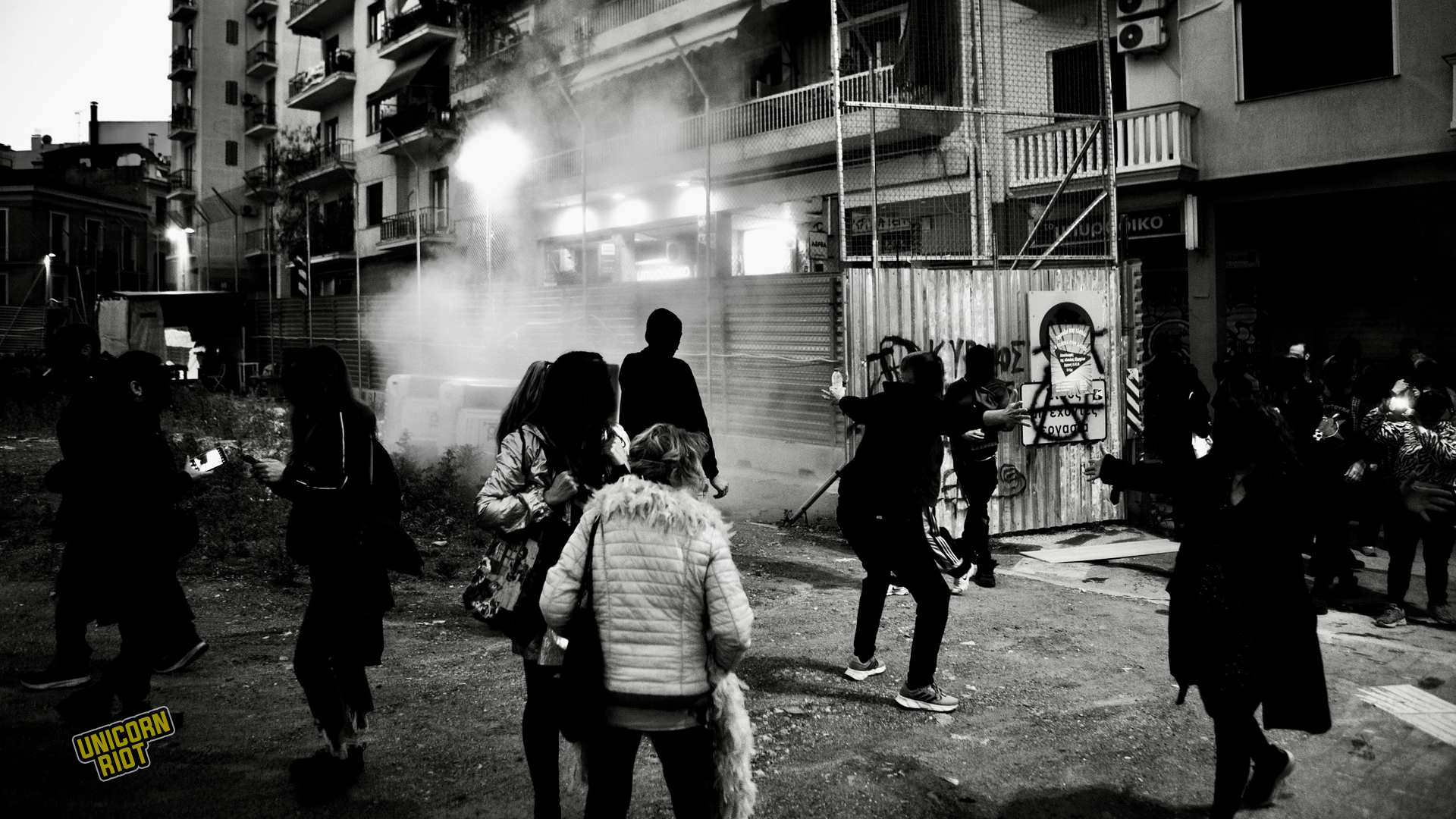
The rise of “efficient authoritarianism” within supposedly democratic nations has become increasingly common. Such practices not only curtail civil liberties but also restrict public discourse and freedom of expression. The actions taken by anti-authoritarians are not inherent to their ideology, but rather reactions, byproducts of long-standing repression and a persistent failure by the government to listen to people’s needs and demands.
All photos, including cover photo, were contributed by Elvis Takahashi Mantello.
For more media from Greece, see our Greece archive page.
A few Exarcheia-related stories:
Altering Exarcheia From the Square to Strefi Hill: A Timeline and Film [March 2024]
The Different Facets of Gentrification in Greece and Beyond [Nov. 2022]
Gentrification Endangers Historic Exarcheia Square [Sept. 2022]
Follow us on X (aka Twitter), Facebook, YouTube, Vimeo, Instagram, Mastodon, Threads, BlueSky and Patreon.
Please consider a tax-deductible donation to help sustain our horizontally-organized, non-profit media organization: