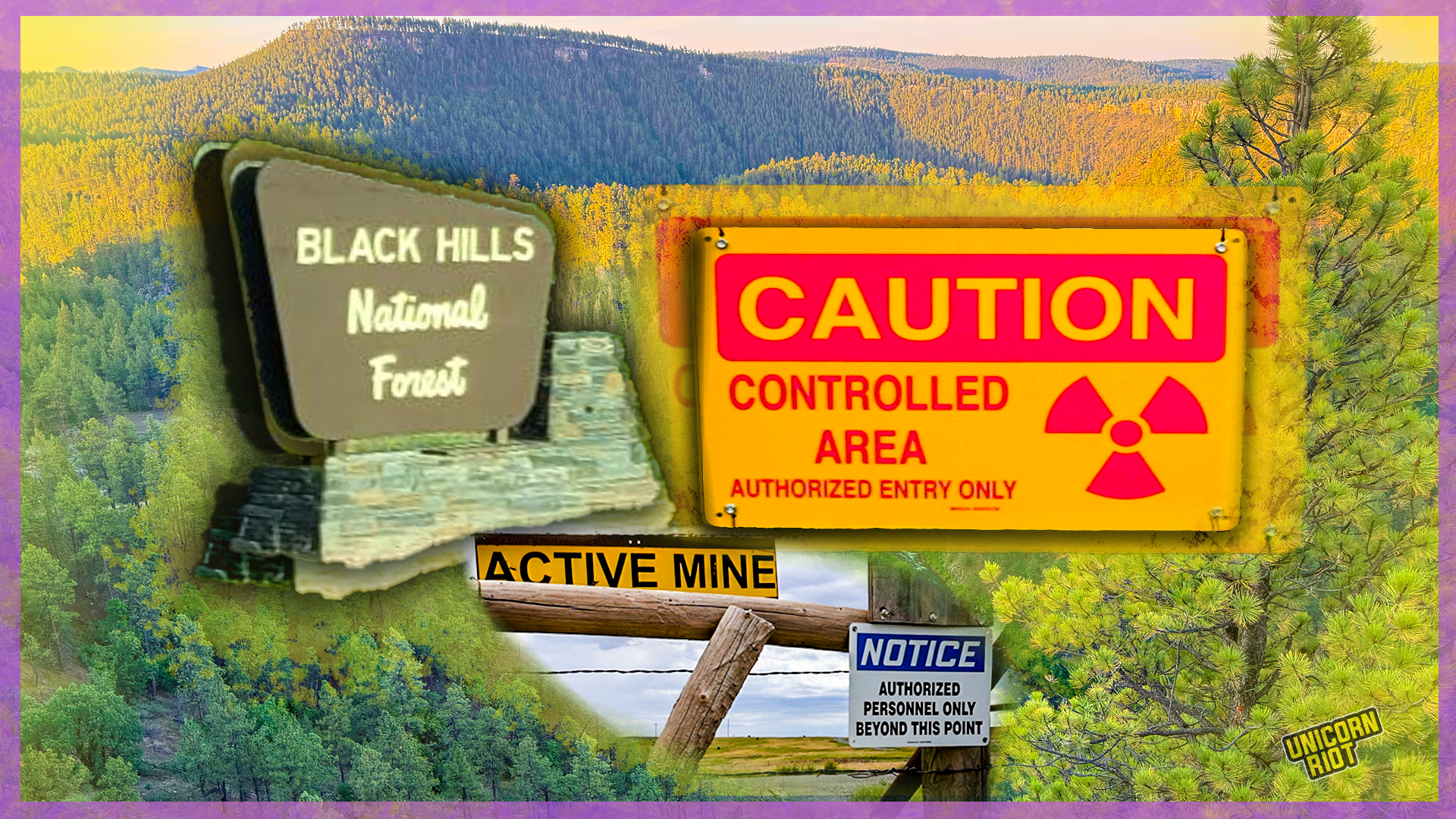
Mining in the Sacred and Stolen Black Hills, Then and Now
The colonization of the Black Hills by the U.S. government is one of the most well-known land thefts in American history. Since gold was discovered in the sacred lands of Paha Sapa or Ȟe Sápa, also known as the Black Hills, more than 150 years of tragedy, land exploitation, and legal issues followed and continue to this day.
When rumors began to spread in the 19th century that gold was found in the Black Hills, U.S. Army General George Armstrong Custer led a 1,000 man expedition in 1874 to find out for himself. When the discovery became public, thousands rushed to the Black Hills — trespassing on Indian Territory — to also find out for themselves.
The Black Hills were then a part of the Great Sioux Reservation and belonged to the Great Sioux Nation as promised in the Fort Laramie Treaty of 1868 which reserved lands for the exclusive use and occupation by the Great Sioux Nation, including the Black Hills. Any cession of any part of the reservation required a new treaty executed and signed by at least three-fourths of all adult male Indians occupying the land.
One of the provisions of the 1868 Treaty was that white men were forbidden from stepping foot on the reservation, except for officials of the U.S. government.
The discovery of gold led to thousands of white men trespassing in the Black Hills with the U.S. government rushing to colonize the area and take ownership.

The Lakota — also known as the Great Sioux Nation — and the Cheyenne refused to cede ownership, resulting in many confrontations which ultimately culminated in the Battle of the Little Bighorn (also called Custer’s Last Stand and the Battle of the Greasy Grass).
On June 25-26, 1876, the U.S. Army’s 7th Cavalry — led by Gen. George Custer — was completely defeated by an encampment of thousands of Lakota, Cheyenne and Arapaho people along the Little Bighorn River in Montana.

After the U.S. defeat at the Battle of the Little Bighorn, Congress responded by cutting off all rations for the Sioux until all hostiles were terminated or imprisoned and the tribe would cede the Black Hills to the U.S.
The Indian Appropriations Act of 1876, enacted on August 15 of that year, was aimed at acquiring the Black Hills by sale or otherwise starve the people. In 1877, a new treaty was presented by a commission headed by George Manypenny, and some signed the treaty under the threat of starvation, with the Black Hills being taken.
“In any first-year contracts course, we teach that a valid agreement requires mutual assent (an agreement by all parties),” Danielle Finn told Unicorn Riot. Finn is Standing Rock Sioux tribal citizen and professor of Lakota Law at William S. Boyd School of Law at the University of Nevada, Las Vegas.
“What the Manypenny Commission presented to the Sioux in 1876 fails that test categorically,” Finn said, “the Fort Laramie Treaty — a binding instrument under the Supremacy Clause — required the signatures of three-fourths of all adult male Sioux to cede any portion of their reservation. The ‘agreement’ that was actually presented to the Sioux was signed by only 10% of the adult male Sioux population. No legitimate legal system would call that consent. The Supreme Court didn’t either.”
The taking of the Black Hills has been challenged several times in federal court by the tribes ultimately resulting in a Supreme Court decision that ruled in favor of the tribes’ claim.
Justice Harry Blackmun delivered the Supreme Court’s opinion in 1980, United States v. Sioux Nation of Indians, and wrote that the tribes were never fairly compensated for the taking of the Black Hills and that they should be. The tribes were entitled to an award of at least $17.5 million, without interest, as damages under the Indian Claims Commission Act of 1946.
“What all people must understand is that the Supreme Court’s holding here was not a gesture of sympathy, it was a constitutional determination,” Finn said. “When the Court confirmed that the 1877 Act constituted a ‘taking’ under the First Amendment, it was applying the same Takings Clause that protects any American property owner from government seizure without just compensation.”
“The Black Hills were not voluntary sold, they were seized, and under our own Constitution, that seizure created an immediate legal debt — one the government carried, with interest, for over a century.”
Danielle Finn told Unicorn Riot. Finn is Standing Rock Sioux tribal citizen and professor of Lakota Law at William S. Boyd School of Law at the University of Nevada, Las Vegas
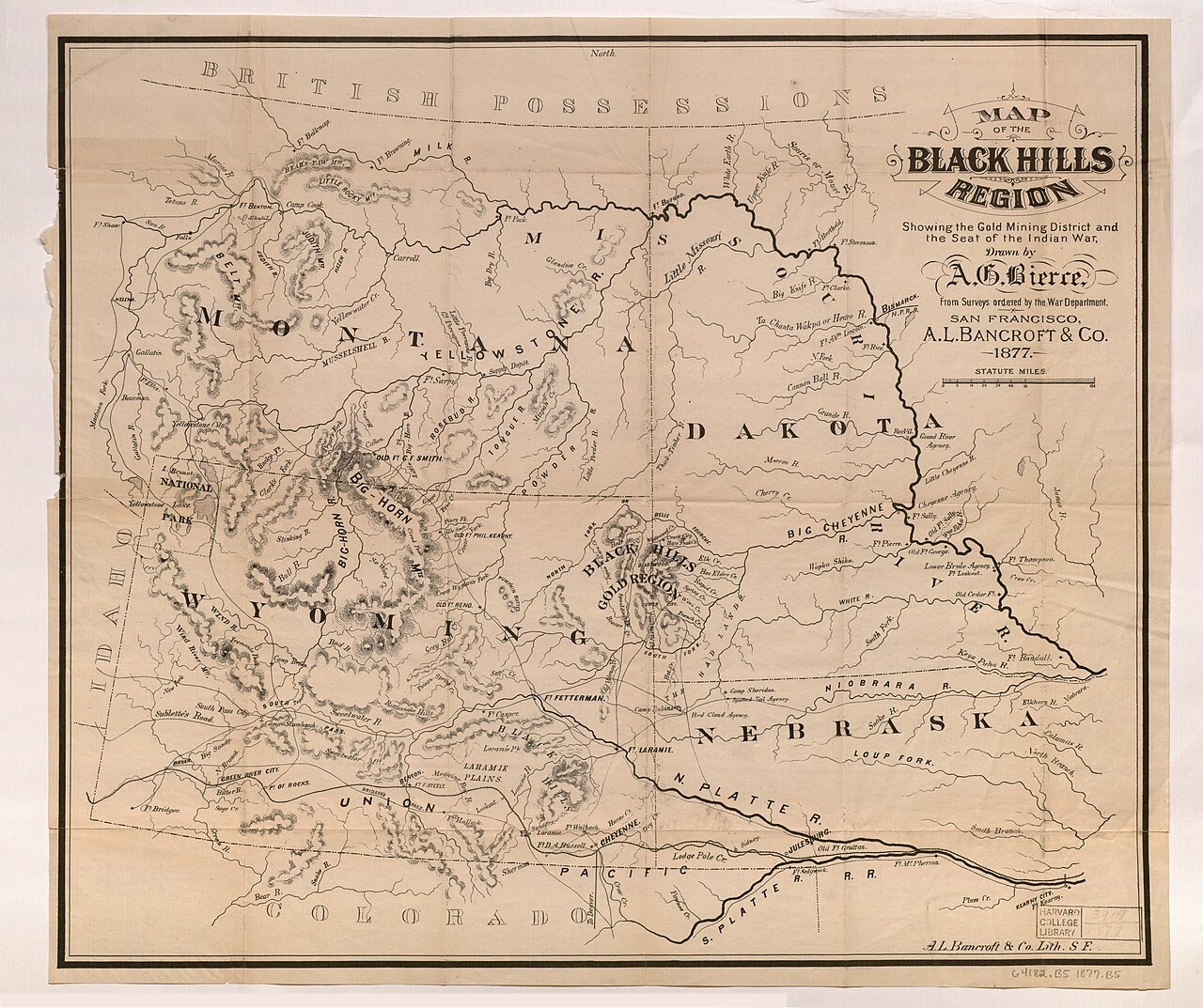
After the California Gold Rush ended in the late 1850’s, the prospect for gold and other minerals continued throughout the country. Gold in California led to many things including its statehood in 1850, the displacement of Indigenous people and eventually legislation regulating mining on public lands that laid the foundation of mining legislation today.
Prior to the taking of the Black Hills, settlers swarmed the area in hopes of taking a fortune as the federal government wanted ownership of the region, where lands would then be public as in California.
Then, U.S. legislation such as the General Mining Act of 1872, or Mining Law, would apply and any person 18 years and older had general rights to mine on public lands. The law is still relevant today, prioritizing mining over all other uses of public lands without federal royalties to be paid on hardrock minerals such as gold, silver, copper, lead, zinc, and uranium.
The Mining Law specifically was the act of legislation that set the pace for the taking of the Black Hills — authorizing it to be mined.
“Legislation set the foundation for the taking of the Black Hills and it is rooted in anti-Indigenous racism,” Taylor Gunhammer, an enrolled member of the Oglala Sioux Tribe and community organizer, told Unicorn Riot.
“When just telling the raw context of military violence and the taking of the Black Hills, it leaves out how essential and inextricable the history of racist colonization and mining is in the Black Hills. The idea that Indigenous peoples’ rights are worth less than those of other people was the reason people illegally took and destroyed land where Indigenous people live. That has formed the basis of all extractive policy in this country, to this day.”
Taylor Gunhammer, an enrolled member of the Oglala Sioux Tribe
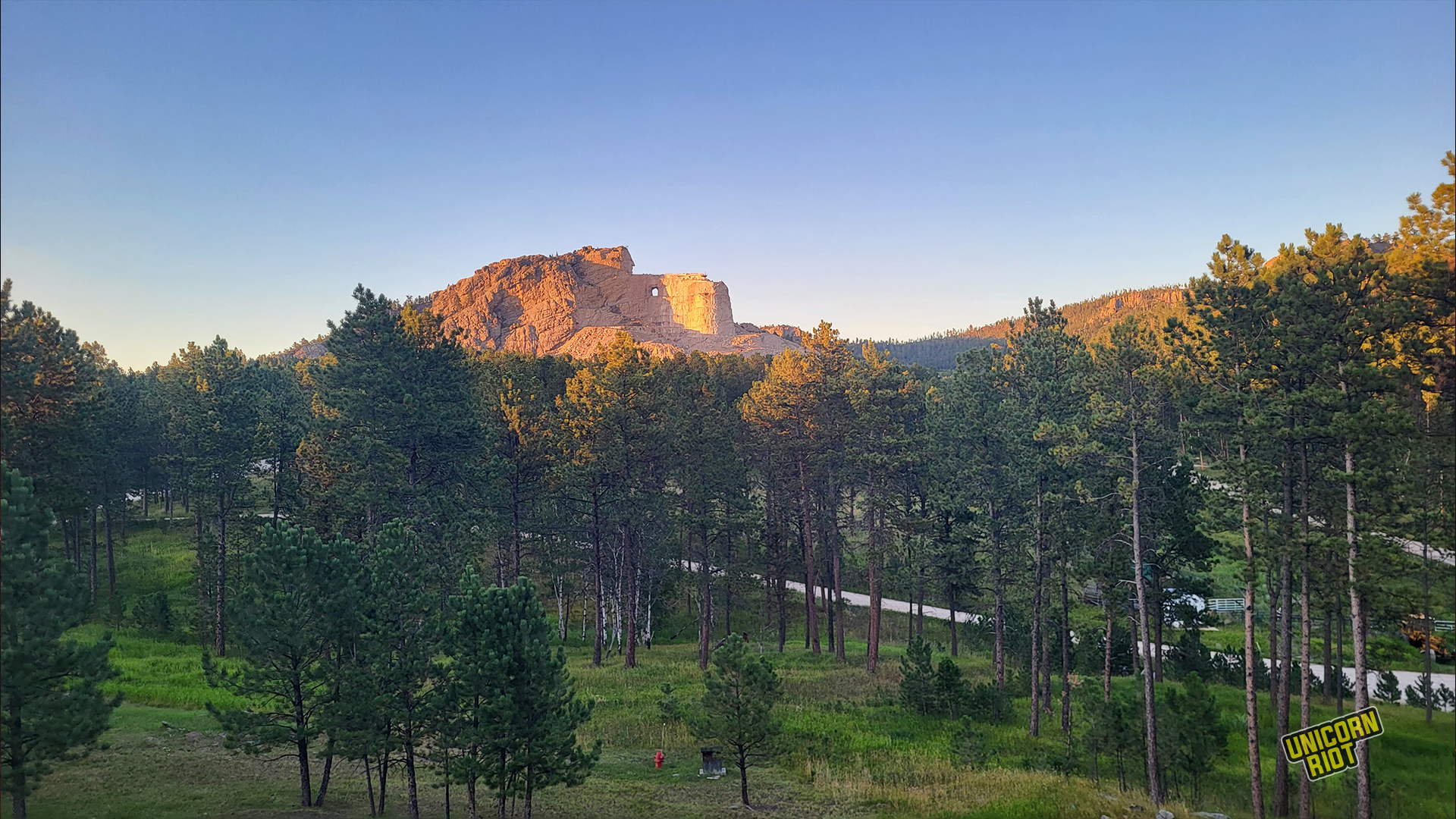
Mining in the Black Hills After 1876
Today, there is only one active mine in the Black Hills, the Wharf Mine in the northern area near the city of Lead and the Terry Peak Ski Area. The operation is owned by Chicago-based Coeur Mining, who is reported to have produced 97,327 ounces of gold in 2025, which was 700 ounces less than in 2024, but made $100 million more due to rising gold prices.
But it may not be the lone operator in the region for long. The Black Hills have had a significant resurgence in active mining claims in the last several years, and as of September 2, 2026, there are 206,042 acres — 17% of the entire Black Hills — currently under 9,973 active mining claims, according to the Black Hills Clean Water Alliance.
Mining companies are looking for gold, uranium, graphite, and other critical minerals. Claims are on federal and state lands with both governments having different mining and environmental regulations and each dealing with historic opposition to development by many Tribal Nations.
“The history of mining in the Black Hills cannot be separated from the history of the Lakota people and our enduring relationship with Ȟe Sápa, our sacred ancestral lands,” South Dakota State Senator Red Dawn Foster (D-SD), Diné and Oglala Lakota, told Unicorn Riot. “For us, these are not simply questions about mining, permits, or economic development; they are questions about water, cultural resources, treaty rights, and what we leave for future generations.”
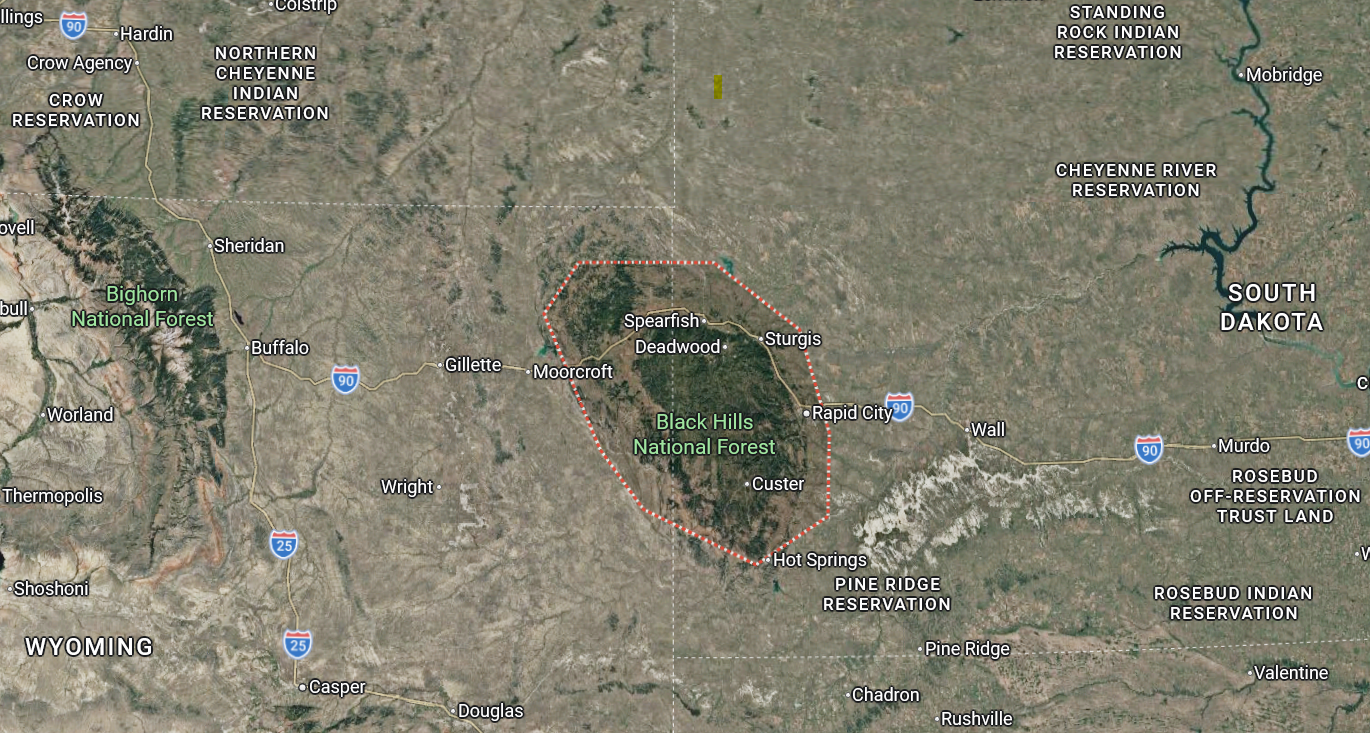
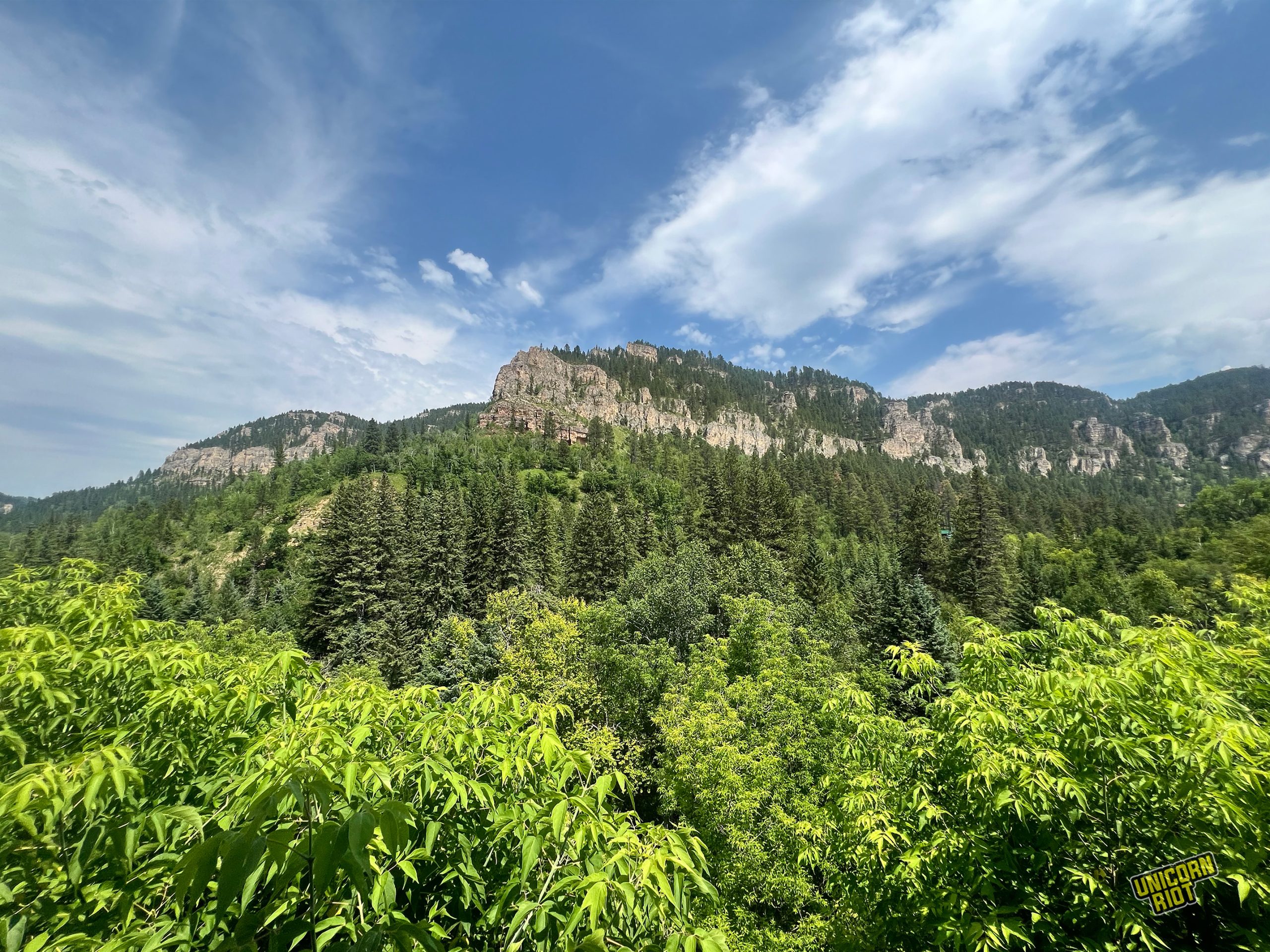
The Black Hills expands over 1.2 million acres, rising up from the Great Plains in southwest South Dakota and extending into Wyoming. Its jagged peaks are smaller than those of the Rocky Mountains, but the pine-covered hills are sacred to the Lakota Sioux people and serve as a destination for millions of tourists who visit Mount Rushmore and state parks.
The Black Hills has also played a key role in U.S. mining history. During World War II, in 1942, the U.S. government sent geologists into the Black Hills to map for pegmatites, which are valuable because they act as a storehouse for rare elements and precious gemstones. They were specifically seeking tantalum, tin and lithium and the Black Hills was one of the few places in the country that produced all three.
Tantalum became an important metal because it was used for wartime equipment, radio and electronics as well as in surgical skull plates for wounded soldiers. At the time, all tantalum had to be imported.
The government mapped the territory for domestic deposits of minerals and metals, prioritized their development, and bought what they produced. Pegmatite mines were active in both the Northern and Southern Black Hills where they also supplied columbite-tantalite and eventually became the country’s leading domestic producer with 12 pegmatite mines producing columbite-tantalite in 1954.
Supplies were stockpiled through the Korean War, but tantalum has not been mined in the U.S. since 1959, according to the U.S. Geological Survey, who note that tantalum was 100% imported, mostly from the Democratic Republic of the Congo, every year from 2021 through 2025.
Tantalum’s modern uses include elements of capacitors in many electronic devices, defense electronics, aerospace superalloys, and semiconductor manufacturing equipment. Today, the U.S. Geological Survey reports that there about 55,000 tons of tantalum resources in identified deposits in the country, most of which were considered sub-economic for today’s prices of tantalum.
Renewed Mining Efforts Reflect on History
Mining efforts in the Black Hills have experienced a resurgence in the last several years for various reasons that include renewed interest in lithium, tin, uranium, and other minerals. Decades of mining has paved a foundation for newer technology such as 3D modeling, geophysical surveys and advanced geochemistry to reinterpret old mines.
While the total number of mining claims has gone down recently, the number of mining permits approved is increasing.
Unicorn Riot reported in May that a mining company halted operations near Pe’Sla after a federal restraining order was granted by the U.S. District Court. The U.S. Forest Service (USFS) supported the project and filed documents to the court saying that the project is nearly halfway complete and that it was properly considered. The company Pete & Sons, Inc. then ultimately withdrew from the Rochford Mineral Exploratory Drilling Project, removed all of its equipment from the mining sites and stated it would no longer pursue future operations.
Companies are attracted to the Black Hills because the land has always been accessible despite the mineral content in the area being generally lower quality and requiring additional processes to extract the mineral to its raw form.
“It has never been about the mineral content,” Gunhammer said, “It is the very American promise of cheap and plentiful Indian land that can be occupied exclusively by white settlers and we’ve seen that at Pe’Sla.”
“What is attractive to mining companies is the permissiveness of the governing bodies that are supposed to protect the people,” Gunhammer told UR. “Instead, we see many governments partnering and accommodating multi-national corporations every step of the way.”
The Dewey Burdock Project
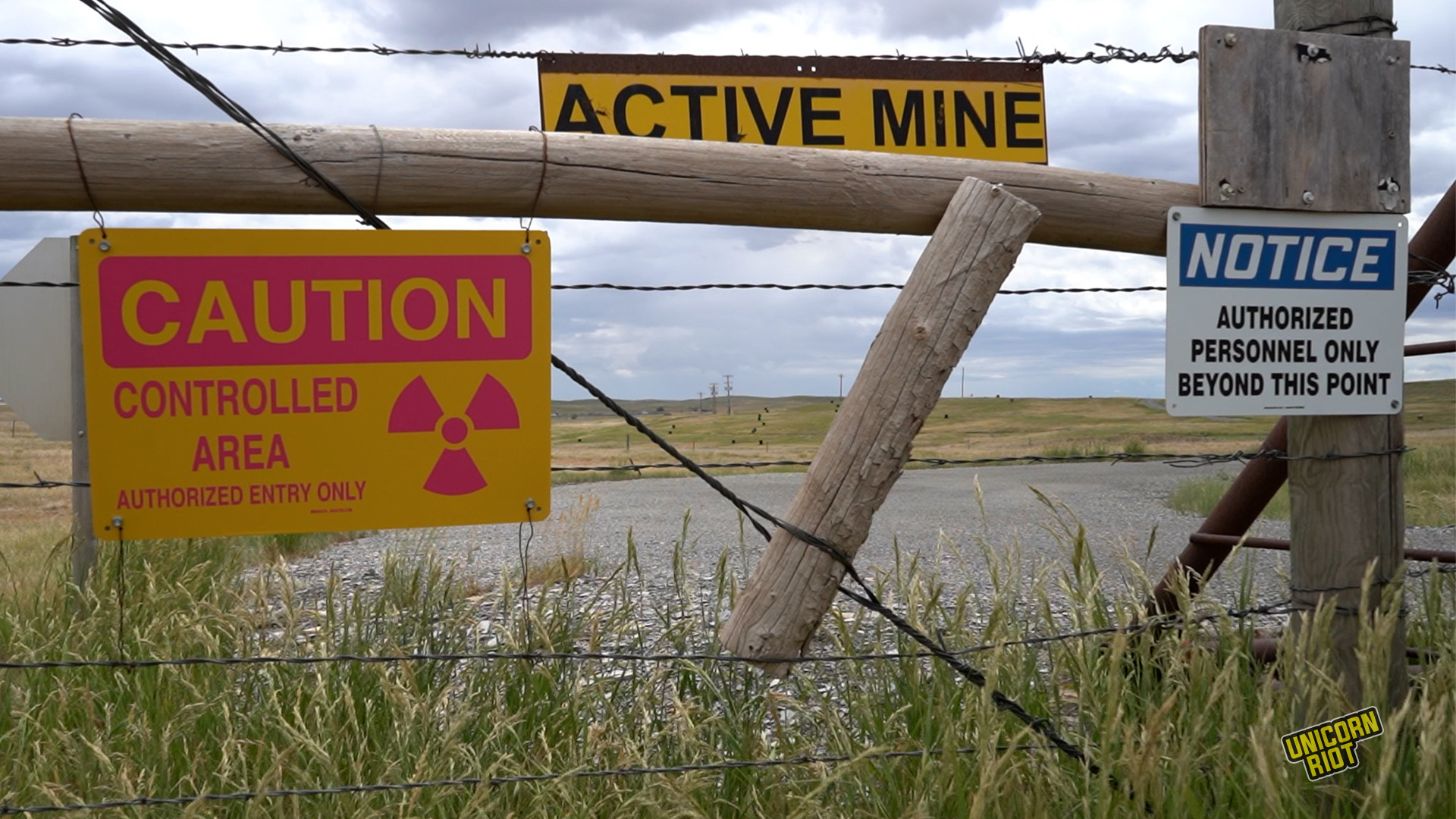
The Dewey Burdock Project’s federal permits were approved in mid-June by both the Bureau of Land Management (BLM) and the U.S. Nuclear Regulatory Commission (NRC). The project has had federal and state mining permits in lieu for 20 years. However, its state permits have not been approved to extract uranium.
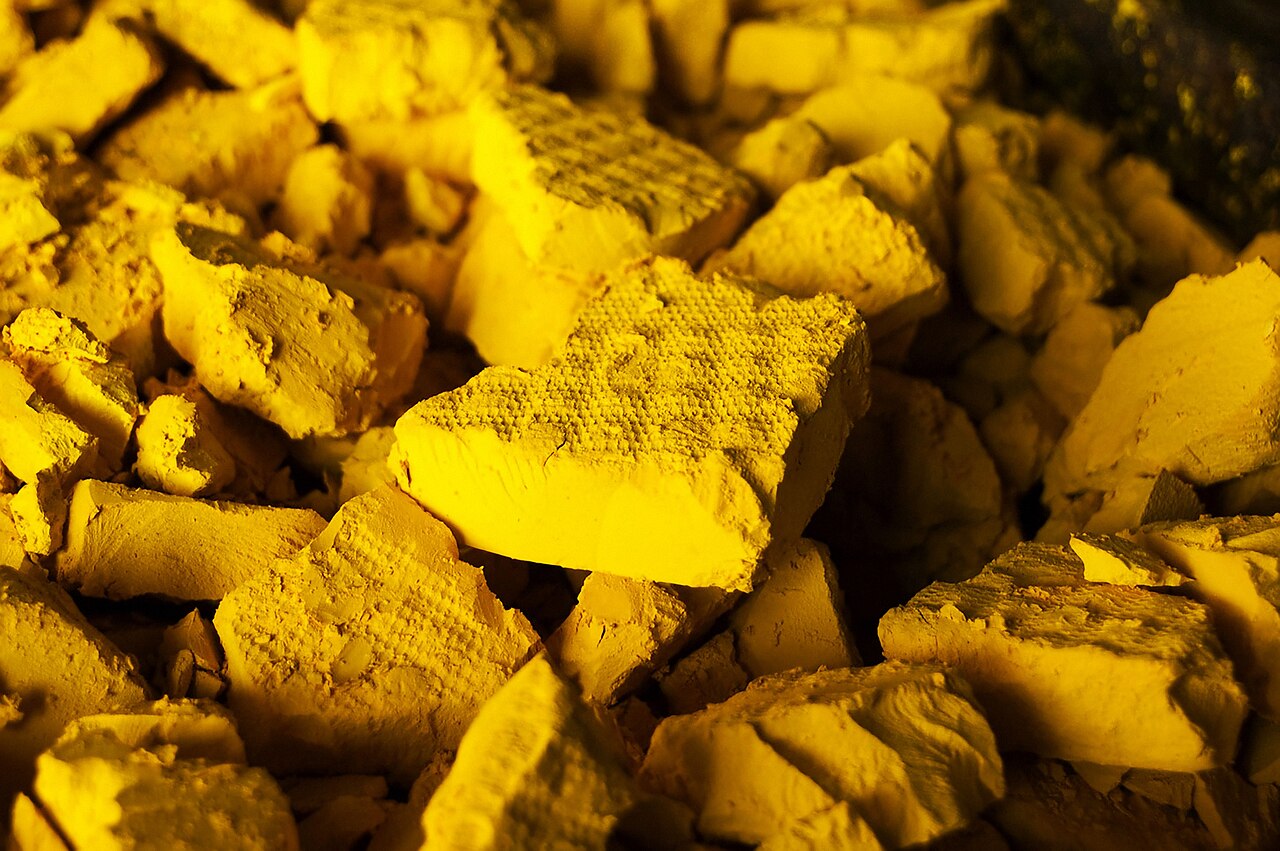
The Dewey Burdock ISR Uranium Project is a proposed uranium production facility that will recover uranium from subsurface sandstone ore bodies through ISR (Intelligence, Surveillance and Reconnaissance) technology. It is seeking U3O8, the olive-green-to-black chemical compound of uranium commonly known as yellowcake and plans to extract over 14 million pounds of uranium, according to the company’s website.
The project is operated by enCore Energy, a Dallas-based mining company that specializes in uranium exploration and extraction in the domestic U.S. and a subsidiary of Powertech (USA) Inc. While the project still lacks several state and federal permits to extract uranium, they aim to spend more than $264 million with an estimated overall cashflow at $476.8M, or $52.56 per pound of U3O8. The total federal income tax for the life of the mine is $113.4 for a cost per pound U3O8 of $8.04.
The NRC issued a renewal license to enCore for its Dewey Burdock Uranium In-Situ Recovery (ISR) Project in Fall River and Custer Counties, South Dakota on June 18, 2026.
“They don’t think there’s more uranium here than anywhere else,” Gunhammer said. “They think it’s going to be easier to steamroll through the so-called regulatory process.”
“The Bureau of Land Management’s June 2026 decision for the Dewey Burdock Uranium Project covers only the small portion of the project that sits on public land which is about 240 acres out of a 10,580‑acre project area that is mostly privately owned,” said a spokesperson for the U.S. Bureau of Land Management in a statement to Unicorn Riot.
“After completing an Environmental Assessment, the BLM issued a Finding of No Significant Impact and a Decision Record that allows limited infrastructure on public land, such as short sections of access roads, four groundwater monitoring wells, and overhead power lines. Overall, the work on BLM‑managed land will disturb about 4.2 acres,” said the spokesperson.
The BLM also stated that the permits do not allow uranium extraction or any processing or waste facilities on public land. “If in‑situ recovery moves forward, those activities would occur only on private land under the oversight of the U.S. Nuclear Regulatory Commission and the State of South Dakota,” the agency said of extraction.
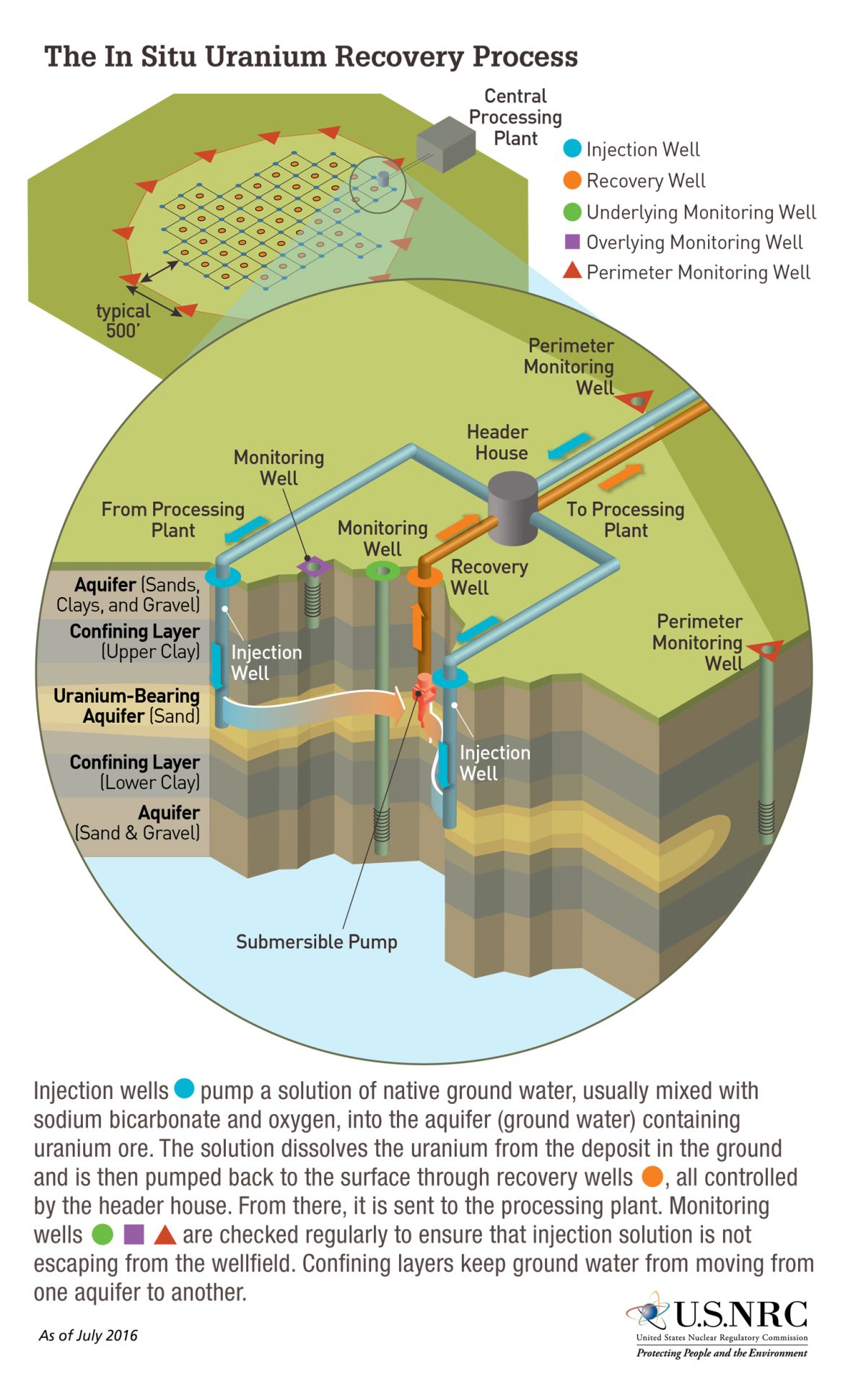
In-situ recovery (also ISR) is one of the two primary extraction methods that are currently used to obtain uranium from under the ground, according to the NRC, and extracts directly from underground deposits without digging open-pit or underground mines. There are only 14 ISR facilities in the country.
After the process occurs to dissolve the uranium, it’s extracted and then further purified, concentrated, and dried to produce yellowcake. Yellowcake is then packed in 55-gallon drums to be transported to a uranium conversion facility, where it is processed through the stages of the nuclear fuel cycle to produce fuel for use in nuclear power reactors.
The Dewey Burdock ISR Uranium Project is the first uranium mining project added to FAST-41 from the state of South Dakota according to the Permitting Council, the federal agency tasked with improving the transparency and predictability of the federal environmental review and authorization process for certain critical infrastructure projects.
Formally Title 41 of the Fixing America’s Surface Transportation Act, FAST-41, or the Permitting Council, is directed by the Federal Permitting Improvement Steering Council which is composed of the Permitting Council Executive Director; 13 federal agency Council members; and the Chair of the White House Council on Environmental Quality and the Director of the Office of Management and Budget.
“FAST-41 has played an important role in securing federal permitting, and we look forward to finalizing state permitting, beginning construction, and ultimately producing from this critical source of clean, reliable, and affordable uranium to fuel the rapidly expanding U.S. nuclear energy needs,” said William M. Sheriff, Executive Chair of enCore Energy, in a press release on June 30, 2026. “This project should provide positive local and national economic impacts through development and ongoing operations.”
The Trump administration is currently utilizing the FAST-41 program to speed-up federal environmental reviews and boost domestic critical mineral production and infrastructure.
An Executive Order declared by President Trump on March 20, 2025, for the Department of Interior to “take immediate action to facilitate domestic mineral production to the maximum possible extent” is declarative of fast-tracking approving mining permits on federal lands.
According to the Permitting Council, the administration has expanded coverage to over 50 critical mineral and mining projects on the Federal Permitting Dashboard to secure domestic supply chains for battery production, defense, and energy generation.
An inquiry to enCore Energy was unanswered as of press time. The Project is the first uranium ISR facility to submit permit applications in the State of South Dakota.
“The Dewey Burdock Project is the latest chapter in a much longer history of resource extraction in the Black Hills,” Sen. Red Dawn Foster said. “With federal permits now approved but state permits still pending, there is an opportunity to look carefully at what has been learned from the history and to ensure that tribal interests are meaningfully considered before any extraction begins.”
The state of South Dakota does not impose a corporate income tax. Production taxes in South Dakota include property tax, sales and use tax, and severance and conservation tax. Custer and Fall River Counties do not impose an Ad Valorem tax on minerals. The BLM said that if the mine is fully developed, the operation could support up to 91 direct jobs and generate approximately $42 million in state and county taxes and $48.4 million in federal taxes over a 16-year mine life.
CNEC’s Chord Project
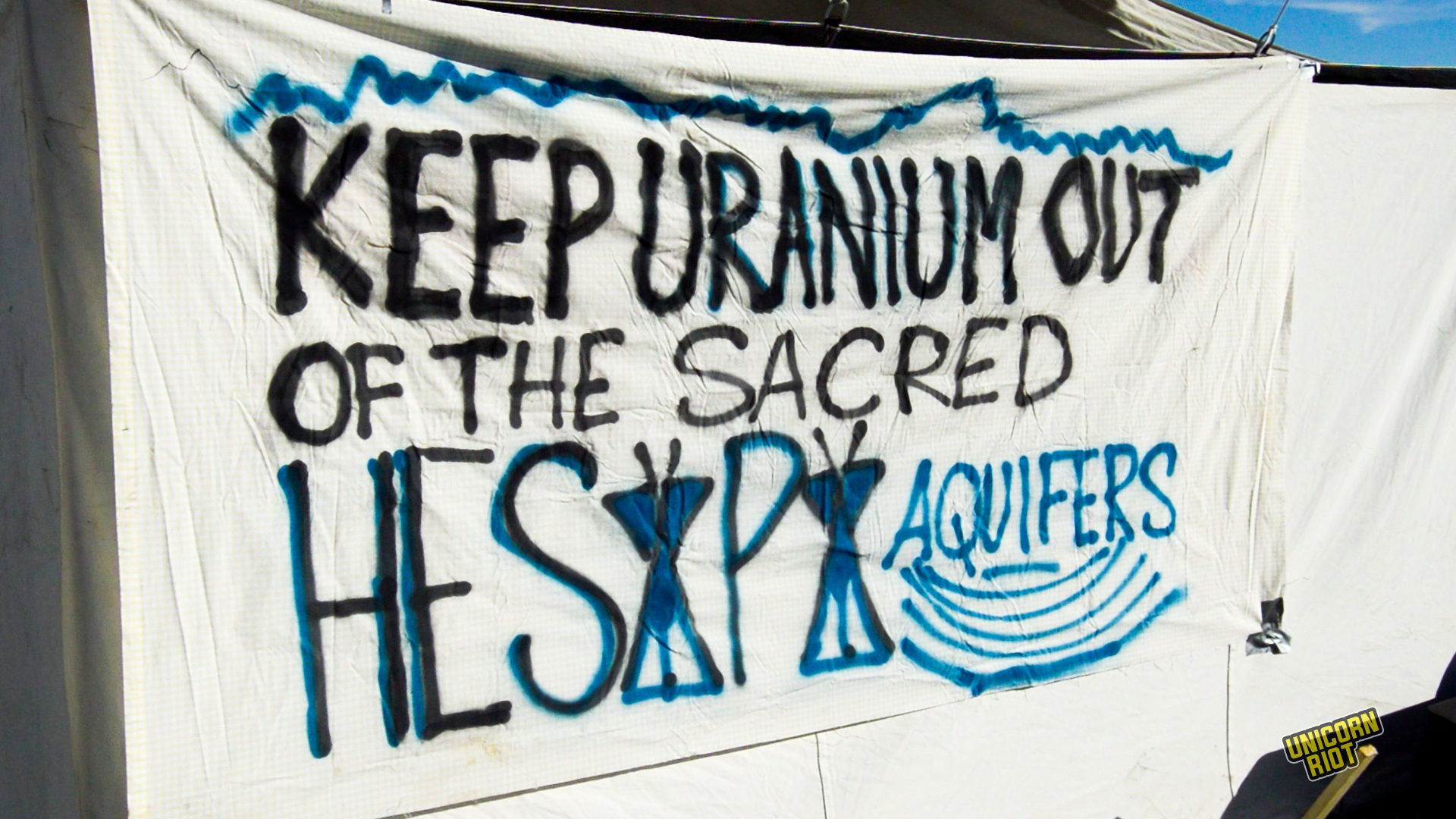
The Chord Project by Clean Nuclear Energy Corporation (CNEC), a subsidiary of the Canadian company Nexus Uranium Corp., is also in Falls River County and has a permit pending to drill 50 exploratory holes in search of uranium near Craven Canyon in the southern Black Hills on state-owned land.
The project is approximately three miles southeast of enCore Energy’s Dewey Burdock ISR uranium project and is a contested case. The South Dakota Board of Minerals oversees all mining and mineral development in the state and hosted a public hearing regarding the project in May, which was ultimately adjourned, and has not yet made a decision on the permit.
Unicorn Riot reported in June that state hearings regarding the Chord Project were halted after Elizabeth Lone Eagle filed a federal lawsuit against the South Dakota Department of Minerals and Environment, alleging that the state violated the civil rights of the intervenors in the contested hearing and for the federal government to direct the state of South Dakota to provide translator services for Lakota speakers. The South Dakota Board of Minerals and Environment has not rescheduled a public hearing regarding the permits for the Chord Project since the federal lawsuit was filed on May 20.
The federal lawsuit was dismissed on a technicality Elizabeth Lone Eagle told Unicorn Riot, but there was an error by the court in the dismissal and the case is currently pending review by the 8th Circuit Court of Appeals.
“Because there is still litigation pending, the South Dakota Board of Minerals and Environment is using the time to challenge and seek interpretation of Helen’s Law,” Lone Eagle said. “In the decision, the judge stated that the Lakota-speaking elders could refile the case on their own or they could get an attorney to refile for them.”
On June 16, 2026, CNEC filed a Notice of Entry of Order to the South Dakota Department of Minerals and Environment, asking for the agency to expedite the hearing process and to accept testimony and cross examination in written form, or to consider direct examination or cross examination via video conference because threatening posters were placed on the seats of applicants’ representatives and in other locations at the hearing. The SD Board of Minerals denied CNEC’s request, but wrote that it would discuss the issue at scheduled meeting on August 20, 2026.
According to the August 20 meeting minutes, the SD Board of Minerals voted to pursue a declaratory ruling in Circuit Court regarding the interpretation of SDCL 1-26-18.4, also known as Helen’s Law. Helen’s Law is a state law named after Helen Red Feather, a fluent Lakota speaker from Wounded Knee, South Dakota, that requires the state to provide translator services for parties in official contested hearings with state agencies, regardless of a speaker’s language.
The project also has additional drilling plans on federally owned land, which are under review by the USFS under the National Environmental Policy Act (NEPA), where the Plan of Operations has been accepted and a Memorandum of Understanding is in place to guide the NEPA process.
The USFS has been reported to indicate that the project may be reviewed under the categorical exclusion, which is limited to short-term activities lasting 1 year or less, and because uranium is identified as a critical mineral. Following USFS approval, the project will continue through the South Dakota’s permitting process.
The Black Hills are no longer simply historical; they may once again become a driver of mineral discovery in the United States.
“Landback is the solution,” said Gunhammer of the future of the Black Hills. “Indigenous stewardship of the lands that everyone can acknowledge are stolen, because our justice is everyone’s survival.”
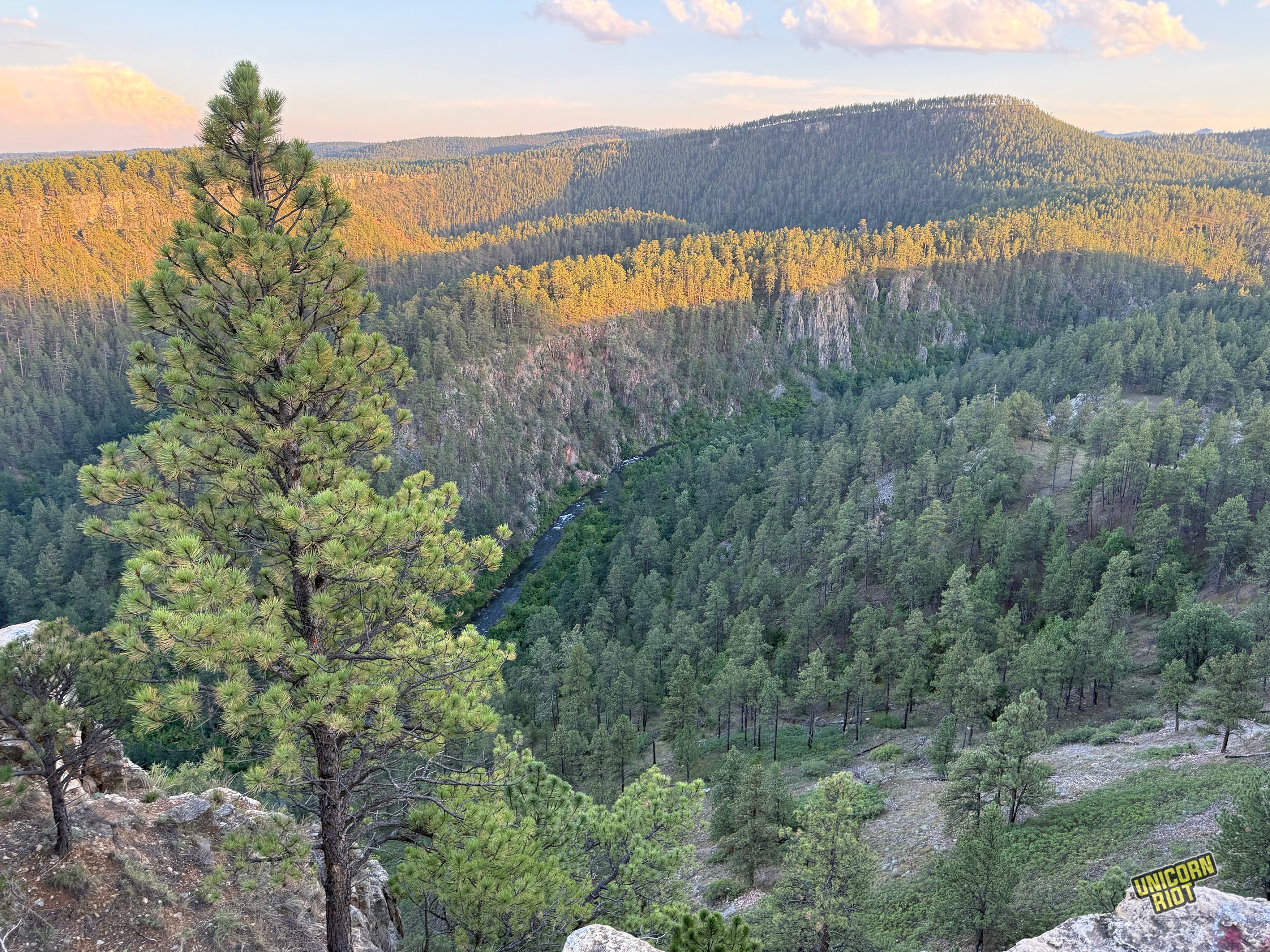
Cover image by Niko Georgiades who also contributed to this report for Unicorn Riot.
About the author: Darren Thompson is a multi-media journalist enrolled at the Lac du Flambeau Band of Lake Superior Chippewa in Northern Wisconsin, where he grew up. He covers breaking news, missing and murdered Indigenous people, environmental and social justice, tribal sovereignty, art, music, and film. He can be reached through his website, www.darrenthompson.net.
Follow us on X (aka Twitter), Facebook, YouTube, Vimeo, Instagram, Mastodon, Threads, BlueSky and Patreon.
Please consider a tax-deductible donation to help sustain our horizontally-organized, non-profit media organization: