Uranium Mining Permit Hearing in Black Hills Halted
Lakota speakers allege civil rights were violated during hearing
Hot Springs, SD — A scheduled hearing was halted after opponents against a proposed uranium drilling project in the Black Hills of South Dakota filed a lawsuit in federal court on May 20. The lawsuit is centered around the state providing Lakota language translation services during a public hearing regarding a uranium mining project near a sacred site in the southern Black Hills. Plaintiffs are asking for the federal government to direct the state of South Dakota to provide interpretation and translation services in the Lakota language during the hearing.
The lawsuit was filed pro se by Elizabeth Lone Eagle and includes six other first-language Lakota speakers as plaintiffs. The suit alleges that the plaintiffs’ civil rights were violated by the South Dakota Board of Minerals and that the agency denied full participation by Lakota first-language speaking citizens during the hearing. A restraining order asking the court to stop the proceedings was also filed, but later denied.
“I filed the lawsuit because the state’s Board of Minerals repeatedly violated the intervener’s right to due process,” Elizabeth Lone Eagle said in an interview to Unicorn Riot. “During the hearing, there were multiple exhibits that our Lakota speakers have not seen before and needed time to have the information translated in their language.”
The state scheduled the five-day hearing in Hot Springs, and assured interveners that a translator who could speak the Lakota language would be provided. When the hearing began on May 18, none were provided, but the state hired two Lakota translators for the second and third days of the hearing. On the second day of the hearing, some of the presentations proceeded without Lakota interpretation, and many objected.
After requesting the state’s Board of Minerals and Environment for translator services, she was told that the state is not required to provide translator services and that a new law, which doesn’t take effect until July 1, will provide interpreter services and not translator services.
“On day two, May 19, 2026, Defendant McVey represented on the record that the Board had approved interpreter services in accordance with HB 1219 but had not approved translation services,” the lawsuit states. The board voted 8-0 to provide “translator services” at a meeting on March 18, 2026.
A new state law signed by Governor Larry Rhodes in March is a legislative response to the denial of Lakota translator services in contested state permit hearings. It requires the decision-making office or board in an administrative contested case to hire an interpreter or translator when a witness or party needs it. The law is also known as Helen’s Law, named after Helen Red Feather, a fluent Lakota speaker from Wounded Knee, South Dakota and is set to take effect on July 1, 2026.
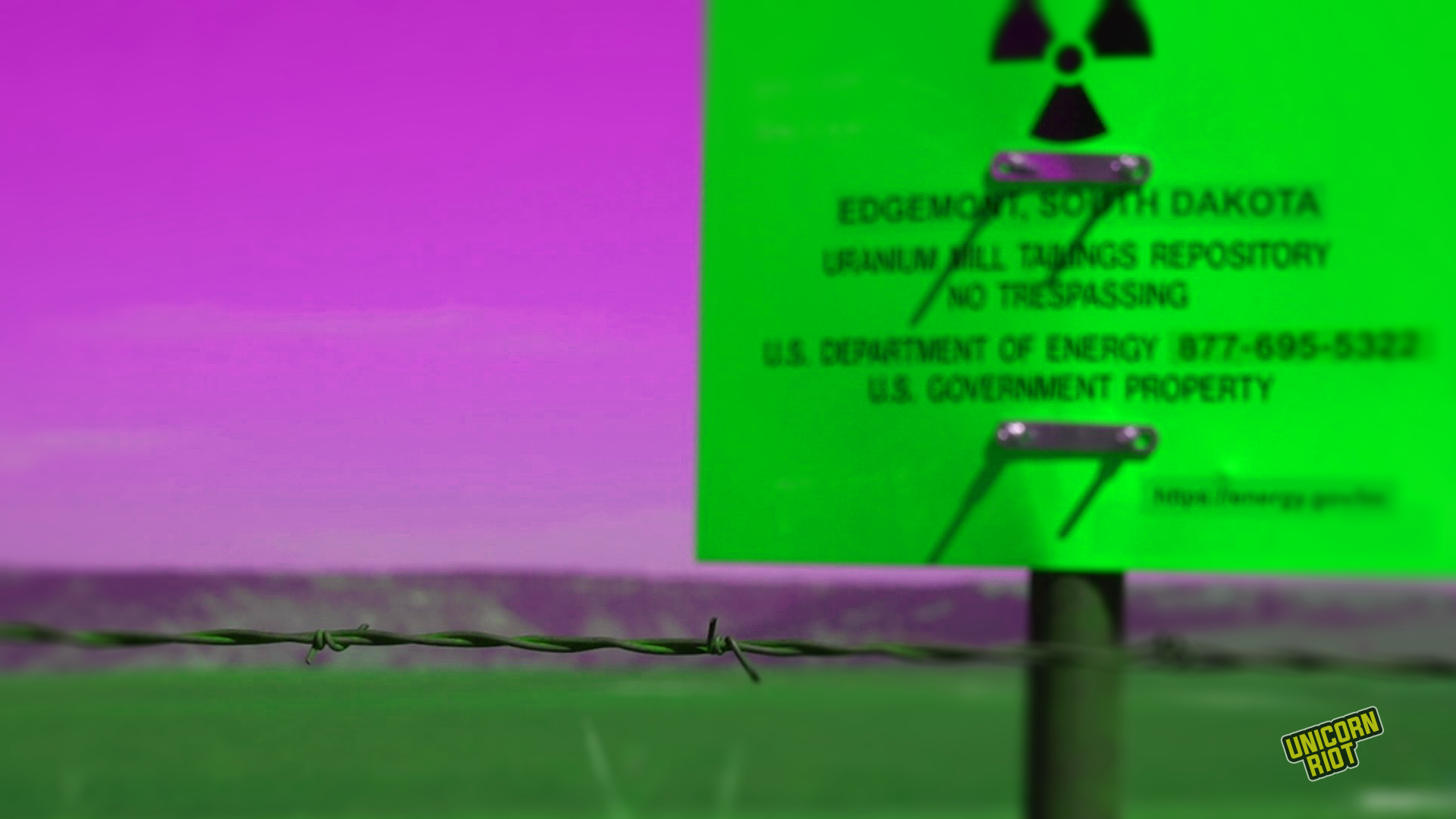
The hearing was in regards to a uranium mining permit on state land, near Edgemont, South Dakota, and mining permits are required for the extraction and processing of minerals such as uranium. The materials used to make cement all require a mining license by the state of South Dakota, a process that includes: the mining of sand, gravel, crushed rock to be used in construction, pegmatite materials, limestone, iron ore, gypsum, shale and pozzolan.
See UR’s 2019 live coverage of a public hearing on proposed uranium mine site in the Black Hills.
Clean Nuclear Energy Corporation, the mining company requesting the permit, is a Canadian-owned subsidiary of Nexus Uranium Corporation focused on uranium exploration in the southern Black Hills of South Dakota. The mining permit has been pending since 2024.
This isn’t the first incident where language has been critical to the permitting process. Hearing Chairman Bob Morris previously denied providing interpreter services, but the board later voted to overturn that decision in March. Regardless, the board voted to provide translation services for the most recent hearing.
The hearing was abruptly adjourned until further notice when they were told that a lawsuit was filed, which wasn’t required, said Lone Eagle. “They decided to adjourn the meeting on their own, and it is our hope that our due process will be honored in proceedings moving forward,” she said.
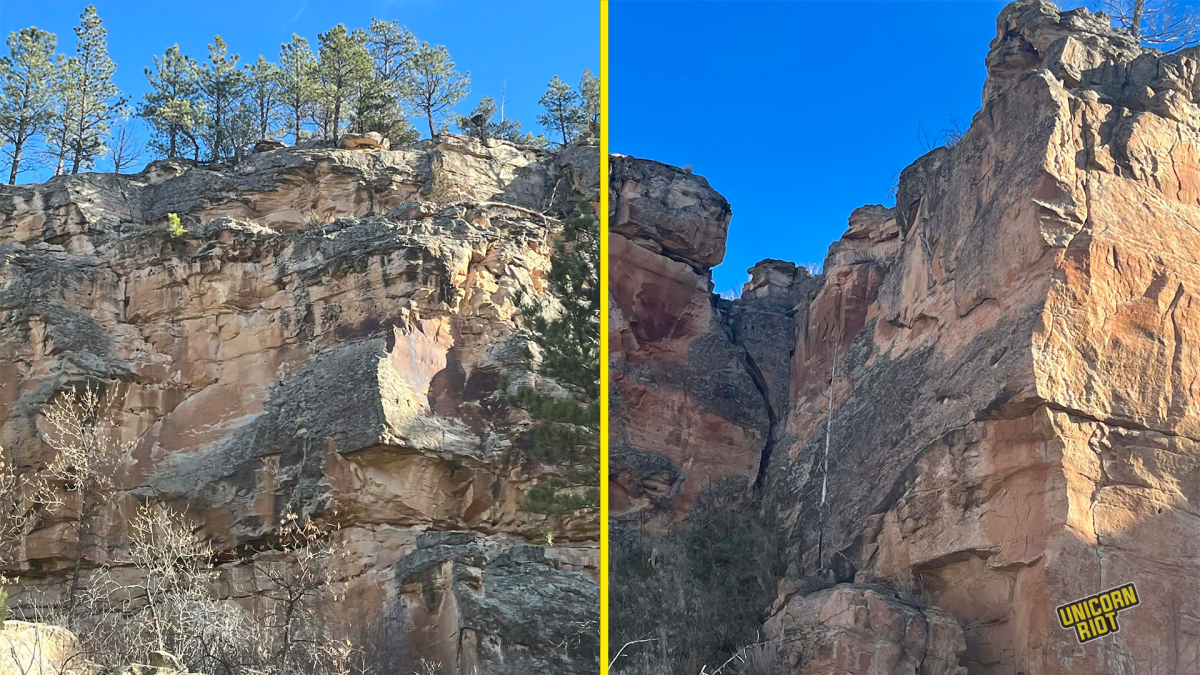
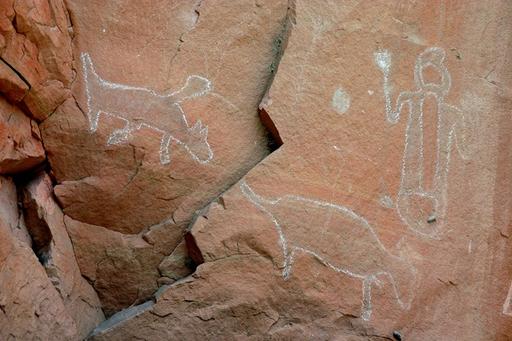
Opponents to the project oppose the mining for a number of reasons including degradation to the natural environment, water contamination, and the fact that the project is too close to a sacred site where ceremonies are conducted known as Craven Canyon. The area contains rock art and other cultural artifacts that are said to be at least 7,000 years old.
The project would include up to 50 drill platforms near the rim of the canyon with drill depths up to 700 feet. Each hole could take up to two weeks to drill and the activities would be seen and heard within the canyon.
The adjournment is seen as a victory to some, and it is one of two recent formal decisions that halted mining activity in the Black Hills. While many tribes including the Oceti Sakowin consider the Black Hills sacred, both mining cases involve specific sacred sites within the Black Hills.
Last month, Unicorn Riot reported on another contested mining project that halted operations and the mining company announced it would not be pursuing further projects in the Black Hills after a federal court granted a restraining order against the mining project. The project was operating within a 2-mile buffer zone of a protected sacred site with federal Indian trust status, and was explicitly cited when U.S. District Court Judge Camela C. Theeler granted a temporary restraining order to stop mining activity.
Cover image originally taken by Alex Binder in 2019, remixed by Niko Georgiades for Unicorn Riot.
Unicorn Riot's Coverage of Extraction and Resistance in the Black Hills:
- Mining Company Opts Out of Controversial Project Near Sacred Site in Black Hills (May 18, 2026)
- Forest Service Finds ‘No Significant Impact’ in F3 Gold’s Proposed Exploration in Black Hills (July 7, 2022)
- “End Gold Mining” Banners Dropped Near Proposed Black Hills Exploration Site (July 4, 2022)
- Over 100 Protesters Block Road to Mt. Rushmore During July 4th Festivities (August 4, 2020)
- Indigenous Activists Assert Right to Unceded Land At Anti-Trump Protest (July 3, 2020)
- Inaugural 'No Uranium In Treaty Territory' Summit Held in Rapid City (October 8, 2019)
- EPA to Hear Public Comments in Proposed Uranium Mine in Black Hills (October 5, 2019)
Follow us on X (aka Twitter), Facebook, YouTube, Vimeo, Instagram, Mastodon, Threads, BlueSky and Patreon.
Please consider a tax-deductible donation to help sustain our horizontally-organized, non-profit media organization: